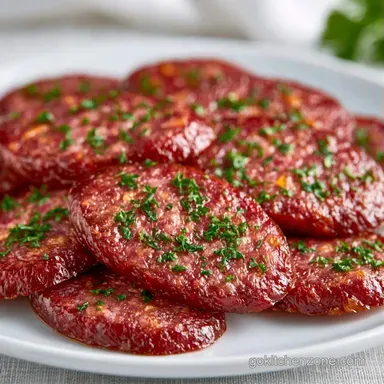
Smoked Beef Summer Sausage with a Snappy Bite
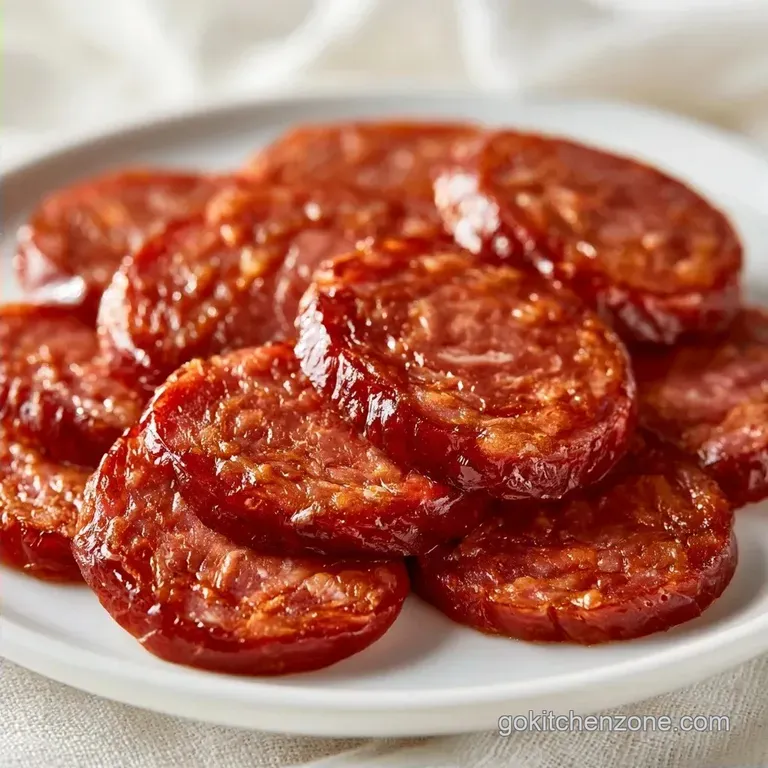
- Time: 30 min active + 6 hours smoking
- Flavor/Texture Hook: Mahogany color with a firm, snappy bite
- Perfect for: Desk lunches, charcuterie boards, or meal prep
Beef Summer Sausage: The Pellet Grill Way
Ever wondered why that specific snap in a deli sausage feels impossible to replicate at home? Most people think you need a degree in meat science or a backyard smokehouse to get it right.
I used to think the same, assuming that the dense, springy texture was some industry trick involving chemicals I couldn't buy at the store.
The truth is simpler. It's all about how you handle the protein and how you manage the heat. Once you stop treating it like a burger and start treating it like an emulsion, everything changes. You don't need fancy equipment, just a bit of patience and a pellet grill.
This Beef Summer Sausage delivers a deep, smoky profile and a mahogany finish that looks great on any platter. It's a hearty, reliable protein that makes your weekly prep feel a lot smarter. Let's get into how to actually make it happen.
What Actually Makes It Work
- The Protein Bind: Kneading the beef creates a tacky texture. This is myosin, a protein that acts like glue, trapping the fat so the sausage doesn't crumble when you slice it.
- Temperature Ramping: We start low to let the smoke penetrate, then slowly raise the heat. This prevents the fat from rendering too quickly, which would leave you with a dry, shrunken log.
- The Cold Shock: Dropping the sausage into ice water immediately after cooking stops the carryover cooking. It also shrinks the casing tightly against the meat for that signature "snap."
If you're planning a big meal, this smoked meat pairs well with a rich meat sauce recipe for a heavy Italian style dinner.
| Goal | What to Change | |||||
|---|---|---|---|---|---|---|
| Spicier Kick | Swap brown sugar for chipotle powder | |||||
| Leaner Texture | Use 90/10 beef (note: will be firmer) | |||||
| Milder Smoke | Reduce Stage 1 smoke by 30 minutes | Method | Time | Texture | Best For | |
| :--- | :--- | :--- | :--- | |||
| Pellet Grill | 6 hours | Deep smoke, snappy | Authentic flavor | |||
| Oven | 4 hours | Mild, uniform | No smoke environments |
The Essential Ingredient List
The fat ratio is the most critical element of this recipe. If you use meat that is too lean, you'll lose that classic "summer sausage" consistency and it will taste like a large hot dog. 80/20 ground beef is the standard choice here, providing the moisture needed to survive the long smoke.
Curing salt is non-negotiable. According to USDA Food Safety guidelines, curing salts are used in this style of sausage to stop spoilage and create the characteristic pink color. Without it, your sausage will be grey and won't have the proper shelf life.
For the Beef Base
- 2 lbs ground beef (80/20 lean to fat ratio) Why this? For optimal flavor and moisture.
- 2 tbsp ice cold water Why this? Keeps the meat chilled during kneading.
- 1 tbsp liquid smoke Why this? Ensures a consistent smoky foundation.
For the Cure & Seasoning
- 1 tbsp curing salt Why this? Prevents spoilage and adds pink color.
- 2 tbsp brown sugar Why this? Offsets the salt and aids browning.
- 1 tbsp garlic powder Why this? Provides a savory, pungent depth.
- 1 tsp ground mustard seed Why this? Balances the fat.
- 1 tsp salt Why this? Boosts the overall flavor profile.
- 1 tsp black pepper Why this? Adds basic heat and aroma.
For the Casing
- 2 12 inch fibrous sausage casings Why this? Holds its shape under pressure.
Substitutions
| Original Ingredient | Substitute | Why It Works |
|---|---|---|
| Brown Sugar | Maple Syrup | Similar sweetness. Note: Results in a wetter mix |
| Ground Beef | Venison/Beef Mix | Leaner game meat. Note: Include 10% more fat |
| Garlic Powder | Fresh Minced Garlic | Stronger punch. Note: May cause air pockets |
All The Recipe Specs
This process is a slow burn. You aren't rushing this. The key is the three stage temperature increase, which ensures the interior is safe to eat while the outside stays intact.
- Prep time: 30 minutes
- Cook time: 6 hours
- Total time: 7 hours
- Yield: 16 servings
- Internal Finish Temp: 155°F
Tools You'll Actually Need
While you can handle this at home without commercial equipment, a few specific tools streamline the work. A stainless steel bowl is essential, as its ability to stay colder than plastic is key to achieving a good bind.
If a sausage stuffer isn't available, a wide mouth funnel can work, although it requires more manual effort. For the grill, a Pit Boss or Traeger is perfect for maintaining the precise temperature control necessary during the ramp.
Chef's Note: Place your mixing bowl in the freezer for 15 minutes before you begin. Keeping the beef chilled prevents the fat from melting while kneading, which is the primary cause of a crumbly texture.
Steps To Build It
1. The Cold Mix
Place your chilled stainless steel bowl on the counter. Combine the ground beef, ice cold water, and liquid smoke. Stir in the curing salt, brown sugar, garlic powder, mustard seed, salt, and pepper.
Knead the mixture by hand or a mixer for 2–3 minutes until the meat becomes tacky and sticky to the touch.
2. Stuffing and Securing
Soak your fibrous casings in warm water for 15 minutes to make them pliable. Slide the casing onto your sausage stuffer or funnel. Fill the casing slowly, pushing the meat through and occasionally poking it with a skewer to remove air pockets.
Twist the ends tightly and secure with butcher's twine every 2 inches to keep the Beef Summer Sausage in a uniform cylinder.
3. The Three Stage Smoke
- Stage 1
- Smoke at 165°F for 2 hours. This is where the meat absorbs the most smoke.
- Stage 2
- Increase the grill to 185°F and smoke for another 2 hours.
- Stage 3
- Increase to 205°F and smoke until the internal temperature hits exactly 155°F.
4. The Thermal Shock
Immediately move the sausages from the grill into an ice bath for 30 minutes. This chills the meat quickly and sets the structure.
Troubleshooting The Process
Sausage making can be finicky. If your first batch isn't quite right, it's usually a temperature or texture issue. If the meat didn't feel sticky during the mix, it won't hold together during the smoke.
Fixing a Crumbly Texture
This usually happens if the beef was too lean or if you skipped the kneading. Without that protein bind, the sausage just tastes like a compressed burger. For a similar beef heavy experience that doesn't require curing, you might enjoy a ground beef pasta for a quicker meal.
Preventing Casing Bursts
Casings burst when steam builds up too quickly inside the meat. This happens if you jump the temperature too fast or if there are large air pockets left during the stuffing phase.
Solving Pale Color
If your Beef Summer Sausage looks grey, it's likely a lack of curing salt or insufficient smoke time. The mahogany color comes from the reaction between the cure and the smoke.
| Problem | Root Cause | Solution |
|---|---|---|
| Crumbly Interior | Insufficient kneading | Mix until tacky/sticky |
| Burst Casings | Air pockets/Rapid heat | Poke air bubbles; use temp ramp |
| Pale Color | Missing cure salt | Always use curing salt for pink hue |
Freshness And Waste
Store your finished Beef Summer Sausage in a sealed glass jar or wrap tightly in butcher paper. It stays fresh in the fridge for about 2 weeks. For longer storage, wrap it in vacuum seal bags and freeze for up to 4 months.
To avoid waste, if you have leftover casing scraps, toss them. However, if you have a bit of the meat mix left over, form it into small patties and fry them up as "sausage sliders" for breakfast. Since they contain curing salt, they'll have a unique, ham like flavor.
Best Ways To Serve
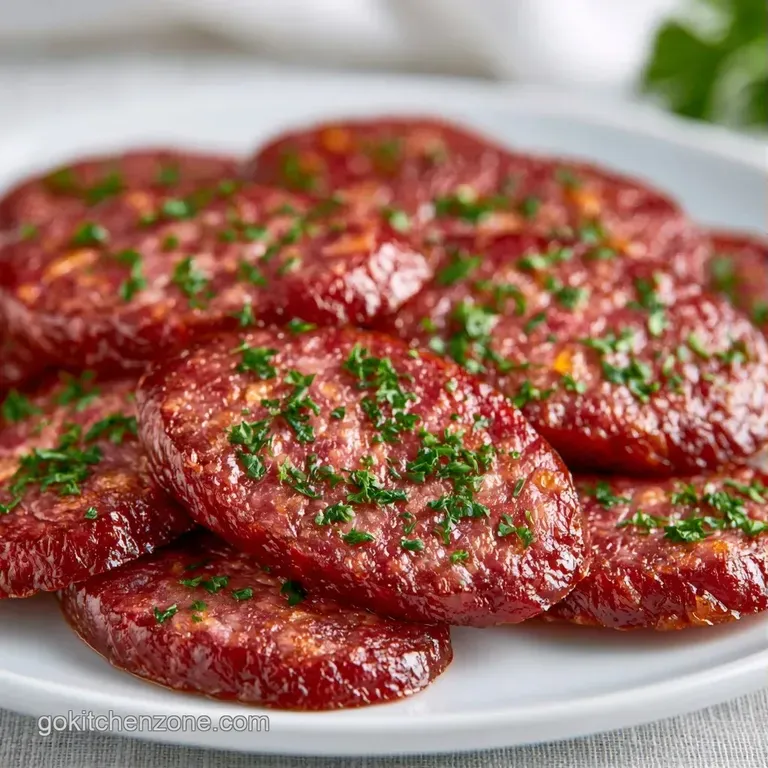
What makes this recipe so great is its versatility. Slicing it paper thin nearly translucent ensures you get the most flavor in every bite. I enjoy arranging it on a platter with aged cheddar, cornichons, and a coarse grain mustard.
For a heartier option, sear the slices in a hot pan for 1 minute per side until the edges curl and brown. This renders the fats and creates a crisp contrast to the velvety interior.
Fun Flavor Twists
After mastering the basic recipe, feel free to experiment with the flavor profile. While the preparation method remains the same, the seasonings can be adjusted.
The Spicy Hunter Blend
Mix in 1 tablespoon of crushed red pepper flakes and 1 teaspoon of smoked paprika. This gives the Beef Summer Sausage a richer red hue and a lasting heat that pairs perfectly with cream cheese.
The Maple Bourbon Twist
Substitute the brown sugar with 2 tablespoons of maple syrup and stir 1 tablespoon of bourbon into the ice cold water. This creates a sweet and savory flavor that is always a hit at gatherings.
The Venison Hybrid
Swap 1 lb of beef for 1 lb of ground venison. Because venison is quite lean, add a tablespoon of melted beef tallow to prevent the sausage from becoming too dense.
Common Misconceptions
It is a common misconception that standard salt can be used as a substitute for curing salt. This is a dangerous error; while regular salt provides seasoning, curing salt (sodium nitrite) is necessary to prevent botulism in low-oxygen environments, such as inside a sausage casing.
Another misconception is that smoking is only for the flavor. Although the taste is wonderful, the gradual heat of the smokehouse stabilizes the emulsion of protein and fat, producing a texture that is impossible to achieve with a quick pan sear.
Recipe FAQs
Do you need to cook summer sausage before eating it?
No, it is already cooked. This sausage is smoked until the internal temperature reaches 155°F and then chilled, making it safe to eat immediately.
How should I serve beef summer sausage?
Slice it thinly into rounds. Arrange these on a charcuterie board with cheeses and crackers or pan-sear the slices for a warm appetizer.
Is it true that cooking summer sausage ruins its texture?
No, and here's why. While it is ready-to-eat, lightly frying or grilling it enhances the flavor and adds a crisp edge without compromising the structure.
What makes summer sausage different from other meats?
The curing and smoking process. Using curing salt and a tiered temperature increase from 165°F to 205°F creates a dense, shelf stable texture unlike fresh sausages.
Which dishes can I make with this sausage?
Dice it into a hearty stew or pasta. It adds a smoky depth to rich meals; if you've mastered the savory balance in a classic French dip, you'll appreciate how this meat complements salty, umami profiles.
Beef Summer Sausage 5