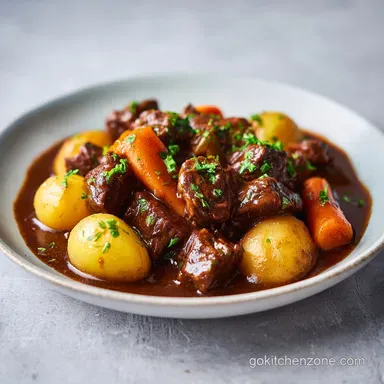
Slow Cooker Beef Stew: Hearty and Tender
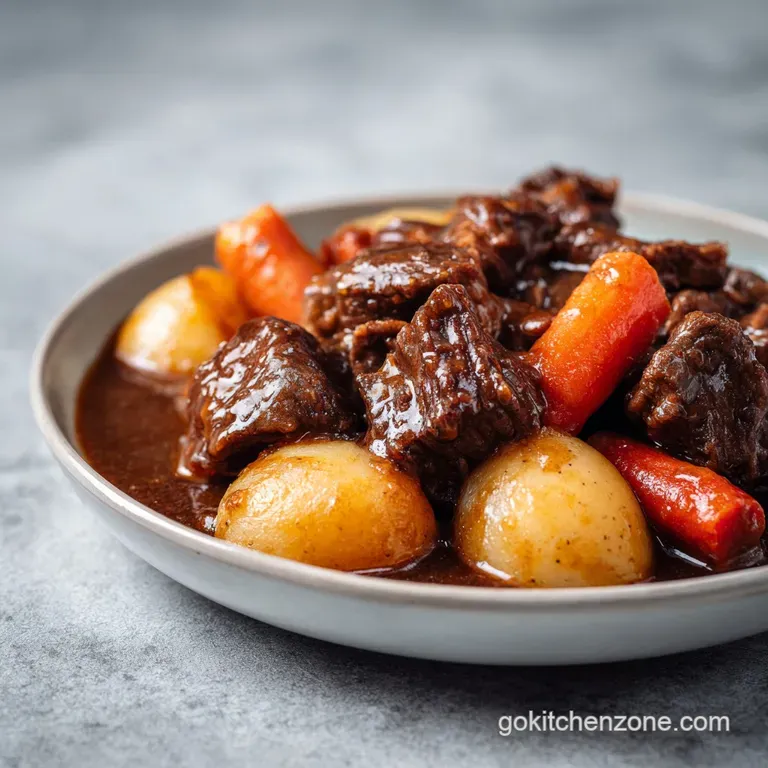
- Time:20 minutes active + 8 hours cooking = Total 8 hours 20 minutes
- Flavor/Texture Hook: Velvety gravy with fork tender beef
- Perfect for: budget-friendly weeknight dinners and meal prep
The Best Slow Cooker Beef Stew
That first sizzle when the beef hits the hot oil is where the magic happens. I remember the first time I tried to skip the searing step because I was in a rush, and the result was... well, gray.
The meat was tender enough, but it tasted like boiled beef and lacked that deep, savory punch that makes a stew feel like a hug in a bowl. It was a total dinner struggle that taught me a lesson I'll never forget: the crust is non negotiable.
Now, I swear by the beef chuck roast as the hero of this dish. It's a budget-friendly cut that's often overlooked, but it's packed with connective tissue that melts away during the long cook. This creates a natural thickness and a silky mouthfeel that lean cuts just can't touch.
When you make this slow cooker beef stew, you're not just cooking meat; you're transforming a tough, cheap piece of beef into something that practically dissolves on your tongue.
This recipe is built for real life. It's designed for those days when you've got a chaotic morning but want to come home to a house that smells like a professional kitchen. We're focusing on smart swaps and a few key tricks to ensure the vegetables don't turn into mush while the beef gets perfectly tender.
Trust me on this, once you see that mahogany crust on your beef, you'll never go back to the "dump and go" method.
Why the Flavor Wins
- Collagen Breakdown: Low, slow heat turns the tough connective tissue in chuck roast into gelatin, giving the sauce a velvety texture.
- Umami Layering: Combining tomato paste and Worcestershire sauce creates a savory base that mimics a long simmered stock.
- Starch Suspension: Adding the cornstarch slurry at the end ensures the gravy is glossy and thick rather than grainy.
- Controlled Veggie Softening: Cutting carrots and potatoes into thick rounds prevents them from disintegrating over 8 hours.
| Method | Time | Texture | Best For |
|---|---|---|---|
| Classic Slow Cooker | 8 hours | Velvety, deeply integrated | Set and forget days |
| Pressure Cooker | 1 hour | Tender, but less integrated | Last minute guests |
| Stovetop Braise | 3 hours | Rich, concentrated | Weekend cooking |
The Quick Specs
Right then, let's look at the numbers. This is a hearty batch that feeds a crowd or gives you plenty of leftovers for the week.
- Prep Time: 20 minutes
- Cook Time: 8 hours (on Low)
- Total Time: 8 hours 20 minutes
- Servings: 8 portions
- Budget Level: Low (utilizes affordable cuts and root veg)
Gathering Your Essentials
When you're shopping for a slow cooker beef stew, the meat choice is everything. I always look for a beef chuck roast with plenty of white fat marbling running through it. If you buy a lean roast, your stew will end up dry, and the sauce will be thin. Don't be afraid of the fat; that's where the flavor lives.
For the vegetables, I use baby potatoes because they hold their shape better than large Russets. Carrots should be sliced thick- a full inch is usually my go to. This ensures they are tender but still have a slight bite when you dig in.
Component Analysis
| Ingredient | Science Role | Pro Secret |
|---|---|---|
| Beef Chuck | Protein/Gelatin | Pat dry with paper towels for a better sear |
| Tomato Paste | Acid/Umami | Sauté it for 1 minute to remove the raw tin taste |
| Cornstarch | Thickener | Always mix with cold water first to avoid lumps |
| Beef Broth | Solvent/Flavor | Use low sodium so you can control the salt |
The Full List
- 2 lbs beef chuck roast, cut into 1 inch cubes Why this? High collagen for a velvety sauce (Sub: Stew meat, though usually leaner)
- 2 tbsp olive oil Why this? High smoke point for searing (Sub: Avocado oil)
- 1 tsp sea salt Why this? Enhances natural beef flavors (Sub: Kosher salt)
- 1/2 tsp cracked black pepper Why this? Adds a sharp, woody heat (Sub: White pepper)
- 1 lb baby potatoes, halved Why this? Waxy texture prevents mushiness (Sub: Red potatoes)
- 4 large carrots, sliced into thick rounds Why this? Natural sweetness to balance salt (Sub: Parsnips)
- 2 stalks celery, chopped Why this? Essential aromatic base (Sub: Fennel)
- 1 medium yellow onion, diced Why this? Standard savory foundation (Sub: White onion)
- 3 cloves garlic, minced Why this? Pungent depth (Sub: 1 tsp garlic powder)
- 8 oz cremini mushrooms, quartered Why this? Earthy umami boost (Sub: Button mushrooms)
- 4 cups low sodium beef broth Why this? Controlled salt levels (Sub: Water + extra bouillon)
- 2 tbsp tomato paste Why this? Thickens and adds richness (Sub: 1/4 cup tomato sauce)
- 1 tbsp Worcestershire sauce Why this? Anchovy/tamarind depth (Sub: Soy sauce)
- 2 bay leaves Why this? Subtle herbal note (Sub: Dried oregano)
- 1 tsp dried thyme Why this? Classic pairing for beef (Sub: Rosemary)
- 1/4 cup cornstarch Why this? Stable thickening agent (Sub: Flour, but less glossy)
- 2 tbsp water Why this? Creates the slurry (Sub: Cold broth)
Gear You'll Need
You don't need a professional kitchen for this, but a few tools make the process smoother. I use a 6 quart slow cooker, which is the standard size for most homes. If you have a smaller one, you might need to halve the recipe or work in batches.
A heavy skillet is crucial for the sear. I prefer a cast iron pan because it holds heat better, meaning the beef doesn't drop the temperature when it hits the oil. This is what gives you that mahogany crust according to the searing principles often discussed at Serious Eats. If you don't have cast iron, a stainless steel pan works just fine.
Chef's Note: Honestly, don't even bother with low-fat olive oil or "light" sprays. You need a real fat to get that crust, and the slow cooker will balance things out over 8 hours.
Step by step Guide
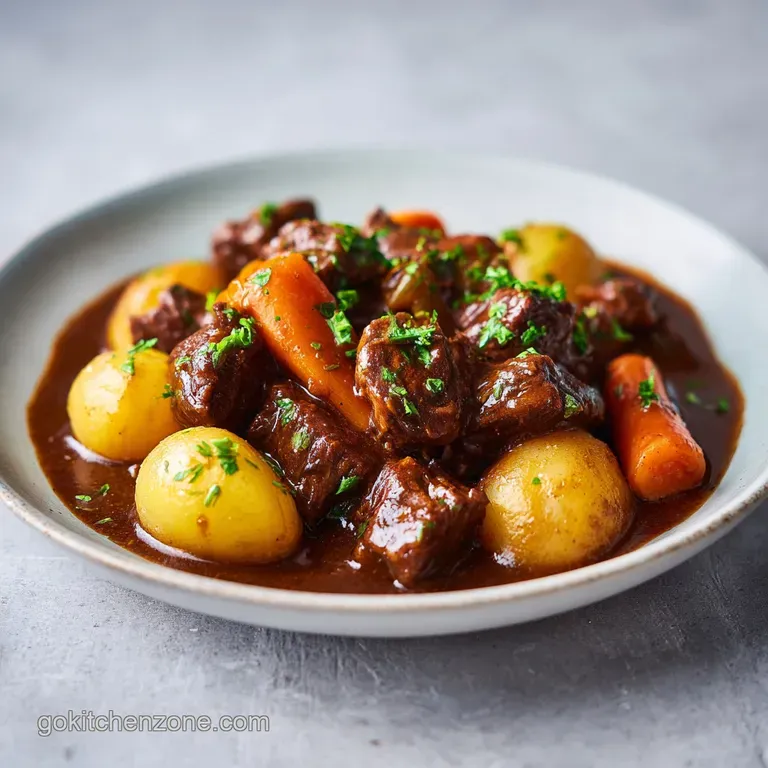
Phase 1: The Flavor Foundation
- Pat the beef cubes dry with paper towels and season generously with salt and pepper. Note: Wet meat steams instead of searing.
- Heat olive oil in a skillet over medium high heat. Sear the beef in batches until a mahogany colored crust forms on all sides.
- Transfer the browned beef to the slow cooker. Note: Don't crowd the pan or the beef will boil in its own juices.
- Add the potatoes, carrots, celery, onion, and mushrooms into the slow cooker around the beef.
Phase 2: The Slow Simmer
- In a small bowl, whisk together the beef broth, tomato paste, Worcestershire sauce, and thyme.
- Pour the liquid over the mixture and nestle the bay leaves on top.
- Cover and cook on Low for 8 hours until the beef is fork tender and pulls apart easily.
Phase 3: The Finishing Touch
- About 30 minutes before serving, whisk the cornstarch and water together to create a slurry.
- Stir the slurry into the stew, cover, and cook on high for the remaining 30 minutes until the sauce is glossy and thickened.
Fixing Common Stew Issues
It's easy to feel like you've messed up when the sauce looks like water or the beef feels like rubber. Most of these problems have a simple root cause and an even simpler fix.
Troubleshooting Common Issues
| Issue | Solution |
|---|---|
| Stew too watery | This usually happens if you have too many vegetables releasing moisture or if you skipped the slurry. If it's still thin after the cornstarch, let it simmer on high for another 20 minutes without the |
| Why is the beef still tough | Contrary to what you'd think, beef can be tough if it's undercooked or if you used a lean cut like sirloin. Collagen needs time and heat to break down; if it's not tender, give it another hour on lo |
| Why did my vegetables turn to mush | This is the result of cutting the veg too small or cooking on "High" for too long. For a more structured stew, you can actually add the carrots and potatoes 3 hours before the end of the cook time. |
Ways to Change It
Once you've got the basic slow cooker beef stew down, you can start playing with the flavors. If you're feeling fancy, try adding a splash of red wine to the broth for a deeper, more acidic profile.
For those who prefer a "cheat code" for flavor, a tablespoon of better than-bouillon can add an instant richness that store-bought broth lacks.
If you're looking for a twist, you can easily turn this into a slow cooker beef stew and dumplings. About 45 minutes before the stew is done, drop spoonfuls of a simple flour, butter, and milk dough onto the surface. Cover and let them steam until fluffy. It's the ultimate comfort food move.
For a different approach to slow cooked beef, you might enjoy a Slow Cooker Pot Roast, which keeps the meat in larger chunks for a different presentation. If you're in a rush, my Beef Stew Crock Pot Recipe is another great alternative for busy weeknights.
Need a diet swap?
- Paleo/Keto: Replace the cornstarch with a xanthan gum slurry or simply reduce the liquid by simmering with the lid off at the end.
- dairy-free: This recipe is naturally dairy-free, but avoid using butter if you're swapping olive oil.
- Low Carb: Swap the potatoes for cauliflower florets or radishes (which taste like potatoes when slow cooked!).
Storage and Waste Tips
This is a prime meal prep dish because the flavor actually improves after a day in the fridge. The spices have more time to penetrate the meat and the sauce stabilizes.
- Fridge
- Store in an airtight container for up to 4 days.
- Freezer
- This freezes beautifully. Use freezer safe bags or containers for up to 3 months.
- Reheating
- Warm it gently on the stovetop over medium low heat. Add a splash of water or broth if the sauce has thickened too much in the fridge.
Zero Waste Hacks Don't toss those veggie scraps! I keep a "scrap bag" in the freezer for onion ends, carrot peels, and celery tops. Once the bag is full, I boil them with water to make a free vegetable stock.
Also, if you have leftover stew but are tired of the bowl format, serve it over a piece of toasted sourdough to soak up every drop of that velvety gravy.
Best Sides to Serve
Since the stew is so hearty, you want sides that provide contrast. Something bright or crisp balances the richness of the beef.
- Crusty Bread: A toasted baguette or a slice of sourdough is mandatory for mopping up the sauce.
- Fresh Green Salad: A simple arugula salad with a lemon vinaigrette cuts through the heaviness.
- Mashed Potatoes: I know there are potatoes in the stew, but serving this over a bed of garlic mash is a total luxury move.
- Steamed Peas: A side of bright green peas adds a pop of color and a fresh sweetness.
Quick Decision Shortcut
- If you want more thickness → Increase cornstarch to 1/3 cup.
- If you want more heat → Add 1/2 tsp of red pepper flakes during the sear.
- If you're short on time → Cook on High for 4-5 hours, but check the beef tenderness at hour 4.
Common Misconceptions
"Searing seals in the juices" This is a total myth. Searing doesn't create a waterproof barrier; in fact, meat loses more moisture during searing. The reason we do it is for the flavor. The browning creates complex compounds that make the stew taste rich instead of bland.
"Lean meat is better for stew" Actually, the opposite is true. Lean meat like sirloin or round will become tough and stringy during a long slow cook. You need the fat and collagen found in chuck roast to keep the meat moist and the sauce silky.
"You must use a specific brand of slow cooker" Not at all. Whether you use a ceramic crock or a digital multicooker, the physics remain the same. Just be mindful that some machines run hotter than others, so always check your beef at the 7 hour mark when cooking on low. According to USDA FoodData, maintaining a consistent temperature is key to ensuring the beef reaches a safe and tender state.
High in Sodium
840 mg 840 mg of sodium per serving (37% 37% of daily value)
The American Heart Association recommends a daily sodium limit of 2,300 mg, with an ideal limit of 1,500 mg for most adults to reduce the risk of cardiovascular disease.
Tips to Reduce Sodium
-
Upgrade Your Broth-30%
Replace the low-sodium beef broth with homemade unsalted beef stock or a combination of water and additional aromatics.
-
Eliminate Added Salt-25%
Remove the 1 tsp of sea salt entirely; the inherent sodium in the other ingredients is sufficient for flavor.
-
Swap the Sauce-20%
Replace the Worcestershire sauce with balsamic vinegar or a splash of low-sodium coconut aminos for that same umami depth.
-
Choose No-Salt Paste-15%
Substitute standard tomato paste with a no-salt-added version to lower the hidden sodium content.
-
Enhance with Herbs
Increase the dried thyme or add fresh rosemary and parsley to boost flavor profiles without adding any sodium.
Recipe FAQs
Can I put raw beef in a slow cooker stew?
Yes, but searing is recommended. Browning the beef first creates a mahogany-colored crust that adds significant depth and richness to the broth.
How to make the best beef stew in a slow cooker?
Sear the beef cubes in olive oil first. Combine the browned meat with vegetables and liquid, then cook on Low for 8 hours or High for 4-5 hours until fork-tender.
Is beef stew ok for diabetics?
Yes, it is generally suitable. The recipe focuses on whole vegetables and protein, though you should check the sugar content of your chosen Worcestershire sauce.
Is it true I must brown the meat to make the stew thicken?
No, this is a common misconception. Searing adds flavor, but the thickness comes from the cornstarch slurry added 30 minutes before serving.
Why is my beef still tough?
The meat is likely undercooked. Collagen requires sustained heat to break down, so give the stew another hour on low to reach the proper tenderness.
How to thicken the stew if it is too watery?
Whisk cornstarch and water together into a slurry. Stir this mixture into the pot and cook on high for 30 minutes until the sauce is glossy.
How to store and reheat the stew?
Store in airtight containers for up to 4 days. Reheat gently on the stovetop over medium-low heat. If you enjoyed mastering the searing technique here, see how the same principle works in our Mongolian beef.
Slow Cooker Beef Stew for 8 Servings