Twice Baked Loaded Breakfast Potatoes: Cheesy and Crisp
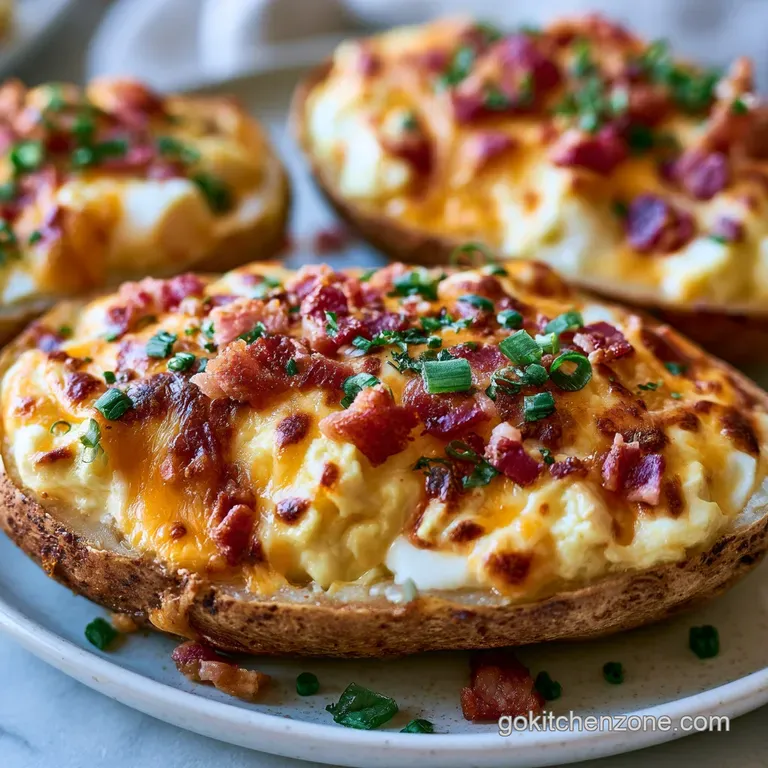
- Time:15 minutes active + 60 minutes cooking = Total 75 minutes
- Flavor/Texture Hook: Mahogany crisp skin with a cheesy, custard like center
- Perfect for: Weekend brunch, budget meal prep, or a fancy feeling breakfast on a budget
- Twice Baked Loaded Breakfast Potatoes Recipe
- Why These Potatoes Work
- The Component Breakdown
- Necessary Tools
- Ingredients and Substitutes
- Step-by-Step Instructions
- Fixing Common Errors
- Troubleshooting Common Issues
- Adjusting Your Batch Size
- Potato Beliefs Debunked
- Storage and Waste Tips
- Serving Suggestions
- Recipe FAQs
- 📝 Recipe Card
Twice Baked Loaded Breakfast Potatoes Recipe
The sound of a perfectly baked russet skin crackling under a knife is a sensory trigger I can't get enough of. There is something about that specific mahogany color and the steam that hits your face when you first slice it open that just screams "comfort food." I remember trying to cheat this once by using gold potatoes, thinking they'd be creamier.
Big mistake. They were too waxy, the skin stayed soft, and the whole thing felt like a soggy mess.
The real hero here is the russet potato. It's the cheapest option at the store, but its high starch content is exactly what we need for that fluffy, cloud like texture. If you use anything else, you're missing out on the structural integrity that allows the potato to hold all that cheesy, eggy goodness without collapsing.
This twice baked loaded breakfast potatoes recipe is basically a hack to make a standard breakfast feel like a restaurant meal without spending more than a couple of dollars per serving. We're taking a humble spud, hollowing it out, and turning it into a vessel for everything you love about breakfast.
It's hearty, filling, and uses tools you already have in your kitchen.
Why These Potatoes Work
The secret to this dish isn't a fancy gadget, it's just basic kitchen logic. By baking the potato twice, we're managing moisture and texture in two different stages.
- Starch Dehydration: The first over high heat bake evaporates water from the skin, which is what creates that crisp, shatter like texture instead of a rubbery peel.
- Protein Binding: Beaten eggs act as a binder, turning the mashed potato into a savory custard that sets during the second bake.
- Fat Emulsification: Mixing melted butter and sour cream into the hot potato flesh creates a velvety mouthfeel by coating the starch granules in fat.
- Temperature Gradient: Cooking at 200°C ensures the outside browns quickly while the inside stays moist, preventing the eggs from overcooking into rubber.
| Method | Time | Texture | Best For |
|---|---|---|---|
| Oven Baked | 75 minutes | Crispy skin, set center | Crowd pleasing, meal prep |
| Stovetop Mash | 30 minutes | Soft, creamy, no shell | Quick weeknight meals |
| Air Fryer | 45 minutes | Extra crunchy, smaller batch | Single servings, speed |
The Component Breakdown
Understanding how each ingredient contributes helps you make better budget swaps. I've learned the hard way that some "healthy" substitutions totally ruin the structure of this recipe.
| Ingredient | Science Role | Pro Secret |
|---|---|---|
| Russet Potato | Starch Base | Scrub well, don't peel for maximum crunch |
| Large Eggs | Structure/Binder | Beat them well to avoid "egg streaks" in the mash |
| Sharp Cheddar | Salt/Fat/Color | Grate it yourself; pre shredded has cornstarch |
| Sour Cream | Acidity/Moisture | Adds a tangy contrast to the heavy fats |
Necessary Tools
You don't need a fancy kitchen to pull this off. I've made these in the most basic setups. All you really need is a baking sheet (or just the oven rack), a sturdy fork, a mixing bowl, and a spoon. If you have a potato masher, great, but a fork works just fine for a small batch. Keep it simple, keep it cheap.
Ingredients and Substitutes
Here is exactly what you'll need. I've kept the list tight to keep the cost down.
- 4 medium russet potatoes, scrubbed (approx. 680g) Why this? High starch makes them fluffy and cheap.
- 2 tbsp olive oil Why this? Helps the salt stick and crisps the skin.
- 1 tsp kosher salt Why this? Draws moisture out of the skin.
- 4 large eggs, lightly beaten Why this? Binds the filling into a custard.
- 4 oz sharp cheddar cheese, shredded Why this? Strong flavor that cuts through the potato.
- 4 strips thick cut bacon, cooked and crumbled Why this? Adds smoky saltiness and texture.
- 1/4 cup sour cream Why this? Creates a velvety, tangy mash.
- 2 tbsp unsalted butter, melted Why this? Richness and smoother texture.
- 1/4 tsp smoked paprika Why this? Adds depth and a hint of wood fire flavor.
- 1/4 tsp black pepper Why this? Basic heat to balance the fats.
- 2 tbsp fresh chives, finely chopped Why this? Fresh, oniony brightness to finish.
- 1 tbsp extra cheese for topping Why this? For that golden brown crust.
Ingredient Swap Table
| Original Ingredient | Substitute | Why It Works |
|---|---|---|
| Sharp Cheddar | Pepper Jack | Similar melt. Note: Adds a spicy kick |
| Sour Cream | Greek Yogurt | Similar tang. Note: Slightly lower fat, more protein |
| Bacon | Smoked Tofu | Salty/smoky. Note: Meat free but less "crispy" |
| Olive Oil | Avocado Oil | High smoke point. Note: Neutral flavor |
I've found that if you're really pinching pennies, you can swap the fresh chives for dried parsley or even just a bit of green onion. It doesn't change the structure, just the final aromatic hit.
Step-by-step Instructions

Right then, let's crack on. Follow these steps exactly to get that restaurant style result at home.
- Preheat your oven to 200°C. Pierce each potato 4-5 times with a fork to let steam escape, rub them thoroughly with olive oil, and sprinkle with salt.
- Place potatoes directly on the oven rack or a lined sheet and bake for 40-45 minutes until the skin is tight and mahogany colored.
- Remove from the oven and let them cool for 5 minutes so you don't burn your hands. Slice each potato in half lengthwise.
- Carefully scoop out the potato flesh with a spoon, leaving a 1/4 inch (6mm) wall. Note: This is crucial so the potato doesn't collapse under the weight of the filling.
- In a bowl, mash the potato flesh with melted butter and sour cream until the mixture is velvety.
- Fold in the beaten eggs, crumbled bacon, half of the shredded cheese, smoked paprika, and black pepper. Mix until just combined.
- Spoon the mixture back into the potato shells, heaping it slightly over the top.
- Sprinkle the remaining cheese over the top of each potato.
- Bake for another 15-20 minutes until the tops are bubbly and golden brown and the filling is set.
- Garnish with finely chopped fresh chives immediately after taking them out of the oven.
Chef Note: Don't over mix the filling after adding the eggs. If you beat it too much, you'll incorporate too much air, and the potatoes might puff up and then collapse, leaving a gap between the filling and the shell.
Fixing Common Errors
Even when you're following a twice baked loaded breakfast potatoes recipe, things can go sideways. Usually, it's a moisture issue.
Troubleshooting Common Issues
| Issue | Solution |
|---|---|
| Why Your Filling Is Runny | If the filling doesn't set, you likely used too much sour cream or your eggs weren't beaten enough. The eggs are the "glue" here. If they don't coagulate, the filling stays like mashed potatoes instea |
| Why Your Skin Is Soft | This usually happens if you wrap the potatoes in foil. Foil traps steam, which boils the skin instead of roasting it. Always bake them naked on the rack for that shatter crisp effect. |
| Why The Shells Break | If you scoop too deep, you lose the structural wall. A 6mm wall is the sweet spot. If they break, don't panic - just treat them like a "breakfast potato hash" on a plate. |
Common Mistakes Checklist
- ✓ Did you pierce the potatoes? (Prevents them from exploding)
- ✓ Is the skin mahogany colored? (Ensures maximum crunch)
- ✓ Did you leave a 1/4 inch wall? (Prevents shell collapse)
- ✓ Are the eggs beaten before adding? (Prevents white streaks)
- ✓ Did you avoid using foil? (Prevents soggy skins)
Adjusting Your Batch Size
Scaling this recipe is pretty straightforward, but you can't just multiply everything linearly if you're doing a huge crowd.
Going Smaller (2 Potatoes) If you're just cooking for yourself, use 2 potatoes. Reduce the second bake time by about 20% since there's less thermal mass in the oven. Beat one egg in a small cup and use half of it.
Going Bigger (8-12 Potatoes) When doubling or tripling, be careful with the salt and smoked paprika. I suggest only increasing the spices to 1.5x the original amount first, then tasting. Liquids like sour cream and butter can be reduced by about 10% as the larger volume retains moisture better.
If you're baking 8+ potatoes, lower the temperature to 180°C and extend the first bake by 10 minutes. This ensures the ones in the middle of the tray cook through without the ones on the edges burning.
| Batch Size | Temp | First Bake | Second Bake |
|---|---|---|---|
| Small (2) | 200°C | 40 mins | 12-15 mins |
| Standard (4) | 200°C | 45 mins | 15-20 mins |
| Large (8+) | 180°C | 55 mins | 20-25 mins |
Potato Beliefs Debunked
There are a few things people tell you about potatoes that are just plain wrong. I've tested these, and here's the truth.
The Foil Myth Many people think wrapping potatoes in foil makes them cook faster. It actually does the opposite. It traps steam, which lowers the temperature and prevents the skin from crisping. For a twice baked loaded breakfast potatoes recipe, foil is your enemy.
The Pre Soaking Myth Some say you need to soak potatoes in water to remove starch. While that's great for french fries, you want the starch here. The starch is what gives the mash its body and helps it bond with the eggs and cheese.
Storage and Waste Tips
Don't let these go to waste. While they're best fresh, you can definitely save them for later.
Storage Store leftovers in an airtight container in the fridge for up to 3 days. To reheat, don't use the microwave if you can help it, as it will make the skin soggy. Pop them back in the oven at 180°C for 10 minutes.
Freezing You can freeze these! Wrap each potato tightly in foil and then a freezer bag. They'll last 2 months. Thaw in the fridge overnight before reheating in the oven.
Zero Waste Hacks If you accidentally scoop out too much potato and have extra mash, don't throw it away. Mix it with a bit of milk and a splash of brown gravy from scratch for a quick side dish. Also, save any leftover bacon grease in a jar in the fridge; use it to sauté onions or kale for your next breakfast.
Serving Suggestions
These are incredibly filling, so you don't need much on the side. I love pairing them with something acidic to cut through the richness of the cheese and eggs. A simple arugula salad with lemon vinaigrette is a great shout.
If you want a more traditional "big breakfast," serve these alongside some grilled tomatoes and sautéed mushrooms. For those who love the potato vibe but want something different for a weekday, you might enjoy a bowl of my loaded potato soup which uses similar flavors but is much faster to throw together.
Right then, you're all set. Grab some cheap russets, get that oven hot, and enjoy a breakfast that feels way more expensive than it actually is. Trust me, your morning is about to get a lot better.
Recipe FAQs
Is it better to wrap the potatoes in foil for crispier skin?
No, this is a common misconception. Foil traps steam and boils the skin; bake them naked on the rack for a shatter-crisp, mahogany finish.
Why is my potato filling runny?
The eggs likely weren't beaten enough or too much sour cream was used. The beaten eggs act as the glue that binds the filling so it sets during the second bake.
How to scoop the potato flesh without breaking the shell?
Leave a 1/4 inch (6mm) wall of potato flesh against the skin. This maintains the structural integrity of the shell so it doesn't collapse.
How to reheat leftover breakfast potatoes without making them soggy?
Bake them at 180°C for 10 minutes. Avoid using the microwave, which softens the skin and ruins the roasted texture.
Can I freeze these potatoes for later?
Yes, they stay fresh in the freezer for 2 months. Wrap each potato tightly in foil and a freezer bag, then thaw in the fridge overnight before oven reheating.
What is a good dipping sauce to serve with these?
A cool, creamy dip balances the richness of the cheese and bacon. For a thick and velvety pairing, try a homemade ranch dip.
How to tell when the first bake is finished?
Check for skin that is tight and mahogany-colored. This typically occurs after 40-45 minutes in a 400°F (200°C) oven.
Twice Baked Breakfast Potatoes for 4