Food Quiche Recipe with Spinach and Cheese

- Time: Active 15 minutes, Passive 45 minutes, Total 1 hours
- Flavor/Texture Hook: Flaky crust with a silky, nutmeg spiced egg center
- Perfect for: Budget-friendly brunch or stress free weeknight dinner
- Master This Food Quiche Recipe with Spinach
- The Physics of the Set
- Component Analysis Deep Dive
- Essential Ingredients and Smart Swaps
- Step-by-Step Assembly and Baking
- Fixing Common Quiche Textures
- Adjusting for Crowds or Singles
- Debunking Quiche Preparation Myths
- Preserving Freshness and Flavor
- Garnishing Like a Pro
- Recipe FAQs
- 📝 Recipe Card
Master This Food Quiche Recipe with Spinach
The first time I attempted a quiche, I ended up with what I can only describe as "green soup in a bowl of wet dough." I hadn't realized that spinach is basically a sponge for water. When it hit the hot oven, all that liquid released, ruining the structural integrity of my crust and curdling the eggs.
It was a weeknight disaster that left us eating cereal for dinner, but it taught me the single most important rule of this dish: the squeeze.
Now, whenever I hear the sizzle of onions hitting olive oil, I know a reliable meal is on the way. This food quiche recipe with spinach and cheese is guaranteed to become a new favorite because it focuses on the texture of the custard rather than just throwing ingredients together.
You get that distinct, sharp bite of white cheddar against the earthy spinach, all held together by a custard that feels like silk.
We've all been through the dinner struggle where you want something that feels fancy but costs less than ten dollars to put on the table. This recipe hits that sweet spot. It uses basic pantry staples like eggs and milk but transforms them into something that looks like it came from a French bakery.
Trust me, once you see that golden brown top and hear the crust shatter under your knife, you'll never go back to store-bought versions.
The Physics of the Set
- Protein Denaturation: Eggs act as the structural glue, uncoiling and rebinding as they heat to trap milk fat in a stable matrix.
- Moisture Displacement: Sautéing the spinach first collapses the cell walls, allowing us to remove excess water that would otherwise dilute the custard.
- Fat Layering: Shredded cheese creates a hydrophobic barrier between the wet egg mixture and the crust, helping maintain crispness.
- Thermal Buffering: Using whole milk provides enough fat to prevent the egg proteins from bonding too tightly, which prevents a rubbery texture.
| Method | Cook Time | Texture Outcome | Best For |
|---|---|---|---|
| Standard Oven | 45 minutes | Flaky crust, even custard set | Traditional presentation |
| Stovetop Frittata | 15 minutes | Dense, browned edges, no crust | Quick weeknight fuel |
| Toaster Oven | 40 minutes | Extra crispy top, soft center | Small batch or singles |
Deciding between a traditional crust and a crustless version usually comes down to how much time you have. If you're in a rush, the stovetop method is a lifesaver, though you lose that satisfying crunch.
For the best results with this recipe with spinach and cheese, the oven is your best friend because it allows the center to wobble and set slowly without scorching the bottom.
Component Analysis Deep Dive
| Ingredient | Science Role | Pro Secret |
|---|---|---|
| Large Eggs | Structural Binder | Use room temp eggs for a faster, more even emulsification. |
| Whole Milk | Fat Emulsifier | Never use skim; the lack of fat leads to a weeping, watery custard. |
| Fresh Baby Spinach | Flavor/Fiber | Squeeze until it feels like a dry ball of yarn to save the crust. |
| Sharp White Cheddar | Ionic Bridge | Aged cheeses have less moisture, ensuring the custard stays firm. |
We often overlook how much the milk choice matters here. If you're looking for other ways to use up a carton of milk and some eggs, this Breakfast Casserole recipe uses a very similar protein to liquid ratio. The goal is always to achieve that "jiggle" in the center, which indicates the proteins have set but haven't become tough.
Essential Ingredients and Smart Swaps
- 1 (9 inch) Deep dish pie crust: The vessel for our custard. Why this? Provides the necessary height for a 4 egg custard volume.
- Substitute: 1 sheet of puff pastry (yields a lighter, more buttery edge).
- 1 tbsp Extra virgin olive oil: For sweating the aromatics.
- Substitute: Unsalted butter (adds a richer, nuttier base note).
- 1 small yellow onion: Adds a foundational sweetness.
- Substitute: Two large shallots (for a more delicate, garlicky profile).
- 10 oz Fresh baby spinach: The star of the recipe with spinach and cheese. Why this? Shrinks significantly but maintains its earthy color.
- Substitute: Frozen chopped spinach (defrost and squeeze twice as hard).
- 1 cup Sharp white cheddar cheese: Provides the salty, tangy punch.
- Substitute: Gruyère (traditional, but more expensive; use for special occasions).
- 1/4 cup Parmesan cheese: Adds an umami rich crust on top.
- Substitute: Pecorino Romano (saltier and more piquant).
- 4 large eggs: The "concrete" that holds the structure.
- 1 1/2 cups Whole milk: Creates the velvety mouthfeel.
- Substitute: 1 cup milk + 1/2 cup heavy cream (for a decadent, restaurant style set).
- 1/2 tsp Sea salt: Enhances every other component.
- 1/4 tsp Ground black pepper: For a subtle, woody heat.
- 1/8 tsp Ground nutmeg: The secret weapon for egg dishes. Why this? Cuts through the fat and highlights the spinach notes.
step-by-step Assembly and Baking
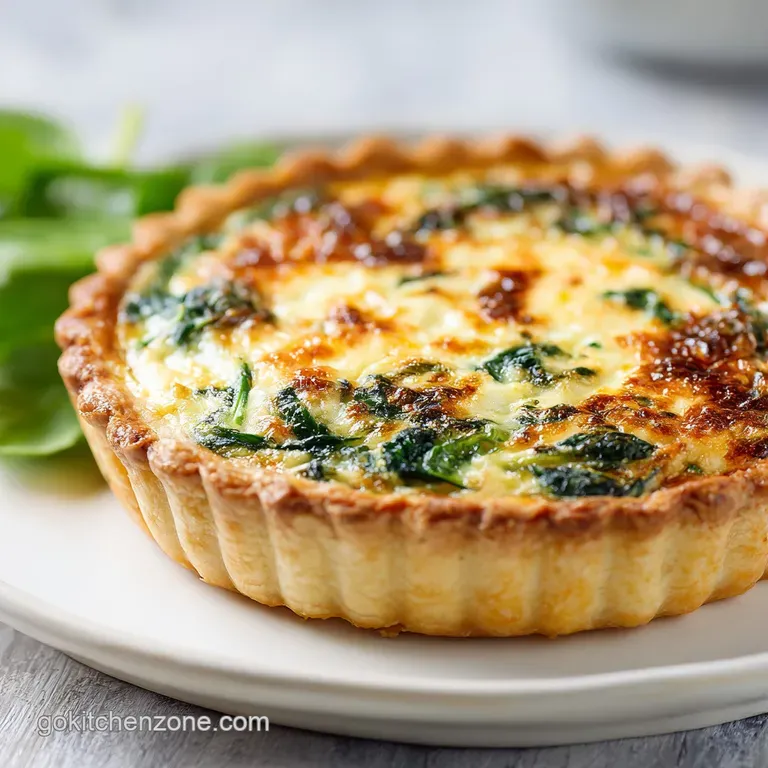
- Preheat your oven to 375°F (190°C). Note: A hot start ensures the crust begins to set before the liquid soaks in.
- Sauté the diced onion in olive oil over medium heat until translucent and soft.
- Add the fresh baby spinach to the pan in batches. Note: It looks like a lot, but it will shrink by 90 percent.
- Cook the spinach 4 minutes until wilted and dark green.
- Remove the spinach from the pan and squeeze it in a clean kitchen towel. Note: You must see at least 1/4 cup of green liquid come out.
- Whisk the 4 eggs, milk, salt, pepper, and nutmeg in a large bowl. Note: Whisk until no streaks of yolk remain for a uniform color.
- Spread the squeezed spinach and diced onions across the bottom of the pie crust.
- Layer the 1 cup of white cheddar and 1/4 cup of parmesan over the vegetables.
- Pour the egg mixture slowly over the fillings. Note: Let it seep down through the cheese layers naturally.
- Bake for 45 minutes until the edges are golden and the center has a slight jiggle.
Chef's Tip: Place your pie dish on a preheated baking sheet. This extra boost of bottom heat acts like a "sear" for the crust, preventing the dreaded soggy bottom even if your spinach was a little damp.
Fixing Common Quiche Textures
Why is the crust soggy?
The most common culprit is either skipping the blind bake (if using homemade dough) or not squeezing the spinach enough. If the liquid from the greens escapes during baking, it pools at the bottom. Another reason could be the oven temp; if it's too low, the crust soaks up the custard before it can crisp up.
Why did the custard curdle?
If your quiche looks like scrambled eggs or has holes in the custard, it's overcooked. Egg proteins contract as they get too hot, squeezing out the liquid. This often happens if you bake too long or if the oven runs hot. Always check the quiche 5-10 minutes before the timer goes off.
| Problem | Root Cause | Solution |
|---|---|---|
| Rubbery Texture | Too many eggs or overcooked | Use the 1 egg to 1/2 cup liquid ratio; check for "jiggle". |
| Greasy Surface | Too much high fat cheese | Blot with a paper towel; use aged cheeses with less oil. |
| Bland Flavor | Not enough salt or nutmeg | Season the spinach directly while sautéing, not just the eggs. |
Common Mistakes Checklist
- ✓ Forgetting to squeeze the spinach (leads to watery filling).
- ✓ Using cold milk (increases bake time and can lead to uneven setting).
- ✓ Over whisking the eggs (incorporates too much air, causing the quiche to puff then collapse).
- ✓ Slicing too early (the custard needs at least 10 minutes to finish setting out of the oven).
- ✓ Overfilling the crust (leave a 1/4 inch gap at the top to prevent spillover).
Adjusting for Crowds or Singles
Scaling a quiche is relatively simple because the ratio is the king. For this quiche recipe with spinach and cheese, we use a 1:0.375 ratio (1 egg per ~6 tbsp of liquid). If you want to double the recipe for a larger gathering, don't just double everything and put it in one pan.
The center won't cook before the edges burn. Instead, use two separate 9 inch pans and rotate them halfway through the bake.
When scaling down to a single serving, you can use a large ramekin. Use 1 egg and 1/3 cup of milk. Reduce the baking time to about 20-25 minutes. If you find yourself with extra spinach, it pairs beautifully as a side for a Cajun Chicken Alfredo Orzo recipe later in the week.
Debunking Quiche Preparation Myths
Many people think you must blind bake every single crust. While it helps, if you use a deep dish frozen crust and high heat, you can skip it for a weeknight version. The "hydrophobic cheese layer" trick mentioned earlier also works wonders for skipping the blind bake.
Another myth is that you need heavy cream for a "real" quiche. In reality, whole milk provides a cleaner flavor profile that allows the sharpness of the cheddar and the earthiness of the spinach to shine.
Cream is great for decadence, but for a standard with spinach and cheese meal, milk is actually the more balanced choice.
Preserving Freshness and Flavor
- Fridge: Store leftovers in an airtight container for up to 4 days. The crust will soften slightly, but the flavor often improves by day two.
- Freezer: You can freeze the baked quiche for up to 3 months. Wrap it tightly in plastic wrap and then foil. To reheat, go straight from the freezer to a 350°F (180°C) oven for 20 minutes.
- Zero Waste: Don't throw away those spinach stems! Finely mince them and sauté them right along with the onions; they provide a nice crunch and hold all the same nutrients. If you have leftover pie crust scraps, sprinkle them with cinnamon sugar and bake them for 8 minutes for a quick "chef's snack."
Garnishing Like a Pro
Plating is where a budget meal starts to look like a twenty dollar brunch. Instead of serving it plain, add a pop of color and texture. A small pile of dressed arugula on top adds a peppery bite that cuts through the rich cheddar.
What are the best garnish options?
Fresh chives are the classic choice. Slice them very thinly and scatter them over the hot quiche so their oils release slightly. A tiny pinch of flaky sea salt (like Maldon) right before serving can also highlight the sweetness of the sautéed onions.
If you want a bit of heat, a drizzle of hot honey or a few red pepper flakes works wonders with the creamy custard.
This food quiche recipe with spinach is a testament to how simple ingredients, handled with a bit of scientific care, can create something truly elevated. Whether it's a hectic Tuesday or a lazy Sunday, it's the kind of reliable dish that never lets you down once you master the "squeeze." Happy cooking!

Recipe FAQs
Should you cook spinach before adding to quiche?
Yes, always sauté and then squeeze it dry. Raw spinach holds excessive water which will release during baking, leading to a watery, soggy quiche filling and crust.
What is the secret to a good quiche?
The secret is managing moisture and achieving precise protein set. Thoroughly draining the spinach and using room temperature eggs ensures a stable, velvety custard that doesn't weep or curdle.
What cheese goes well with spinach quiche?
Sharp white cheddar or Gruyère are excellent choices. These aged cheeses offer a robust, salty flavor that stands up well to the earthiness of the spinach without adding too much extra moisture.
What are common quiche mistakes?
The most common mistake is overcooking the custard. This causes the egg proteins to seize up, resulting in a rubbery texture; always pull the quiche when the center still has a slight jiggle.
How to prevent the bottom crust from getting soggy?
Place the pie dish on a preheated baking sheet for the first half of baking. This blast of bottom heat helps rapidly crisp the crust before the liquid custard has time to soak in, a technique also useful for baking pies like our Beef Stew Recipe topping.
Can I substitute whole milk with a lighter dairy option?
No, stick to whole milk or cream for the best set. Skim or 1% milk lacks the necessary fat content, which prevents the egg proteins from binding correctly, often leading to a watery, weeping custard.
How to ensure the custard has a smooth, not rubbery texture?
Whisk the eggs just until combined, and never overbake. Over whisking incorporates air which leads to a fragile structure, while overbaking causes the proteins to shrink too tightly, making the texture tough.
Food Quiche Recipe Spinach
Ingredients:
Instructions:
Nutrition Facts:
| Calories | 257 kcal |
|---|---|
| Protein | 11.2 g |
| Fat | 17.1 g |
| Carbs | 14.3 g |
| Fiber | 1.2 g |
| Sugar | 3.1 g |
| Sodium | 442 mg |
