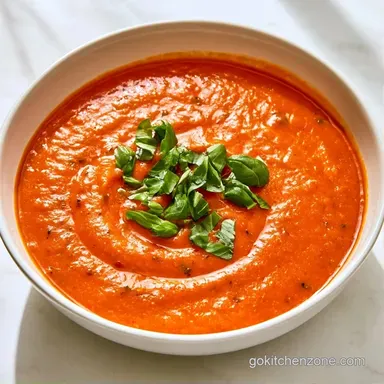
Creamy Crockpot Tomato Basil Soup
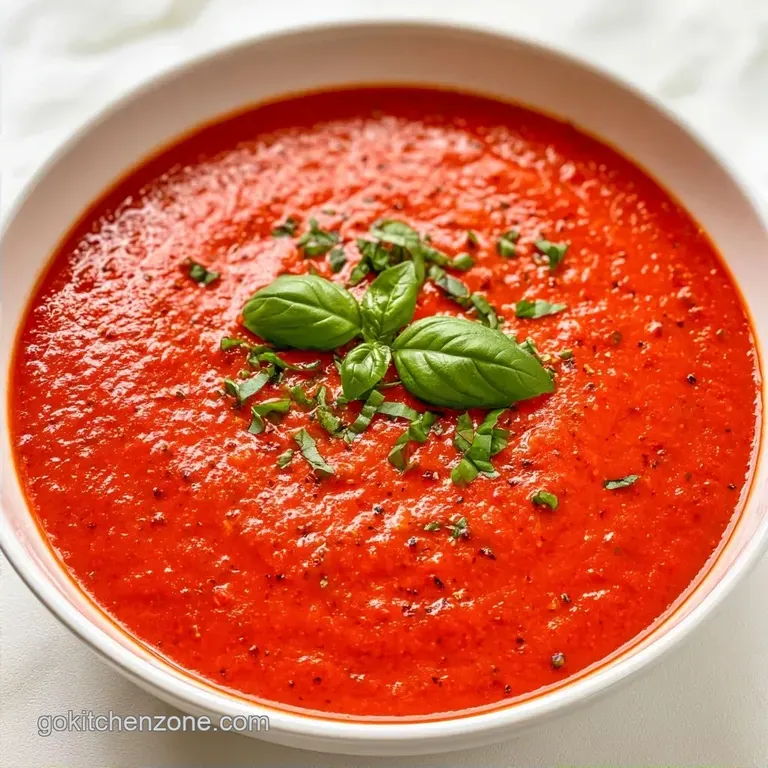
- Time:20 minutes of prep + 6 hours total
- Taste & Feel: Thick, creamy, and herbal
- Perfect for: Cold weeknights, meal prep, or easy hosting
The aroma greets you the moment you step inside. It's a hearty, warm, herb filled scent that lets you know dinner is ready before you've even dropped your keys.
I once tried to speed this up on the stovetop, but it always tasted metallic. The heat was too intense, the tomatoes remained acidic, and the dairy would often separate unless I watched the pot constantly.
Switching to the slow cooker was a game changer. This Crockpot Tomato Basil Soup allows the ingredients to blend gradually, eliminating that tinny quality. You end up with a rich, savory profile that feels professional, despite only spending about 20 minutes on the actual prep.
Crockpot Tomato Basil Soup for Busy Nights
Acid Reduction: Simmering tomatoes for six hours allows the sharp acids to break down and soften.
Dairy Tempering: Stirring hot soup into the cream first prevents the cold dairy from shocking and curdling.
Fresh Finish: Adding the fresh basil at the very end keeps the herb's profile bright instead of muted.
| Method | Prep Time | Texture | Best For |
|---|---|---|---|
| Slow Cooker | 20 mins | Thick and blended | Set and forget meals |
| Stovetop | 30 mins | Lighter | Quick cravings |
| Oven Braise | 40 mins | Concentrated | Small batches |
As for the flavor, the key is balancing sugar and acidity. A tingling sensation in the teeth typically means the pH is too low. This is where the slow cooking process and a bit of sugar come in to round off those edges.
Reliable Results and Timing
The timeline for this is straightforward. You spend 20 minutes prepping in the morning, let it ride for 6 hours, and then spend 10 minutes finishing the texture. It's a reliable flow that doesn't require you to be in the kitchen.
The most important checkpoint is the blending phase. You want to run that immersion blender until the soup is completely smooth. If you see tiny chunks of onion, keep going. The goal is a uniform, heavy consistency.
Another point to watch is the temperature when adding the cream. Never dump cold cream into a boiling pot. Tempering is the process of gradually raising the temperature of the dairy, which ensures the soup stays smooth.
The Core Ingredients
| Ingredient | Role | If You Don't Have It |
|---|---|---|
| Crushed Tomatoes | Primary base | Pureed canned tomatoes |
| Tomato Paste | Concentration and body | Extra crushed tomatoes (will be thinner) |
| Heavy Cream | Creaminess | Full fat coconut milk (adds a nutty hint) |
| Parmesan Cheese | Savory saltiness | Pecorino Romano (more pungent/salty) |
I typically prefer chicken broth to give the soup more substance, though vegetable broth is a great alternative for vegetarians. Opt for an unsalted variety so you can adjust the seasoning to your taste.
Adding sugar may seem unusual, but it's essential. It won't make the soup taste like a dessert; instead, it balances the acidity of the tomatoes. Without it, the flavor can come across as too harsh and one-dimensional.
| Original Ingredient | Substitute | Why It Works |
|---|---|---|
| Heavy Cream (1 cup) | Half and Half (1 cup) | Maintains creaminess. Note: The consistency will be lighter than heavy cream |
| Fresh Basil (1/4 cup) | Dried Basil (1 tsp) | Comparable taste. Note: Misses that fresh, peppery punch |
| Vegetable Broth (2 cups) | Water + 1 tsp Salt | Simple base. Note: Lacks the rich, savory profile |
I previously experimented with low-fat milk as a replacement for heavy cream, and it was a total failure. The mixture curdled immediately because there wasn't enough fat to offset the tomato acidity. For a consistent result, definitely use the full fat alternatives.
Tools For The Job
You'll need a standard 6 quart slow cooker. Anything smaller might overflow when you start blending. A wide mouth pot is better because it gives your blender more room to move.
An immersion blender is the real hero here. It saves you from transferring boiling liquid into a traditional blender, which is a great way to burn your face. If you must use a stand blender, work in three small batches and leave the lid slightly cracked to let steam escape.
A whisk is also necessary for the tempering step. You need to get the cream and Parmesan fully incorporated before they hit the main pot to avoid clumps of cheese.
How To Make It
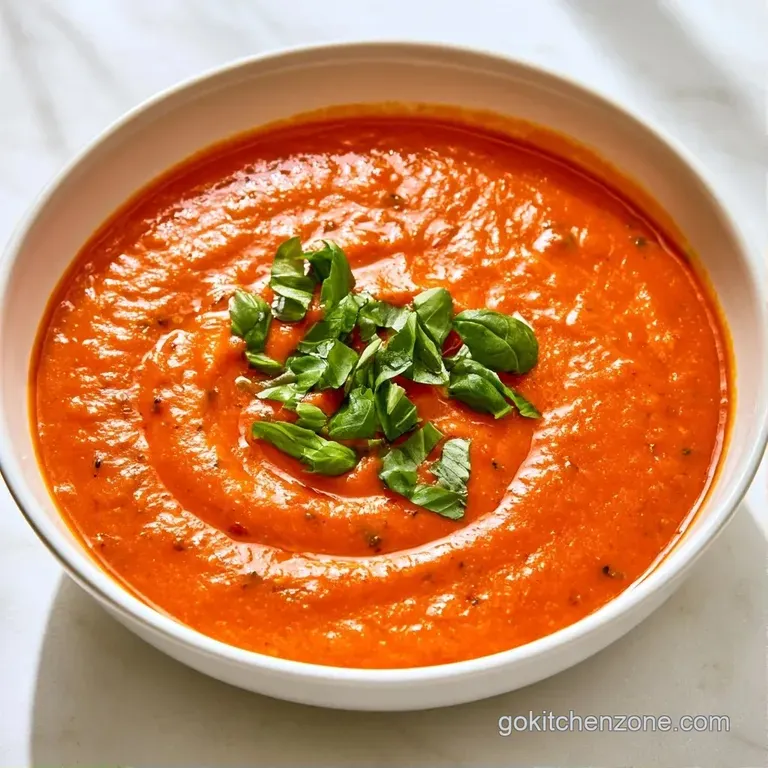
- Rub 1 tbsp olive oil on the base of your slow cooker. Note: This ensures the tomato paste doesn't stick or burn.
- Add in 28 oz crushed tomatoes, 6 oz tomato paste, 2 cups broth, 1 diced onion, and 4 minced garlic cloves.
- Stir in 1 tsp dried oregano, 1 tsp dried basil, 1 tbsp sugar, 1 tsp salt, and 1/2 tsp black pepper until well mixed.
- Place the lid on and set to Low for 6 hours until the onions are translucent and the aroma has deepened.
- Using a hand blender, puree the soup on high for 2-3 minutes until the consistency is completely smooth.
- In a small bowl, whisk together 1 cup heavy cream and 1/2 cup grated Parmesan cheese.
- Temper the dairy by slowly whisking 1 cup of the hot soup into the cream mixture. Note: This prevents the cream from curdling.
- Stir the tempered mixture and 1 tbsp unsalted butter into the slow cooker.
- Fold in 1/4 cup fresh basil leaves (chiffonade) and heat gently on low for 5 minutes.
Chef's Tip: To achieve a richer flavor, stir in a teaspoon of balsamic vinegar just before serving. This provides a tangy depth reminiscent of a professional restaurant bisque.
Another suggestion is to grate your Parmesan yourself. Pre-shredded cheese often includes potato starch to prevent clumping, which may result in a slightly grainy soup.
Fixing Common Soup Issues
Dealing with acidity is the most common hurdle. If the soup still tastes too sharp after 6 hours, a tiny pinch of baking soda can neutralize the pH instantly. You'll see it bubble slightly, then the flavor will mellow out.
Dairy separation happens when the temperature shift is too aggressive. If your soup looks grainy or has tiny white dots, it's already curdled. You can sometimes save it by blending it again on high, but tempering is the only way to prevent it.
For those who find the soup too thin, you can let it cook on high for an extra 30 minutes after blending. This evaporates some of the liquid and concentrates the tomato solids.
Fixing High Acidity
Add 1/2 tsp of sugar or a pinch of baking soda.
Preventing Dairy Curdling
Always temper the cream with hot soup first.
Solving Thin Consistency
Simmer on high for 30 mins without the lid.
| Problem | Fix |
|---|---|
| Too acidic/sharp | Add 1 tsp sugar or pinch of baking soda |
| Grainy texture | Use freshly grated cheese; blend longer |
| Curdled cream | Temper dairy before adding to pot |
| Too thick | Stir in extra broth 1/4 cup at a time |
If you're looking for other hearty options for your meal prep, my Crockpot Lentil Soup recipe uses a similar slow cooking logic but a different protein base.
Customizing Your Bowl
For those wanting a Healthy Crockpot Tomato Basil Soup, swap the heavy cream for full fat coconut milk or a cashew cream. You'll lose some of the dairy tang, but the richness remains.
If you prefer using fresh garden produce, you can use a Homemade Tomato Soup recipe approach by roasting the tomatoes first before adding them to the crockpot. This adds a smoky, charred note that canned tomatoes can't match.
For a spicy kick, stir in a pinch of red pepper flakes or a teaspoon of smoked paprika during the initial mixing phase. This works especially well if you're serving the soup with a grilled cheese sandwich.
Decision Shortcut:
- For a thicker bisque: Use 8 oz of tomato paste instead of 6 oz.
- For a lighter version: Replace heavy cream with half and half.
- For a vegan twist: Use coconut cream and nutritional yeast instead of Parmesan.
| Variation | Change | Impact |
|---|---|---|
| Spicy | Add 1 tsp red pepper flakes | Warm, lingering heat |
| Vegan | Coconut cream + Nutritional yeast | Nutty, dairy-free richness |
| Extra Rich | Add 2 tbsp butter | Glossier finish |
Keeping Your Leftovers
The flavors of basil and garlic deepen overnight, making the soup even more delicious. Keep it in glass containers in the refrigerator for a maximum of 4 days.
If freezing, omit the butter and cream. Store the tomato base in portions in the freezer for up to 3 months. To serve, defrost the base, warm it through, and then stir in the cream and cheese. This prevents the dairy from separating during the freezing and thawing process.
To reheat, use a saucepan over medium low heat. It is best to avoid the microwave, as hot spots can cause the cream to curdle. Stir frequently and add a bit of broth if the soup has thickened during storage.
USDA guidelines recommend reheating leftovers to an internal temperature of 165°F for safety.
What To Serve With It
A sourdough grilled cheese is the quintessential pairing. Choose gruyère or a sharp cheddar to balance the sweetness of the tomatoes. The crispiness of the toasted bread provides a wonderful contrast to the soup's velvety texture.
For a lighter option, serve it alongside an arugula salad with a tangy lemon dressing. The peppery leaves and citrus notes provide a refreshing counterpoint to the Parmesan and heavy cream.
If you are serving a crowd, pour the soup into small mugs and garnish with a swirl of cream and a single leaf of fresh basil. This takes just ten seconds but creates a professional presentation.
Finally, a splash of high-quality olive oil right before serving adds a grassy flavor that enhances the basil. It is a simple detail that makes the bowl feel complete.
Recipe FAQs
How do I make this tomato basil soup in a slow cooker?
Combine crushed tomatoes, paste, broth, onion, and garlic in a greased crockpot. Cook on low for 6-7 hours, blend with an immersion blender, and stir in tempered cream and Parmesan.
What improves the flavor of this tomato soup?
Add granulated sugar to balance the acidity of the canned tomatoes. This simple step removes the metallic edge and creates a smoother, more savory taste.
Is it true that cold cream will curdle if added directly to the hot soup?
No, and here's why. The temperature difference shocks the dairy, so you must temper the cream by whisking in a cup of hot soup first to ensure a silky texture.
Can I use a slow cooker to reduce a pasta sauce?
Set the cooker to low to concentrate the flavors without scorching the base. If you enjoyed the slow simmered base here, the same principle works in our ground beef pasta.
Crockpot Tomato Basil Soup for 6 Servings