Brown Gravy from Scratch: Silky Smooth

- Time: Active 5 mins, Passive 10 mins, Total 15 minutes
- Flavor/Texture Hook: Velvety smooth with a deep umami finish
- Perfect for: Weeknight dinners, mashed potato sides, or reviving leftover roasts
- Mastering the Best Brown Gravy from Scratch
- The Science of the Roux
- Component Analysis
- Essential Ingredients and Smart Subs
- Minimal Tools for Better Results
- Cooking Steps for Silky Texture
- Solving Common Gravy Cooking Mistakes
- Simple Swaps and Flavor Twists
- Storage and Food Waste Tips
- Best Ways to Serve Gravy
- Debunking Common Gravy Myths
- Brown Gravy From Scratch FAQs
- 📝 Recipe Card
Mastering the Best Brown Gravy from Scratch
We've all been there the roast is resting, the potatoes are mashed to perfection, but the pan is bone dry. No drippings, no flavorful bits, just a looming dinner struggle. I used to panic and reach for those salty little packets, but honestly, those always tasted more like chemicals than comfort.
This brown gravy from scratch was born out of one of those "oops" moments when I realized you don't actually need a whole prime rib to get that deep, savory flavor we all crave.
The kitchen starts smelling like heaven the second that butter hits the pan. It's that specific, nutty aroma that lets you know something good is coming. You'll watch the butter sizzle and foam, then the flour transforms it into a golden paste that smells like toasted bread.
It’s a simple ritual, but it’s the difference between a sad, watery sauce and a velvety masterpiece that makes everyone ask for seconds.
This is the reliable, one pan savior I keep in my back pocket for busy nights. Whether you're topping a pile of fries or looking to improve a simple How to Make recipe for meatloaf, this method never fails. We're skipping the complicated techniques and focusing on what actually works in a real, messy home kitchen. Trust me, once you see how easy this is, you'll never look at a packet again.
The Science of the Roux
Starch Gelatinization: When flour particles are coated in fat and then heated with liquid, the starch granules swell and burst, creating a thick, stable network that prevents a watery mess.
Maillard Reaction: Browning the flour butter mixture (the roux) creates new flavor compounds that provide that characteristic toasted, savory depth without needing hours of simmering.
Fat Protein Emulsion: The whisking action breaks the butter's fat into tiny droplets that are suspended by the flour, resulting in a glossy finish that doesn't feel greasy on the tongue.
| Cook Method | Prep Time | Resulting Texture | Best For |
|---|---|---|---|
| Stovetop Roux | 15 minutes | Thick and velvety | Traditional mashed potatoes |
| Cornstarch Slurry | 8 minutes | Translucent and thin | Quick stir fry finishes |
| Cold Butter Finish | 5 minutes | Extra glossy/rich | Steak pan sauces |
Choosing the stovetop roux method is the standard for a reason. It provides a structural integrity that other methods lack, ensuring your sauce stays thick even as it cools on the plate.
Component Analysis
| Ingredient | Science Role | Pro Secret |
|---|---|---|
| Unsalted Butter | Fat medium | Use cold butter for a slower, more controlled roux browning. |
| All Purpose Flour | Thicken agent | Toast it until it smells like popcorn for maximum flavor depth. |
| Beef Stock | Liquid base | Use low sodium stock to control the final seasoning perfectly. |
Choosing the right base is vital for a Brown Gravy Recipe that tastes like it came from a high end kitchen. The butter provides the mouthfeel, while the flour provides the "body" that clings to your food.
Essential Ingredients and Smart Subs
- 4 tbsp (56g) unsalted butter: Provides the fat base for the roux. Why this? Butter adds a richer flavor profile than oil or margarine.
- Substitute: Beef tallow or bacon grease for an extra smoky, meaty punch.
- 1/4 cup (30g) all purpose flour: The structural backbone of the sauce. Why this? AP flour has the right protein balance for a smooth thickening.
- Substitute: Cornstarch (use half the amount) if you need a gluten-free quick fix.
- 2 cups (475ml) beef stock: The primary flavor carrier. Why this? A deep, dark stock ensures the gravy looks and tastes authentic.
- Substitute: Chicken stock mixed with 1 tsp soy sauce for color and depth.
- 1 tsp Worcestershire sauce: Adds acidity and umami.
- Substitute: Soy sauce or balsamic vinegar (use half) for a similar fermented tang.
- 1/2 tsp onion powder: Provides savory background notes.
- Substitute: Very finely grated fresh onion (sautéed in the butter first).
- 1/4 tsp garlic powder: Adds a subtle aromatic punch.
- Substitute: One smashed garlic clove steeped in the stock, then removed.
- 1/2 tsp fine sea salt: Enhances all other flavors.
- Substitute: Kosher salt (use slightly more) for better grain control.
- 1/4 tsp fresh cracked black pepper: Adds a necessary bite to cut through the fat.
- Substitute: White pepper for a smoother, less visible heat.
Minimal Tools for Better Results
You don't need a pantry full of gadgets to make this work. A heavy bottomed skillet or saucepan is your best friend here. Cast iron or stainless steel works best because they hold heat evenly, preventing the roux from scorching in the corners.
Avoid thin aluminum pans; they have "hot spots" that can burn the flour before it has a chance to brown.
The only other "must have" is a sturdy balloon whisk. A spoon just won't cut it when you're trying to break up those tiny flour pockets. If you're worried about scratching a non stick pan, a silicone coated whisk is a brilliant investment.
Finally, a liquid measuring cup is essential for accuracy gravy is a game of ratios, and guessing the stock amount is how you end up with a bowl of salty glue.
Cooking Steps for Silky Texture
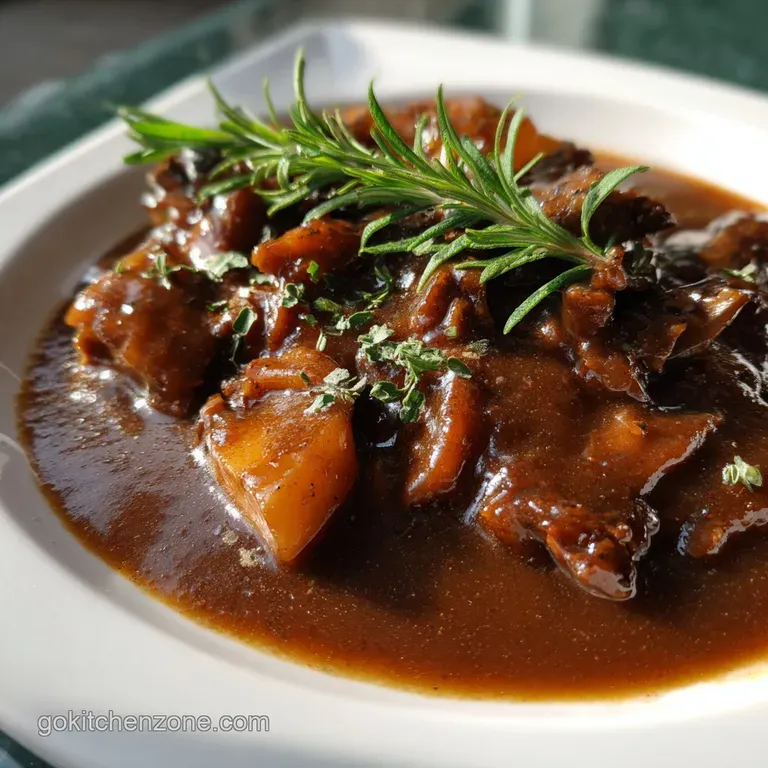
- Melt butter. Place 4 tbsp unsalted butter in a medium saucepan over medium heat until foam subsides and it starts to sizzle. Note: This ensures the water has evaporated from the butter.
- Whisk flour. Sprinkle 1/4 cup all purpose flour over the melted butter.
- Brown roux. Cook for 2 to 3 minutes, whisking constantly, until the mixture turns a light nutty brown. Note: This removes the raw flour taste.
- Add liquid. Slowly pour in 1/2 cup of the beef stock while whisking vigorously.
- Emulsify base. Continue whisking until a thick, smooth paste forms with no visible lumps.
- Incorporate remaining stock. Gradually add the rest of the 2 cups beef stock while continuing to whisk.
- Season sauce. Stir in 1 tsp Worcestershire sauce, 1/2 tsp onion powder, 1/4 tsp garlic powder, 1/2 tsp fine sea salt, and 1/4 tsp black pepper.
- Simmer gravy. Bring the mixture to a gentle boil, then reduce heat to low.
- Check thickness. Cook for 3 to 5 minutes until the sauce coats the back of a spoon.
- Final adjust. Taste and add more salt or pepper if needed, then serve immediately.
Solving Common Gravy Cooking Mistakes
Lumps are the most common heartbreak when making gravy from scratch. Usually, this happens because the liquid was added too fast or the roux wasn't whisked thoroughly at the start.
It’s also important to watch your heat; if the pan is screaming hot when you add the stock, the starch cooks instantly into "dumplings" rather than a smooth sauce.
The Lumpy Gravy Crisis
If you see small flour balls forming, don't panic. Take the pan off the heat immediately and whisk like your life depends on it. If that doesn't work, you can always use a fine mesh strainer or a quick pulse in a blender to save the day. It happens to the best of us.
The Thin Sauce Problem
Sometimes the gravy looks more like soup than sauce. This usually means it hasn't simmered long enough for the starch to fully hydrate, or you mismeasured the stock. Give it a few more minutes on the stove, or check the troubleshooting table below for a quick fix.
| Problem | Root Cause | Solution |
|---|---|---|
| Lumps | Liquid added too fast | Whisk vigorously or pour through a fine mesh sieve. |
| Too Thin | Not enough roux/simmer | Simmer longer or add a "beurre manié" (equal parts soft butter/flour). |
| Too Salty | Stock was over reduced | Add a splash of water or a tiny pinch of sugar to balance. |
Common Mistakes Checklist
- ✓ Never leave the roux unattended; it can go from brown to burnt in ten seconds.
- ✓ Use room temperature or slightly warm stock to prevent the butter from seizing.
- ✓ Add the liquid in small splashes at first to create a smooth "slurry" before thinning it out.
- ✓ Don't skip the Worcestershire; it provides the "dark" flavor profile that stock alone lacks.
- ✓ Preheat the pan properly before adding butter to ensure even melting.
Simple Swaps and Flavor Twists
If you want to change the profile, this recipe is incredibly flexible. For a "Creamy Onion" version, sauté half a finely minced yellow onion in the butter before adding the flour. Let the onions get soft and translucent, then proceed with the roux as usual. It adds a lovely texture and a natural sweetness that pairs perfectly with Salisbury steak or a Beef Tips and recipe combo.
For those who need a gluten-free option, you can swap the flour for a high-quality 1 to-1 gluten-free flour blend. Just be aware that some blends thicken faster than others, so keep an eye on the consistency.
If you find the flavor too one note, a tablespoon of heavy cream stirred in at the very end creates a "Cafe de Paris" style richness that is absolutely decadent.
| Feature | Fresh Gravy | Shortcut Packet |
|---|---|---|
| Sodium Level | Controlled | Often very high |
| Flavor Depth | Complex/Toasted | One dimensional |
| Texture | Velvety/Rich | Can be "gelatinous" |
- For more shine
- Whisk in a tablespoon of cold butter right before serving.
- For darker color
- Add 1/2 tsp of Kitchen Bouquet or a drop of gravy browner.
- For herby notes
- Add a sprig of fresh thyme while simmering and remove before serving.
Storage and Food Waste Tips
Storage: You can keep this gravy in an airtight container in the fridge for up to 4 days. It will thicken significantly as it chills almost into a jelly like consistency but don't worry, that's just the gelatin and starch doing their thing.
To reheat, place it in a small saucepan over low heat with a splash of water or extra stock to loosen it up.
Freezing: This recipe freezes surprisingly well for up to 3 months. I recommend freezing it in silicone ice cube trays. Once frozen, pop the cubes into a freezer bag. This way, you can grab just one or two cubes to revive a dry sandwich or a single serving of leftovers without thawing a whole batch.
Zero Waste: Never toss those vegetable scraps! If you have onion skins, celery tops, or mushroom stems, simmer them in your beef stock for 20 minutes before making the gravy.
It adds a layer of "fresh" flavor to store-bought stock that makes it taste like you spent all day in the kitchen. Also, if you have leftover gravy that you won't use, stir it into a beef stew or use it as a base for a shepherd's pie filling.
Best Ways to Serve Gravy
This sauce is the ultimate companion for comfort food. While we usually think of mashed potatoes, it's also the secret to a great Poutine just pour it over hot fries and fresh cheese curds. If you're feeling adventurous, try it over a Country Fried Chicken recipe for a hearty breakfast vibe.
The beauty of this recipe is that it fills the gaps when your main dish is a bit lean. It turns a simple seared chicken breast or a plate of roasted vegetables into a cohesive, satisfying meal. I've even been known to use it as a "dipping sauce" for crusty sourdough bread.
There are no rules here just good, honest flavor that makes a weeknight feel a little bit more special.
Debunking Common Gravy Myths
"You must use drippings for flavor." This is simply not true. While drippings are great, a well made roux combined with high-quality stock and umami boosters like Worcestershire sauce can create a result that is 95% as good with 100% less hassle.
It's about building layers of flavor manually rather than relying on the meat to do it for you.
"Sifting the flour prevents lumps." While sifting doesn't hurt, it's not the solution to lumpy gravy. Lumps are caused by the way the liquid interacts with the flour fat bond. Adding the liquid slowly and whisking constantly is ten times more effective at ensuring smoothness than sifting ever will be.
"Boiling the gravy ruins the texture." Actually, you need to bring the gravy to a brief boil to fully "activate" the thickening power of the flour. If you only warm it up, it might taste floury and never reach its full potential.
A quick bubble followed by a gentle simmer is the key to that perfect nappe consistency.

Brown Gravy From Scratch FAQs
What makes brown gravy?
A combination of fat, flour, and liquid. The fat (often butter or pan drippings) and flour are cooked together to form a roux, which acts as the thickening agent. This roux is then whisked with liquid, typically beef or chicken stock, and seasoned to create the rich flavor and smooth texture characteristic of brown gravy.
What is the 3 2 1 rule for gravy?
This refers to the ratio of ingredients for a basic gravy. It typically means 3 parts liquid (like stock), 2 parts fat (like butter), and 1 part flour for thickening. While not a strict scientific rule, it's a helpful guideline for achieving a good balance and texture.
Mastering this ratio can help prevent issues, much like controlling dough hydration in a bread recipe.
Can you make gravy with just flour and water?
Yes, but the flavor will be very bland. While flour and water can create a thick sauce, it lacks the depth and savory notes that make gravy enjoyable. You'll need to add significant seasoning, like salt, pepper, and umami rich ingredients such as Worcestershire sauce or bouillon, to make it palatable. For a truly satisfying gravy, using a good quality stock is highly recommended, similar to how a rich stock elevates a Beef Stew Crock Pot Recipe: Tender Beef Stew.
How to make your own gravy easy?
Melt equal parts butter and flour in a saucepan over medium heat until nutty brown. Whisk in your liquid, like beef or chicken stock, gradually until smooth and thickened. Season to taste with salt, pepper, and a dash of Worcestershire sauce for depth.
This quick method creates a flavorful sauce without needing pan drippings, perfect for weeknight meals.
What is the best liquid to use for brown gravy?
Beef stock is generally preferred for a classic brown gravy flavor and color. Chicken stock is also a good option, especially if you don't have beef stock on hand, and can be enhanced with a teaspoon of soy sauce or a pinch of Marmite for added depth.
For a richer, more robust flavor, consider using the liquid from roasted meats.
How long should I cook the roux for brown gravy?
Cook the roux for about 2 to 3 minutes, stirring constantly, until it turns a light to medium nutty brown. This process, known as toasting the flour, removes the raw flour taste and develops a deeper, more complex flavor profile for your gravy.
Be careful not to burn it, as burnt roux will impart a bitter taste, similar to how over toasted nuts can ruin a dish.
Can I make brown gravy ahead of time?
Yes, brown gravy can be made a day or two in advance and stored in the refrigerator. It will thicken considerably as it cools. To reheat, gently warm it in a saucepan over low heat, whisking frequently and adding a splash of extra stock or water to achieve the desired consistency. This make-ahead capability is a lifesaver for busy meal prep, much like a Corn Pudding Casserole: Creamy Baked Casserole can be prepared in advance.
Brown Gravy From Scratch
Ingredients:
Instructions:
Nutrition Facts:
| Calories | 94 kcal |
|---|---|
| Protein | 1.5 g |
| Fat | 7.8 g |
| Carbs | 4.7 g |
| Fiber | 0.1 g |
| Sugar | 0.3 g |
| Sodium | 478 mg |
