Homemade French Dip Beef Sandwich

- Prep15 Mins
- Cook2 Hrs 10 Mins
- Servings4
- Time: 15 min active + 130 min cooking + 30 min resting
- Taste: savory, umami, buttery
- Best for: a hearty weekend lunch
How to Make French Dip Beef
Nothing beats the aroma of a beef roast searing in a hot pan. That intense, savory fragrance signals a delicious meal is on the way. Pairing a deeply browned crust with a soak of salty, flavorful broth creates a truly indulgent sandwich.
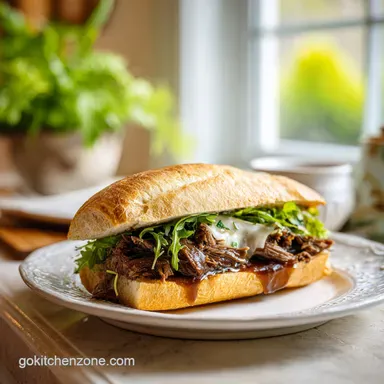
This dish is all about the textures. You get a crisp, buttery roll, gooey provolone, and beef so tender it practically shreds. It's a substantial meal that delivers consistent results if you stick to a few key guidelines.
Preparing French dip beef is a fantastic way to transform a basic roast into something special, regardless of the occasion. Success depends on precise timing and temperature to keep the meat succulent while the jus reduces into a bold concentrate.
Why the Method Works
- The Hard Sear: Searing the meat at high heat develops a rich, dark crust. This provides a savory complexity that you can't achieve with simmering or slow-cooking alone.
- The Long Rest: Letting the beef rest for 30 minutes allows the fibers to loosen and the juices to redistribute. This ensures the meat doesn't lose its moisture the moment it's sliced.
- Acid Balance: Adding lemon juice to the broth balances the richness of the beef and butter. This lifts the overall flavor so the dish doesn't taste overly heavy.
Ingredients and Swaps
- 3 lb beef roast
- 2 tbsp olive oil
- 1 tsp kosher salt
- 1/2 tsp black pepper
- 1 tsp garlic powder
- 2 tbsp unsalted butter
- 1 large yellow onion, thinly sliced
- 3 cups low-sodium beef broth
- 1 tbsp lemon juice
- 1 tsp Worcestershire sauce
- 2 sprigs fresh thyme
- 4 6-inch hoagie rolls
- 8 slices provolone cheese
- 2 tbsp unsalted butter, softened
Ingredient Breakdown
| Ingredient | Role | If You Don't Have It |
|---|---|---|
| Beef Roast | Primary protein and structure | Chuck roast (more fat) or Top Round (leaner) |
| Beef Broth | Foundation for the dipping sauce | Unsalted beef stock (add a pinch of salt) |
| Provolone Cheese | Smooth, mild melt | Swiss or Mozzarella |
| Lemon Juice | Acid balance and brightness | Apple cider vinegar (use slightly less) |
To be honest, avoid using low-fat cheese here. You need the rich flavor of full-fat provolone to stand up to the beef.
Your choice of roast affects the final texture. A chuck roast is more forgiving because of its fat content, whereas a leaner top round requires a more precise internal temperature to avoid becoming tough.
Substitution Guide
| Original Ingredient | Substitute | Why It Works |
|---|---|---|
| Provolone | Swiss Cheese | Comparable melting point with a slightly nuttier taste |
| Fresh Thyme | Dried Thyme (1/3 tsp) | Same herb profile, though less potent than fresh |
| Hoagie Rolls | Baguettes | Similar crusty exterior, though you'll need to slice them lengthwise |
The Essential Tools
This recipe requires minimal equipment. A heavy cast iron skillet is ideal since its superior heat retention creates that signature deep crust. If you lack one, a stainless steel pan is a suitable substitute, provided you maintain high heat.
A digital meat thermometer is also essential. Cooking beef by time alone is risky, as a few degrees can be the difference between juicy and dry meat. Finally, use a sharp carving knife to ensure thin slices for the perfect mouthfeel.
Cooking Steps
Stage 1: The Sear
Set your oven to 325°F (163°C). Use paper towels to pat the 3 lb beef roast dry. Note: moisture on the surface creates steam, which stops the meat from browning. Massage the roast with 2 tbsp olive oil, 1 tsp kosher salt, 1/2 tsp black pepper, and 1 tsp garlic powder.
Heat a cast iron skillet on high until the oil is shimmering. Brown the beef for 3–5 minutes per side until a dark, caramelized crust forms on all surfaces.

Stage 2: Roasting
Move the skillet into the oven. Roast the meat until it reaches a safe internal temperature of 145°F (63°C). Pull the beef from the oven and place it on a cutting board to rest for 30 minutes, allowing the juices to redistribute.

Stage 3: The Jus
Using the same skillet or a separate saucepan, melt 2 tbsp unsalted butter over medium heat. Add the sliced yellow onion and cook, stirring occasionally, for 20–25 minutes until deeply caramelized and rich brown.
Stir in 3 cups low-sodium beef broth, 1 tbsp lemon juice, and 1 tsp Worcestershire sauce. Add 2 sprigs of fresh thyme. Simmer the mixture for 10–15 minutes, reducing the volume by approximately 20% to intensify the flavor.

Stage 4: Assembling the French Dip Beef Sandwich
Slice 4 hoagie rolls open and spread with 2 tbsp softened butter. Toast them under the broiler for 1–2 minutes until the edges are golden brown.
Against the grain, slice the rested beef as thinly as possible, aiming for about 1/8 inch thickness. Pile the meat onto the toasted rolls, topping each with caramelized onions and 2 slices of provolone cheese. Return the sandwiches to the broiler for 1 minute until the cheese is bubbly and melted.

Common Problems and Fixes
Stopping Soggy Bread
Bread becomes soggy if it isn't toasted sufficiently or if the beef is overly moist. By buttering the roll and broiling it until the edges are crisp, you create a protective fat layer. This prevents the bread from soaking up the juices too rapidly during dipping.
Fixing Thin Jus
A watery or weak-tasting sauce simply needs more reduction. Simmer it for an additional 5 to 10 minutes. You want the liquid to appear slightly glossier and have a more concentrated flavor.
Over-Salty Broth
Using standard broth instead of low-sodium versions can often result in an overly salted sauce. To balance a jus that is too salty, stir in some water or an extra squeeze of lemon juice. The acidity helps neutralize the salt without altering the overall taste.
Preventing Tough Beef
Rubbery meat is typically the result of overcooking or slicing the roast too thickly. Use a meat thermometer to ensure you hit exactly 145°F (63°C) and slice the beef as thinly as possible.
Storage and Leftovers
Keep your French dip beef components separate. Store the sliced beef in one airtight container and the au jus in another. According to USDA guidelines, cooked leftovers stay safe in the refrigerator for 3 to 4 days.
To reheat the beef without overcooking it, don't use the microwave. Instead, warm the jus in a saucepan until it simmers. Use tongs to dip the cold beef slices directly into the simmering liquid until the thickest slice reaches 165°F (74°C). This warms the meat through while keeping it moist.
If you're reheating the rolls, a quick 2 minutes in the oven at 350°F (175°C) brings back the crunch.
Different Cuts and Sides
If you want a richer, more "fall-apart" style, use a chuck roast. It has more connective tissue that breaks down during roasting, though it's less lean than a top round. Just be aware that a fattier cut might need a slightly longer roast time to get tender.
For a lighter version, you can serve the sliced beef and caramelized onions over a bowl of quinoa or cauliflower rice, using the jus as a savory sauce. This turns the sandwich into a set of beef bowls.
If you're looking for a side dish to balance the richness of the beef, a creamy vegetable side works well. I like serving this with a Broccoli Casserole recipe to add some freshness to the plate.
Plating and Serving

Serve the sandwiches on a large platter with the au jus in small individual ramekins. This prevents the bread from sitting in the sauce and getting soggy before the guest even takes a bite.
For a professional look, lean the sandwiches against each other and garnish the jus with a fresh sprig of thyme. If you have extra caramelized onions, pile them on top of the beef before adding the cheese so they get slightly charred under the broiler.
Slicing the beef into very thin ribbons and piling them high creates more surface area for the jus to cling to, which is the key to a great dip.
High in Sodium
1125 mg of sodium per serving (49% of daily value)
American Heart Association recommendation: no more than 2,300 mg of sodium per day
Tips to Reduce Sodium
-
Limit Added Salt
Reduce or completely omit the kosher salt, as the broth and cheese already provide a significant amount of sodium.
-
Modify the Cheese
Use half the amount of provolone or substitute it with a lower-sodium fresh mozzarella to reduce the dairy salt contribution.
-
Upgrade the Broth
Swap the low-sodium beef broth for unsalted beef stock or a homemade version to eliminate hidden sodium.
-
Swap the Rolls
Choose low-sodium hoagie rolls or a crusty artisanal sourdough, which typically contains less salt than commercial processed breads.
-
Control the Sauce
Use less Worcestershire sauce or replace it with a splash of balsamic vinegar for a similar tangy, savory profile.
-
Boost Flavor Aromatics
Increase the fresh thyme, garlic powder, and black pepper to create deep flavor and complexity without relying on salt.
Good to Know
What cut of meat is used for beef dip?
Use a beef roast. This cut provides the right balance of flavor and tenderness when roasted to 145°F.
Why does the sliced beef get tough or tighten when it sits in the jus?
Meat fibers contract when exposed to high heat. Avoid boiling the sliced beef in the liquid for too long to maintain tenderness.
How do I keep the bread from falling apart or going soggy when dipped?
Toast the hoagie rolls under the broiler for 1-2 minutes first. This creates a golden crust that resists soaking up too much liquid immediately.
How can I melt cheese on the sandwich without overheating or drying out the beef?
Return the assembled sandwiches to the broiler for only 1 minute. This quickly bubbles the provolone without cooking the meat further.
What should I do if I run out of jus partway through serving?
Simmer more beef broth with a bit of lemon juice and Worcestershire sauce. This quickly replicates the base flavor of the original sauce.
How to avoid a jus that is too salty?
Use low-sodium beef broth. This allows you to control the seasoning with kosher salt more accurately.
Is it possible to make components ahead and store them?
Store the sliced beef and the au jus in separate airtight containers. Keep them in the refrigerator for 3 to 4 days.
Pan-Seared French Dip Beef
Ingredients:
Instructions:
More to Cook

Classic French Dip Sandwich Recipe
Master the Classic French Dip Sandwich with our slow-cooked roast beef recipe, featuring homemade…

Ground Beef Stir Fry in 20 Minutes: Velvety Sauce
Create the ultimate Ground Beef Stir Fry using this one-pan method.

Homemade Fettuccine Alfredo for 4 Servings: Creamy Italian Pasta
Master Fettuccine Alfredo with our step-by-step guide. Includes a common mistakes checklist to…

Broccoli Rice Casserole: Silky Sauce, 40 Min
Ditch canned soup for this amazing Broccoli Rice Casserole scratch recipe.
