Twice Baked Potato Casserole with Bacon
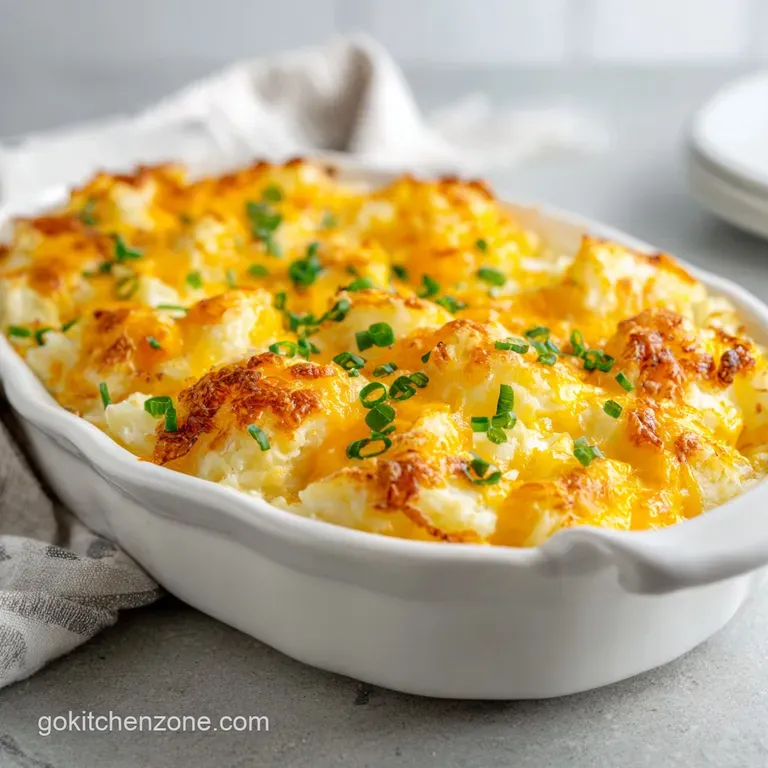
- Time: Active 20 minutes, Passive 1 hour 10 mins, Total 1 hour 30 mins
- Flavor/Texture Hook: Velvety mashed potatoes with a shatter crisp bacon topping
- Perfect for: Potlucks, holiday sides, or a filling weeknight dinner
- The Ultimate Twice Baked Potato Casserole
- Essential Recipe Measurements and Timing
- The Physics of the Fluffy Mash
- Primary Ingredients and Smart Substitutes
- Necessary Tools for Success
- Detailed Step by Step Instructions
- Fixing Common Potato Mistakes
- Creative Recipe Adaptations
- Long Term Storage Guidelines
- Ideal Side Dish Pairings
- Kitchen Myths Debunked
- Recipe FAQs
- 📝 Recipe Card
The Ultimate Twice Baked Potato Casserole
Picture this: you’ve got a dozen people coming over, and you thought individual twice baked potatoes were a good idea. Halfway through, the skins are tearing, your hands are burnt, and the kitchen looks like a starch bomb went off.
I’ve been there, and honestly, it’s why I stopped making individual potatoes entirely. This casserole gives you that exact same flavor profile the tangy sour cream, the sharp cheddar, and that unmistakable salt baked potato taste without the stress of stuffing tiny edible boats.
The magic happens when the skins of the russets get a chance to dry out in the oven first. That earthy aroma of roasting potatoes is the first sign of a good meal. When you finally crack those hot potatoes open, the steam carries the scent of caramelized starch.
By the time we fold in the cream cheese and that mountain of bacon, you’re looking at a dish that disappears faster than the main course. We’ve all had those dry, crumbly potato bakes, but we’re avoiding that today.
Essential Recipe Measurements and Timing
Before we start mashing, we need to talk about the numbers. Getting the ratio of fat to starch right is what separates a mediocre side dish from one that people ask for the recipe for.
We’re going big with 5 lbs of potatoes because leftovers are actually better the next day after the flavors have had time to hang out.
| Comparison | Oven Roasting | Stovetop Boiling |
|---|---|---|
| Texture Outcome | Fluffy and dry (ideal) | Moist and dense |
| Flavor Profile | Deep, earthy, nuttier | Mild and water logged |
| Effort Level | Passive (set and forget) | Active (draining/peeling) |
Roasting the potatoes in their skins is my hill to die on. Boiling introduces water, and water is the enemy of a velvety mash. When you roast, you concentrate the potato flavor. If you're in a rush, you might be tempted to boil, but you'll lose that "twice baked" essence that makes this dish what it is.
Precision Checkpoints for Success
- Weight: 5 lbs of potatoes ensures the dairy to starch ratio remains balanced.
- Temperature: Potatoes are done when they hit an internal 210°F.
- Resting: Let the potatoes cool for 10 minutes before handling to avoid "steam burns" on your hands.
The Physics of the Fluffy Mash
Starch Retrogradation: Cooling the potatoes slightly before mashing allows starches to stabilize, preventing the "gluey" texture that happens when you over work boiling hot spuds.
Fat Encapsulation: Adding melted butter first coats the starch granules, which prevents the milk and sour cream from making the mixture too sticky.
Lactic Acid Tenderizing: The acidity in the sour cream and cream cheese breaks down the denseness of the potato, resulting in a lighter, more aerated mouthfeel.
Maillard Reaction: Baking the assembled casserole at a high temperature creates those browned, crispy peaks on the surface that provide a textural contrast to the silky interior.
| Premium Ingredient | Budget Alternative | Flavor Impact | Savings |
|---|---|---|---|
| Thick cut Bacon | Bacon Bits/Ends | Less smoky crunch | Save $4-6 |
| Sharp Aged Cheddar | Mild Block Cheddar | Less tangy punch | Save $3-5 |
| Sea Salt | Table Salt | Sharper saltiness | Save $1-2 |
Primary Ingredients and Smart Substitutes
We are using heavy hitters here to ensure the dish stays moist during the second bake. low-fat ingredients don't have the structural integrity to hold up under the heat, so stick to the full fat versions whenever possible.
- 5 lbs Russet potatoes: These are non negotiable for their high starch content.
- Substitute: Yukon Gold potatoes (will be creamier but less fluffy). Why this? Russets provide the classic dry, mealy texture that absorbs dairy perfectly.
- 8 oz full fat cream cheese: Provides the backbone and stability.
- Substitute: Mascarpone for a sweeter, richer finish. Why this? Cream cheese adds tang and prevents the casserole from drying out.
- 1/2 cup unsalted butter: Essential for that silky mouthfeel.
- Substitute: Salted butter (just reduce the added sea salt).
- 1 cup whole milk: For moisture and consistency.
- Substitute: Half and half for an even more decadent texture.
- 1 cup full fat sour cream: The classic "twice baked" flavor.
- Substitute: Plain Greek yogurt (adds a sharper tang).
- 2.5 cups sharp Cheddar cheese: Use a block and grate it yourself.
- Substitute: Monterey Jack for better meltability. Why this? Pre shredded cheese is coated in starch and won't melt as smoothly.
- 12 slices thick cut bacon: The salty, smoky crunch we need.
- Substitute: Turkey bacon or smoked paprika chickpeas for a vegetarian twist.
| Ingredient | Science Role | Pro Secret |
|---|---|---|
| Russet Potatoes | Starch Base | Scrub with salt before roasting to draw out moisture. |
| Cream Cheese | Emulsifier | Use softened cheese to avoid white lumps in your mash. |
| Sour Cream | Acidic Component | Fold in last to preserve the aerated structure. |
Necessary Tools for Success
You don't need a professional kitchen, but a few specific tools make this much easier. A sturdy potato masher is better than a hand mixer here; mixers tend to over work the starch, turning your beautiful side dish into wallpaper paste.
I usually reach for my 9x13 glass baking dish because it distributes heat evenly. If you want more crispy edges, a large cast iron skillet works wonders too. Just make sure whatever you use has enough room for 5 lbs of potato goodness without overflowing.
Chef's Tip: Freeze your butter for 10 minutes then grate it into the hot potatoes. This ensures it melts instantly and evenly without you having to over mix the mash.
Detailed step-by-step Instructions
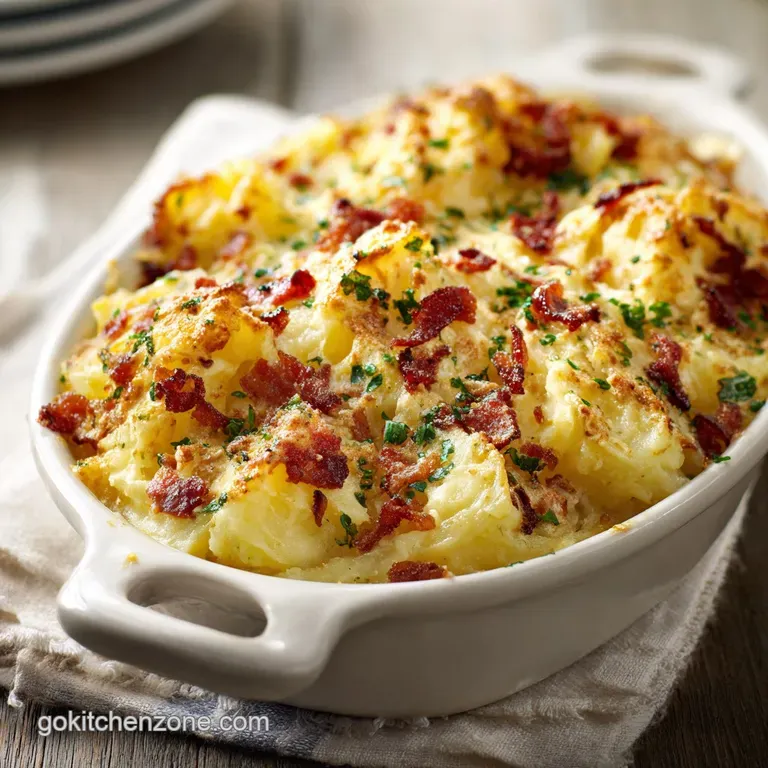
- Roast the potatoes. Scrub 5 lbs Russets and pierce with a fork. Bake at 400°F for 1 hour until the skins are papery and the centers give easily when squeezed.
- Prep the bacon. While the potatoes roast, fry 12 slices of thick cut bacon in a skillet until shatter crisp. Drain on paper towels and crumble once cooled.
- Hollow the spuds. Slice the hot potatoes in half. Scoop the flesh into a large bowl, leaving the skins behind. Note: You can discard the skins or fry them up as a snack later.
- Add the fats. Pour 1/2 cup melted butter over the hot potato flesh. Mash roughly until no large chunks remain.
- Incorporate dairy. Add 8 oz softened cream cheese and 1 cup whole milk. Use a sturdy masher to incorporate until the mixture looks velvety.
- Fold in flavor. Gently fold in 1 cup sour cream, 1 tsp garlic powder, 2 tsp sea salt, and 1 tsp black pepper.
- Add the mix ins. Stir in 1.5 cups of the shredded cheddar, half of the crumbled bacon, and half of the sliced green onions.
- Assemble the bake. Spread the mixture into a greased 9x13 dish. Top with the remaining 1 cup of cheddar and the rest of the bacon.
- The final bake. Place in a 350°F oven for 20 minutes until the cheese is bubbling and the edges are golden.
- Garnish and serve. Sprinkle with the remaining green onions just before serving until the fresh aroma hits the table.
If you enjoy this kind of comforting bake, you'll find the technique very similar to my Chicken Pot Pie recipe, where the balance of fat and starch is key to a stable sauce.
Fixing Common Potato Mistakes
The biggest heartbreak in potato cooking is the texture. We’ve all been there: you follow the recipe, but it comes out like soup or, worse, like a gummy mess. Usually, the culprit isn't the recipe itself, but how the starch was handled.
Why is my casserole gluey?
Gluey potatoes happen when the starch granules are smashed too hard or too long. If you use a food processor or a high speed electric mixer, you’re basically popping the starch cells and releasing "glue." Stick to a hand masher or a potato ricer for the best results.
What if my potatoes are still lumpy?
If you're finding hard lumps, your potatoes weren't cooked long enough. If you’ve already started mashing, try using a ricer to push the mixture through small holes. In the future, always check the largest potato with a knife it should slide in and out with zero resistance.
| Problem | Root Cause | Solution |
|---|---|---|
| Soupy Consistency | Too much milk added too fast | Add an extra half block of cream cheese to tighten it up. |
| Greasy Surface | Cheese split due to high heat | Broil for 2 minutes to crisp up the fat, then blot with a paper towel. |
| Bland Flavor | Not enough salt in the mash | Stir in a teaspoon of Dijon mustard or more sea salt. |
Common Mistakes Checklist
- ✓ Never use cold dairy; cold milk and butter will shock the starch and cause lumps.
- ✓ Don't skip the roasting; boiling adds too much water for a true "twice baked" feel.
- ✓ Hand grate your cheese to ensure a smooth, velvety melt without the powdery coating.
- ✓ Let the potatoes steam dry for 2 minutes after cutting them open before scooping.
- ✓ Avoid over mixing once you add the sour cream to keep the texture light.
Creative Recipe Adaptations
This Twice Baked Potato Casserole is a fantastic base for experimentation. If you're looking for a change of pace, you can easily swap the flavor profile without changing the core mechanics of the dish.
- Twice Baked Potato Casserole Slow Cooker: Assemble everything in the crockpot and cook on low for 3-4 hours. You won't get the crispy top, but it's great for potlucks.
- The Loaded Steakhouse: Add 1/2 cup of caramelized onions and a teaspoon of horseradish for a sophisticated kick.
- Vegetarian Swap: Skip the bacon and add roasted broccoli or sautéed mushrooms. This is similar to the vegetable forward approach in my Fried Eggplant Recipe.
Decision Shortcut
- If you want a Crispier Top, use the broiler for the last 3 minutes of baking.
- If you want it Creamier, substitute the milk with heavy cream and add an extra 1/2 cup of sour cream.
- If you want it Lighter, swap half the potatoes for steamed cauliflower mash.
Long Term Storage Guidelines
Potatoes are notorious for changing texture when frozen, but because this casserole has such a high fat content from the cream cheese and butter, it actually holds up surprisingly well. The fat protects the starch from turning grainy.
Storage: Keep leftovers in an airtight container in the fridge for up to 4 days. When reheating, add a splash of milk to bring back the creaminess.
Freezing: You can freeze this dish for up to 3 months. I recommend freezing it before the second bake. Wrap the dish tightly in plastic wrap and then foil. Thaw in the fridge overnight before baking as directed.
Zero Waste: Don't throw away those potato skins! Toss them with oil and salt, then bake at 425°F for 10 minutes. They make incredible "potato skin chips" for dipping into any leftover sour cream.
Ideal Side Dish Pairings
This dish is heavy, so you want to pair it with something that has a bit of acidity or brightness. A sharp green salad with a lemon vinaigrette is perfect. If you're serving this as part of a larger spread, it pairs beautifully with grilled chicken or a hearty steak.
If you're looking for another crowd pleaser to round out your menu, this casserole sits perfectly next to a Cheesy Hashbrown Casserole recipe, especially if you're hosting a brunch where everyone wants "all the potatoes."
Why Russets are Non Negotiable?
Russets have a high starch to water ratio. When they bake, the water evaporates, leaving behind a dry, crystalline starch structure. This is exactly what you want because it acts like a sponge, soaking up the butter and cream cheese.
If you used a waxy potato like a Red Bliss, the mixture would stay "chunky" and never achieve that velvety fold we’re looking for.
How Cream Cheese Stabilizes the Casserole?
Most potato casseroles rely solely on milk, which can separate and leave a puddle at the bottom of the dish. Cream cheese contains stabilizers (like carob bean gum) that help hold the emulsion together even when subjected to the high heat of the oven for a second time.
It's the secret to that "stiff" but creamy texture that holds its shape on a plate.
Kitchen Myths Debunked
Many people believe that "soaking potatoes removes the starch." While it does remove surface starch (which is good for fries), it won't change the internal structure of a roasted potato. For this recipe, soaking is actually counterproductive because we want the potatoes as dry as possible.
Another common myth is that you need to wrap potatoes in foil to bake them. Doing this actually steams the potato rather than roasting it, resulting in a wet, gummy interior. Always bake them "naked" on the rack for that perfect, earthy skin and fluffy center.
Trust me, the difference in the final Twice Baked Potato Casserole is massive.
Right then, you've got the science, the steps, and the tricks. Time to get those spuds in the oven and make a side dish that actually earns its place on the table!

Recipe FAQs
What is Stanley Tucci's 4 ingredient potato casserole so good he eats it for breakfast and dinner?
No, this recipe is different but achieves a similar decadent texture. The key to Tucci's method is usually very high cream and cheese ratios, which is why this casserole relies heavily on full fat cream cheese and sour cream to achieve that signature rich mouthfeel.
What is Dolly Parton casserole?
Dolly Parton casserole generally refers to a recipe called "Salty Sausage Buns," not a potato dish. However, any rich, layered, comfort food bake is often affectionately nicknamed a Dolly Parton casserole due to her reputation for hearty, delicious home cooking.
What is the point of a twice baked potato?
The point is layering texture and concentrating flavor. Baking the potato once dries out the starch, and the second bake toasts the topping, creating a contrast between a creamy interior and a savory, crispy crust.
What to make for dinner with twice baked potatoes?
Serve this casserole alongside a bright protein or a lean green vegetable. It pairs wonderfully with roasted chicken or a simple pan-seared steak, providing a rich, starchy counterpoint.
How do I prevent my potato casserole from turning gluey after the second bake?
Use a hand masher or ricer instead of a food processor. Overworking the potato starch causes it to become gummy, a principle you should remember when mastering the technique for our Chicken Pot Pie recipe.
Is it true I must use Russet potatoes for the best texture?
Yes, Russets are highly recommended for the classic dry, fluffy result. Their high starch content absorbs the dairy perfectly, whereas waxy potatoes retain too much moisture and result in a denser, less yielding casserole structure.
How long should I roast the potatoes before scooping the flesh?
Roast at 400°F until the internal temperature reaches 210°F, usually about 60 minutes. The skins should feel papery, ensuring maximum moisture has evaporated, which is crucial for a dry, light mash.
Twice Baked Potato Casserole
Ingredients:
Instructions:
Nutrition Facts:
| Calories | 482 kcal |
|---|---|
| Protein | 14.8 g |
| Fat | 31.4 g |
| Carbs | 36.2 g |
| Fiber | 3.1 g |
| Sugar | 3.4 g |
| Sodium | 728 mg |
