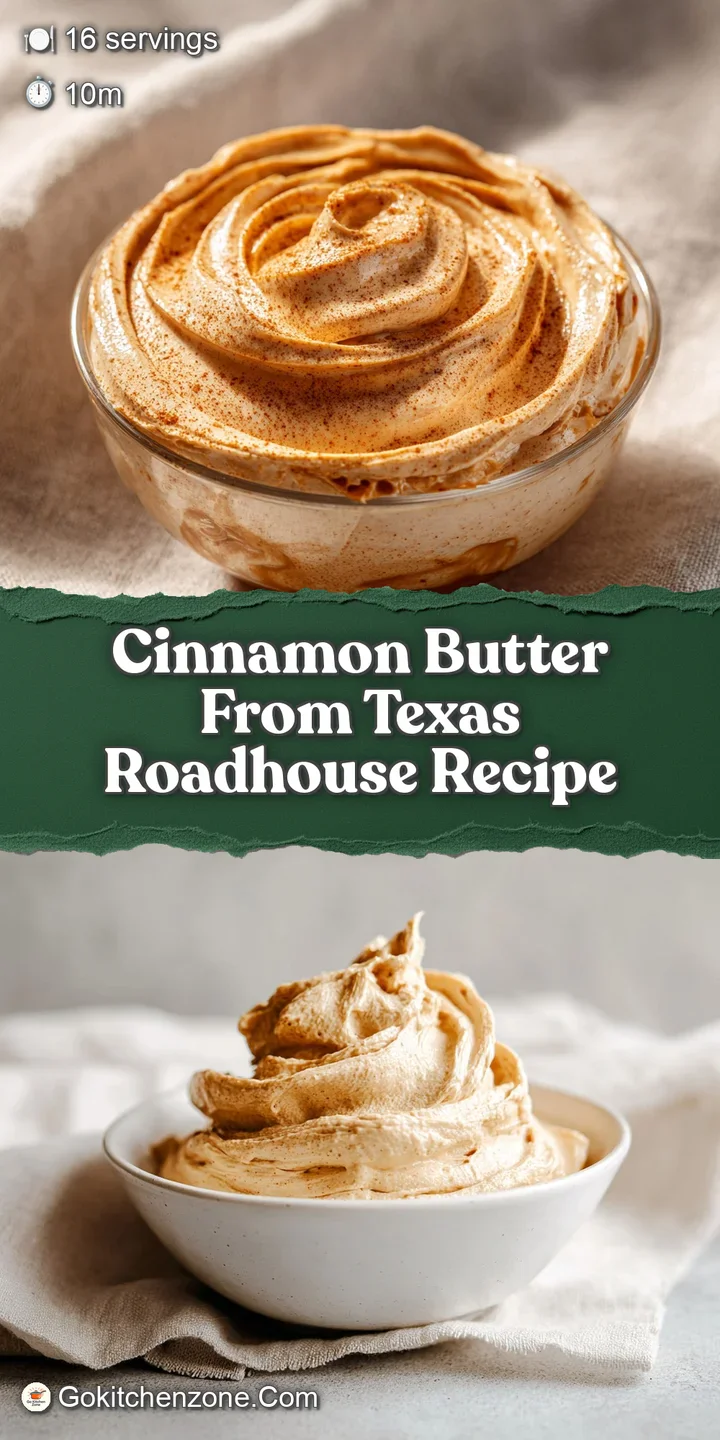
Cinnamon Butter from Texas Roadhouse Recipe
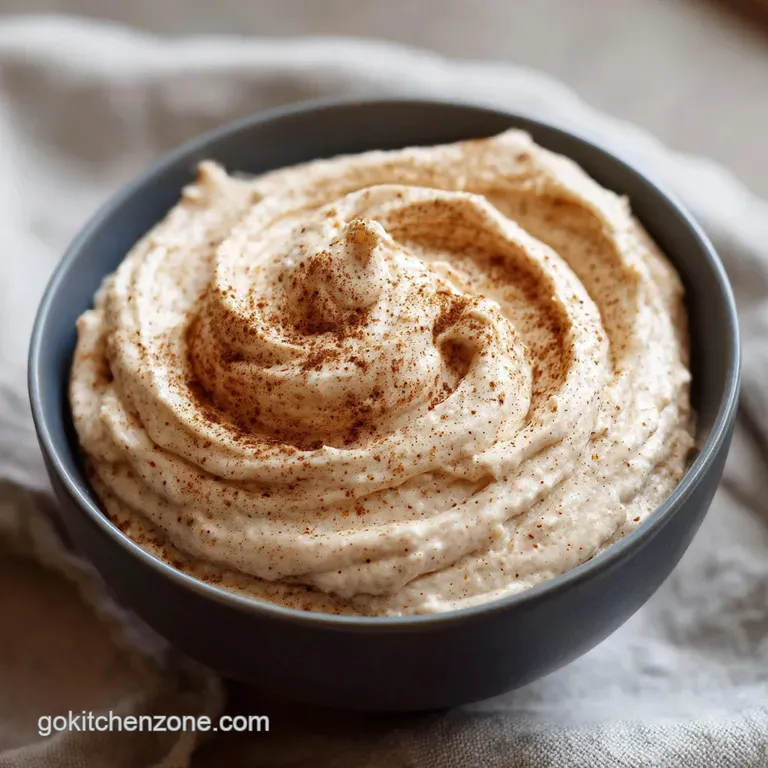
- Time: Active 10 minutes, Passive 0 minutes, Total 10 minutes
- Flavor/Texture Hook: Light, velvety, and sweet with a warm Saigon cinnamon finish
- Perfect for: Weeknight dinner sides, brunch spreads, or meal prepped snacks
- Mastering the Iconic Cinnamon Butter From Texas Roadhouse Recipe
- Science and Key Techniques Explained
- Essential Recipe Specs for Success
- Choosing Ingredients for Best Flavor
- Essential Equipment for Fluffy Butter
- The Simple Step-by-Step Whipping Process
- Solving Texture and Flavor Issues
- Smart Swaps and Flavor Variations
- Preservation and Creative Leftover Ideas
- Best Pairings and Perfect Complements
- Recipe FAQs
- 📝 Recipe Card
Mastering the Iconic Cinnamon Butter From Texas Roadhouse Recipe
We've all stood in that crowded lobby, stomach growling, just waiting for the waiter to drop off that first basket of warm rolls. The real star isn't even the bread; it's the whipped, sweet spread that disappears the second it hits the table.
I spent years trying to get that exact velvety texture at home, usually ending up with a lumpy, greasy mess because I was too impatient to let my ingredients reach the right temperature.
The secret to this cinnamon butter from texas roadhouse recipe isn't some mystery chemical; it's all about how you handle the fat. If your butter is too cold, it won't trap air. If it's too warm, the honey will just slide right off like oil on a rainy windshield.
I finally cracked the code after a failed brunch where I tried to "soften" butter in the microwave, only to create a soup that never whipped up.
Now, I make a double batch of this roadhouse recipe every Sunday. It turns a basic piece of toast into something that feels like a treat, and it's reliable enough for a hectic Tuesday night. We're going to use a specific double whip method that guarantees that signature fluffiness every single time.
Let's get the mixer ready and skip the 45 minute wait for a table.
Science and Key Techniques Explained
Getting the texture right requires understanding how fat and sugar interact during aeration. We aren't just mixing; we're building a structural foam.
- Fat Aeration: Beating the butter first creates tiny air pockets. These pockets are what give the spread its light, cloud like feel rather than a dense, oily one.
- Crystal Interface: The powdered sugar acts as a stabilizer. The fine particles sit between the fat molecules, preventing them from collapsing while providing a smooth mouthfeel without the grit of granulated sugar.
- Emulsification Stability: Honey is a humectant and can be difficult to bond with fat. By adding it slowly after the butter is already whipped, we force the honey into an emulsion that stays stable even at room temperature.
- Thermal Consistency: Keeping the butter at exactly 18°C (65°F) ensures it is soft enough to expand but firm enough to hold the air we're pumping into it.
| Method | Prep Time | Texture Result | Best Use Case |
|---|---|---|---|
| Fast Stir | 2 minutes | Dense and oily | Quick toast topping |
| Standard Mix | 5 minutes | Creamy but heavy | Sandwich spread |
| Classic Double Whip | 10 minutes | Airy and velvety | Authentic steakhouse style |
Choosing the classic whipping method is the only way to achieve the volume needed for this specific recipe. While a fast stir might save you a few minutes, you lose that signature "melt in-your mouth" sensation that makes this spread famous.
| Component | Science Role | Pro Secret |
|---|---|---|
| Salted Butter | Structural base and flavor carrier | Use European style for higher fat content and better loft |
| Raw Honey | Natural emulsifier and floral sweetener | Warm the jar in a bowl of water for 2 mins for easy pouring |
| Powdered Sugar | Texture stabilizer | Always sift to prevent microscopic lumps in the final whip |
| Saigon Cinnamon | Flavor depth | High volatile oil content provides a more intense "warmth" |
Essential Recipe Specs for Success
This recipe is designed for reliability, but you have to hit your marks. Accuracy with weight is far more important than volume when dealing with semi solid fats.
- Target Temperature: Your butter should be 18°C. If you press it with a finger, it should leave a clean indent without your finger sliding through to the bottom.
- Whip Duration: Expect to spend at least 4-5 minutes on the initial butter whip. You're looking for the color to change from yellow to a pale ivory.
- Yield Accuracy: This makes 16 servings (about 1.5 tablespoons each). If you don't see the volume nearly double in your bowl, you haven't whipped it long enough.
Chef's Tip: If your kitchen is hot (above 24°C), place your mixing bowl in the fridge for 5 minutes before you start. A cold bowl helps prevent the butter from hitting the "greasy" stage during high speed mixing.
Choosing Ingredients for Best Flavor
The quality of your fats and spices determines the final outcome of this texas roadhouse recipe. Since there is no cooking involved, every note is exposed.
- 1 cup (227g) high-quality salted butter: Softened naturally. Why this? Salt balances the heavy sugar and honey profiles perfectly.
- 1/4 cup (85g) raw organic honey: Room temperature. Why this? Provides a thicker viscosity than processed clover honey.
- 1/4 cup (30g) organic powdered sugar: Sifted. Why this? Dissolves instantly into the fat for a non gritty finish.
- 1.5 tsp Saigon cinnamon: Freshly opened if possible. Why this? It has a higher oil content and stronger aroma than Ceylon.
- 0.5 tsp vanilla bean paste: high-quality. Why this? The flecks look beautiful and the flavor is more concentrated.
| Original Ingredient | Substitute | Why It Works |
|---|---|---|
| Salted Butter (1 cup) | Unsalted Butter + 1/4 tsp salt | Allows for total control over sodium levels. |
| Raw Honey (1/4 cup) | Maple Syrup (Grade A) | Same sugar density but adds a woody, autumnal flavor. |
| Vanilla Bean Paste | Pure Vanilla Extract | Provides the same flavor profile but lacks the visual "specks." |
For those looking to pair this with a weekend breakfast, this spread is incredible on a Cinnamon Waffles recipe because the holes in the waffles act as little reservoirs for the melting honey and butter.
Essential Equipment for Fluffy Butter
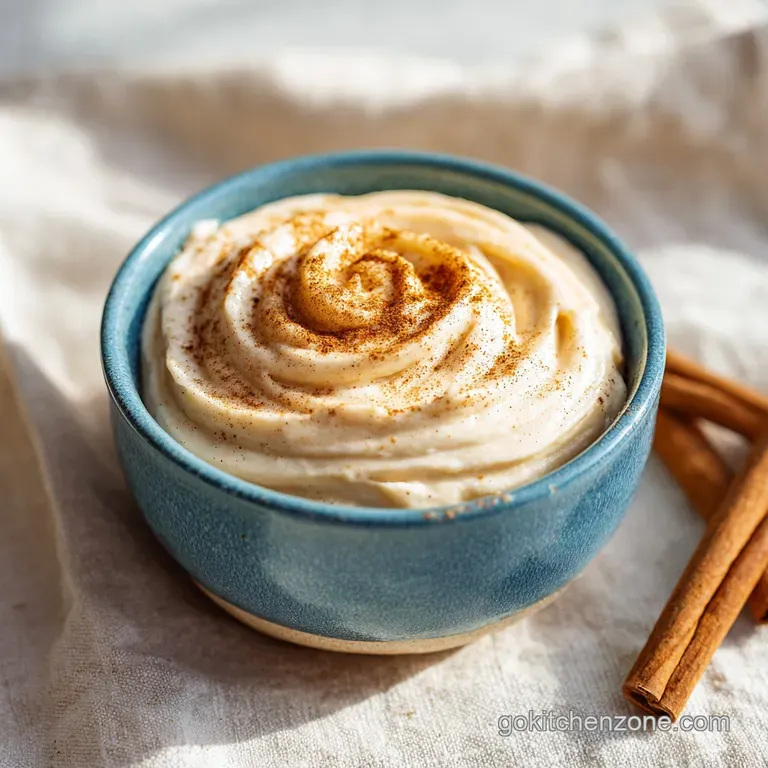
You don't need a commercial kitchen, but a fork and a bowl won't get you the aeration required for this cinnamon butter from.
- Stand Mixer or Electric Hand Mixer: Essential for incorporating enough air. A stand mixer (like a KitchenAid) is preferred because it allows you to stream in the honey while the whisk is running.
- Fine Mesh Sieve: To ensure the powdered sugar is completely free of clumps. Even tiny sugar beads can ruin the velvety texture.
- Silicone Spatula: For scraping the "dead zones" at the bottom of the bowl where honey tends to pool.
- Digital Thermometer: To check that the butter is at the 18°C sweet spot.
Chef's Tip: Use the whisk attachment rather than the paddle. The whisk is designed to pull air into the mixture, which is the secret to that "cloud" texture.
The Simple step-by-step Whipping Process
Follow this flow to ensure the emulsion doesn't break. The order of operations is just as important as the ingredients themselves.
- Check temperature. Ensure butter is 18°C. Note: This is the most common failure point.
- Cream the butter. Beat the 1 cup (227g) salted butter on medium high for 3 minutes until pale and fluffy.
- Sift sugar. Add the 1/4 cup (30g) powdered sugar through a sieve directly into the bowl.
- Incorporate sugar. Mix on low for 30 seconds, then high for 1 minute until no white streaks remain.
- Stream honey. With the mixer running, slowly drizzle in the 1/4 cup (85g) raw honey.
- Add aromatics. Stop the mixer and add 1.5 tsp Saigon cinnamon and 0.5 tsp vanilla bean paste.
- Final whip. Beat on high for 2 full minutes until the mixture looks like stiff whipped cream.
- Scrape and fold. Use a spatula to ensure everything from the bottom is incorporated.
- Transfer and set. Move to a serving crock and let sit at room temperature for 15 minutes until flavors meld and soften further.
Solving Texture and Flavor Issues
Even simple recipes can hit a snag, usually related to temperature or mixing speed. If your spread looks more like a sauce than a cloud, don't toss it out yet.
Correcting Liquid or Soupy Butter
If the butter gets too warm during mixing, the fat structure collapses and it becomes runny. This often happens if you use a microwave to soften the butter or if your kitchen is very hot.
Improving Gritty Cinnamon Texture
Sometimes the cinnamon doesn't fully hydrate, leaving a "dusty" feel on the tongue. This usually happens if the cinnamon is old or if it wasn't whipped long enough at high speed.
| Problem | Root Cause | Solution |
|---|---|---|
| Butter is "breaking" | Honey added too fast | Add a teaspoon of powdered sugar and whip on high for 1 minute. |
| Too salty | Low quality butter | Fold in an extra tablespoon of unsalted butter to dilute the salt. |
| Not fluffy enough | Butter was too cold | Let the bowl sit in warm water for 30 seconds, then re whip. |
Common Mistakes Checklist
- ✓ Never use margarine; the water content is too high and it will never fluff properly.
- ✓ Avoid the microwave for softening; it creates hot spots that melt the fat crystals.
- ✓ Sift the powdered sugar every single time to avoid "sugar beads."
- ✓ Don't skip the final 2 minute whip; this is where the volume actually happens.
Smart Swaps and Flavor Variations
While the classic version is hard to beat, you can adapt this recipe to fit different dietary needs or flavor profiles without losing the core structure.
- Vegan Friendly Adaptations: Swap the salted butter for a high fat plant based butter stick (like Miyoko's). Use agave nectar instead of honey. The texture will be slightly less stable at room temperature, so keep it chilled until 10 minutes before serving.
- Spiced Chai Version: Replace the cinnamon with a blend of cardamom, ginger, cloves, and black pepper. This creates a more complex, adult flavor profile that is incredible on scones.
- Bourbon Infusion: Add 1 teaspoon of high-quality bourbon during the honey step. The alcohol adds a smoky depth that pairs perfectly with grilled pork or sweet potatoes.
Scaling the Recipe
- Downsizing (1/2 batch): Use a small bowl and a hand mixer. It is difficult for a large stand mixer to catch a half batch of ingredients at the bottom.
- Upsizing (Double batch): Keep the cinnamon and vanilla at 1.5x the original amount first, then taste. Spices can become overwhelming when doubled exactly. Whip in two stages if your mixer bowl is smaller than 5 quarts.
Preservation and Creative Leftover Ideas
Since this spread is mostly fat and sugar, it has a surprisingly long shelf life if stored correctly.
Storage GuidelinesFridge: Store in an airtight container for up to 2 weeks. The butter will go firm, so you'll need to leave it on the counter for 30 minutes before it becomes spreadable again. Freezer: You can freeze this for up to 3 months.
I like to freeze it in silicone ice cube trays for perfect individual portions. Thaw overnight in the fridge.
Zero Waste Tips If you have a small amount left in the jar that isn't enough for a roll, don't wash it away. Toss a tablespoon of the leftover butter into a pan of sautéed carrots or sweet potatoes. The honey and cinnamon create a built in glaze that caramelizes beautifully.
You can also melt a dollop into your morning coffee for a "bulletproof" style treat with a festive kick.
Best Pairings and Perfect Complements
This butter isn't just for rolls. Its versatility makes it a staple for any meal that needs a hint of sweetness and warmth.
- The Brunch Duo: Serve this alongside a Homemade Cinnamon Rolls recipe for an absolute sugar and spice explosion. It adds an extra layer of creaminess to the bread.
- The Savory Contrast: Swipe a generous amount over a hot, salted sweet potato. The salt from the butter pulls out the natural sugars in the potato.
- The Steakhouse Finish: Believe it or not, a tiny bit of this on a charred pork chop or a thick cut ham steak provides a beautiful sweet and salty crust.
Common Misconceptions
- Myth 1: "You must use honey." While honey provides the classic flavor, maple syrup or even agave can work if you adjust the powdered sugar to compensate for the different liquid densities.
- Myth 2: "Whipping doesn't add flavor." Whipping actually changes how flavor molecules hit your tongue. By aerating the fat, you're increasing the surface area, making the cinnamon and vanilla taste much more intense than if they were just stirred in.
- Myth 3: "store-bought whipped butter is the same." Commercial whipped butter often uses nitrogen gas. Doing it at home with a mixer creates a more natural, dense foam that doesn't "deflate" the moment it hits warm bread.
Recipe FAQs
What is Texas Roadhouse cinnamon butter made of?
Salted butter, raw honey, powdered sugar, cinnamon, and vanilla. The key is using high-quality salted butter softened to exactly 18°C for proper aeration.
What is the butter they use at Texas Roadhouse?
They use high fat, salted butter. Replicating the texture requires a high fat European style butter because it has fewer milk solids and water content, which allows for greater air incorporation.
Is the cinnamon butter from Texas Roadhouse real butter?
Yes, the authentic recipe uses real butter. Commercial spreads sometimes rely on vegetable shortening for stability, but the true flavor comes entirely from the dairy fat structure you build through whipping.
Does Texas Roadhouse sell their cinnamon butter?
No, they do not typically sell retail tubs of the butter. While they sometimes offer small to-go containers, the easiest way to get it fresh is by making this recipe at home since the ingredients are simple.
How do I keep my cinnamon butter from separating after mixing?
Stream the honey in slowly while the mixer is running on low speed. This technique forces the honey to create a stable emulsion with the whipped fat structure, preventing separation later on. If you master stable fat mixtures here, you'll find the same principles apply when creating a thick dressing, like in our Corn Casserole Recipe.
What is the best method for getting that signature airy texture?
Use a stand mixer with the whisk attachment and whip for at least 5 minutes initially. You must beat the butter alone until it doubles in volume and becomes pale ivory; this step creates the necessary air pockets to support the sugar and honey.
Can I substitute granulated sugar for powdered sugar in this recipe?
No, powdered sugar is essential for the velvety texture. Granulated sugar has large crystals that will not fully dissolve into the fat, resulting in a gritty, unpleasant mouthfeel rather than the smooth spread required for this recipe.
Texas Roadhouse Cinnamon Butter
Ingredients:
Instructions:
Nutrition Facts:
| Calories | 126 kcal |
|---|---|
| Protein | 0.1 g |
| Fat | 11.5 g |
| Carbs | 6.6 g |
| Fiber | 0.1 g |
| Sugar | 6.3 g |
| Sodium | 91 mg |
