Smothered Chicken Recipe with Onion Gravy

- Time: Active 20 minutes, Passive 40 minutes, Total 1 hour
- Flavor/Texture Hook: Silky onion gravy over tender, salt seared chicken
- Perfect for: Stressful weeknights or a reliable Sunday family meal
- Essential Flavor Keys for This Smothered Chicken Recipe
- Why This Works
- Component Analysis for Success
- Selecting Your Base Components Wisely
- Minimal Tools for One Pan Ease
- Steps for Velvety Gravy Texture
- Avoiding Common Sear and Sauce Errors
- Customizing the Flavor Profile Naturally
- Keeping Leftovers Fresh and Tasty
- Classic Sides for Maximum Comfort
- Flavor Myths Debunked
- Critical in Sodium
- Recipe FAQs
- 📝 Recipe Card
Essential Flavor Keys for This Smothered Chicken Recipe
The first time I tried to make a Southern style gravy, the kitchen smelled like a dream but the pan looked like a disaster. I remember the sizzle of the chicken hitting the oil, that high pitched hiss that usually means good things, but I rushed the onions.
Instead of a deep, golden sweetness, I ended up with crunchy, translucent bits swimming in a grey puddle. It was a dinner struggle of the highest order, but it taught me one thing: patience with your aromatics is the difference between a bland meal and a legendary one.
When you drop 1.36 kg (3 lbs) of chicken thighs into a hot pan, the aroma of smoked paprika and garlic powder starts to bloom immediately. That scent fills the house and tells everyone that something serious is happening in the kitchen.
This dish isn't about being fancy; it's about how the flour on the chicken skin catches the fat to create a natural thickener. You're not just cooking; you're building layers of flavor that move from the sharp bite of cayenne pepper to the mellow, velvety finish of heavy cream.
We’ve all had those moments where we just want a plate that feels like a hug. That is exactly what we are doing here. By the time the thyme sprigs have wilted into the stock and the onions have melted into the sauce, you'll have a meal that looks like you spent three hours at the stove when you really just managed your time well.
It’s reliable, it’s one pan, and it actually works every single time.
Why This Works
- Maillard Reaction: Searing the skin on thighs at a high temperature creates a complex crust that provides the foundational "brown" flavor for the entire gravy.
- Starch Gelatinization: The 180 grams (1.5 cups) of flour used to dredge the chicken acts as a hidden roux, thickening the stock as it simmers without needing extra steps.
- Connective Tissue Breakdown: Simmering bone in thighs for 40 minutes allows the collagen to melt into gelatin, which gives the sauce its silky, mouth coating texture.
- Allium Caramelization: Thinly slicing the two large yellow onions increases their surface area, allowing them to release natural sugars that balance the salt and heat.
| Chicken Thickness | Internal Temp | Rest Time | Visual Cue |
|---|---|---|---|
| 2.5 cm (1 inch) | 74°C (165°F) | 5 minutes | Juices run clear when pierced |
| 4 cm (1.5 inches) | 74°C (165°F) | 8 minutes | Meat pulls easily from bone |
| Large Thigh (5 cm+) | 74°C (165°F) | 10 minutes | Skin is deep mahogany brown |
The resting period is non negotiable here. If you cut into the chicken immediately after pulling it from the pan, those internal juices will flood the plate instead of staying in the meat. Think of it like a quick cool down session that keeps every bite juicy.
While the chicken rests, the gravy continues to thicken and develop its final character.
Component Analysis for Success
| Ingredient | Science Role | Pro Secret |
|---|---|---|
| Chicken Thighs | Fat and Gelatin Source | Keep the skin on for maximum flavor release during the sear. |
| All Purpose Flour | Primary Thickening Agent | Season the flour heavily; it's your only chance to flavor the crust. |
| Yellow Onions | Sugar and Moisture | Slice them against the grain so they melt into the sauce faster. |
| Chicken Stock | Liquid Emulsion Base | Use low sodium stock so you can control the final salt levels yourself. |
Building a sauce like this is similar to the technique used in my Chicken Pot Pie recipe, where the fat and flour must bond before the liquid is introduced. When you understand how the flour coating on the chicken migrates into the stock, you stop worrying about lumps and start focusing on the color of your sear.
Selecting Your Base Components Wisely
To get this right, you need the official lineup of ingredients. We are using 1.36 kg (3 lbs) of bone in, skin on chicken thighs. Thighs are superior to breasts here because they won't dry out during the 40 minute simmer.
For the dredge, you’ll need 180 grams (1.5 cups) of all purpose flour mixed with 15 grams (1 tbsp) each of smoked paprika, garlic powder, and onion powder.
Don't skip the 5 grams (1 tsp) of cayenne pepper unless you really hate a tiny bit of back end heat. You’ll also need 10 grams (2 tsp) of kosher salt and 5 grams (1 tsp) of cracked black pepper. For the "smothering" part, grab 45 ml (3 tbsp) of vegetable oil, 2 large yellow onions, and 3 cloves of minced garlic.
The liquid base consists of 720 ml (3 cups) of low sodium chicken stock, 120 ml (0.5 cup) of heavy cream, 2 sprigs of fresh thyme, and 15 ml (1 tbsp) of Worcestershire sauce.
To Maximize Umami Depth
If you want to push the savory notes further, a dash of soy sauce or a teaspoon of tomato paste added with the garlic can do wonders. However, the Worcestershire sauce usually carries enough weight to provide that deep "umami" hit.
For the Chicken & Coating
Always pat your chicken dry with paper towels before dredging. If the skin is wet, the flour will turn into a gummy paste instead of a crisp coating. This is a trick I also use in my pan-fried Chicken recipe to ensure the seasoning actually sticks to the meat.
| Original Ingredient | Substitute | Why It Works |
|---|---|---|
| Heavy Cream | Full fat Coconut Milk | Provides similar fat content. Note: Adds a subtle tropical scent to the gravy. |
| Chicken Thighs | Drumsticks | Same cook time and fat ratio. The flavor remains consistently savory. |
| Vegetable Oil | Lard or Schmaltz | Higher smoke point and adds much deeper animal fat flavor. |
Minimal Tools for One Pan Ease
You don't need a kitchen full of gadgets for this. A heavy bottomed skillet, preferably cast iron or a deep stainless steel sauté pan, is the star of the show. You need something that can hold heat consistently.
A set of tongs is essential for flipping the chicken without tearing the skin, and a sturdy whisk will help you incorporate the stock into the flour and onion mixture without leaving any dry pockets.
Beyond the pan, a large shallow bowl or a gallon sized zip top bag works best for dredging the chicken. I personally prefer the bowl because I can see exactly how much coverage I’m getting.
You'll also want a sharp knife for those onions the thinner you slice them, the more "smothered" the chicken will actually feel.
Steps for Velvety Gravy Texture
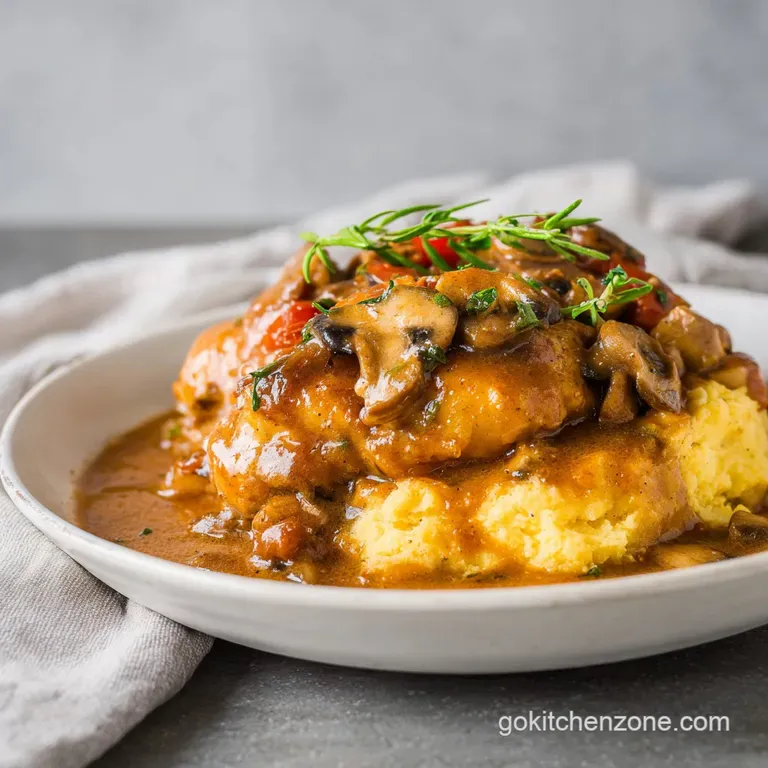
- Prep the chicken. Pat 1.36 kg (3 lbs) of thighs dry with paper towels. Note: Dry skin sears better.
- Mix the dredge. Combine 180 grams (1.5 cups) flour, paprika, garlic powder, onion powder, cayenne, salt, and pepper in a shallow dish.
- Coat thoroughly. Press each thigh into the flour mixture until every nook and cranny is covered.
- Heat the oil. Add 45 ml (3 tbsp) oil to your skillet over medium high heat.
- Sear the meat. Place chicken skin side down and cook 5-7 minutes until the skin is golden and shatters when poked. Flip and sear the other side for 3 minutes, then remove to a plate.
- Sauté aromatics. Toss in the sliced onions and cook for 8-10 minutes until they turn translucent and start to brown at the edges. Add garlic and cook for 1 minute.
- Build the base. Sprinkle 2 tablespoons of the leftover dredge flour over the onions and stir for 2 minutes to cook out the raw flour taste.
- Deglaze the pan. Slowly pour in 720 ml (3 cups) stock while whisking constantly until the liquid is smooth and bubbling.
- Simmer and smother. Return chicken to the pan, add thyme and Worcestershire, then lower heat. Cover and cook for 30 minutes.
- Add the finish. Stir in 120 ml (0.5 cup) heavy cream and simmer uncovered for 5-10 minutes until the gravy coats the back of a spoon.
Chef's Tip: If your gravy looks too thick before the chicken is done, don't panic. Just whisk in an extra 1/4 cup of stock or water. The flour on the chicken continues to thicken the sauce as it sits, so it's a living thing until it hits the plate.
Avoiding Common Sear and Sauce Errors
One of the biggest mistakes I see is people overcrowding the pan. If you put all the chicken in at once, the temperature drops and the chicken steams instead of searing. Work in two batches if you have to. You want that "sizzle" to stay loud and proud.
Another pitfall is the flour if you don't cook the flour and onion mixture for at least two minutes before adding stock, your gravy will taste like raw dough.
Why Your Gravy Is Lumpy
If you add the stock too fast, the flour clumps together. The key is a slow stream while whisking vigorously. It might look like a paste at first, but keep going, and it will smooth out into a velvety sauce.
| Problem | Root Cause | Solution |
|---|---|---|
| Greasy Gravy | Too much oil left after searing | Drain all but 2 tablespoons of fat before adding onions. |
| Bland Sauce | Under seasoned flour | Taste the gravy at the end and add a splash of Worcestershire or salt. |
| Tough Chicken | High heat during simmer | Ensure the liquid is at a low bubble, not a rolling boil. |
Common Mistakes Checklist
- ✓ Don't skip the paper towel dry; moisture is the enemy of a golden sear.
- ✓ Let the pan get hot for 3 minutes before the oil goes in.
- ✓ Never pour cold stock into a blazing hot pan; let the stock be room temp if possible.
- ✓ Resist the urge to move the chicken for the first 5 minutes of searing.
- ✓ Check the internal temp with a meat thermometer to hit exactly 74°C.
Customizing the Flavor Profile Naturally
If you're feeling adventurous, there are ways to tweak this without breaking the fundamental structure. For a "Soul Food" kick, add a teaspoon of hot sauce or a pinch of red pepper flakes to the gravy. If you want a Smothered Chicken Oven Recipe variation, you can perform the sear on the stove and then transfer the whole skillet to a 175°C (350°F) oven for the 30 minute simmer. This often results in an even more tender bird because the heat surrounds the pan entirely.
If you want it lighter, do this:
- Use skinless thighs to reduce the total fat content significantly.
- Replace the heavy cream with whole milk or a splash of Greek yogurt stirred in at the very end.
- Increase the amount of onions and garlic to provide flavor without needing as much salt.
Keeping Leftovers Fresh and Tasty
Storage is straightforward. This dish actually tastes better the next day because the spices have more time to mingle. Keep it in an airtight container in the fridge for up to 4 days. When reheating, the gravy will likely have turned into a thick gel.
Add a splash of water or stock before microwaving or heating on the stove to bring that velvety texture back to life.
For zero waste, save the chicken bones if you're using bone in thighs. You can toss them into a pot with water and veggie scraps to make a quick stock for your next Chicken Vegetable Soup recipe. If you have leftover gravy but no chicken, it's incredible served over toast or used as a base for a quick pot pie the following night. You can freeze this for up to 3 months, though the cream might separate slightly upon thawing just whisk it well during reheating.
Classic Sides for Maximum Comfort
You need something to soak up that gravy. Mashed potatoes are the obvious choice, but white rice or buttered egg noodles are just as effective. I personally love serving this with a side of garlicky green beans or collard greens to cut through the richness of the sauce.
To Achieve Fall Apart Tenderness
The secret is the low and slow simmer. If you try to rush it by boiling the sauce, the muscle fibers in the chicken will tighten up and become rubbery. Keep the bubbles small and lazy.
Scaling the Recipe
- To Downsize (Serves 2-3): Use 0.7 kg of chicken. Halve the flour and spices, but keep at least one full onion for flavor. Reduce the stock to 400 ml.
- To Upsize (Serves 12): Double everything but work in three batches for the searing. Use a large Dutch oven instead of a skillet to ensure you have enough room for all the liquid to circulate.
Flavor Myths Debunked
One common myth is that searing "seals in the juices." Science tells us this isn't true moisture is lost during the sear regardless. What you are actually doing is creating the Maillard reaction, which is purely about flavor and texture.
Another myth is that you must use "cream of" soups for a good smothered chicken. While those shortcuts exist, using real onions, flour, and stock creates a much cleaner, more sophisticated flavor profile that doesn't leave a film on the roof of your mouth.
Trust me, once you see that gravy go from a thin liquid to a thick, mahogany colored sauce, you'll never go back to the canned stuff. It's about taking those few extra minutes to brown the onions and whisk the flour properly.
Your kitchen will smell better, your family will eat better, and you'll feel like a pro even on a Tuesday.

Critical in Sodium
1180 mg mg of sodium per serving (51% % of daily value)
The American Heart Association recommends limiting sodium intake to about 2,300mg per day for most adults.
Sodium Reduction Tips for this Recipe
-
Low-Sodium Broth-30%
Swap the regular chicken stock for a no-sodium or low-sodium version. This simple change can significantly reduce the overall sodium content.
-
Reduce Added Salt-25%
Halve the amount of kosher salt initially added to the recipe. Taste and adjust if needed, remembering that other ingredients contribute sodium.
-
Worcestershire Alternative-20%
Use a low-sodium Worcestershire sauce. Alternatively, reduce the quantity or eliminate it completely for a subtle change in flavor but lower sodium.
-
Chicken Prep-10%
Rinse the chicken thighs thoroughly before cooking. This may remove some surface sodium if the chicken was pre-treated.
-
Fresh Herbs & Spices
Instead of relying on salt for flavor, experiment with a wider variety of fresh herbs like parsley, oregano, or basil, and spices to enhance the taste.
Recipe FAQs
What's the secret to the best smothered chicken?
Patience with the aromatics and a proper sear. You must cook the dredged flour coating with the onions until they are deeply golden brown before adding stock; this creates the foundational flavor for the gravy.
What is smothered chicken?
It is pan-seared chicken smothered in a thick, savory gravy. Typically, chicken thighs are dredged in seasoned flour, seared until crisp, removed, and then simmered in a rich sauce made from the pan drippings, onions, stock, and cream.
What's the difference between stew chicken and smothered chicken?
Smothered chicken is defined by its thick, gravy like sauce, whereas stew chicken uses a thinner broth. Smothered chicken relies on a roux or flour dredge for thickening, while stew chicken often uses naturally reduced stock or vegetables for body.
Can I use water instead of chicken broth for smothered chicken?
No, stick with chicken broth for optimal flavor depth. Water will result in a very thin, bland sauce unless you heavily compensate with bouillon or concentrated seasonings.
How to ensure the chicken is tender and not dry after simmering?
Simmer bone-in thighs gently over low heat until the internal temperature reaches exactly 74°C (165°F). Bone-in thighs provide necessary fat and collagen that breaks down beautifully during the long simmer, keeping the meat moist; this principle of fat rendering also applies when learning to perfect a Creamy Herb Chicken recipe.
Is it true I must use chicken thighs and not breasts?
No, this is a common misconception, but thighs are strongly recommended. Thighs have much higher fat content, which prevents them from drying out during the 40-minute simmer required to fully develop the gravy.
How to keep the gravy from being lumpy when I add the stock?
Pour the liquid in slowly while whisking the flour/onion mixture constantly. Whisking vigorously helps break up any initial clumps of flour paste before the liquid fully incorporates.
Smothered Chicken Recipe
Ingredients:
Instructions:
Nutrition Facts:
| Calories | 685 kcal |
|---|---|
| Protein | 46 g |
| Fat | 44 g |
| Carbs | 24 g |
| Fiber | 2 g |
| Sugar | 4 g |
| Sodium | 1180 mg |
