Foolproof Prime Rib Roast Recipe
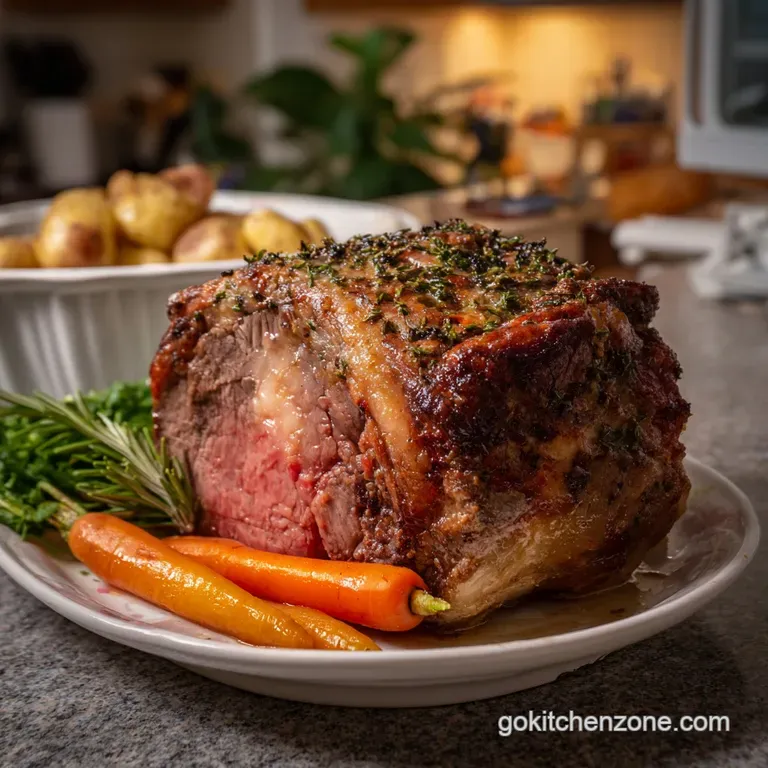
- Time: Active 30 minutes, Passive 4 hours, Total 4 hours 30 mins
- Flavor/Texture Hook: Shatter crisp herb crust with a velvety, melt in-your mouth center
- Perfect for: Holiday centerpieces or low stress Sunday family feasts
- Achieve a Juicy Prime Rib Roast Recipe
- Reasons the Science Works Well
- Selecting the Best Quality Elements
- Critical Specs and Success Checkpoints
- Minimal Tools for Reliable Results
- Step by Step Preparation Guide
- Solving Common Cooking Hurdles
- Adjusting for Different Meat Sizes
- Debunking Traditional Kitchen Myths
- Fresh Storage and Leftover Ideas
- Creative Flavor Variations to Try
- Serving Suggestions for Great Presentation
- Recipe FAQs
- 📝 Recipe Card
Cooking a massive hunk of beef is enough to make anyone sweat. I remember the first time I stared down an 8 lb roast in my kitchen, thinking I was about to turn a very expensive grocery trip into a very large piece of leather.
It’s a common dinner struggle because most people treat it like a standard roast, crank the heat, and hope for the best. That’s how you end up with a grey, overcooked ring around a tiny patch of red.
We aren't doing that today. This method is about reliability. I’ve found that the secret isn't some fancy gadget or a "gourmet" secret sauce, it’s just physics and patience.
By the time we’re done, you’ll have a roast that looks like it came out of a high end steakhouse, but you’ll have spent most of the afternoon on the couch instead of hovering over the stove.
Right then, let's get into it. This prime rib roast recipe relies on a two stage temperature process. It sounds fancy, but it just means we cook it low to keep it juicy, then high to make it pretty. It’s the most reliable way I know to get dinner on the table without a single "is it done yet?" panic attack.
Achieve a Juicy Prime Rib Roast Recipe
Salt Diffusion: Sodium ions penetrate the muscle fibers over time, which denatures proteins and allows the meat to hold onto more liquid during the cook.
Enzymatic Breakdown: Naturally occurring enzymes in the beef work more efficiently at low temperatures, tenderizing the connective tissue before the heat gets high enough to toughen it.
Thermal Momentum: Because we start low, the internal temperature rises slowly and evenly, preventing the outer layers from overcooking while the center is still cold.
Maillard Reaction: The final over high heat blast triggers a chemical reaction between amino acids and reducing sugars, creating that dark, savory crust.
Reasons the Science Works Well
| Ingredient | Science Role | Pro Secret |
|---|---|---|
| Kosher Salt | Protein Denaturation | Season 24 hours early to dry brine the interior. |
| Dijon Mustard | Emulsified Binder | Acts as "glue" for herbs while the acidity balances fat. |
| Garlic Paste | Sulfuric Aromatics | Mincing into paste releases more oils than chopping. |
| Black Pepper | Heat Stability | Use coarse grinds to prevent the spice from burning. |
Selecting the Best Quality Elements
The 1 (3-4 bone) standing rib roast (approx. 8 lbs) is the star of the show. You want to look for "Choice" or "Prime" grades if your budget allows, as the marbling is what keeps the meat silky. If you can't find a bone in version, a boneless rib eye roast works too, though it might cook about 15% faster.
For the seasoning, 3 tbsp Diamond Crystal Kosher salt is non negotiable. Don't use table salt, it's too salty by volume and won't distribute as evenly. We pair this with 1/4 cup Grey Poupon Dijon mustard which serves as our binder.
Why this? The mustard disappears but leaves a tangy depth that cuts through the rich beef fat.
You will also need 2 tbsp freshly cracked black pepper and 3 tbsp finely minced fresh rosemary and thyme. Fresh is much better than dried here because the volatile oils are more potent. Then there’s 6 cloves garlic, minced into a paste, and 1 tbsp prepared horseradish.
Why this? Horseradish adds a sharp "bite" that makes the crust incredibly addictive.
| Original Ingredient | Substitute | Why It Works |
|---|---|---|
| Dijon Mustard | Spicy Brown Mustard | Similar acidity but adds a rustic, grainy texture. |
| Fresh Rosemary/Thyme | Dried Herbs (1 tbsp) | Concentrated flavor, though less aromatic than fresh. |
| Garlic Paste | Garlic Powder (2 tsp) | Distributes evenly but lacks the pungent punch of fresh. |
| Prepared Horseradish | Wasabi Paste | Provides similar nasal heat but with a cleaner finish. |
Critical Specs and Success Checkpoints
To keep things reliable, keep these three checkpoints in mind. First, the meat must sit out for at least 2 hours before hitting the heat. If it’s cold from the fridge, the outside will overcook before the middle even realizes it’s in the oven.
Second, pull the roast when the thermometer hits 120°F for medium rare. Carryover cooking is real, and it will climb to 130°F while resting. Third, the rest must be at least 30 minutes.
Cut it too soon, and all that juice ends up on your cutting board instead of in your mouth.
Minimal Tools for Reliable Results
You don't need a kitchen full of gadgets for a prime rib roast recipe oven masterpiece. A heavy duty roasting pan is great, but honestly, a large Lodge Cast Iron Skillet or even a sturdy rimmed baking sheet with a wire rack will do the job. The goal is to keep the meat elevated so air can circulate underneath.
The most important tool is a digital meat thermometer. Do not try to "poke" the meat or time it by the clock. Every oven is different, and every roast has a different shape. A probe thermometer that stays in the meat while it cooks is a total life saver for busy cooks.
It removes all the guesswork and ensures you never overcook a pricey piece of beef.
step-by-step Preparation Guide
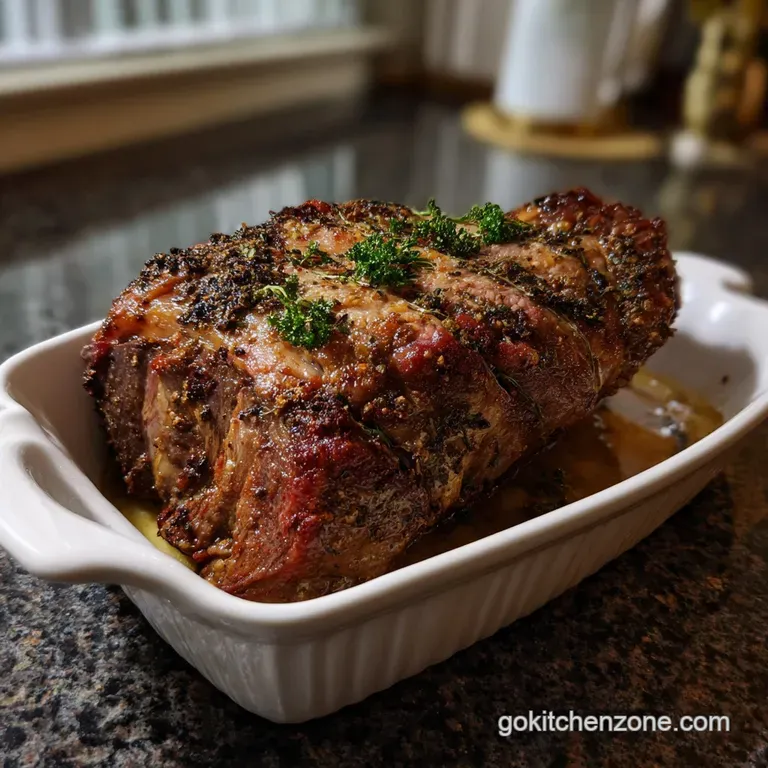
Prepping the Dry Brine
Pat the 8 lb standing rib roast completely dry with paper towels. Rub the 3 tbsp Kosher salt over every single inch of the meat and bones. Place it on a rack over a tray and leave it uncovered in the fridge for 24 hours. Note: This dries out the surface for a better crust later.
Making the Herb Rub
In a small bowl, mix the 1/4 cup Dijon mustard, 2 tbsp cracked black pepper, 3 tbsp minced rosemary and thyme, 6 cloves garlic paste, and 1 tbsp horseradish. Stir until it forms a thick, fragrant paste.
Applying the Mustard Rub
Slather the mustard mixture over the top and sides of the roast. You want a thick, even coating. This isn't just for flavor, it’s a protective barrier that keeps the meat from drying out during the long cook.
Setting Up the Oven
Preheat your oven to 250°F. We are using the prime rib roast recipe reverse sear method here, which means we go low and slow first. Place the roast bone side down in your pan.
The Low Temperature Cook
Slide the roast into the oven. Roast for about 3 to 4 hours until the internal temperature reaches 120°F. This is the slow phase where the magic happens.
The Essential Rest Period
Remove the roast from the oven and tent it loosely with foil. Let it sit for 30 to 45 minutes. Do not skip this. The temperature will continue to rise to about 130°F (medium rare).
The High Heat Blast
While the meat rests, crank your oven to 500°F. Once the oven is screaming hot, put the roast back in for 6 to 10 minutes until the crust is dark brown and sizzling.
Carving and Serving
Remove the roast and cut the strings. Slide your knife along the bones to remove the entire eye of the roast, then slice the meat into thick slabs. It should be perfectly pink from edge to edge.
Solving Common Cooking Hurdles
Why Your Meat Overcooked
The biggest culprit is usually ignoring carryover cooking. Meat is like a thermal battery; it holds heat and keeps cooking even after you pull it out. If you wait until the thermometer says 130°F in the oven, you'll end up with a medium roast at 140°F after the rest.
Fixing a Stall in Temperature
Sometimes the roast hits 110°F and just stays there for what feels like an eternity. This is the "stall," caused by surface moisture evaporating and cooling the meat. Don't panic and don't turn up the heat. Just wait it out. It will eventually start climbing again. This is similar to how we handle the slow process in a Prime Rib Roast Oven recipe.
| Problem | Cause | Fix | Pro Tip |
|---|---|---|---|
| Grey Inner Ring | Oven too hot initially | Use the 250°F setting | Start with a cold ish roast |
| Soggy Crust | Surface was too wet | Pat dry and salt early | Leave uncovered in fridge |
| Tough Texture | Cut too early | Rest for 30+ minutes | Use a sharp carving knife |
Adjusting for Different Meat Sizes
If you are scaling down to a 2 bone roast (about 4-5 lbs), the cook time will drop significantly, usually to around 2 hours. Keep the temperature at 250°F and rely solely on your thermometer. For larger roasts (up to 7 bones), the time can stretch to 5 or 6 hours.
When working with massive pieces of meat, I usually reduce the salt to 1.5x the original amount rather than doubling it to prevent the exterior from becoming too briney.
For a smaller gathering, you might consider making a Christmas Side Dish recipe to fill out the plate. When doubling the recipe for two separate roasts, make sure there is at least 3 inches of space between them in the oven so the air can circulate, otherwise, they will steam instead of roast.
Debunking Traditional Kitchen Myths
Searing meat does not "seal in juices." This is a total myth that’s been around forever. Moisture loss actually increases at high temperatures. We sear at the end solely for flavor and texture via the Maillard reaction.
Another one is that you should always cook prime rib at 500 degrees for 15 minutes then turn the oven off. While that "500 degree oven" method can work, it's very inconsistent because every oven loses heat at a different rate. The reverse sear is far more reliable for the home cook.
Fresh Storage and Leftover Ideas
- Fridge
- Store leftovers in an airtight container for up to 4 days. To keep it juicy, wrap the meat tightly in plastic wrap before putting it in the container.
- Freezer
- You can freeze cooked slices for up to 3 months. Thaw in the fridge overnight before reheating.
- Zero Waste
- Save those bones! Simmer them with onions, carrots, and celery for 6 hours to make the most incredible beef stock you've ever tasted. You can also shave the leftover cold meat thin for the best French Dip sandwiches of your life.
Creative Flavor Variations to Try
If you want to change things up, try a garlic butter finish. Melt a stick of butter with smashed garlic and pour it over the roast during the final 500 degree blast. For a bit of an earthy twist, add 1 tsp of porcini mushroom powder to your dry rub. It adds a massive hit of umami without changing the texture. If you're looking for a different vibe entirely, you could even serve this alongside a Prime Rib recipe inspired horseradish cream sauce.
Serving Suggestions for Great Presentation
When it comes to the table, keep it simple. Let the meat be the star. I like to serve the slices on a large wooden board with the bones piled to the side people love to gnaw on those.
Stovetop vs Oven Comparison
| Method | Pros | Cons |
|---|---|---|
| Traditional Oven | Fast, familiar | Often results in a thick grey ring |
| Reverse Sear | Wall to wall pink, tender | Takes significantly longer |
| Stovetop Sear | Incredible crust | Difficult to handle 8 lbs of meat in a pan |
- - If you want the most tender, even cook
- Use the reverse sear method.
- - If you are short on time
- Use a higher temp (325°F) but expect more grey meat.
- - If you love a thick, charred crust
- Do a stovetop sear before the oven.
Honestly, don't even bother with low-fat versions or skipping the salt. The fat is what makes this a prime rib roast recipe worth making. Trust the process, watch your thermometer, and you'll be fine. Let's crack on.
Recipe FAQs
What internal temperature should I pull the prime rib out of the oven at for medium rare?
Yes, 120°F is the target pull temperature. Due to carryover cooking, the internal temperature will continue to rise by about 10 degrees while resting, bringing it perfectly to 130°F.
Can I substitute table salt instead of Kosher salt for the dry brine?
No, stick strictly to Kosher salt. Table salt is much denser by volume, meaning you will oversalt the meat and interfere with proper surface dehydration for the crust.
How long must the roast rest after cooking before slicing?
A minimum of 30 minutes is mandatory for resting. This allows the muscle fibers to relax and reabsorb the juices; cutting early will release all the moisture onto your board.
Is it necessary to use the bone-in cut for the best results?
No, a boneless rib eye roast works, but adjust the time. The bone acts as an insulator, slowing the cook slightly, so expect a boneless roast to cook about 15% faster.
What is the purpose of applying the Dijon mustard layer?
The mustard acts primarily as an emulsified binder. It holds the herb and spice rub firmly against the meat during the long, low cook, and its mild acidity balances the richness of the beef fat.
If my roast stalls (stops rising in temperature), should I increase the heat?
No, resisting the urge to raise the heat is crucial. The stall happens when surface moisture evaporates, cooling the meat; just let the low temperature continue working, as this ensures an even cook, much like the slow, precise nature of a [Cinnamon Rolls: Velvety Crumb, Easy Scratch Recipe] dough
rest.
How far in advance can I season the roast for the best flavor penetration?
Seasoning up to 24 hours ahead is ideal for dry brining. The salt must penetrate the muscle fibers to tenderize and allow the meat to hold more liquid during the cooking process.
Foolproof Prime Rib Roast
Ingredients:
Instructions:
Nutrition Facts:
| Calories | 942 kcal |
|---|---|
| Protein | 56g |
| Fat | 79g |
| Carbs | 2g |
| Fiber | 0.6g |
| Sugar | 0.4g |
| Sodium | 1480mg |
