Classic Lasagna Recipe with Meat Sauce
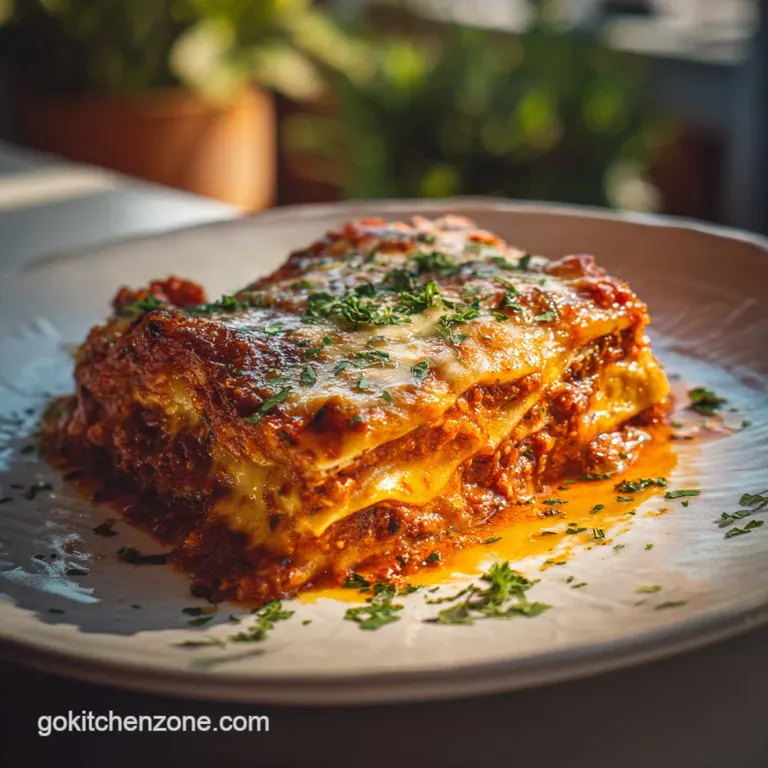
- Time: Active 45 minutes, Passive 1 hours 15 mins, Total 2 hours
- Flavor/Texture Hook: Savory, velvety ricotta and crispy cheese edges
- Perfect for: Sunday family dinner or impressive meal prep
- Reasons This Recipe Always Wins
- Component Analysis and Selection
- Essential Ingredients and Smart Swaps
- Tools for a Perfect Bake
- Step-by-Step Guide to Layering
- Fixing Common Lasagna Soup Issues
- Scaling for Any Crowd
- Debunking Common Kitchen Beliefs
- Flavor Variations and Easy Substitutes
- Storing and Reheating Your Leftovers
- Best Sides for Italian Night
- High in Sodium
- Recipe FAQs
- 📝 Recipe Card
You know that specific sound? The low, rhythmic sizzle of ground beef and Italian sausage hitting a hot pan? That’s where the magic starts. I remember the first time I tried making a "real" lasagna for a big dinner party.
I was so proud of it, but when I cut into it, the whole thing just slid apart into a puddle of red soup. It tasted fine, but it looked like a kitchen accident. I realized then that great food isn't just about ingredients - it's about the construction.
We’ve all been there, staring at a plate of what should be a masterpiece but is actually a messy heap. Since that day, I’ve obsessed over the "stack." I wanted layers you could actually see, a sauce that clung to the noodles, and a cheese crust that would literally shatter under your fork.
This version is the result of years of trial and error, a few burnt pans, and a lot of hungry friends giving me honest feedback. It's the kind of meal that makes the whole house smell like a dream and actually stays together when you serve it.
Reasons This Recipe Always Wins
- Protein Synergy: Mixing lean beef with Italian sausage provides a balance of texture and fat that single meat sauces lack.
- Starch Management: Par boiling the noodles just enough allows them to absorb excess sauce moisture during the final bake.
- Binder Chemistry: The egg in the ricotta mixture denatures and sets, acting as a "glue" that holds the heavy layers in place.
- The Nutmeg Factor: A tiny amount of nutmeg mimics the flavor profile of a traditional bechamel without the extra stovetop work.
Precision Doneness Checkpoints
| Thickness | Internal Temp | Rest Time | Visual Cue |
|---|---|---|---|
| 3.5 inches | 165°F | 15 minutes | Bubbles at edges slow down |
| 4 inches | 165°F | 20 minutes | Cheese top moves as one unit |
| 2.5 inches | 160°F | 10 minutes | Sauce no longer looks watery |
It is absolutely vital to let the dish sit after it comes out of the oven. If you cut it immediately, the heat keeps the cheese and sauce in a liquid state, leading to the dreaded "lasagna slide." Giving it those fifteen minutes allows the proteins and starches to firm up, ensuring a clean slice every single time.
Component Analysis and Selection
| Ingredient | Science Role | Pro Secret |
|---|---|---|
| Tomato Paste | Umami booster | Fry it in the meat fat until it turns brick red for deeper flavor |
| Whole Milk Ricotta | Moisture & Creaminess | Drain it in a fine mesh sieve for 30 minutes to prevent a watery bake |
| Dry Red Wine | Acidity & Depth | Use a Merlot to dissolve flavorful browned bits from the pan bottom |
| Low Moisture Mozzarella | Meltability | Shred your own block; pre shredded cheese is coated in starch that prevents a smooth melt |
Choosing the right ingredients is half the battle when you're on a budget. You don't need the most expensive imported tomatoes to get a great result, but you do need to understand how these components interact.
For instance, the acidity in the wine isn't just for taste - it helps break down the connective tissue in the meats, making the sauce much more tender.
Essential Ingredients and Smart Swaps
- 1 lb lean ground beef (90/10): Provides the meaty base. Why this? High protein to fat ratio prevents a greasy, oily finish.
- Substitute: Ground turkey (93/7) with 1 tsp extra olive oil.
- 1 lb Italian sweet sausage: Adds fat, fennel, and spice. Why this? The pre seasoned meat builds flavor faster than plain pork.
- Substitute: Ground pork with an extra tablespoon of Italian seasoning.
- 1 large yellow onion: The aromatic foundation. Why this? Sweeter than white onions, it balances the tomato acidity.
- Substitute: 2 large shallots for a more delicate flavor.
- 4 cloves garlic: Sharp, pungent depth. Why this? Microplaning it ensures it melts into the sauce evenly.
- Substitute: 1 tsp garlic powder added to the dry herbs.
- 28 oz crushed San Marzano tomatoes: The sauce body. Why this? Naturally sweeter and less acidic than standard canned tomatoes.
- Substitute: Any "Red Gold" or "Muir Glen" crushed tomatoes.
- 6 oz tomato paste: Thickener and color. Why this? Concentrates the tomato flavor without adding extra liquid.
- Substitute: 1/2 cup tomato puree reduced by half on the stove.
- 0.5 cup dry red wine: Deglazing agent. Why this? Adds a sophisticated, fermented note that mimics long simmered sauces.
- Substitute: 1/4 cup balsamic vinegar mixed with 1/4 cup beef broth.
- 2 tsp dried oregano & 0.5 cup fresh basil: The herbal profile. Why this? Oregano thrives in heat; basil adds a fresh finish.
- Substitute: Dried Italian seasoning blend (3 tsp total).
- 15 oz whole milk ricotta: The creamy layer. Why this? Skim ricotta is too grainy and can become watery.
- Substitute: Cottage cheese (small curd) drained and pulsed in a blender.
- 1 large egg: The structural binder. Why this? Necessary to keep the cheese layer from running.
- Substitute: 2 tbsp heavy cream (Note: will result in a softer set).
- 0.5 cup Pecorino Romano: Salty, sharp kick. Why this? More intense than Parmesan, so you can use less.
- Substitute: Grated Parmesan cheese.
- 0.25 tsp freshly grated nutmeg: The "secret" aromatics. Why this? Rounds out the dairy flavors and adds complexity.
- Substitute: A pinch of ground mace.
- 1 lb low moisture mozzarella cheese: The melting cheese. Why this? Melts evenly without releasing too much water.
- Substitute: Provolone or a mild white cheddar blend.
- 12 classic lasagna noodles: The "bones" of the dish. Why this? Stronger structure than "no bake" varieties.
- Substitute: No boil noodles (add 1/2 cup extra water to the sauce).
- 1 tsp sea salt & 0.5 tsp coarse black pepper: Seasoning. Why this? Enhances every other ingredient.
- Substitute: Standard table salt (use slightly less).
Tools for a Perfect Bake
Deep Dish 9x13 Casserole Pan
A standard baking dish is often too shallow for a truly towering Lasagna. I prefer a ceramic or glass dish that is at least 3 inches deep. This prevents the sauce from bubbling over the sides and making a mess of your oven floor.
If you use metal, just keep in mind that it conducts heat faster, so the edges might get crispy a bit sooner than they would in ceramic.
Heavy Bottomed Dutch Oven
Building the meat sauce requires consistent heat. A heavy pot like a Lodge cast iron or a Le Creuset ensures the meat browns evenly without scorching. You need enough surface area to let the wine evaporate quickly when you deglaze, or you'll end up steaming the meat instead of searing it.
Chef's Note: If you're worried about cleanup, place a rimmed baking sheet on the rack below your lasagna. It’ll catch any stray drips of cheese or sauce before they smoke up your kitchen.
step-by-step Guide to Layering
1. Build the Flavor Base
Brown the 1 lb beef and 1 lb sausage in the Dutch oven over medium high heat. Cook until the meat is deeply browned and no pink remains.Note: This creates the Maillard reaction, which is the key to that savory "umami" flavor.
2. Sauté the Aromatics
Add the minced onion and microplaned garlic to the rendered fat in the pan. Sauté for 5 minutes until the onions are translucent and fragrant. If the pan seems too dry, add a teaspoon of olive oil, but usually, the sausage provides plenty of fat.
3. The Deglaze and Simmer
Pour in the 0.5 cup red wine and scrape the bottom of the pan with a wooden spoon. Simmer until the wine has reduced by half. This incorporates all those "fond" bits into the liquid. Add the crushed tomatoes, tomato paste, oregano, salt, and pepper.
Cover and simmer on low for 30 minutes.
4. Prepare the Noodles
While the sauce simmers, boil the 12 noodles in salted water for 2 minutes less than the package directions. Cook until they are flexible but still have a firm bite. Drain and lay them flat on parchment paper so they don't stick together.
5. Whip the Ricotta Binder
In a medium bowl, combine the 15 oz ricotta, 1 egg, 0.5 cup Pecorino Romano, and 0.25 tsp nutmeg. Mix until the egg is fully incorporated and the texture is velvety. Fold in half of the chopped fresh basil at this stage.
6. Start the Layering
Spread 1 cup of the meat sauce in the bottom of your 9x13 pan. Layer 3 noodles across the sauce, slightly overlapping them to create a solid floor.
7. The Mid Section Build
Spread one third of the ricotta mixture over the noodles, followed by a generous handful of mozzarella and another cup of meat sauce. Repeat this layering pattern two more times. You want to be intentional with your spreading so the corners don't end up dry.
8. The Final Top
Place the last 3 noodles on top. Cover with the remaining sauce and the rest of the 1 lb mozzarella. Ensure the cheese reaches all the way to the edges. This creates a seal that keeps the interior moist.
9. The Controlled Bake
Cover the pan tightly with foil, making sure it doesn't touch the cheese (spray the foil with oil if needed). Bake at 375°F (190°C) for 25 minutes.
Remove the foil and bake for another 25 minutes until the cheese is golden brown and bubbling vigorously.
10. The Essential Rest
Remove the pan from the oven and set it on a cooling rack. Let it rest for at least 15 minutes before slicing. Note: This is the most important step for structural integrity.
Fixing Common Lasagna Soup Issues
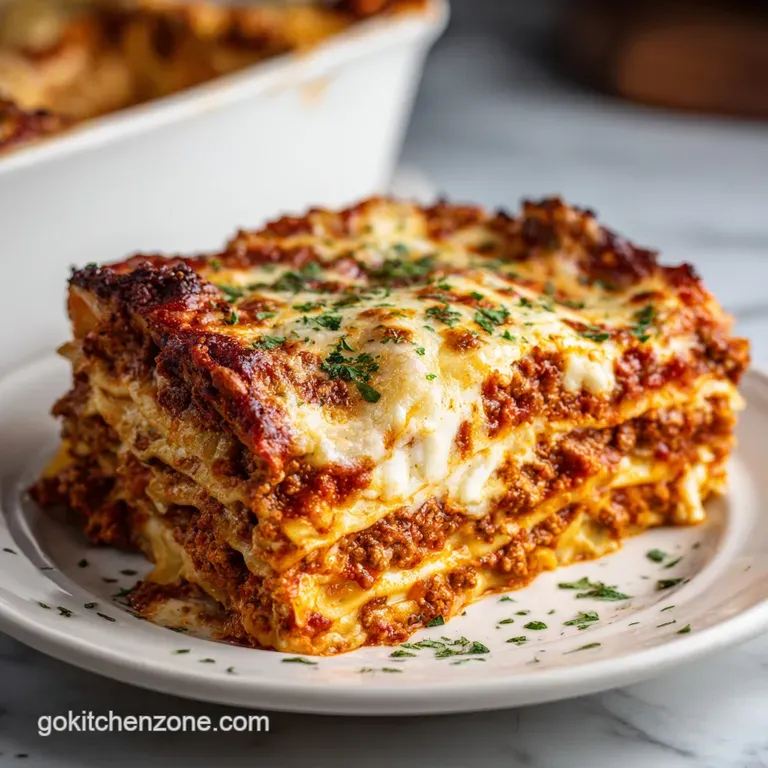
The "Sliding" Lasagna
If your layers are drifting apart like icebergs, it usually means your sauce was too thin or you didn't let the dish rest. To prevent this, always simmer your sauce until it's thick enough to coat the back of a spoon. Using the egg in the ricotta is also non negotiable for a stable stack.
Crunchy Top Edges
Sometimes the noodles on the very top or the corners get hard and brittle. This happens if they aren't fully covered by sauce or cheese. If you notice the edges are getting too dark too fast, you can loosely tent the pan with foil again for the last 10 minutes of baking.
| Problem | Root Cause | Solution |
|---|---|---|
| Watery bottom | Excess moisture in ricotta or onions | Drain ricotta for 30 mins; sauté onions until fully softened |
| Tough noodles | Not enough sauce liquid | Ensure noodles are completely submerged in sauce/cheese |
| Greasy surface | High fat meat wasn't drained | Use 90/10 beef and drain excess fat before adding tomatoes |
Common Mistakes Checklist
- ✓ Shred your own mozzarella from a block for a better melt.
- ✓ Don't skip the nutmeg; it provides a professional flavor profile.
- ✓ Sauté the tomato paste for 2 minutes before adding the crushed tomatoes.
- ✓ Pat the par boiled noodles dry with a paper towel before layering.
- ✓ Allow the sauce to cool slightly before assembling to prevent the cheese from melting prematurely.
- ✓ Use a deep dish pan to avoid oven spills.
Scaling for Any Crowd
Making a Half Batch
To scale down, use an 8x8 inch square pan. You can use half of the beef and sausage, but it's often easier to cook the full amount of sauce and freeze half for later. For the egg, beat it in a small bowl and use about 2 tablespoons.
Bake time should be reduced by about 10-15 minutes, but still aim for that 165°F internal temperature.
Doubling for a Party
When doubling, use two separate 9x13 pans rather than one giant one to ensure even heat distribution. You don't need to double the salt or spices exactly; start at 1.5x and taste as you go.
Total bake time might increase by 15 minutes if you are putting both pans in the oven at the same time, as the oven temperature will drop initially.
High Volume Shortcuts
If you are cooking for a huge group, using "no boil" noodles can save a massive amount of time and counter space. Just ensure your sauce has an extra 1/2 cup of water or broth to account for the absorption. If you like the idea of a faster pasta bake, you might also enjoy my Ravioli Lasagna Bake recipe which uses pre made ravioli to skip the layering hassle entirely.
| Component | Classic Method | Fast Shortcut | Result Difference |
|---|---|---|---|
| Meat Base | Beef/Sausage mix | Bulk Italian sausage only | Slightly less beefy depth |
| Noodles | Par boiled classic | No boil sheets | Softer, less "chewy" texture |
| Sauce | Simmered 45 mins | high-quality jarred sauce | Less complex, more acidic |
This table helps you decide where to spend your time. If it's a Tuesday night, the "Fast Shortcut" column is a life saver. For a holiday, stick to the "Classic Method" for that traditional, slow cooked feel that everyone expects.
Debunking Common Kitchen Beliefs
One myth I hear constantly is that you must boil noodles all the way through before layering. This is actually a mistake! If you boil them to "al dente," they will become mushy and disintegrated after an hour in the oven.
Par boiling for just a few minutes leaves enough room for the pasta to drink up the sauce, which seasons the noodle from the inside out.
Another misconception is that you need a bechamel (white sauce) for it to be "authentic." While common in Northern Italy, the ricotta based version is a staple of Southern Italian American cooking. It’s not "wrong," it’s just a different style.
Ricotta provides a much higher protein count and a lighter, grainier texture that many people actually prefer for a weeknight meal.
Flavor Variations and Easy Substitutes
The Plant Forward "Umami" Swap
If you want to cut back on meat without losing flavor, swap the beef for 1 lb of finely chopped cremini mushrooms. Sauté them until they release all their water and turn golden brown. They provide a similar "chew" and a deep earthiness that pairs beautifully with the Pecorino.
The "Zoodle" Low Carb Twist
For a keto friendly version, replace the noodles with thin slices of zucchini or eggplant. The key here is to salt the slices first and let them sit for 20 minutes, then pat them completely dry.
If you don't do this, the vegetables will release their water in the oven and turn your dinner into a vegetable soup.
| Premium Ingredient | Budget Alternative | Flavor Impact | Savings |
|---|---|---|---|
| San Marzano Tomatoes | Canned Crushed + 1 tsp sugar | Slightly more acidic | Save $3-5 per can |
| Pecorino Romano | Parmesan (Green shaker style) | Less salty punch | Save $4 per wedge |
| Fresh Basil | Dried Basil (use 1/3 amount) | Less "bright" finish | Save $3 per bunch |
Storing and Reheating Your Leftovers
Fridge and Freezer Rules
Lasagna is arguably better the next day. Keep it in an airtight container in the fridge for up to 4 days. For long term storage, you can freeze individual slices wrapped tightly in plastic wrap and then foil for up to 3 months. This is my favorite way to handle "emergency dinners" for busy weeks.
Reheating for Best Texture
To reheat a large portion, cover it with foil and bake at 350°F (180°C) until the center is hot. For a single slice, the microwave works, but the oven or an air fryer is better for keeping the cheese from getting rubbery.
If it looks a little dry, add a teaspoon of water or a splash of extra sauce before heating to create a bit of steam.
Zero Waste Tips
Don't throw away those broken noodle pieces at the bottom of the box! Boil them and toss them into a minestrone soup. If you have leftover ricotta mixture, it makes a killer topping for pancakes the next morning or can be stirred into a quick Spaghetti Pie Recipe to add a creamy element to a simpler pasta dish.
Best Sides for Italian Night
When you have a dish this heavy and rich, you need something bright and acidic to cut through the fat. A simple arugula salad with lemon vinaigrette is my go to. It cleans the palate and makes you want another bite of that savory meat sauce.
Garlic bread is the classic choice, of course. I like to make mine with plenty of salted butter and a sprinkle of dried parsley. If you're feeling adventurous, a side of roasted broccolini with red pepper flakes adds a nice bit of bitterness and crunch that contrasts the soft layers of the main course.
Honestly, this dish is so complete that even a simple plate of sliced tomatoes with sea salt is enough to call it a feast. Give it a try this weekend your kitchen (and your stomach) will thank you!
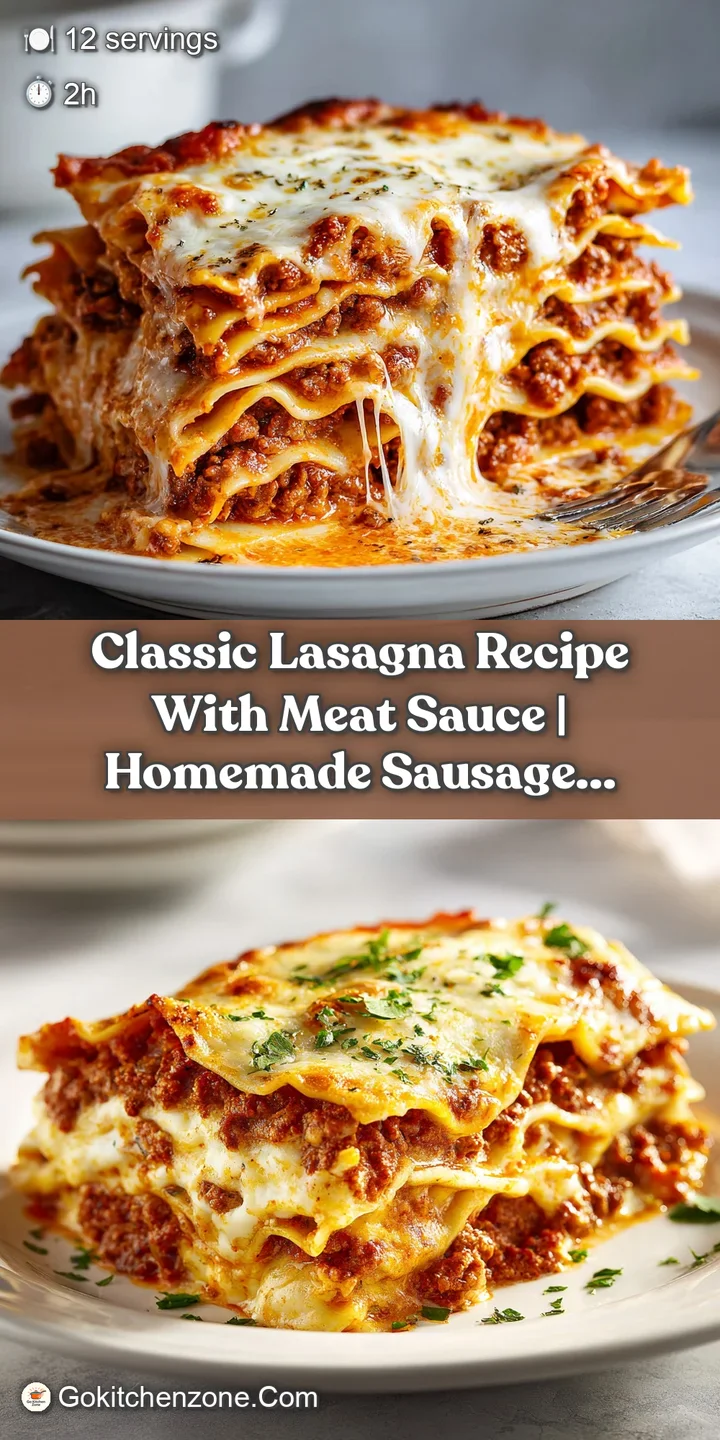
High in Sodium
945 mg mg of sodium per serving (41% of daily value)
The American Heart Association recommends limiting sodium intake to about 2,300mg per day for overall cardiovascular health.
Tips to Reduce Sodium in Your Lasagna
-
Reduce Cheese Sodium-15%
Opt for low-sodium or no-salt added ricotta and mozzarella cheese. These alternatives can significantly reduce the overall sodium content without sacrificing flavor. This can reduce sodium by up to 15%.
-
Reduce Sodium in Sausage-25%
Choose low-sodium Italian sausage or substitute half of the sausage with an equal amount of lean ground beef. This can reduce sodium by up to 25%.
-
No-Salt Added Tomatoes-20%
Use no-salt added crushed tomatoes and tomato paste. This eliminates a significant source of sodium without affecting the recipe's integrity. This can reduce sodium by up to 20%.
-
Control Added Salt-25%
Omit the added sea salt completely and adjust the seasoning at the end, if needed. Taste as you go! Remember that the cheeses and sausage already contribute sodium. This can reduce sodium by up to 25%.
-
Sodium in Wine?-5%
Ensure the dry red wine used is a low-sodium variety. While not a major source, every little bit helps. Many wines contain sulfites and can contain trace sodium. This can reduce sodium by up to 5%.
-
Flavor with Herbs
Enhance the flavor with more fresh basil, oregano, garlic, nutmeg, and black pepper to compensate for the reduction in salt. These won't add sodium and can boost the flavor profile.
Recipe FAQs
How to make a lasagne step-by-step?
Brown the meat, sauté the aromatics, simmer the sauce for 30 minutes, par boil the noodles, whip the ricotta binder, and then layer the components in the pan. Ensure you bake covered for 25 minutes then uncovered for 25 minutes, followed by an essential 15-minute rest.
What are the correct layers for lasagna?
Start with sauce, then noodles, followed by ricotta, mozzarella, and more sauce. You repeat this pattern twice more, finishing with the final noodles, sauce, and a generous top layer of mozzarella cheese.
What are the main ingredients in lasagna?
The main components are a dual meat sauce (beef/sausage), lasagna noodles, a ricotta binder mixed with egg and Pecorino, and low moisture mozzarella cheese. A good tomato base using quality crushed tomatoes is also crucial for flavor depth.
How to make lasagna at home from scratch?
Build a rich meat sauce by first browning the ground beef and sausage, deglazing with red wine, and simmering with tomatoes and herbs for at least 30 minutes. While simmering, prepare your ricotta mixture with egg and seasonings, and par boil your lasagna noodles until flexible.
Do I need to pre-boil my lasagna noodles?
Yes, par boil them, but do not cook them fully. Boil the noodles for 2 minutes less than directed so they are still firm; this allows them to absorb liquid and set properly during the long bake time without becoming mushy.
Why does my finished lasagna fall apart when I slice it?
This is almost always caused by slicing the lasagna immediately after it comes out of the oven. You must let the finished dish rest, covered loosely, for at least 15 minutes so the internal structure can set and the cheese can firm up.
Is it true that you must use both beef and sausage in the sauce?
No, it is not strictly mandatory, but it is highly recommended for the best flavor. Mixing lean beef with fatty, seasoned Italian sausage provides a superior balance of savory depth and necessary fat that a single meat cannot achieve.
Classic Meat Lasagna Recipe
Ingredients:
Instructions:
Nutrition Facts:
| Calories | 568 kcal |
|---|---|
| Protein | 36.5 g |
| Fat | 32.4 g |
| Carbs | 31.2 g |
| Fiber | 3.8 g |
| Sugar | 6.2 g |
| Sodium | 945 mg |
