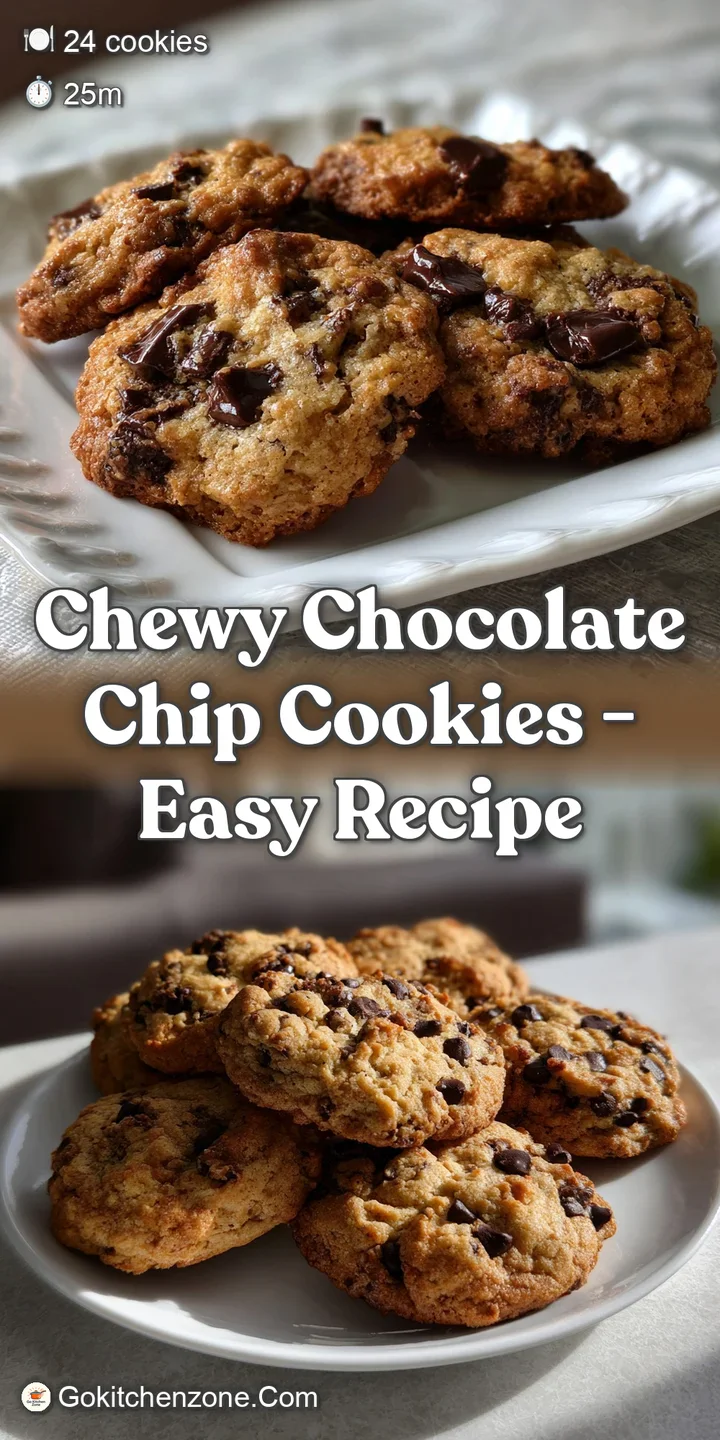
Chewy Chocolate Chip Cookies Recipe
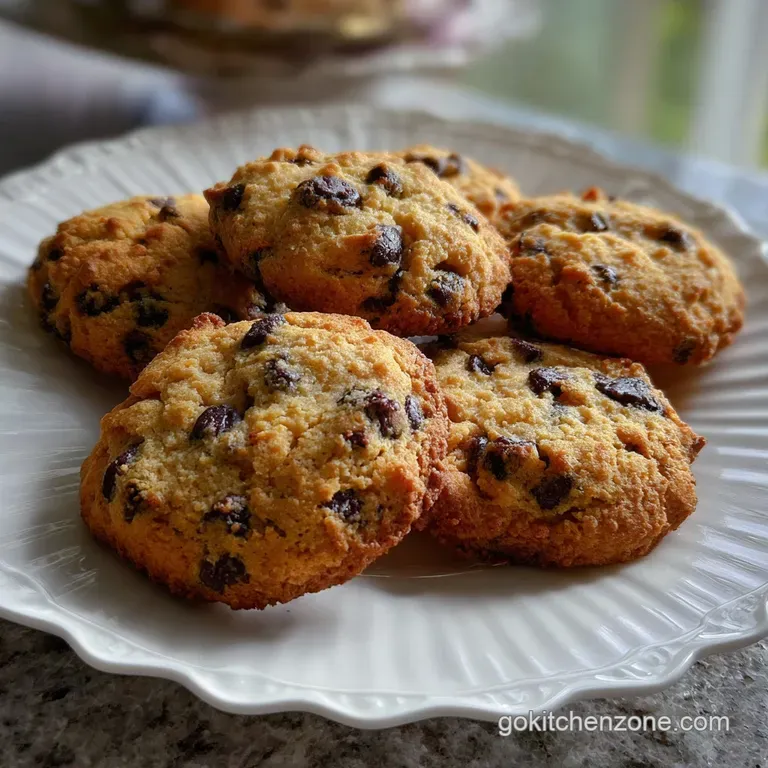
- Effort/Time:25 minutes (low-effort, high-reward)
- Flavor Hook: Deep mahogany caramelization with hits of sea salt
- Perfect for: Make-ahead snacks or a quick-fix weeknight treat
- Understanding the Molecular Harmony of This chocolate chip cookies Recipe
- Precision Time and Temperature Control for Consistent Batches
- The Alchemy of Texture: Selecting Elements for chocolate chip cookies
- Minimal Tools Strategy for High-Efficiency Cookie Production
- The Atomic Execution Protocol for chocolate chip cookies Success
- Solving Common Structural Failures in Your Chip Cookie Batches
- Flavor Architecture and Smart Substitutions for Every Pantry
- ⚗️ The Scaling Lab: The Physics of Quantity
- Common Myths Debunked
- Preservation Physics and the Science of Reheating Cookies
- Recipe FAQs
- 📝 Recipe Card
Understanding the Molecular Harmony of This chocolate chip cookies Recipe
Pulling a tray of flat, gray, puddle like cookies out of the oven is a technical failure that hurts both the spirit and the grocery budget. I remember destroying three consecutive batches of dough by over creaming the butter until it lost its structural integrity, resulting in a greasy mess that lacked any "chewy snap." That failure led me to realize the physics of butter temperature; if it's too warm, the emulsion breaks before the starch can set.
The secret to this "Masterclass" result isn't a complex technique, but rather resting the dough to allow for full starch hydration, which creates that signature crackled top and prevents the dreaded "cookie spread."
- Maillard Reaction
- The combination of light brown sugar and baking soda raises the pH, accelerating browning and creating complex, toasted flavor compounds.
- Hygroscopic Balance
- The 0.75 cup of light brown sugar attracts moisture, ensuring the center stays velvety while the granulated sugar allows the edges to dehydrate and shatter.
- Fat Emulsification
- Using one large egg provides the lecithin necessary to bind the 0.75 cup of unsalted butter and 2.25 cups of flour into a stable, cohesive matrix.
| Ingredient | Chemical/Physical Role (Science) | The Pro Secret (Why This Matters) |
|---|---|---|
| All-purpose Flour | Provides the gluten network for structural rigidity | 2.25 cups ensures enough protein to hold the 2 cups of chips without collapsing |
| Baking Soda | Leavening agent that reacts with acidic brown sugar | Promotes the Maillard reaction for a deep mahogany colored finish |
| Unsalted Butter | Provides lipids for tenderness and flavor | Softened (not melted) state traps air during creaming for a lighter crumb |
| Sea Salt | Enhances flavor perception and strengthens gluten | 0.5 tsp balances the high sugar content and makes the chocolate "pop" |
Precision Time and Temperature Control for Consistent Batches
Success in baking is determined by three exact numeric checkpoints. First, your oven must reach 190°C (375°F) before the tray enters; a cold start leads to fat leakage before the structure sets.
Second, the creaming process should take exactly 3 minutes at medium speed until the mixture looks like pale buttercream. Third, the internal temperature of a "finished" cookie should be roughly 80°C to 85°C.
If you pull them at this stage, carryover cooking will finish the center while keeping it soft.
| Prep Type | Texture Result | Time Commitment |
|---|---|---|
| Fresh Dough | Soft, velvety center with high moisture | 25 minutes total |
| Aged Dough (24h) | Intense caramel notes, deeper browning | 24 hours 15 mins |
| Shortcut (store-bought) | Uniform but often lacks "shatter" edges | 12 minutes |
The Alchemy of Texture: Selecting Elements for chocolate chip cookies
To make homemade chocolate chip cookies that stand out, you need specific elements. I recommend using King Arthur All-Purpose Flour for its consistent protein content and Nielsen Massey Pure Vanilla Extract for its complex aromatic profile.
If you are out of an ingredient, use the table below to pivot without ruining the batch.
| Original Ingredient | Substitute | Why It Works |
|---|---|---|
| 2.25 cups AP Flour | 2.25 cups Almond Flour | Note: Results in a denser, moisture rich crumb; cookies won't rise as much. |
| 0.75 cup Brown Sugar | 0.75 cup White Sugar + 1 tbsp Molasses | Recreates the acidity and moisture needed for the chewy texture. |
| 0.75 cup Butter | 0.75 cup Coconut Oil (Solid) | High fat content maintains structure, but adds a distinct tropical note. |
| 2 cups Chocolate Chips | 2 cups Chopped Dark Chocolate | Higher cocoa butter content leads to "melty pools" rather than distinct chips. |
- 2.25 cups King Arthur All-Purpose FlourWhy this? 11.7% protein content provides the ideal "chewy" resistance without being tough.
- 1 tsp Arm & Hammer Baking SodaWhy this? Specific alkalinity levels ensure the cookies spread just enough to thin the edges.
- 0.5 tsp Diamond Crystal Sea SaltWhy this? Larger flakes dissolve slowly, providing bursts of contrast against the sugar.
- 0.75 cup Kerrygold Unsalted Butter, softened
- 0.75 cup Domino Light Brown Sugar, packed
- 0.5 cup Domino Granulated White Sugar
- 1 Large Egg
- 2 tsp Pure Vanilla Extract
- 2 cups Nestlé Toll House Semi Sweet Chocolate Chips
Minimal Tools Strategy for High Efficiency Cookie Production
You don't need a pantry full of gadgets to make a best chocolate chip cookies recipe. I prioritize reliability and speed. A KitchenAid Stand Mixer is great, but a simple Pyrex Glass Mixing Bowl and a sturdy Rubbermaid Silicone Spatula give you more control over the dough's development.
For baking, a USA Pan Half Sheet provides superior heat distribution, ensuring the bottom of the cookies doesn't burn before the top sets.
- Whisk: Use this to aerate the dry ingredients and break up flour clumps.
- Large Mixing Bowl: Essential for the creaming stage; glass allows you to see if sugar is fully incorporated.
- Measuring Cups/Spoons: Vital for the "2.25 cups" precision required for gluten balance.
- Baking Sheet: Use a light colored rimmed sheet to prevent over browning the bottoms.
- Wire Cooling Rack: Crucial for airflow to stop the cooking process immediately after removal.
The Atomic Execution Protocol for chocolate chip cookies Success
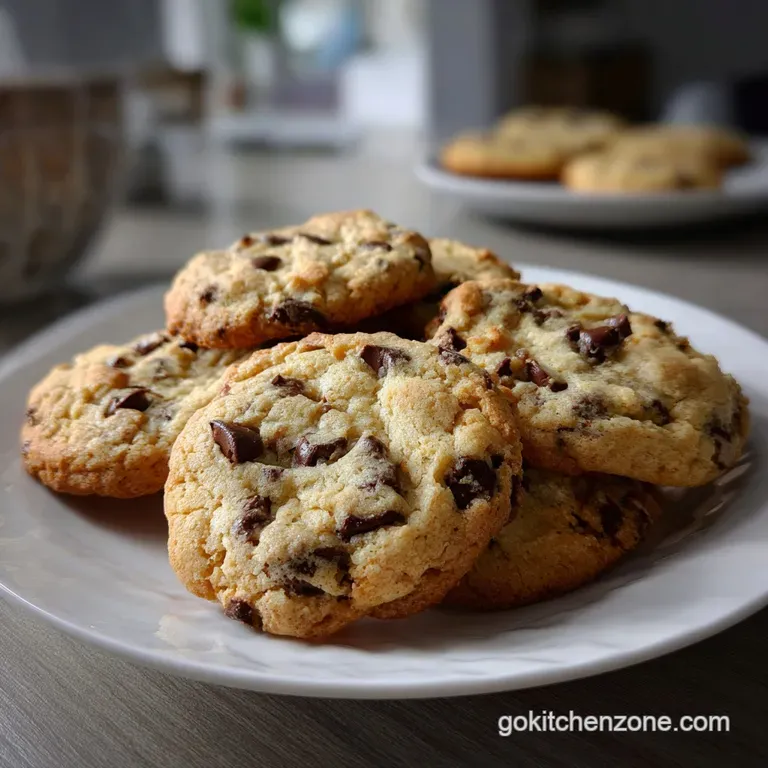
- Preheat the oven to 190°C (375°F). Note: High heat creates the "shatter" edge.
- Whisk the 2.25 cups all-purpose flour, 1 tsp baking soda, and 0.5 tsp sea salt in a small bowl until the mixture is uniform and aerated.
- Cream the 0.75 cup softened butter with 0.75 cup light brown sugar and 0.5 cup granulated sugar for 3 minutes until the texture is fluffy and pale mahogany.
- Beat in the 1 large egg and 2 tsp vanilla extract until the mixture is glossy and fully emulsified.
- Fold the dry flour mixture into the wet ingredients until no white streaks remain and a thick dough forms.
- Stir in the 2 cups semi sweet chocolate chips until they are evenly distributed throughout the mass.
- Scoop rounded tablespoons of dough onto the baking sheet until you have 12 per tray, spaced 5cm apart.
- Bake for 9 to 11 minutes until the edges are golden brown and the centers look slightly underdone.
- Rest the cookies on the hot baking sheet for 2 minutes until the structure firms up enough to move.
- Transfer to a wire rack for 10 minutes until the cookies reach room temperature and the chocolate sets.
Solving Common Structural Failures in Your Chip Cookie Batches
Why your chewy chocolate chip cookies sometimes turn into hard biscuits usually comes down to oven calibration or over mixing. If you work the dough too long after adding the flour, you develop too much gluten, which leads to a tough, bread like texture instead of a tender "velvety" one.
Why Your Cookies Spread Too Much
Excessive spreading happens when the butter is too soft or the oven is too cool. When the fat melts before the flour's proteins can denature and set the structure, the dough simply flows across the pan. This is why "softened" butter should still feel cool to the touch, not oily or warm.
| Problem | Root Cause | The Fix | Pro Protocol |
|---|---|---|---|
| Flat Cookies | Butter was too warm/melted | Chill dough for 30 mins | Use butter at 18°C exactly |
| Tough Texture | Over developed gluten | Mix dry ingredients only until combined | Use the "folding" method |
| Burnt Bottoms | Dark baking sheet | Use parchment or a lighter pan | Move rack to the upper third |
Flavor Architecture and Smart Substitutions for Every Pantry
Creating homemade chocolate chip cookies allows for endless variations. If you want a deeper flavor, try adding a teaspoon of espresso powder to the dry ingredients; it acts as a flavor catalyst for the chocolate. For another classic texture profile, check out my Sugar Cookies Recipe which uses similar creaming physics but focuses on a soft, pillowy bite.
- Salted Dark Chocolate: Swap semi sweet chips for 70% cacao chunks and add a pinch of Maldon salt on top.
- Nutty Crunch: Replace 0.5 cup of chips with toasted walnuts or pecans for tactile variety.
- The "Brown Butter" Hack: Melt the butter and brown it before cooling to a solid state; this adds a nutty, toasted aroma.
Chef's Tip: To get that professional "rippled" look, bang the baking sheet on the oven rack halfway through baking. This collapses the air bubbles and creates beautiful ridges.
⚗️ The Scaling Lab: The Physics of Quantity
When you decide to double this easy chocolate chip cookies recipe, the physics of your kitchen changes. You cannot simply multiply everything by two and expect the same results.
- Flavor Saturation: For the salt and vanilla, scale to 1.5x. If you use 1 tsp of salt for 48 cookies, it will taste significantly saltier than the single batch due to how flavor compounds interact in larger volumes.
- Thermal Mass: Adding two cold trays of dough to the oven simultaneously drops the internal temperature by up to 15°C. The Fix: Increase bake time by 2 3 minutes or rotate the trays halfway through to ensure even heat absorption.
- Chemical Leavening: Scale the baking soda exactly. Too much soda in a large batch creates a metallic, soapy aftertaste and causes the cookies to collapse.
- Pan Crowding: Never try to fit more than 12 cookies on a standard sheet. Crowding prevents the hot air from circulating, leading to "steamed" cookies that lack the "shatter" edge.
Common Myths Debunked
Myth: You must chill the dough for 24 hours for a good cookie. Truth: While chilling improves flavor, this chocolate chip cookie recipe easy version is specifically balanced for immediate baking by using a higher ratio of brown sugar for instant moisture.
Myth: Melted butter and softened butter are interchangeable. Truth: Melted butter destroys the air pockets needed for a "velvety" crumb. Softened butter (18°C) is required to hold the air bubbles that expand during baking.
Preservation Physics and the Science of Reheating Cookies
To keep chocolate chip cookies from scratch fresh, you must combat starch retrogradation (staling). Storing them in an airtight container with a slice of white bread works because the cookies will pull moisture from the bread, keeping the centers soft for up to 5 days.
- Freezing: You can freeze raw dough balls for up to 3 months. Bake them directly from frozen, adding 2 minutes to the total time.
- Reheating: Use a microwave for 10 seconds to soften the chocolate, or a 150°C oven for 3 minutes to restore the "shatter" to the edges.
💡 ZERO WASTE PHILOSOPHY: Don't discard broken cookie crumbs or the "dust" at the bottom of the jar. Transform: Pulse them in a blender and use as a base for a cheesecake crust or a topping for vanilla ice cream.
Science: The high fat and sugar content in the crumbs provides a pre-caramelized, crunchy structural base that holds up better than plain graham crackers.
Whether it’s a Tuesday night craving or a weekend project, these chocolate chip cookies deliver a reliable, high density flavor that beats any store-bought shortcut. Let's crack on and get a batch in the oven!
Recipe FAQs
What sugar ratio creates the best chewy-to-crispy balance?
Brown sugar for chewiness, granulated for edges. Brown sugar is hygroscopic, attracting moisture to keep the center soft while white sugar promotes dehydration at the perimeter for a crisp snap.
Must I chill the dough before baking?
No. Chilling is optional, not mandatory for this formulation. This specific recipe uses a controlled fat/flour ratio that prevents excessive spread even when baking immediately after mixing.
Why are my cookies greasy puddles on the sheet?
Butter temperature was too high, breaking the emulsion. If the butter is fully melted, the fat leaks before the flour structure sets, causing the cookie to flow outward uncontrollably.
- Use butter only slightly softened (around 18°C)
- Ensure oven is at full 190°C preheat
- Add 1 extra tablespoon of flour if dough feels slack
Is it better to use salted or unsalted butter?
Unsalted butter for precision control. Salted brands vary widely (80-200mg sodium per tbsp), making standardization impossible when balancing sugar content. Unsalted lets you accurately control the 0.5 tsp specified.
Does the type of flour significantly change the texture?
Yes, protein content dictates chewiness. All-Purpose flour (11-12% protein) creates the ideal gluten network for chewiness; using low-protein pastry flour will result in a crumbly, cake like texture.
Myth: Baking soda and baking powder are interchangeable.
Myth: Baking soda and baking powder are interchangeable. Reality: Baking soda requires an acid (brown sugar) to activate fully, promoting spread and color via the Maillard reaction; powder activates with liquid and heat alone.
Myth: You must scrape down the bowl after creaming butter and sugar.
Myth: You must scrape down the bowl after creaming butter and sugar. Reality: Scraped butter often incorporates too quickly into the egg mixture, leading to curdling; allow 3 minutes of uninterrupted creaming for stable aeration.
Chewy Chocolate Chip Cookies
Ingredients:
Instructions:
Nutrition Facts:
| Calories | 205 kcal |
|---|---|
| Protein | 2.1 g |
| Fat | 10.3 g |
| Carbs | 26.9 g |
| Fiber | 0.8 g |
| Sugar | 18.2 g |
| Sodium | 85 mg |
