Sausage and Cheese Egg Casserole Recipe
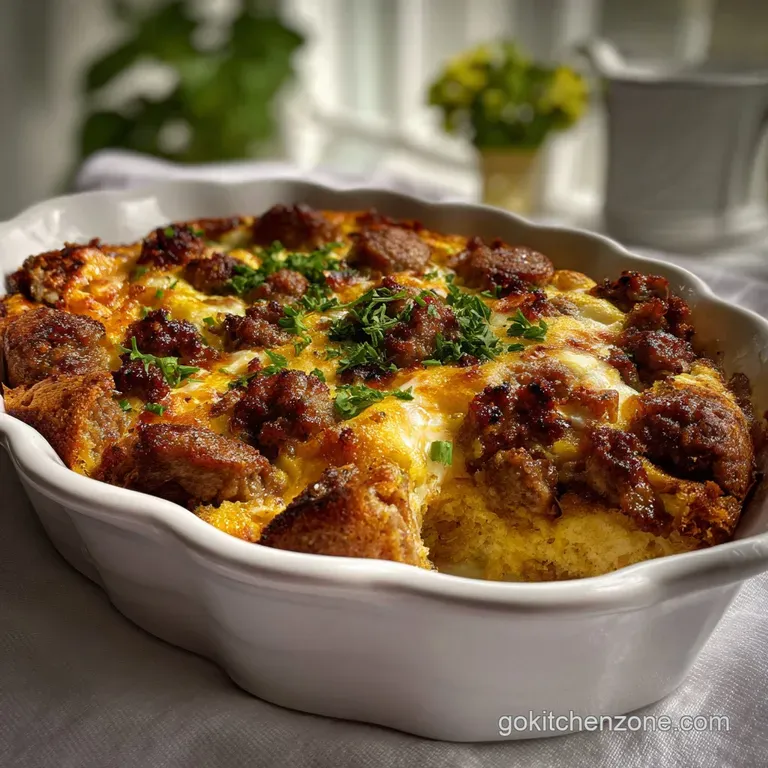
- Time: Active 20 minutes, Passive 45 minutes, Total 1 hour 5 minutes
- Flavor/Texture Hook: Savory, mahogany-seared sausage folded into a rich, silky egg custard.
- Perfect for: Weekend meal prep or a crowd-pleasing holiday brunch solution.
- Master This Egg Casserole Recipe with Sausage and Cheese
- Core Recipe Specifications and Planning
- The Pantry Breakdown and Science
- Essential Tools for Morning Success
- Step-by-Step Culinary Execution Strategy
- Troubleshooting Common Baking Failures
- Creative Flavor and Dietary Adaptations
- Storage Strategies and Waste Prevention
- Side Dishes to Complete the Meal
- Myth-Busting and Critical Q&A
- Common Questions
- 📝 Recipe Card
Master This Egg Casserole Recipe with Sausage and Cheese
Ever wondered why some morning bakes feel like a damp sponge while others boast a cloud like lift and savory depth? The difference lies in the structural integrity of your bread and the emulsification of your custard. Today, I'm sharing my favorite Egg Casserole Recipe with Sausage and Cheese.
It is the result of years spent perfecting the balance between high fat dairy and aerated proteins.
We often settle for "good enough" when it comes to breakfast, but the dinner struggle shouldn't bleed into your weekend mornings. This one-pan wonder eliminates the need for standing over a stove flipping individual omelets.
Instead, we rely on the oven’s convection heat to set a custard that is both firm enough to slice and soft enough to melt on the tongue.
As the 1 lb (454g) of breakfast sausage renders its fat in the pan, it creates a mahogany crust that anchors the entire dish. When that savory protein meets 12 large eggs and the sharp tang of 2 cups (225g) of freshly grated cheddar, the kitchen transforms.
The aroma of smoked paprika and dry mustard signals that this isn't your standard, bland egg bake it’s a carefully engineered morning masterpiece. Even slight variations in this Egg Casserole Recipe with Sausage and Cheese can impact the final texture.
Core Recipe Specifications and Planning
Understanding the physics of this dish helps ensure it happens perfectly every time. We aren't just tossing ingredients into a pan; we are building a structural bread pudding. Unlike quick fix versions that use pre-cooked frozen links, our fresh seared approach utilizes the rendered fat to season the sourdough cubes, creating a barrier against sogginess.
1. The 2:1 Ratio for Structural Integrity
The success of this bake depends on the ratio of liquid custard to dry bread. Using 6 cups of cubed sourdough provides enough surface area to absorb 2.5 cups of dairy without losing its shape. This prevents the "puddling" effect often seen in recipes that over saturate the bread.
2. over High heat Maillard Reaction
Browning the sausage at a high temperature is non-negotiable. This chemical reaction creates complex flavor molecules that raw or steamed sausage simply cannot provide. The crispy bits (fond) left in the pan are concentrated flavor gold that gets distributed throughout the casserole.
3. Sourdough’s Open Crumb Advantage
Using sourdough over standard white bread is a deliberate choice for its "open crumb" structure. The large air pockets in sourdough act as tiny reservoirs for the egg mixture. This leads to a more aerated, lighter texture once the proteins denature and expand in the oven’s heat.
| Feature | Fresh Soured Approach | Shortcut Method | Result |
|---|---|---|---|
| Bread Choice | Crusty Sourdough | Pre-sliced White Bread | Sourdough holds its shape; white bread turns to mush |
| Cheese Prep | Freshly Grated Block | Pre-shredded Bagged | Fresh melts smoothly; bagged has gritty cellulose |
| Meat Prep | Skillet Seared Bulk | Pre-cooked Links | Seared meat provides deep umami and better texture |
The Pantry Breakdown and Science
Selecting high-quality elements is the first step toward reliability. When you use 12 large eggs, you are creating a massive protein network that requires fat for lubrication. This is why we combine 2 cups of whole milk with 1/2 cup of heavy cream; the extra milk fat prevents the eggs from becoming rubbery during the 45 minute bake.
Mastering the pantry is key to making a superior Egg Casserole Recipe with Sausage and Cheese.
| Ingredient | Chemical/Physical Role (Science) | The Pro Secret (Why This Matters) |
|---|---|---|
| Large Eggs | Protein denaturation and coagulation | Provides the structural "lattice" that holds the casserole together |
| Whole Milk/Cream | Fat-in-water emulsification | Interfere with egg protein bonds to ensure a velvety, tender crumb |
| Sourdough Bread | Starch gelatinization and absorption | The fermented dough resists breaking down, maintaining a "bite" |
| Dry Mustard | Natural emulsifier and acidulent | Sharpens the flavor profile while helping fats and liquids bond |
3 Essential Proteins and Dairy
- Breakfast Sausage (1 lb/454g):Why this? Pork fat has a lower melting point, providing superior mouthfeel and browning. Use a high-quality bulk sausage rather than links to ensure even distribution in every bite.
- Sharp Cheddar (2 cups/225g):Why this? Aged cheddar has less moisture, preventing an oily separation during the melting process. I recommend [Tillamook Extra Sharp Cheddar] for its consistent melt and punchy flavor.
- Heavy Cream (1/2 cup/120ml): The high fat content (36%+) creates a barrier against "weeping," where the eggs release water as they cook.
4 Flavor Enhancers and Cheeses
- Dry Mustard Powder (1 tsp): This adds a subtle "back-of-the-throat" heat that cuts through the richness of the cheese.
- Smoked Paprika (1/2 tsp): Adds a woody, mahogany color to the custard and complements the savory sausage.
- Scallions (1/2 cup): These provide a necessary sulfurous "pop" and a visual contrast against the golden eggs.
- Kosher Salt & Black Pepper: Essential for drawing out the natural flavors of the eggs and pork.
Essential Tools for Morning Success
To make this happen efficiently, you need the right gear. A Lodge 12 inch Cast Iron Skillet is the best tool for browning the sausage because its heat retention ensures a hard sear without dropping the temperature. For the bake itself, a Pyrex 9x13-inch Glass Baking Dish is ideal.
Glass is a poor conductor of heat but an excellent radiator, meaning it heats up slowly and evenly, preventing the edges from burning before the center sets.
You will also need a large stainless steel whisk. A OXO Good Grips Balloon Whisk allows you to incorporate air into the 12 eggs, which is vital for a light texture.
Don't forget a sturdy [rubber spatula] to fold the heavy sausage and bread into the delicate egg mixture without crushing the air pockets you've just created. Executing this specific Egg Casserole Recipe with Sausage and Cheese requires proper folding technique.
step-by-step Culinary Execution Strategy
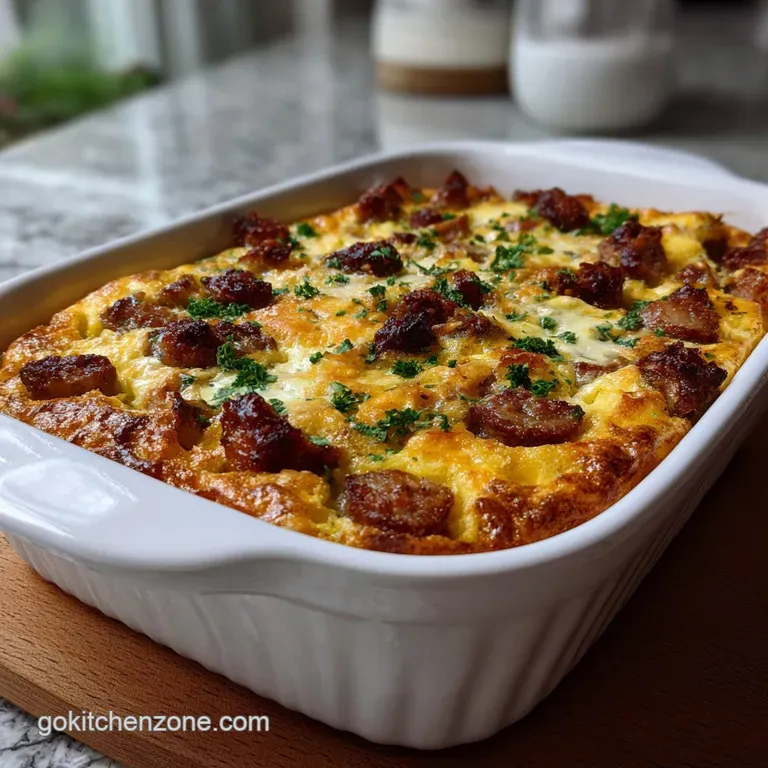
Follow this timeline to ensure your Egg Casserole Recipe with Sausage and Cheese reaches the table exactly when you want it.
- Preheat oven to 190°C (375°F). Note: High initial heat ensures a crisp top.
- Brown 1 lb (454g) breakfast sausage in a skillet over medium high heat for 8 10 minutes until deep mahogany brown and crispy on the edges.
- Drain excess fat from the sausage on a paper towel-lined plate. Note: Prevents the casserole from becoming greasy.
- Whisk 12 large eggs, 2 cups (475ml) whole milk, and 1/2 cup (120ml) heavy cream for 2 minutes until no streaks of yolk remain and tiny bubbles form on the surface.
- Incorporate 1 tsp dry mustard, 1/2 tsp smoked paprika, 1/2 tsp salt, and 1/2 tsp pepper into the liquid.
- Toss 6 cups of sourdough cubes with the browned sausage and 1.5 cups of the cheddar in a large bowl.
- Transfer the bread mixture into a greased 9x13-inch baking dish, spreading it until the surface is level and even.
- Pour the egg custard slowly over the bread, ensuring every cube is moistened.
- Sprinkle the remaining 1/2 cup of cheddar and 1/2 cup of scallions over the top.
- Bake for 40 45 minutes until the center is puffed, the top is golden brown, and a knife inserted in the center comes out clean.
Chef's Note: If you prefer an even crispier top, move the rack to the upper third of the oven for the final 10 minutes. This intensifies the radiant heat, giving the cheese a bubbly, caramelized finish similar to the technique used in my Hashbrown Casserole recipe.
Troubleshooting Common Baking Failures
If your casserole doesn't look like the pictures, it's usually a matter of thermodynamics or ingredient chemistry.
Why Your Casserole Turned Out Watery
When eggs are overcooked, the protein molecules tighten so much that they squeeze out the water they were holding. This is known as syneresis. If you see a puddle in the bottom of your pan, you likely baked it too long or at too high a temperature.
Why the Bread is Soggy
If you don't use a sturdy bread like sourdough, or if you don't sear the sausage properly, moisture will migrate into the bread fibers too quickly. The starch gelatinizes into a paste rather than a structured sponge.
| Problem | Root Cause | The Fix | Pro Protocol |
|---|---|---|---|
| Rubbery Texture | Over coagulated egg proteins | Reduce bake time by 5 mins | Pull at 71°C (160°F) internal temp |
| Greasy Surface | Sausage wasn't drained | Use paper towels post sear | Add a dash of flour to the meat |
| Sunken Center | Sudden temp drop | Don't open oven door early | Let rest 10 mins before slicing |
Creative Flavor and Dietary Adaptations
While the standard Sausage and Cheese version is a classic, you can easily pivot based on what's in your fridge. Just remember to keep the liquid-to-solid ratio consistent when adapting this Egg Casserole Recipe with Sausage and Cheese.
- Scaling Down (Half Recipe)
- Use a 20x20cm (8x8 inch) pan. Reduce bake time to 30 35 minutes.
- Scaling Up (Double Recipe)
- Use two separate 9x13 pans. Do not try to use one deep pan, as the center will remain raw while the edges burn.
- Spice Adjustments
- When doubling, only use 1.5x the salt and mustard to avoid overwhelming the palate.
Dietary Swaps:gluten-free: Replace sourdough with a dense gluten-free loaf. Increase the egg count by one to help with the lack of gluten structure. Vegetarian: Swap sausage for 2 cups of sautéed mushrooms and spinach.
Ensure you cook the water out of the vegetables first!
If you’re looking for a smaller bite sized alternative with similar flavors, my Sausage Balls recipe uses the same savory protein profile in a portable format.
Storage Strategies and Waste Prevention
This Egg Casserole Recipe with Sausage and Cheese is a meal prep champion. The structure of the eggs and sourdough actually holds up remarkably well to reheating.
- Storage: Store leftovers in an airtight container in the fridge for up to 4 days.
- Freezing: Slice into individual portions, wrap tightly in foil, and freeze for up to 2 months. Thaw in the fridge overnight before reheating.
- Zero Waste Tip: Don't throw away the scallion whites! Sauté them with the sausage for an extra layer of allium depth. If you have leftover sourdough crusts that are too hard to cube, pulse them into breadcrumbs for a future topping.
- Science of Reheating: Use the oven (175°C) rather than the microwave. The microwave vibrates water molecules rapidly, which can make the eggs "tough" through localized overcooking. The oven provides gentle, ambient heat that preserves the velvety custard.
Side Dishes to Complete the Meal
To balance the richness of this Recipe with Sausage and Cheese, you need acidity and freshness. A simple arugula salad with a lemon vinaigrette works wonders. The sharpness of the greens cuts through the fat of the heavy cream and cheddar.
If you are hosting a full brunch, pair this with a fruit platter featuring acidic fruits like grapefruit or berries. For a starch heavy spread, it pairs beautifully with a Christmas Side Dish recipe involving honey glazed carrots, which provides a sweet counterpoint to the savory sausage.
Myth Busting and Critical Q&A
Myth: You must soak the bread overnight for the best results. Truth: While an overnight soak is convenient, a 15 minute soak is actually better for sourdough.
It allows the bread to absorb the custard without the starches breaking down completely, preserving that desirable "shatter" on the top crust.
Myth: Using more eggs makes it fluffier. Truth: Too many eggs without enough dairy leads to a dense, sulfurous sponge. The fluffiness actually comes from the steam created by the milk and cream as it heats up within the bread’s air pockets.
Decision Shortcut: If you want a crunchier top, sprinkle an extra 1/4 cup of panko breadcrumbs over the cheese before baking. If you want it spicier, swap the sharp cheddar for Pepper Jack and add a teaspoon of red pepper flakes to the sausage while browning.
If you want it creamier, substitute the milk for half and half, but be aware the calorie count will rise significantly.
Can I freeze this ahead of time before baking?
Yes, but for the best texture, freeze the components separately. Freeze the browned sausage and cubed bread together, then whisk and add the fresh egg mixture just before baking. Freezing raw eggs in bread can lead to a grainy texture upon thawing due to ice crystal formation breaking the protein bonds.
Why did my casserole turn out watery?
This usually happens because of "weeping" or syneresis. It means the eggs were cooked too fast or too long, causing the protein network to collapse and squeeze out the liquid. Always use a thermometer and pull the dish when the center reaches 71°C (160°F).
What if I don't have sourdough bread?
Any crusty, "country style" loaf will work. Avoid soft, pre-sliced sandwich bread, as it lacks the structural protein (gluten) needed to hold up under the weight of 2.5 cups of liquid. If you only have soft bread, toast it in the oven for 10 minutes first to dry it out.

Common Questions
Is it essential to brown the sausage before baking?
Yes, searing creates flavor compounds. The high heat induces the Maillard reaction, developing deep umami notes that permeate the custard matrix. This concentrated flavor anchors the entire dish.
What is the ideal bread for this casserole?
Sourdough bread is superior for structure. Its open crumb absorbs custard evenly while maintaining integrity, unlike white bread which collapses into mush.
Why did my casserole weep liquid onto the plate?
Overcooking causes egg protein denaturation and moisture expulsion. When the proteins tighten too aggressively, they squeeze out the water they bound, resulting in a visibly wet layer.
- Reduce oven temperature by 10°C
- Verify internal temperature hits 71°C (160°F)
- Ensure 1/2 cup heavy cream is used
Should I use block cheese or pre-shredded cheese?
Block cheese melts smoother for a homogenous texture. Pre-shredded cheese contains anti caking agents like cellulose, which prevent full emulsification and can result in a slightly gritty mouthfeel.
Can I substitute the whole milk with skim milk?
No, whole milk is necessary for tenderness. The fat in whole milk interferes with the egg proteins, ensuring the final bake is velvety rather than rubbery. Lower fat dairy results in a drier, tougher final product.
Myth: I can skip resting the casserole after baking.
Myth: Resting isn't necessary for structural integrity. Reality: Allowing a 10-minute rest lets residual heat finish setting the center gently and allows surface moisture to reabsorb before serving, improving sliceability.
Is soaking the bread cubes overnight mandatory?
A 15-minute soak is sufficient for optimal absorption. Overnight soaking risks overly dissolving the starch structure in sourdough, leading to texture loss. If you master the folding technique here, you can apply that delicate handling to our Sugar Cookies Recipe: Velvety Centers & Crisp Edges to prevent spread.
Sausage Egg Casserole Staple
Ingredients:
Instructions:
Nutrition Facts:
| Calories | 568 kcal |
|---|---|
| Protein | 31g |
| Fat | 38g |
| Carbs | 24g |
| Fiber | 1.2g |
| Sugar | 4g |
| Sodium | 895mg |
