Reliable Sausage Balls Recipe
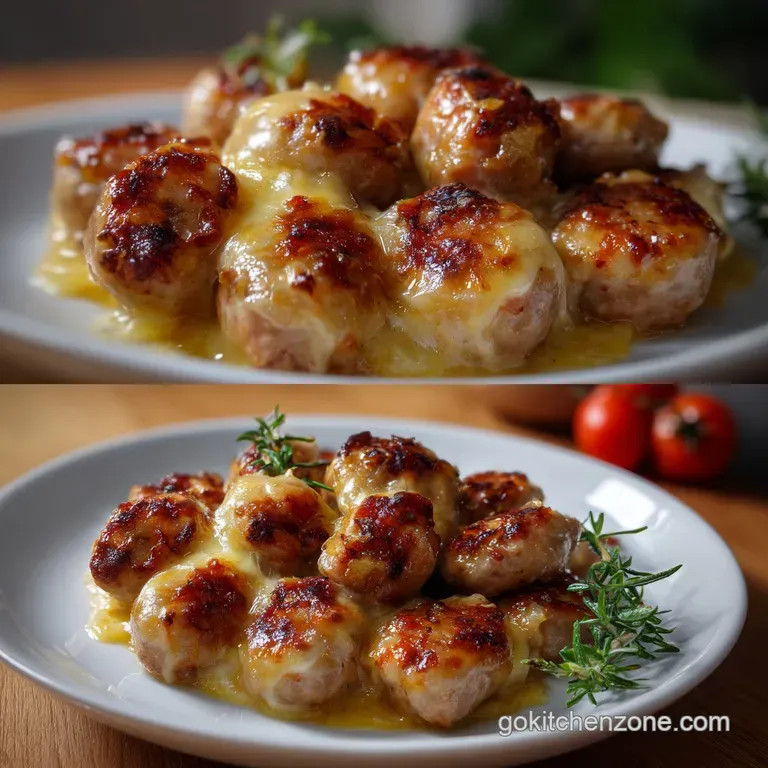
- Effort/Time: 35 minutes total (Minimal cleanup for these amazing sausage balls)
- Flavor Hook: Sharp cheddar umami meets spicy sage notes in every bite of these sausage balls
- Perfect for: Low-stress tailgates, holiday brunches, or make-ahead snacks using this tried and true sausage balls method
- Why This Recipe Works: The Science of Texture
- Thermodynamic Precision and Time Benchmarks
- The Chemistry of Fat and Starch: Selecting Elements
- Streamlined Setup for the Busy Home Cook
- Atomic Steps for Maximum Exterior Crunch
- Why Your Party Bites Crumble: Science-Backed Fixes
- Flavor Profiles and Dietary Adaptation Protocols
- ⚗️ The Scaling Lab: The Physics of Quantity
- Storage & Reheating Physics
- Optimal Pairing Strategies for Holiday Gatherings
- Recipe FAQs
- 📝 Recipe Card
There is nothing worse than biting into a party appetizer only to have it crumble into dry, flavorless dust in your mouth. We’ve all been there the financial cost of a pound of quality cheddar and sausage down the drain because the texture ended up resembling a pencil eraser.
It’s a dinner struggle that happens when the moisture balance is ignored, leaving you with a tray of rocks that no amount of dip can save when making poor sausage balls.
I once destroyed three batches of these for a neighborhood New Year’s party because I tried to use pre-shredded cheese from a bag. I thought I was saving time, but the cellulose coating on the cheese prevented it from emulsifying with the sausage fat.
The result was a greasy, separated mess that leaked all over my Lodge Cast Iron Baking Sheet a true tragedy for any batch of sausage balls.
The secret to a velvety interior isn't adding more liquid; it’s about managing protein denaturation and starch hydration, which is critical for excellent sausage balls.
When you use freshly shredded sharp cheddar, the natural fats act as a lubricant for the flour in the Bisquick, while the 1 lb bulk pork sausage provides the structural protein network.
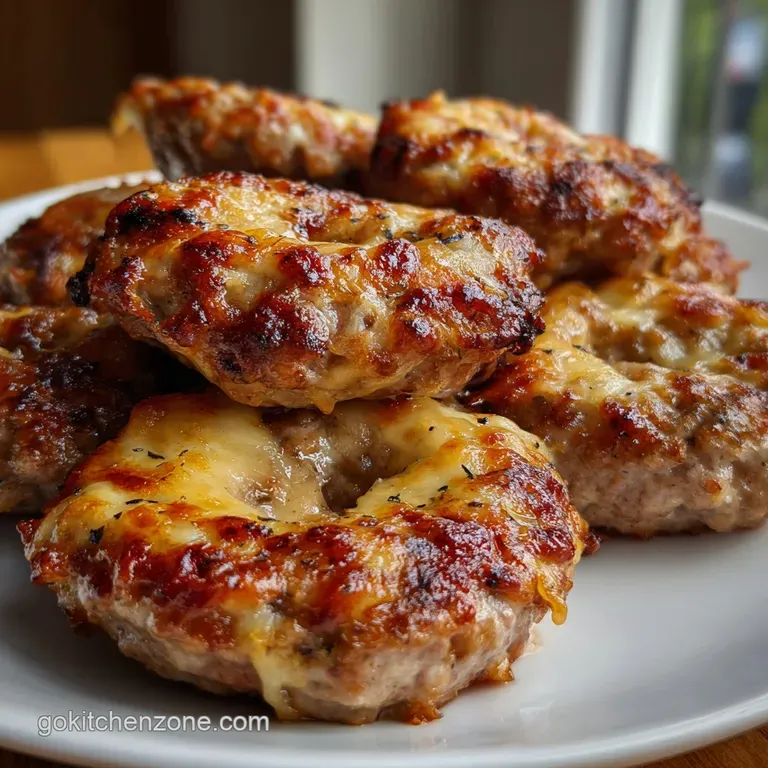
The result is a savory bite with a distinct "snap" and a rich, mahogany colored crust that holds its shape without becoming a hockey puck, unlike lesser versions of sausage balls.
Why This Recipe Works: The Science of Texture
- Lipid Emulsification: The high fat content in 1 lb bulk pork sausage melts during baking, hydrating the starch in the 2 cups baking mix to prevent a sandy texture in your sausage balls.
- Protein Matrix Formation: As the pork proteins denature at 140°F (60°C), they bond with the gluten in the flour, creating a stable, springy structure for the perfect sausage balls.
- Maillard Reaction Synergy: The sugars in the 1/4 cup whole milk react with the amino acids in the meat to produce a deep, complex caramelized fragrance on these tasty sausage balls.
- Moisture Retention: Freshly shredded 1 lb sharp cheddar cheese contains more moisture than bagged versions, preventing the sausage balls from drying out during the 20 minutes cook time.
Thermodynamic Precision and Time Benchmarks
To ensure consistency, we look at how the fast method (using baking mix) compares to the classic scratch made version when making sausage balls. The goal is efficiency without sacrificing the structural integrity of the bite.
| Metric | Fast Method (This Recipe) | Classic Scratch Method | Outcome Difference |
|---|---|---|---|
| Active Prep | 15 minutes | 45 minutes | Fast method saves 30 mins by skipping flour sifting/leavening for quick sausage balls. |
| Binding Agent | Pre-mixed leaveners/fats | Flour + Butter + Powder | Fast method provides more consistent rise and aeration for party sausage balls. |
| Texture Profile | Uniform, tender crumb | Denser, more biscuit like | Fast method results in a lighter, more "poppable" snack when eating these sausage balls. |
- 1. Mixing Temp
- Ingredients should be at 65°F (18°C) for the best "clay like" consistency when forming your sausage balls.
- 2. Size
- Each ball should weigh exactly 1 oz (28g) for even heat penetration across the batch of sausage balls.
- 3. Final Temp
- Pull from oven when internal temperature hits 160°F (71°C) for food safety.
The Chemistry of Fat and Starch: Selecting Elements
Selecting your components is about understanding how they interact under heat. If you're hosting a large crowd, these savory bites are a heavy hitter, but if you need a sweet counterpart for your dessert table, my Peanut Butter Balls recipe is the easiest no-bake follow-up that follows the same "minimal tool" philosophy as these sausage balls.
Ingredient Chemistry Breakdown
| Ingredient | Chemical/Physical Role (Science) | The Pro Secret (Why This Matters) |
|---|---|---|
| 1 lb bulk pork sausage | Provides lipid based hydration and structural protein | Using "hot" sausage increases capsaicin, which cuts through the heavy fat profile of the sausage balls. |
| 2 cups baking mix | Acts as a pre-leavened starch network | The vegetable shortening in the mix creates a flaky, non-dense crumb for superior sausage balls. |
| 1 lb sharp cheddar | Adds ionic salt and emulsified dairy fats | Sharp cheddar has a lower pH, which helps it break down and integrate faster into the dough. |
Component Details & Substitutions:
- 1 lb bulk pork sausage (Jimmy Dean Pork Sausage)
- Substitute: 1 lb Ground Turkey with 2 tbsp bacon grease.
- Why this?Why this? The 20 30% fat ratio in pork ensures the starch doesn't become brittle in the final product.
- 2 cups baking mix (Bisquick Original)
- Substitute: 2 cups All-purpose flour + 3 tsp baking powder + 1/2 tsp salt + 2 tbsp cold butter.
- Why this?Why this? Pre-distributed leavening agents ensure every ball rises identically without "flat spots."
- 1 lb sharp cheddar cheese (Tillamook Sharp Cheddar)
- Substitute: 1 lb Pepper Jack.
- Why this?Why this? Freshly grated cheese lacks anti clumping starches, allowing for a seamless protein fat bond.
- 1/2 tsp garlic powder (McCormick)
- Substitute: 1/2 tsp Onion powder.
- 1/4 cup whole milk
- Substitute: 1/4 cup Heavy cream for a richer, more velvety interior.
- 1/2 tsp dried parsley
- Substitute: 1/2 tsp Dried chives.
Streamlined Setup for the Busy Home Cook
We are prioritizing reliability and speed when making your sausage balls. You don’t need a fancy stand mixer; in fact, over mixing with high power tools can lead to gluten over development, making the balls tough.
- KitchenAid Professional 5 Qt Stand Mixer (Optional): Use the paddle attachment on low speed to save your wrists.
- Lodge Cast Iron Baking Sheet: Provides superior thermal mass, ensuring the bottoms of the sausage balls get that signature mahogany crunch.
- OXO Good Grips Medium Cookie Scoop: This is non-negotiable for ensuring all 36 servings are identical in volume.
- Box Grater: For the cheese. The larger holes are better for "shreds" that melt into distinct pockets of flavor.
Atomic Steps for Maximum Exterior Crunch
- Temper the meat. Remove 1 lb bulk pork sausage from the fridge 15 minutes before mixing to soften the fats.
- Shred the block. Grate 1 lb sharp cheddar cheese using the coarse side of a box grater until you have a mountain of fluffy ribbons.
- Combine dry elements. Whisk 2 cups baking mix, 1/2 tsp garlic powder, and 1/2 tsp dried parsley in a large bowl until the green flecks are evenly distributed.
- Integrate the protein. Add the sausage to the dry mix and use your hands to pinch the meat into the flour until the mixture looks like coarse, pebbly sand.Note: This coats the meat proteins in starch, preventing grease runoff from your sausage balls.
- Fold in the dairy. Add the shredded cheese and 1/4 cup whole milk (if the dough feels too crumbly) and knead gently until a cohesive, tacky ball forms.
- Calibrate the oven. Pre-heat your oven to 350°F (175°C) and place the rack in the center position for optimal convection.
- Portion precisely. Use a scoop to form 36 spheres, rolling them between your palms until the surface is smooth and no cracks remain.
- Space for airflow. Arrange on a baking sheet 1 inch apart until the tray is filled but not crowded.
- Execute the bake. Slide into the oven for 20 minutes until the tops are golden brown and the cheese sizzle subsides.
- Rest for carryover. Let the sausage balls sit on the hot pan for 5 minutes until the internal structure sets firm.
Why Your Party Bites Crumble: Science Backed Fixes
When sausage balls fail, it’s usually a breakdown of the emulsion between the fat and the starch. If your mixture looks more like a pile of sawdust than a dough, the hydration levels are off for successful sausage balls.
Crumbly or Falling Apart
This happens when the starch (baking mix) isn't sufficiently "wet" by the sausage fat or milk. Without that moisture, the gluten cannot form the "glue" needed to hold the ball together.
| Problem | Root Cause | The Fix | Pro Protocol |
|---|---|---|---|
| Falling Apart | Insufficient hydration/binding | Add 1 tbsp milk at a time | Mix until the dough cleans the side of the bowl for perfect sausage balls. |
| Greasy Puddles | Sausage fat rendered too fast | Chill shaped balls for 10 mins | Cold fat stays trapped in the starch longer, improving the final texture of the sausage balls. |
| Hard as Rocks | Over worked gluten | Mix until just combined | Use a "folding" motion rather than aggressive kneading on the dough. |
Flavor Profiles and Dietary Adaptation Protocols
The "Pioneer Woman" Inspired Twist
To mimic the classic Southern style, increase the cheese ratio by 25% and add a pinch of cayenne pepper. This creates a more "custard like" interior that is highly addictive in these sausage balls.
Dietary Swaps: gluten-free & Keto
- gluten-free: Swap the 2 cups baking mix for a GF version (like King Arthur). Add an extra 2 tbsp of milk, as GF flours are more thirsty when making GF sausage balls.
- Low Carb/Keto: Use 1.5 cups almond flour and 1/2 tsp xanthan gum instead of the baking mix. Note: This will result in a much softer, more tender bite with less "snap" than traditional ones.
Decision Shortcut
- If you want Maximum Crunch, use a cast iron pan and skip the milk for drier sausage balls.
- If you want Soft & Pillowy, use 1/4 cup whole milk and bake on a silicone mat.
- If you want Spicy Kick, use "Hot" sausage and add 1/2 tsp red pepper flakes to your sausage balls.
⚗️ The Scaling Lab: The Physics of Quantity
When you need to make 72 or 108 sausage balls for a graduation or wedding, the rules of the kitchen change. You cannot simply double everything and expect the same result for your massive quantity of sausage balls.
- Flavor Saturation (Salt/Spices): When doubling, scale spices like garlic powder to 1.5x (NOT 2x). The aromatic compounds can become overwhelming and bitter in large batches.
- Pan Crowding (Maillard Killer): Doubling the recipe and cramming 72 balls onto one tray will drop the oven temperature significantly. This leads to steaming instead of searing, resulting in gray, rubbery meat that ruins the appeal of the sausage balls. Mandatory instruction: Bake in batches or use two separate racks with a convection fan.
- Thermal Mass & Carry Over: A double batch of cold sausage in a bowl takes longer to reach room temperature. This can cause the exterior of the ball to burn before the center reaches the safe 160°F. If the dough is very cold, increase bake time by 4 minutes.
- The Square Cube Law: Larger batches of dough generate more internal friction when mixing. If using a stand mixer, keep it on the lowest setting to prevent the heat from the motor from melting the cheese before it hits the oven.
Storage & Reheating Physics
Preservation Timelines
- Fridge: Store in an airtight container for up to 4 days. The starch will retrogradate (harden) over time, so reheating is mandatory for optimal enjoyment of your leftover sausage balls.
- Freeze: These are the ultimate make-ahead snack. Flash freeze the raw balls on a tray for 1 hour, then bag them. They stay fresh for 3 months.
- Reheat: Avoid the microwave; it makes the crust soggy. Use an air fryer at 350°F for 4 minutes to "re-shatter" the exterior of the frozen treats.
💡 ZERO WASTE PHILOSOPHY
Cheese rinds?Transform: Don't toss the hard ends of that cheddar block. Throw them into a simmering pot of soup or beans. Science: The rind is packed with concentrated umami and helps thicken liquids through slow protein release.
Sausage drippings?Transform: If you have excess fat on the pan, wipe it up with a piece of bread and toast it. Science: The rendered lard has a high smoke point and is infused with the garlic and parsley aromatics.
Optimal Pairing Strategies for Holiday Gatherings
These savory bites need an acid heavy companion to cut through the 8.5 g of fat per serving. I recommend a grainy Dijon mustard or a spicy pepper jelly to complement the flavor profile of the sausage balls.
If you are setting up a "One-Pan" themed brunch, these fit perfectly alongside a fruit salad or a light yogurt parfait. The beauty of the sausage balls is their versatility they are just as good cold from the fridge as they are sizzling from the oven.
Just remember: freshly shredded cheese is the hill to die on if you want that masterclass texture when making your sausage balls. Let’s crack on and get baking!

Recipe FAQs
Can I substitute the sausage with ground turkey?
Yes, but add 2 tbsp bacon grease for texture. Turkey is too lean, lacking the necessary fat content (20-30%) required to properly hydrate the starch. This fat coats the flour proteins, preventing a brittle, dry result.
Is it necessary to use freshly shredded cheddar?
Yes. Bagged cheese prevents proper emulsification. Pre-shredded cheese is coated with cellulose or potato starch to prevent clumping in the bag. This coating prevents the dairy fat from bonding with the sausage protein matrix.
What is the required internal temperature for food safety?
Pull the balls when the interior hits 160°F (71°C). Pork proteins denature and bond with the gluten structure around 140°F, but 160°F ensures complete pathogen kill and perfect structural set.
- Avoid over mixing dough
- Use a digital thermometer
- Rest balls 5 minutes after baking
How do I prevent the sausage balls from tasting dry and crumbling?
Under mixing the dough prevents tough gluten development. Over working the flour develops too much gluten, which traps moisture inefficiently, creating a tough, rubbery, or crumbly texture.
- Mix only until the dough is cohesive
- Add milk one tablespoon at a time
- Ensure fat is slightly softened before combining
Should I use salted or unsalted butter if making them from scratch?
Unsalted butter allows for superior sodium regulation. Salted butter brands vary widely in sodium content, making standardization difficult when combined with salty sausage and cheese. Unsalted gives you control over the final seasoning level.
Myth: Freezing raw sausage balls ruins the final texture.
Myth: Freezing raw sausage balls ruins the final texture. Reality: Flash freezing raw dough on a tray before bagging locks in moisture; air-fry them directly from frozen for the best reheating crispness.
What is the difference between using baking mix versus all-purpose flour?
Baking mix yields a lighter, faster rise. Baking mix includes pre-measured leavening agents and fats that create a more uniform, lighter crumb structure compared to scratch flour. Scratch flour results in a denser, more biscuit like texture.
Reliable Sausage Balls Recipe
Ingredients:
Instructions:
Nutrition Facts:
| Calories | 114 kcal |
|---|---|
| Protein | 5.3 g |
| Fat | 8.5 g |
| Carbs | 4.3 g |
| Fiber | 0.2 g |
| Sugar | 0.5 g |
| Sodium | 272 mg |
