Perfect Prime Rib Roast Oven Reverse Sear
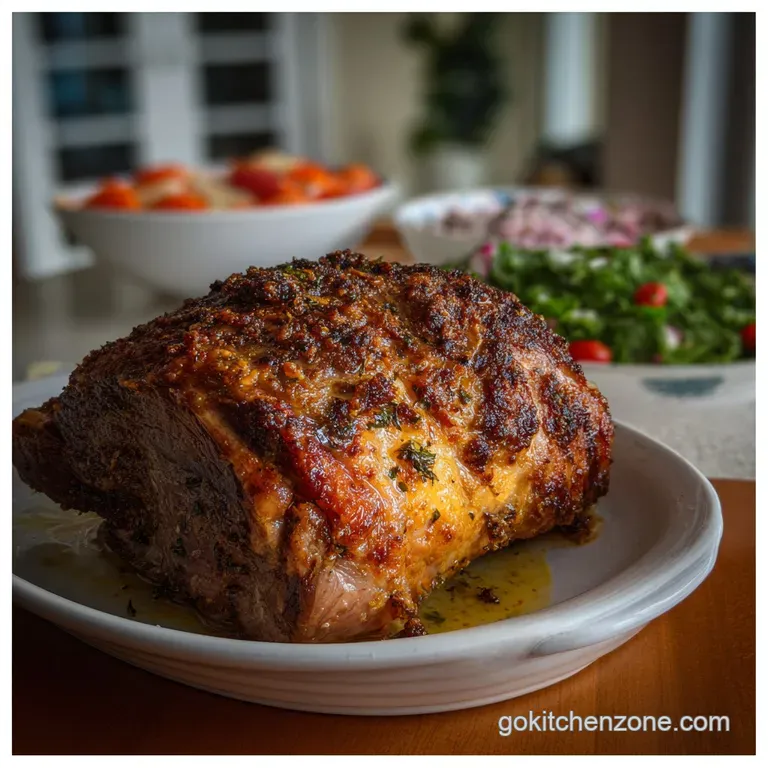
- Effort/Time: 3 hours 15 mins (low-effort, high-patience)
- Flavor Hook: Herb-heavy compound butter creates a crackling, umami-rich crust.
- Perfect for: Holiday-centerpieces, Sunday-suppers, or high-stakes dinner parties.
- Mastering the Ultimate Prime Rib Roast Oven
- Thermal Precision and The Reverse Sear Advantage
- Time Management and Quantitative Success Metrics
- The Alchemy of Umami: Selecting Your Elements
- Essential Tools for Professional Grade Heat Management
- The Action Plan: Precision Temperature Control Protocol
- Troubleshooting Texture and Heat Distribution Failures
- ⚗️ The Scaling Lab: The Physics of Quantity
- Flavor Architecture: Creative Substitutions and Swaps
- Longevity Logistics and Zero Waste Scrap Utilization
- Final Assembly and Flavor Enhancement Pairings
- Recipe FAQs
- 📝 Recipe Card
Mastering the Ultimate Prime Rib Roast Oven
The hissing of rendering beef fat against a hot roasting pan is the sound of success. But for many, it’s a sound of anxiety. There is nothing more gut-wrenching than slicing into a $150 investment only to find a center that is still cold and purple, or worse, a dry, overcooked exterior that tastes like cardboard.
You’ve spent the money; now you need the physics to back it up. We aren't just "cooking" meat here; we are managing thermal mass and enzymatic activity to ensure every bite is velvety.
I learned this the hard way during a New Year’s Eve dinner five years ago. I cranked the heat early, thinking I could speed up the process. I ended up with a roast that was charred on the outside but raw in the center a classic "thermal shock" failure.
I had to apologize to twelve people while microwaving individual slices. It was humiliating. That failure led me to obsess over the "reverse sear" and the science of carryover heat, which is exactly what we are going to master today.
The secret to a "Masterclass" result isn't a secret ingredient; it's the Reverse Sear Protocol. By starting in a over low heat environment, we allow the internal enzymes (cathepsins) to work longer, tenderizing the meat from the inside out.
Then, we finish with a over high heat blast to trigger the Maillard reaction. This creates a shattering crust and a uniform, edge-to-edge pink interior that looks like it came from a professional steakhouse.
Thermal Precision and The Reverse Sear Advantage
- Enzymatic Tenderization: Cathepsins remain active up to 50°C (122°F), breaking down connective tissues while the meat roasts slowly.
- Surface Dehydration: Low-temperature roasting dries the exterior of the prime rib roast oven, allowing the final sear to happen instantly without steaming the meat.
- Carryover Heat Management: A slow roasted 8 lb bone-in prime rib roast has less "thermal momentum," meaning it won't overcook as aggressively during the resting period.
- Maillard Optimization: The final over high heat blast focuses energy solely on the surface, creating complex flavor molecules without toughening the deep muscle fibers.
Time Management and Quantitative Success Metrics
To pull off a prime rib roast oven with professional reliability, you need to track these three precision checkpoints. Do not guess.
- Weight Check: 8 lb bone-in roast (3 4 ribs) provides the ideal thermal mass for a 2 hour 30 mins cook time.
- Internal Pull Temp: Remove the roast from the oven at exactly 120°F (49°C) for a medium rare finish after resting.
- Resting Duration: Minimum 30 minutes. This allows the pressure inside the muscle fibers to equalize, preventing juice loss upon slicing.
| Feature | Fast Method (High Heat Start) | Classic Reverse Sear (This Recipe) |
|---|---|---|
| Texture | Tough outer ring, rare center | Uniformly tender, edge-to-edge pink |
| Crust | Often soggy due to moisture | Shattering, deeply browned crust |
| Control | High risk of overshooting temp | Maximum precision; 15 minute margin of error |
The Alchemy of Umami: Selecting Your Elements
| Ingredient | Chemical/Physical Role (Science) | The Pro Secret (Why This Matters) |
|---|---|---|
| 8 lb Bone-in Prime Rib | Bone acts as an insulator | Protects the "eye" of the meat from direct heat, ensuring even cooking. |
| Kosher Salt | Denatures surface proteins | Allows the herb butter to "grip" the meat while drawing out moisture for a better crust. |
| Unsalted Butter | Fat-soluble flavor carrier | Suspends garlic and herb oils against the meat surface during the final sear. |
| Dry Red Wine | Acidity and tannin structure | Deglazes the pan, breaking down caramelized proteins into the au jus. |
Ingredient Chemistry Breakdown
- 8 lb bone-in prime rib roast: Why this? Bone-in provides structural integrity and insulation during the long roasting period.
- Substitute: Boneless roast. Note: Reduce cook time by 20% as heat penetrates faster without the bone barrier.
- 2 tbsp Diamond Crystal Kosher Salt: Why this? Large grains provide even coverage without over salting via osmotic pressure.
- Substitute: Sea salt. Note: Use 1.5 tbsp as sea salt is denser than kosher.
- 1 cup Kerrygold Unsalted Butter: Why this? High butterfat content ensures a richer, more velvety crust during the over high heat phase.
- Substitute: Ghee. Note: Higher smoke point but lacks the milk solids that aid browning.
- 6 cloves garlic, minced:
- Substitute: 1 tbsp garlic powder. Note: Less pungent, better for long term storage of leftovers.
- 2 cups beef bone broth: Why this? High gelatin content provides a "sticky" mouthfeel to the finished au jus.
- Substitute: Beef stock. Note: Results in a thinner, less "silky" sauce.
- 1/2 cup dry red wine (Cabernet Sauvignon):
- Substitute: 2 tbsp balsamic vinegar + water. Note: Provides acidity but lacks the complex tannins of wine.
Essential Tools for Professional Grade Heat Management
You cannot master the prime rib roast oven with a flimsy aluminum tray. You need a Lodge Cast Iron Roasting Pan or a heavy gauge stainless steel pan to handle the thermal load.
A ThermoWorks ChefAlarm is non-negotiable; you need a probe that stays in the meat throughout the entire process. Using a manual "poke" test on a $150 roast is a recipe for heartbreak.
Finally,, ensure you have a sharp Victorinox Slicing Knife—a dull blade will shred the delicate muscle fibers you worked so hard to preserve.
The Action Plan: Precision Temperature Control Protocol
1. The Dry Brine Phase
Season the 8 lb bone-in prime rib roast with 2 tbsp kosher salt and 1 tbsp black pepper 24 hours in advance. Note: This allows salt to penetrate deep into the muscle via osmosis, seasoning the interior.
2. Room Temperature Tempering
Remove the roast from the fridge 2 hours before cooking until the internal chill dissipates and the fat feels slightly soft. Note: This reduces the "thermal gradient," preventing a cold center.
3. Slathering the Herb Butter
Mix 1 cup softened butter, 6 minced garlic cloves, 2 tbsp rosemary, 2 tbsp thyme, and 1 tbsp Worcestershire sauce. Spread it over the roast until every inch of the fat cap is covered in a thick, green flecked paste.
4. Low and Slow Roasting
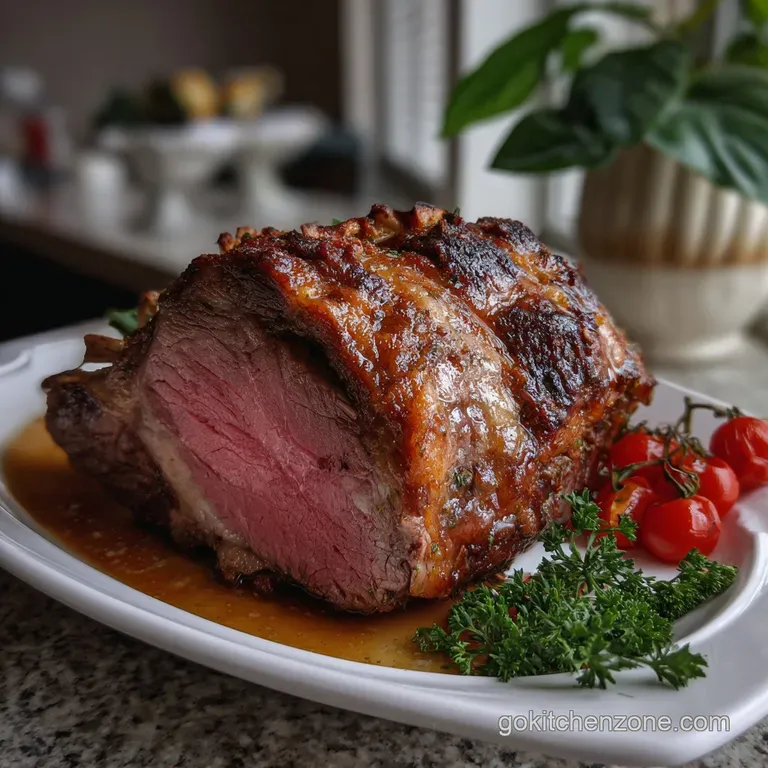
Place the roast in the oven at 120°C (250°F). Roast for approximately 2 hours 30 mins until the internal probe reads exactly 120°F (49°C).
Note: This is the pull temp for a medium rare finish.
5. The Resting Period
Transfer the roast to a cutting board. Tent loosely with foil for 30 minutes until the internal temperature peaks and begins to stabilize. Note: This allows fibers to reabsorb juices.
6. The Au Jus Reduction
While the meat rests, pour 1/2 cup dry red wine into the roasting pan. Scrap the bottom until all browned bits (fond) are dissolved into the liquid. Add 2 cups beef bone broth and simmer until reduced by half.
7. The over High heat Blast
Crank your oven to its highest setting (usually 260°C / 500°F). Return the rested roast to the oven for 6 10 minutes until the butter crust is sizzling, mahogany colored, and fragrant.
8. The Final Slice
Cut the twine and remove the bones. Slice the roast into 2cm thick pieces until the edge-to-edge pink interior is revealed.
Troubleshooting Texture and Heat Distribution Failures
Why Your Prime Rib Roast Oven Has a Gray Ring
A thick gray ring indicates the exterior cooked significantly faster than the interior. This is usually caused by roasting at too high a temperature or not letting the meat temper properly before it hits the oven.
When the exterior hits 140°F (60°C) too quickly, the proteins contract and squeeze out moisture, resulting in that dry, gray texture.
| Problem | Root Cause | The Fix | Pro Protocol |
|---|---|---|---|
| Tough, Chewy Meat | Insufficient resting time | Rest for at least 30 mins | Don't tent too tightly; you want to avoid steaming the crust. |
| Cold Center | Inadequate tempering | Leave out for 2 full hours | Use a probe thermometer to ensure the core isn't 4°C (40°F) when starting. |
| Soggy Crust | Too much moisture in oven | Pat the meat dry before buttering | A dry surface is required for the Maillard reaction to trigger effectively. |
⚗️ The Scaling Lab: The Physics of Quantity
When you decide to scale this prime rib roast oven recipe up or down, the physics of heat transfer changes. Doubling the weight does not mean doubling the time.
- The Square Cube Law: A 16 lb roast has twice the volume of an 8 lb roast but not twice the surface area. This means the center will take significantly longer to reach the target temperature while the exterior is exposed to heat longer. Increase time by only 50% and rely entirely on your probe.
- Pan Crowding (Maillard Killer): If you are roasting two separate 8 lb roasts in one oven, you are introducing twice the moisture. This can create a "steaming" effect. Mandatory instruction: Ensure at least 5cm of space between roasts to allow for proper air convection.
- Flavor Saturation: When scaling the herb butter for a larger roast, scale the salt and spices to 1.5x (NOT 2x). Spices become more concentrated in large volumes of fat; you can always add a finishing salt later, but you can't remove it.
Flavor Architecture: Creative Substitutions and Swaps
| Original Ingredient | Substitute | Why It Works |
|---|---|---|
| Worcestershire Sauce | Soy Sauce (1 tbsp) | Provides the same fermented umami depth but with more salt. |
| Fresh Rosemary | Dried Herbes de Provence (1 tbsp) | Concentrated flavor; best for a more "rustic" French profile. |
| Beef Bone Broth | Mushroom Broth | Adds an earthy, forest floor aroma that complements the beef. |
Variations for the Prime Rib Roast Oven
- The Steakhouse Crust: Add 1 tbsp of finely ground espresso to the butter rub. The acidity of the coffee cuts through the fat, and the bitterness mimics a charcoal grill char.
- The Horseradish Kick: Fold 2 tbsp of prepared horseradish into the compound butter before roasting. This infuses the crust with a sharp heat that balances the rich ribeye fat.
Longevity Logistics and Zero Waste Scrap Utilization
Storage and Reheating
- Fridge: Store leftovers in an airtight container for up to 4 days.
- Freezing: You can freeze sliced prime rib for up to 3 months. Wrap tightly in plastic wrap, then foil, to prevent freezer burn.
- Reheating: Avoid the microwave. Place slices in a baking dish with a splash of beef broth, cover with foil, and warm at 120°C (250°F) until just heated through. This prevents the meat from turning gray.
💡 ZERO WASTE PHILOSOPHY
Don't discard the rib bones! Transform: Simmer the bones with onion scraps and peppercorns for 6 hours to create a secondary "remouillage" stock. Science: The marrow and connective tissue in the bones contain collagen which, when heated, converts to gelatin, providing a velvety mouthfeel to future soups or stews.
Final Assembly and Flavor Enhancement Pairings
Serving a prime rib roast oven is about theater as much as taste. Always carve at the table for the "wow" factor. Pair this with a sharp, cold Horseradish Cream (sour cream, horseradish, lemon, chives) to cut through the 86g of fat per serving.
Myth: Searing the meat first "locks in" the juices. Truth: Searing creates flavor via the Maillard reaction, but it actually causes moisture loss on the surface. The reverse sear method used here minimizes moisture loss by keeping the muscle fibers relaxed for as long as possible.
Whether it's a festive prime rib dinner or a weekend project, remember that the best prime rib recipe oven isn't about the oven at all it's about the thermometer. If you trust the numbers, the meat will trust you back. Let's get that roast in the oven.
The juicy prime rib roast oven of your dreams is just a few hours away. Just remember: low heat, long rest, high blast. That is the trinity of the perfect prime rib roast. Go forth and conquer your dinner struggle.
Recipe FAQs
What is the correct internal pull temperature for medium rare?
120°F (49°C). This is the temperature before resting, which accounts for carryover heat. Ensure your probe thermometer is calibrated for accuracy.
How long should the prime rib rest before slicing?
Minimum 30 minutes. Resting allows muscle fibers to relax and reabsorb internal moisture. Failure to rest results in significant juice loss when cut.
Is a bone-in or boneless roast better for even cooking?
Bone-in roast provides better insulation. The bone acts as a natural thermal buffer, protecting the center eye of the meat from direct heat exposure. Boneless roasts cook faster but have less inherent structural protection against rapid temperature swings.
Why does my crust turn out soggy?
Surface moisture prevented the Maillard reaction from triggering. The exterior must be bone dry before the final high heat blast to achieve a shattering crust.
- Pat the roast completely dry post brine
- Apply herb butter just before the final high heat
- Do not use a pan with liquid during the sear phase
What temperature should the oven be set to initially?
120°C (250°F). This low temperature facilitates enzymatic tenderization via active cathepsins working on connective tissues. High initial heat causes rapid protein contraction and moisture expulsion.
Myth: Searing meat first locks in juices.
Myth: Searing meat first locks in juices. Truth: Searing creates flavor via the Maillard reaction, but it actually causes moisture loss on the surface. The reverse sear method used here minimizes moisture loss by keeping the muscle fibers relaxed for as long as possible.
Reverse sear vs. Traditional high heat start?
Reverse sear delivers uniform texture. The traditional method creates a large temperature gradient, resulting in a gray band of overcooked meat near the exterior. The low-and-slow approach gently brings the entire roast up to temperature before a final crust application.
Prime Rib Roast Oven Masterclass
Ingredients:
Instructions:
Nutrition Facts:
| Calories | 1042 kcal |
|---|---|
| Protein | 61g |
| Fat | 86g |
| Carbs | 3.5g |
| Fiber | 0.4g |
| Sugar | 0.8g |
| Sodium | 1420mg |
