Mastering Twice Baked Potatoes
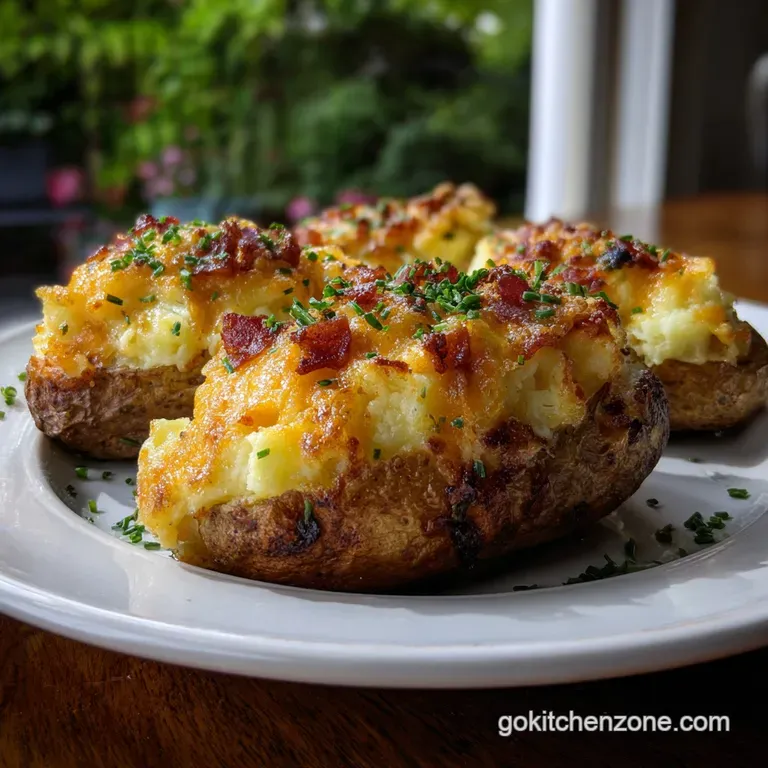
- Effort/Time: 1 hour 35 mins (mostly passive)
- Flavor Hook: Sharp cheddar and hickory-smoke bacon with a garlic-infused whipped core.
- Perfect for: make-ahead weeknight dinners or high-stakes holiday sides.
- Thermal Precision and The Science of Potato Structure
- Precision Control: Temperature and Yield Metrics
- The Alchemy of Filling: Selecting Your Elements
- Minimalist Toolset for Maximum Efficiency
- The Foundation and Filling: A Phased Assembly Protocol
- Why Your Filling Turns Gummy: Pro Physics Fixes
- Flavor Architecture and Dietary Adaptations
- ⚗️ The Scaling Lab: Physics of Quantity
- Common Myths
- Storage & Reheating: Moisture Retention
- Serving Suggestions: Texture Pairings
- Recipe FAQs
- 📝 Recipe Card
There is nothing worse than the dinner struggle of serving a gray, gluey mess when you promised the family legendary twice baked potatoes. I used to think the starch didn't matter, throwing cold milk into hot tubers only to end up with something resembling wallpaper paste.
It was a waste of four beautiful Russets and a total texture failure that left everyone reaching for the salt shaker in disappointment.
I once destroyed three batches for a blog post by trying to rush the cooling process in the freezer. I didn't understand the physics of moisture migration; the skins became soggy while the centers stayed icy.
It took months of iteration to realize that the secret to the ultimate twice baked potatoes isn't just more butter it’s managing the starch gelatinization and ensuring a stable emulsion before the second bake.
The breakthrough came when I applied the principle of "Starch Retrogradation." By allowing the baked potatoes to rest slightly before scooping, you control the amylose release. This ensures the filling remains light and velvety rather than gummy.
When that sharp cheddar hits the heat for the second time, you get a bubbling, mahogany colored crust that crackles under a fork.
Thermal Precision and The Science of Potato Structure
The secret to the structural integrity of twice baked potatoes lies in the molecular behavior of the Russet potato's high starch content.
- Starch Gelatinization: over High heat baking causes starch granules to swell and burst, creating the fluffy "dry" texture essential for absorbing fats without turning into a paste.
- Maillard Reaction: The second bake at a lower temperature allows the sugars in the milk and the proteins in the cheddar to undergo non-enzymatic browning for deep umami.
- Moisture Migration: Salt on the exterior skin creates an osmotic draw, pulling water out of the peel to ensure it shatters rather than tears.
- Fat Emulsification: Room temperature butter and sour cream integrate with the warm starch molecules to create a stable, velvety suspension that resists weeping.
Precision Control: Temperature and Yield Metrics
Success with twice baked potatoes depends on exact numeric checkpoints. If you deviate from these metrics, the structural shell may collapse during the scooping phase.
| Metric | Target Value | Why It Matters |
|---|---|---|
| Potato Weight | 10 oz (approx. 280g) each | Ensures uniform heat penetration and consistent cook times. |
| Internal Temperature | 205°F - 210°F | The precise window where starch granules have fully gelatinized. |
| Oven Temp (Bake 1) | 400°F (205°C) | High heat is required to crisp the skin via moisture evaporation. |
Decision Shortcut: The Texture Guide
- If you want a fluffier filling: Use a ricer instead of a masher to minimize cell rupture.
- If you want a sturdier shell: Do not wrap in foil; the trapped steam softens the skin too much.
- If you want more tang: Increase the Daisy Sour Cream ratio by 10% and reduce milk.
The Alchemy of Filling: Selecting Your Elements
Choosing the right components for twice baked potatoes is about balancing moisture and fat. low-fat substitutes will result in a dry, crumbly interior that lacks the signature mouthfeel.
- 4 large Russet potatoes: Why this? High starch-to-water ratio creates the fluffiest interior cell structure.
- 2 tbsp Extra Virgin Olive Oil: Used for the initial rub to facilitate heat transfer to the skin.
- 1 tsp Diamond Crystal Kosher Salt: Why this? Larger flakes provide better surface coverage for skin dehydration.
- 1/2 cup Kerrygold Unsalted Butter: Softened to room temperature to prevent "thermal shock" when mixing.
- 1/2 cup Daisy Full Fat Sour Cream: Provides the lactic acid necessary to brighten the heavy starches.
- 1/4 cup Whole Milk: The primary hydration agent; ensures the filling is pipeable.
- 1 1/2 cups Cabot Sharp Cheddar: Why this? High aged protein content ensures a better melt-to-flavor ratio.
- 1/2 tsp Garlic Powder: Provides a baseline aromatic depth without the moisture of fresh garlic.
- 6 strips Wright’s Thick Cut Bacon: Cooked until brittle for a textural contrast to the velvet filling.
- 2 tbsp Fresh Chives: Adds a sulfurous, grassy finish to cut through the heavy fats.
Ingredient Chemistry Breakdown
| Ingredient | Chemical/Physical Role (Science) | The Pro Secret (Why This Matters) |
|---|---|---|
| Russet Potatoes | Amylose rich starch structure | High starch granules burst easily, creating a "dry" floury texture. |
| Unsalted Butter | Fat-in-water emulsion | Coats starch molecules to prevent them from bonding into glue. |
| Sharp Cheddar | Protein fat matrix | Casein proteins brown during the second bake for umami depth. |
| Sour Cream | Acidic pH regulator | Lowers the pH of the filling, which helps set the potato proteins. |
Minimalist Toolset for Maximum Efficiency
You don't need a pantry full of gadgets to master twice baked potatoes. Stick to these reliable tools for the best results.
- Lodge Cast Iron Baking Sheet: Provides superior thermal mass for even bottom browning.
- OXO Good Grips Potato Masher: Use the "vertical press" motion to avoid overworking the starch.
- Standard Metal Spoon: A thin edged spoon is essential for scooping without piercing the skin.
- KitchenAid Hand Mixer (Optional): If you prefer a "whipped" rather than "mashed" texture.
- Stainless Steel Mixing Bowl: Retains heat better than plastic while you incorporate ingredients.
The Foundation and Filling: A Phased Assembly Protocol
Follow these atomic steps for twice baked potatoes. Do not combine actions; the sequence is vital for moisture management.
- Scrub 4 large Russet potatoes under cold water until all debris is removed.
- Pierce each potato 6 times with a fork to allow steam to escape. Note: Prevents internal pressure from exploding the skin.
- Massage 2 tbsp extra virgin olive oil and 1 tsp Diamond Crystal salt into the skins until they shimmer.
- Bake at 400°F for 1 hour until the skin feels brittle and the center yields to a gentle squeeze.
- Rest potatoes for 10 minutes until they are cool enough to handle but still radiating steam.
- Slice each potato in half lengthwise using a serrated knife to minimize tearing.
- Scoop the flesh into a bowl, leaving a 1/4 inch "wall" of potato. Note: This provides structural integrity for the second bake.
- Mash the potato flesh while adding 1/2 cup Kerrygold butter and 1/2 cup Daisy sour cream until no large lumps remain and the mixture looks velvety.
- Fold in 1/4 cup whole milk, 1 cup Cabot cheddar, 1/2 tsp garlic powder, and the crumbled bacon.
- Pipe or spoon the mixture back into the shells until mounded high and slightly overflowing.
- Top with the remaining 1/2 cup cheddar cheese.
- Bake at 350°F for 15 minutes until the cheese is bubbling and the edges show a pale golden brown sizzle.
- Garnish with fresh chives and cracked black pepper immediately before the heat dissipates.
Why Your Filling Turns Gummy: Pro Physics Fixes
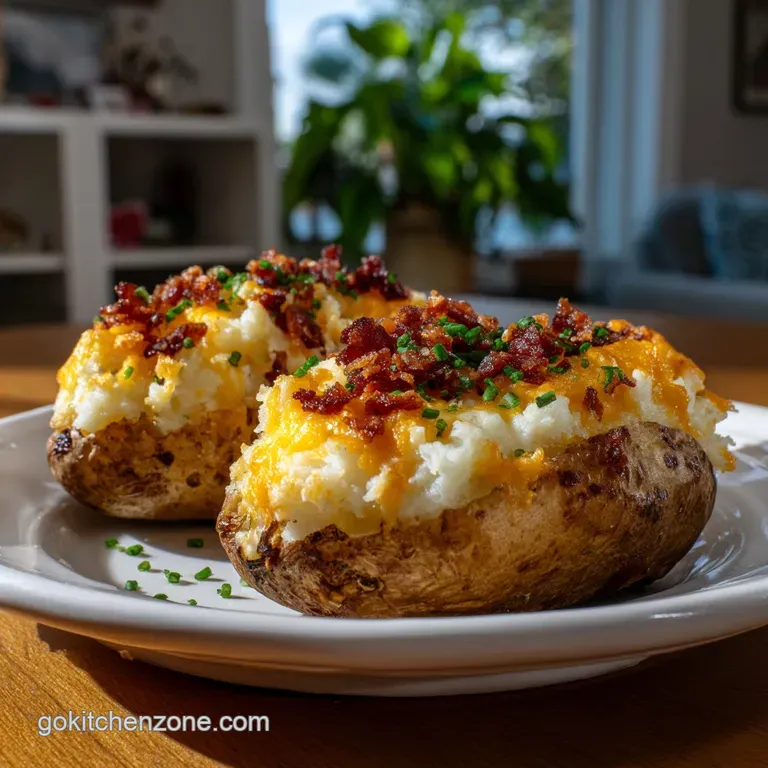
The most common failure in twice baked potatoes is a texture that feels like gummy bears. This is almost always due to "starch damage."
The Science of Gumminess
When you over process a potato, the starch cells (amyloplasts) rupture. This releases a massive amount of amylopectin into the surrounding moisture. Amylopectin is a highly branched polymer that, when agitated, creates a sticky, glue like web. This is why we never use a food processor for this recipe.
| Problem | Root Cause | The Fix | Pro Protocol |
|---|---|---|---|
| Sticky/Gluey Texture | Over mashing (Starch cell rupture) | Switch to a ricer or hand mash only. | Stop mashing the moment the butter is integrated. |
| Collapsed Shells | Walls scooped too thin | Leave 1/4 inch of flesh attached to the skin. | Use a smaller spoon for more precision control. |
| Bland Interior | Salt added too late | Season the warm mash before adding cold dairy. | Taste the mash before piping back into shells. |
Flavor Architecture and Dietary Adaptations
You can modify twice baked potatoes to fit different flavor profiles or dietary needs without sacrificing the structural science.
| Original Ingredient | Substitute | Why It Works |
|---|---|---|
| Sharp Cheddar (1.5 cups) | Smoked Gouda (1.5 cups) | Melts similarly but adds a deep, wood fired flavor profile. |
| Sour Cream (1/2 cup) | Plain Greek Yogurt (full fat) | Similar acidity and protein; adds a slightly sharper tang. |
| Whole Milk (1/4 cup) | Heavy Cream (1/4 cup) | Note: Higher fat content makes a richer, denser filling. |
| Bacon (6 strips) | Sautéed Mushrooms (1 cup) | Provides umami and "chew" without the animal fat. |
⚗️ The Scaling Lab: Physics of Quantity
Doubling a batch of twice baked potatoes isn't as simple as multiplying by two. Thermodynamics dictates how heat moves through the oven.
- The Square Cube Law: If you double the potatoes, the surface area increases by four, but the volume increases by eight. You must leave at least 2 inches of space between potatoes on the Lodge sheet to allow for airflow.
- Flavor Saturation: Scale spices (garlic powder/salt) to 1.5x (NOT 2x). Volatile aromatics concentrate more heavily in larger batches; you can always add more chives at the end.
- Pan Crowding (The Maillard Killer): Putting 8 potatoes on one tray drops the oven temp significantly. Mandatory instruction: Use two separate racks and rotate them halfway through the bake to ensure even browning.
- Carry Over Cooking: A larger mass of potatoes retains heat longer. Pull them 5 minutes earlier if you plan to keep them in a warming drawer, as they will continue to soften internally.
Common Myths
Myth: You should wrap potatoes in foil for the first bake. Truth: Foil traps steam, which results in a "boiled" potato texture and soggy, leathery skin. For the best twice baked potatoes, bake them naked on the rack.
Myth: Cold butter is better for the mash. Truth: Cold butter requires more agitation to incorporate, which leads to overworked starch and gumminess. Always use room temperature fats.
Storage & Reheating: Moisture Retention
twice baked potatoes are the ultimate make-ahead meal because the fat in the filling protects the starch from drying out.
- Fridge: Store in an airtight container for up to 4 days.
- Freeze: Wrap individual potatoes in plastic wrap, then foil. They last 3 months. To cook from frozen: Bake at 350°F for 45 minutes.
- Reheat: Use the oven or air fryer at 350°F. Avoid the microwave, as it makes the skin soft and rubbery.
💡 ZERO WASTE PHILOSOPHY
Don't discard any "accidental" tears in the potato skins. Transform: Chop them up and fry them in the leftover bacon fat. Science: These "skin crisps" are loaded with potassium and become incredibly crunchy when the remaining starch undergoes a second fry.
Use them as a salad topper or an extra crunchy garnish for your twice baked potatoes.
Serving Suggestions: Texture Pairings
The richness of twice baked potatoes requires a high acid or bitter pairing to reset the palate.
- The Steakhouse Standard: Serve alongside a seared ribeye. The beef's iron notes complement the sharp cheddar.
- The Weeknight Shortcut: Pair with a bright lemon arugula salad. The acidity of the lemon cuts right through the butter and sour cream.
- Comparison: Fresh vs. Shortcut
| Method | Texture Result | Time Trade off |
|---|---|---|
| Full Double Bake | Shattering skin, fluffy core | 1 hour 35 mins |
| Microwave Start | Soft, chewy skin, dense core | 45 minutes |
| Air Fryer Finish | Extra crispy skin, dry core | 1 hour 10 mins |
Let's crack on with these once you master the "scoop and mash" physics, you'll never go back to basic sides again. Trust me, the extra 10 minutes of resting is the difference between "okay" and "Masterclass" twice baked potatoes.

Recipe FAQs
What internal temperature must the potato reach before scooping?
205°F - 210°F. This precise window ensures complete starch granule gelatinization for maximum fluffiness. Deviating too low leaves undercooked starch, resulting in a heavier filling.
Is wrapping potatoes in foil acceptable for the first bake?
No. Wrapping potatoes in foil traps steam and softens the skin. This prevents the necessary moisture evaporation required to create a crisp, shattering exterior.
Why does the filling become gummy or gluey?
- Ricing is superior to mashing
- Stop mixing immediately after fat is incorporated
- Use room temperature dairy only
Should I use salted or unsalted butter?
Can I skip resting the potatoes after the initial bake?
Myth: Cold butter is better for incorporating into the mash.
Which cutting tool yields the fluffiest filling?
Mastering Twice Baked Potatoes
Ingredients:
Instructions:
Nutrition Facts:
| Calories | 360 kcal |
|---|---|
| Protein | 9.8 g |
| Fat | 26.9 g |
| Carbs | 26.8 g |
| Fiber | 1.9 g |
| Sugar | 1.5 g |
| Sodium | 345 mg |
