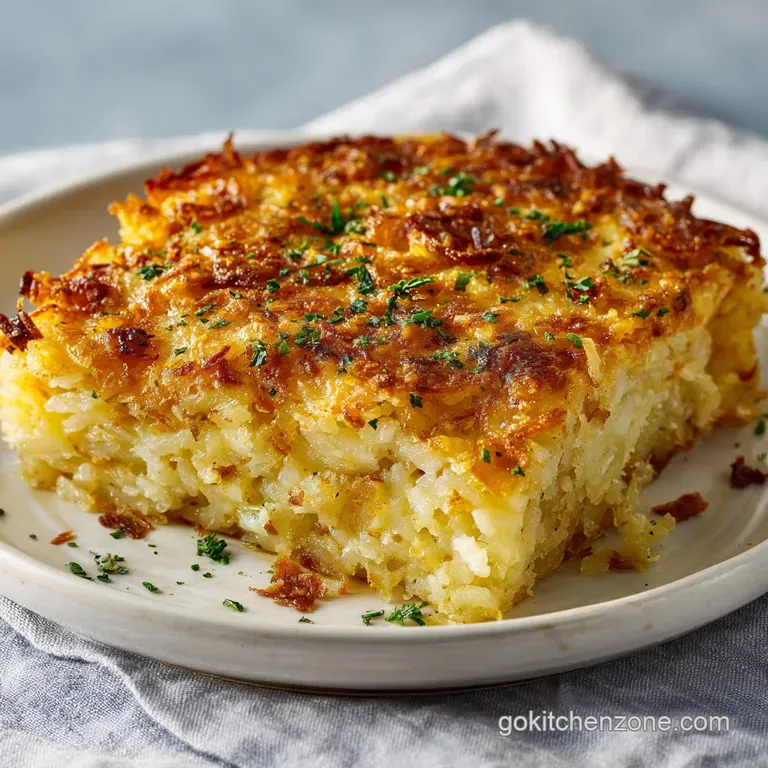
Hash Brown Casserole: Velvety and Crunchy
- Time: Active 15 minutes, Passive 45 mins, Total 1 hours
- Flavor/Texture Hook: Velvety cheese base with a loud, buttery crunch
- Perfect for: Holiday brunches, potlucks, and busy weeknight side dishes
- The Ultimate Easy Cheesy Hash Brown Casserole
- Why This Recipe Works
- Understanding the Ingredient Science
- The Primary Building Blocks
- Necessary Kitchen Tool List
- From Initial Prep to Plate
- Correcting Common Texture Issues
- Scaling for Large Gatherings
- Creative Flavor and Texture Swaps
- Safe Freezing and Reheating Steps
- Side Dishes and Complements
- Common Potato Cooking Myths
- Recipe FAQs
- 📝 Recipe Card
The Ultimate Easy Cheesy Hash Brown Casserole
Picture this: it’s a slow Sunday morning, the coffee’s brewing, and you hear that satisfying shatter of cornflakes being crushed in a bag. That is the sound of a good day starting in my house. I remember one Christmas when I tried to rush this dish and skipped thawing the potatoes properly.
I served a puddle of lukewarm, watery spuds to twelve hungry relatives. It was a dinner struggle of epic proportions that I still hear about today.
I learned the hard way that a little patience with your ingredients makes the difference between a soggy mess and a velvety, golden masterpiece. This Hash Brown Casserole is the result of years of "oops" moments turned into "aha" tricks.
We are talking about a side dish that happens to steal the show every single time, whether it's a holiday or just a Tuesday where you need a win.
We’ve all seen the basic versions, but we are going for something better here. By focusing on moisture control and the right kind of fat, we create a texture that’s rich without being greasy. It’s the kind of comfort food that feels like a hug, but with a better crunch.
Trust me, once you see that golden topping sizzle as it comes out of the oven, you’ll never go back to the standard dump and bake method.
Why This Recipe Works
- Starch Gelatinization: Thawing and drying the potatoes allows the starch to absorb the liquid from the sour cream and soup during the bake, creating a cohesive structure.
- Fat Emulsification: Mixing the room temperature sour cream with melted butter creates a stable emulsion that coats every potato shred without breaking or leaking oil.
- Surface Area Optimization: Crushing the cornflakes coarsely provides more jagged edges for the butter to cling to, resulting in a more dramatic, crispy texture.
- Maillard Reaction Boost: The small amount of sugar in the cornflakes combined with the butter leads to rapid browning at 350°F, giving you that deep amber color.
| Potato Type | Prep Level | Final Texture | Best Use |
|---|---|---|---|
| Frozen Shredded | Low (Thaw only) | Consistently tender | Weeknight ease |
| Fresh Grated | High (Peel, grate, soak) | Slightly more bite | Gourmet flair |
| Frozen Cubed | Low (Thaw only) | Hearty and chunky | Main dish vibes |
If you're looking for a version with more protein to make this a full meal, my Breakfast Casserole recipe is a solid choice. This particular method works great as a side for my Hashbrown Casserole recipe which focuses on a higher shatter crust and a slightly different cheese blend.
Understanding the Ingredient Science
| Ingredient | Science Role | Pro Secret |
|---|---|---|
| Frozen Hash Browns | Structural Base | Thaw them completely and press between paper towels to remove "ice melt" water. |
| Sour Cream | Acidic Tenderizer | Use full fat only; the lactic acid softens the potato fibers while the fat provides creaminess. |
| Sharp Cheddar | Flavor & Binding | Grate your own from a block to avoid the anti clumping starches found in pre shredded bags. |
| Cornflakes | Texture Contrast | Don't pulverize them; you want coarse shards to catch the heat and stay crunchy. |
The Primary Building Blocks
- 30 oz frozen shredded hash browns: Thawed and patted dry. Why this? Shreds provide more surface area for the cheese sauce to cling to.
- Substitute: 30 oz frozen cubed hash browns for a chunkier texture.
- 1/2 cup unsalted butter: Melted and cooled slightly. Why this? Controls salt levels while providing the essential fat for the "velvety" mouthfeel.
- Substitute: Salted butter (just reduce the added sea salt by half).
- 10.5 oz condensed cream of chicken soup: The flavor anchor. Why this? Provides thickeners and savory depth that home-made sauces struggle to match in a casserole.
- Substitute: Cream of mushroom soup for a vegetarian friendly option.
- 16 oz full fat sour cream: Room temperature. Why this? Room temp prevents the melted butter from seizing and clumping when mixed.
- Substitute: Plain Greek yogurt for a slightly tangier, higher protein finish.
- 1/2 cup yellow onion: Very finely minced. Why this? Finely minced onions melt into the sauce so you get flavor without "onion crunch."
- Substitute: 1 tablespoon onion powder if you have picky eaters who hate visible onions.
- 2 cups sharp cheddar cheese: Freshly grated. Why this? Sharp cheddar has a lower moisture content and higher flavor punch than mild versions.
- Substitute: Gruyère for a more sophisticated, nutty flavor profile.
- 1 tsp sea salt & 1/2 tsp black pepper: Essential seasoning.
- 1/4 tsp smoked paprika: For a subtle earthy note.
- 2 cups cornflakes: Coarsely crushed. Why this? They stay crispier longer than breadcrumbs under the heat of the oven.
- Substitute: Ritz crackers for a more buttery, salty topping.
- 1/4 cup unsalted butter: Melted (for the topping).
Necessary Kitchen Tool List
You don't need a pantry full of gadgets to make a great Hash Brown Casserole. I prefer using a large glass mixing bowl so I can see if the onions are evenly distributed. A sturdy 9x13 inch baking dish is the standard here, but a ceramic one often provides more even heat distribution than thin metal.
For the topping, a simple heavy duty zip top bag and a rolling pin (or even a heavy wine bottle) work perfectly to crush those cornflakes without making a mess. Avoid using a food processor for the topping, as it turns the flakes into dust too quickly. You want shards, not powder.
From Initial Prep to Plate
1. The Prep Phase
Preheat your oven to 350°F (180°C). Grease a 9x13 inch baking dish with butter or non stick spray. Take your thawed hash browns and press them firmly between layers of paper towels to remove any lingering moisture.
Note: Excess water is the enemy of a velvety casserole.
2. Mixing the Base
In a large bowl, whisk together the 1/2 cup melted butter, cream of chicken soup, sour cream, minced onion, salt, pepper, and smoked paprika. Whisk until the mixture is smooth and pale orange. This ensures every bite has the same level of seasoning.
3. Folding and Incorporating
Add the shredded hash browns and the 2 cups of freshly grated cheddar cheese to the bowl. Use a large spatula to fold everything together gently. You want the potatoes coated but not smashed into a paste.
4. Transferring the Mix
Spread the potato mixture into your prepared baking dish. Use the back of your spatula to level the top, but don't pack it down tightly. Keeping it a bit airy allows the heat to penetrate the center faster.
5. Preparing the Topping
Place the cornflakes in a bag and crush them coarsely. In a small bowl, toss the crushed flakes with the 1/4 cup of melted butter until they look damp and golden.
6. The Topping Layer
Sprinkle the buttered cornflakes evenly over the top of the potatoes. Ensure you get all the way to the corners so every serving has a bit of that shatter-crisp texture.
7. The Baking Stage
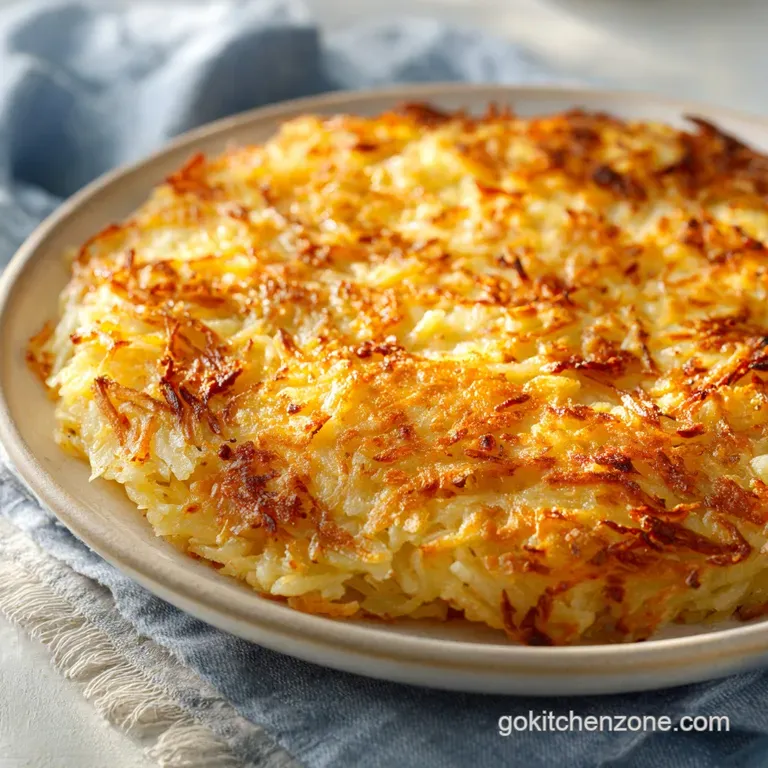
Place the dish in the center of the oven. Bake for 45 mins. You are looking for the edges to be fragrantly bubbling and the topping to be a deep, toasted golden brown.
8. The Cooling Rest
Remove the casserole from the oven and let it sit on the counter for 10 minutes before serving. Note: This "carryover" time allows the starches to set so the casserole holds its shape when scooped.
Correcting Common Texture Issues
Why Your Casserole Is Soupy
This is almost always due to frozen potatoes that weren't thawed or dried. As the "ice" inside the potato shreds melts in the oven, it releases water into your cream sauce. If you find yourself with a watery center, you can try extending the bake time by 10 minutes uncovered to help evaporation, but the real fix starts at the prep stage.
| Problem | Root Cause | Solution |
|---|---|---|
| Oily surface | Pre shredded cheese | Use block cheese; the potato starch can't absorb the added cellulose in pre bagged shreds. |
| Soggy topping | Buttered too early | Only add the buttered cornflakes right before the dish goes into the oven. |
| Bland middle | Under seasoning | Ensure the salt and paprika are whisked into the liquid base before adding potatoes. |
Common Mistakes Checklist
- ✓ Pat the hash browns completely dry with paper towels to prevent a watery base.
- ✓ Use room temperature sour cream so the melted butter doesn't clump up into greasy pockets.
- ✓ Avoid over crushing the cornflakes; you want varied textures for the best mouthfeel.
- ✓ Let the dish rest for 10 minutes after baking to allow the "velvety" structure to set.
- ✓ Grate your own cheese to ensure a smooth, stringy melt rather than a grainy one.
Scaling for Large Gatherings
If you need to double this for a massive family reunion, don't just double the dish size and hope for the best. Use two separate 9x13 pans. Doubling the thickness in one deep pan will result in a burnt top and a raw, cold center.
If you must use one giant pan, lower the oven temp to 325°F and extend the time by 20 minutes, covering with foil for the first half of the bake.
For a smaller household, you can easily halve this recipe. Use an 8x8 inch square pan. The bake time will usually drop by about 10 minutes, so start checking for those bubbles at the 35 minute mark.
To halve the egg (if you were using one, though this recipe doesn't call for it), beat it in a cup and use two tablespoons.
Chef's Tip: If you are making this for a crowd, you can assemble the whole thing (minus the topping) the night before. Just add 5-10 minutes to the bake time since you'll be starting with a cold dish from the fridge.
| Goal | Adjustment Strategy | Resulting Texture |
|---|---|---|
| Feeding 24 | Use two 9x13 pans; swap positions halfway through | Consistent crunch |
| Budget Meal | Use crushed saltines instead of cornflakes | Salty, classic finish |
| Quick Weeknight | Skip the onion mincing; use 1 tsp onion powder | Smoother texture |
Creative Flavor and Texture Swaps
- For a Hearty Main: Hash Brown Casserole with Ham: Stir in 1.5 cups of diced cooked ham and 1 cup of frozen peas. It turns the side dish into a one pan dinner.
- To Make It Without Soup: Use a thick homemade béchamel sauce (butter, flour, and milk) seasoned with chicken bouillon to mimic the condensed soup flavor.
- For the Set It and Forget It Method: You can do this in a slow cooker! Cook on low for 4 hours. However, you'll need to toast the cornflakes in a pan with butter and add them right before serving to keep them from getting mushy.
| Original Ingredient | Substitute | Why It Works |
|---|---|---|
| Cornflakes (2 cups) | Panko Breadcrumbs | Provides a lighter, Japanese style crunch. |
| Cream of Chicken | Cream of Celery | Offers a brighter, more vegetal flavor profile. |
| Sharp Cheddar | Pepper Jack | Adds a subtle creeping heat that cuts through the richness. |
Safe Freezing and Reheating Steps
Storage: Keep leftovers in an airtight container in the fridge for up to 4 days. The cornflakes will lose their shatter after the first day, but the potato base stays delicious.
Freezing: You can freeze the assembled (unbaked) casserole for up to 3 months. Wrap the dish tightly in plastic wrap and then foil. For the best results, freeze without the cornflake topping and add that fresh just before you bake it. Thaw in the fridge overnight before cooking.
Reheating: Avoid the microwave if you want to save the texture. Reheat in a 350°F oven for 15-20 minutes until the cheese is sizzling again. If the top is already very brown, tent it with foil during the reheat.
Zero Waste: If you have leftover cornflakes that aren't enough for a topping, toss them into your next batch of fried chicken coating. Leftover minced onions can be frozen in an ice cube tray with a little oil for your next saute.
Side Dishes and Complements
This Hash Brown Casserole is a heavy hitter, so it needs partners that can handle the richness. For a traditional breakfast, serve it alongside thick cut maple bacon and soft scrambled eggs. The saltiness of the bacon cuts right through the creamy cheddar base.
For a holiday dinner, this is the soulmate of a honey glazed ham or a roasted turkey. If you want something green on the plate to balance the carbs, a crisp arugula salad with a lemon vinaigrette works wonders. The acidity of the lemon clears your palate between those decadent, cheesy bites. It also pairs beautifully with a Cheesy Hashbrown Casserole recipe if you're hosting a massive "potato palooza" and want to offer different topping styles.
Common Potato Cooking Myths
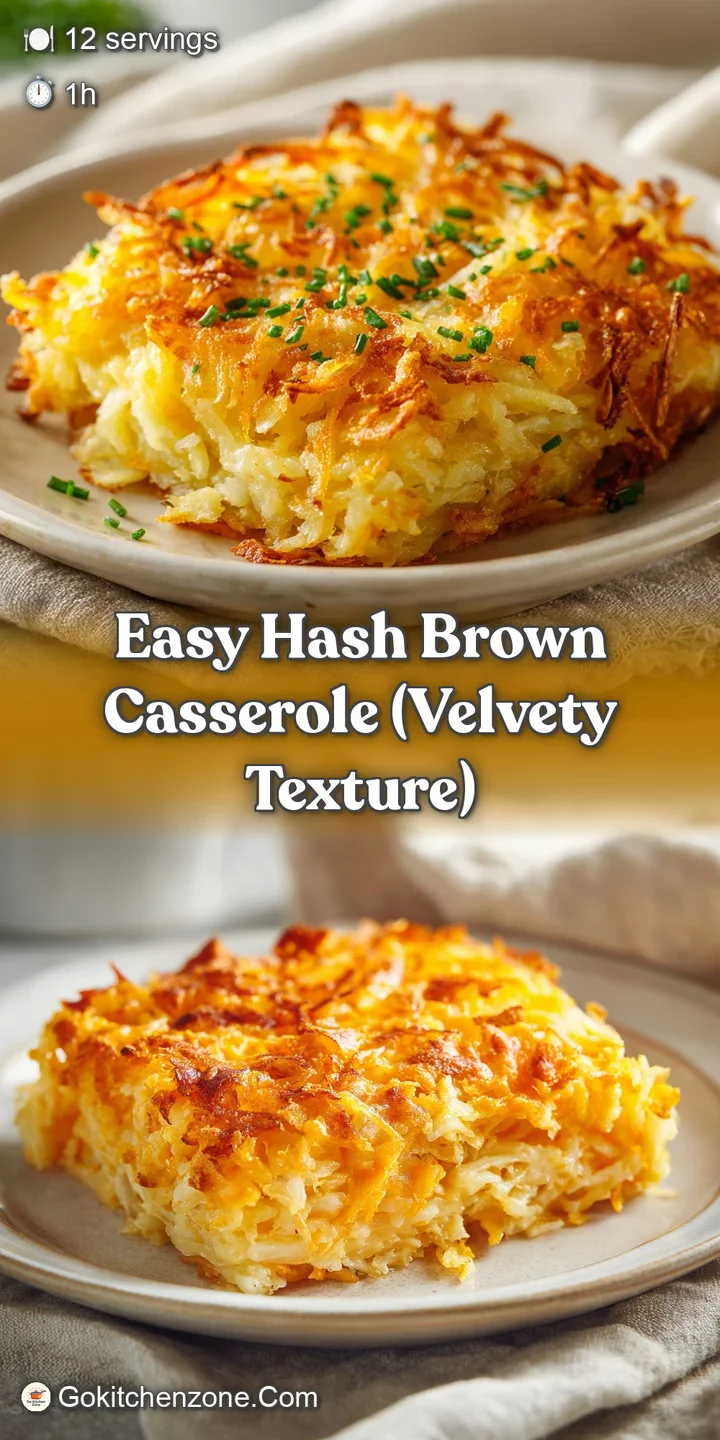
One big misconception is that you have to use fresh potatoes for the best flavor. Honestly, for this specific casserole, frozen hash browns are often better because they’ve been blanched and flash frozen, which helps them maintain their shape during the long bake.
Fresh potatoes can sometimes turn into a gummy mash if they aren't handled perfectly.
Another myth is that you can't over mix the base. While you won't develop gluten like in bread, over mixing can break the delicate potato shreds into a mushy paste. You want those distinct shreds to provide structural integrity to the dish.
Fold with a gentle hand, and your fork will thank you later with a much better "bite."
Recipe FAQs
What are the ingredients for hash brown casserole?
The core ingredients are frozen shredded hash browns, condensed cream of chicken soup, sour cream, butter, onion, and cheddar cheese. The topping usually requires crushed cornflakes mixed with melted butter. For a different creamy, sweet profile, you might enjoy the base ingredients used in our Cinnamon Roll Casserole recipe.
What is Stanley Tucci's 4 ingredient potato casserole so good he eats it for breakfast and dinner?
Stanley Tucci’s famous recipe typically uses frozen hash browns, cream of mushroom soup, sour cream, and shredded cheddar cheese. It omits the onion and the traditional cornflake topping, focusing purely on a rich, cheesy interior consistency.
Mastering texture control, like ensuring your sour cream is room temperature, is the key skill for success here.
Do you have to thaw hash browns for hash brown casserole?
Yes, it is highly recommended to thaw them first. Frozen potatoes contain excess water that releases during baking, leading to a soupy, watery casserole base. After thawing, press them very firmly between paper towels to remove as much moisture as possible.
What is Dolly Parton's 5 layer casserole?
This usually refers to her famous layered comfort dish, which often includes layers of ground beef, onion, canned soup, cheese, and crispy hash browns on top. While technically different from a pure cheesy hash brown side dish, the technique of layering dense ingredients beneath a crunchy potato crust is similar. If you enjoy savory layered meals, you should also try our Sloppy Joe Casserole recipe.
How do I prevent the cornflake topping from getting soggy?
Mix the crushed cornflakes with melted butter until just coated before sprinkling them on. This fat barrier helps protect them from the steam rising from the potato mixture below. Only add the topping immediately before the casserole goes into the oven for the final bake.
Why is my casserole oily instead of creamy?
This usually happens when you use pre-shredded cheese instead of grating your own block cheese. Pre-shredded varieties contain anti caking agents that prevent the cheese from melting into a smooth emulsion with the fat from the soup and butter. Grating cheese fresh ensures proper starch absorption.
Can I make this casserole ahead of time?
Yes, you can assemble the entire casserole, minus the topping, up to 24 hours in advance. Cover it tightly and refrigerate, then add the buttered cornflakes right before you bake it. Remember to add an extra 5 to 10 minutes to the bake time since you are starting from a cold temperature.
Hash Brown Casserole Rich
Ingredients:
Instructions:
Nutrition Facts:
| Calories | 347 kcal |
|---|---|
| Protein | 7.4 g |
| Fat | 26.5 g |
| Carbs | 20.8 g |
| Fiber | 1.4 g |
| Sugar | 2.6 g |
| Sodium | 483 mg |
