Grandmas Goulash: Traditional One-Pot Comfort
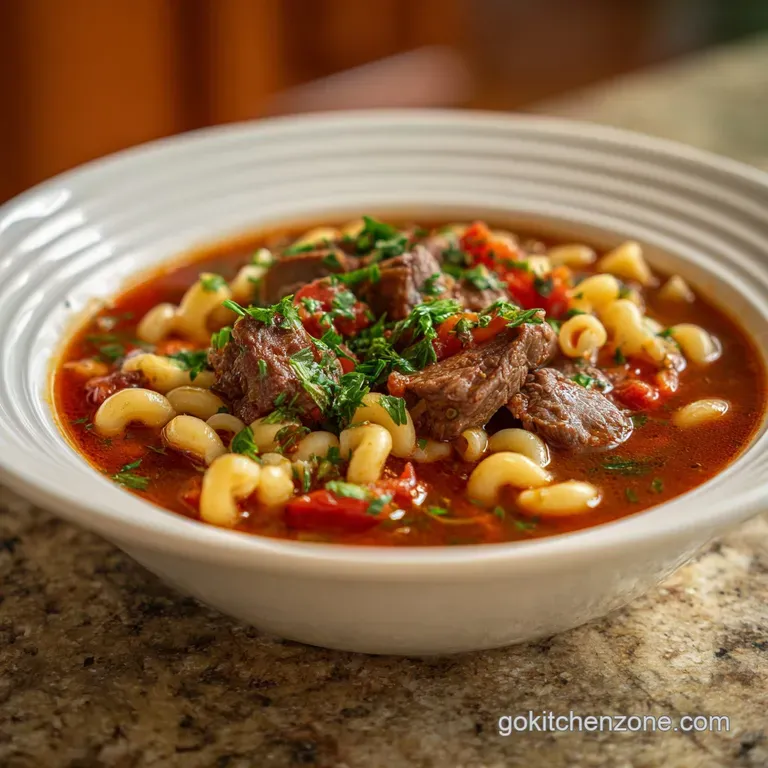
- Time: Active 10 minutes, Passive 30 minutes, Total 40 minutes
- Flavor/Texture Hook: Savory, beefy, and slightly tangy with tender macaroni.
- Perfect for: Stressful weeknight dinners or budget-friendly meal prepping.
- The Best Old Fashioned Grandmas Goulash Recipe
- Why This One Pot Method Succeeds
- Component Analysis and Selection
- Selecting Your Ingredients
- Minimal Equipment Needed
- Simple Cooking Instructions
- Troubleshooting Common Failures
- Smart Substitutes and Twists
- Scaling the Recipe
- Debunking Goulash Myths
- Storage and Waste Tips
- Perfect Side Dish Ideas
- High in Sodium ⚠️
- Recipe FAQs
- 📝 Recipe Card
The Best Old Fashioned Grandmas Goulash Recipe
Grandma’s kitchen always had a specific soundtrack on Tuesday nights: the rhythmic thwack of a wooden spoon against a heavy pot and the wet hiss of onions hitting hot beef fat.
I remember standing on a stepstool, barely tall enough to see over the rim of the Dutch oven, watching the steam rise in thick, savory clouds. This wasn't some fancy culinary project; it was the ultimate answer to the weeknight dinner struggle, a way to feed a crowd without breaking a sweat or the bank.
We’ve all had those versions that are basically just watery tomato soup with a few lonely noodles floating around. This isn't that. This grandmas goulash recipe is thick, chunky, and hits that specific spot in your brain that craves home.
It’s the kind of meal that actually tastes better the next day when the pasta has soaked up every drop of that smoky paprika and tangy Worcestershire sauce.
The beauty of this dish lies in its lack of pretension. You don’t need specialized skills or high end gadgets just a big pot and about 40 minutes of your time.
Whether you’re trying to replicate a childhood memory or you just need a reliable one pan win for your family, this recipe stays true to the old-fashioned roots that made it a staple in kitchens across the country for decades.
Why This One Pot Method Succeeds
- Starch Emulsification: Cooking the dry macaroni directly in the beef broth and tomato juices releases starch into the liquid, creating a thick, glossy sauce without needing a flour roux.
- The Maillard Reaction: Searing the lean ground beef at a high temperature until it develops a mahogany crust provides the deep, savory foundation that prevents the dish from tasting flat.
- Aromatic Softening: Dicing the onions finely allows them to melt into the sauce, providing sweetness that balances the sharp acidity of the canned tomatoes.
- Layered Seasoning: Adding smoked paprika and oregano to the fat of the browned meat "blooms" the spices, releasing oil soluble flavors that wouldn't be as vibrant if added to the liquid later.
| Beef Fat % | Searing Time | Visual Cue | Best Result |
|---|---|---|---|
| 85/15 Ground | 6 minutes | Dark brown bits | Maximum flavor with moderate drainage |
| 90/10 Lean | 5 minutes | Light grey/brown | Healthier but needs extra oil for browning |
| 80/20 Chuck | 8 minutes | Crispy edges | Richer flavor but requires heavy skimming |
Choosing the right meat is the first step in ensuring your dinner doesn't end up greasy. I prefer the 85/15 blend because it provides enough fat to sauté the vegetables properly without leaving a pool of oil at the bottom of your bowl.
Component Analysis and Selection
| Ingredient | Science Role | Pro Secret |
|---|---|---|
| Tomato Sauce | Base Liquid | Provides the smooth, uniform red sauce texture. |
| Elbow Macaroni | Thickener | Releases amylose starch to bind the water and fat. |
| Smoked Paprika | Flavor Bridge | Connects the beefy notes to the acidic tomatoes. |
Selecting Your Ingredients
To make a truly easy grandmas goulash, you need to start with the right building blocks. While the pantry staples do most of the heavy lifting, the quality of your canned goods matters. I always reach for a high-quality tomato sauce that isn't pre seasoned so I can control the salt and herb levels myself.
- 2 lbs Lean Ground Beef (85/15): The protein core. Why this? Provides the best balance of moisture and beefy flavor.
- Substitute: Ground turkey or chicken (add 1 tbsp olive oil to compensate for lower fat).
- 1 Large Yellow Onion, finely diced: The sweetness source. Why this? Yellow onions have a high sugar content that caramelizes beautifully.
- Substitute: White onion for a sharper, more pungent bite.
- 3 cloves Garlic, minced: The aromatic punch. Why this? Fresh garlic provides a depth that powder simply cannot match.
- Substitute: 1 tsp garlic powder if you're in a rush.
- 1 Green Bell Pepper, diced: The classic vegetal note. Why this? Adds a slight bitterness to cut through the rich beef fat.
- Substitute: Red bell pepper for a sweeter, less traditional profile.
- 30 oz Tomato Sauce: The smooth binder. Why this? Creates the "gravy" that coats every piece of macaroni.
- Substitute: Marinara sauce (reduce oregano and salt in the recipe).
- 29 oz Diced Tomatoes (with juice): The texture builder. Why this? Provides chunks of fruit that survive the simmering process.
- Substitute: Crushed tomatoes for a thicker, less chunky sauce.
- 1/4 cup Ketchup: The secret balancer. Why this? The sugar and vinegar in ketchup round out the tomato acidity.
- Substitute: 1 tbsp tomato paste plus 1 tsp sugar.
- 2 tbsp Worcestershire Sauce: The umami bomb. Why this? Adds fermented depth and a salty, savory kick.
- Substitute: Soy sauce mixed with a drop of lemon juice.
- 2 tsp Smoked Paprika: The smoky heart. Why this? Gives the dish its signature "old fashioned" campfire undertone.
- Substitute: Sweet paprika for a milder, more traditional Hungarian vibe.
- 1 tsp Dried Oregano: The herbal lift. Why this? Provides an earthy, Mediterranean scent that pairs with tomatoes.
- Substitute: Dried basil or Italian seasoning blend.
- 2 Dried Bay Leaves: The subtle background. Why this? Infuses a faint floral aroma that lightens the heavy sauce.
- Substitute: 1/4 tsp celery seed.
- 2 cups Dry Elbow Macaroni: The vehicle. Why this? The hollow tubes trap sauce inside every bite.
- Substitute: Shells or rotini for similar sauce holding power.
- 2 cups Low Sodium Beef Broth: The cooking liquid. Why this? Simmers the pasta while adding more beefy dimension than water.
- Substitute: Chicken broth or water with a bouillon cube.
- 1 tsp Salt & 1/2 tsp Black Pepper: The basic enhancers. Why this? Essential for pulling all the other flavors together.
Minimal Equipment Needed
You don't need a kitchen full of gadgets for this. A large Dutch oven or a heavy bottomed stockpot is the only essential tool. Using a heavy pot ensures even heat distribution, which is vital when you're simmering pasta, as it prevents the noodles from sticking to the bottom and scorching.
A sturdy wooden spoon or a flat edged spatula is also a must have. You'll need it to scrape up the "fond" those tasty brown bits from the bottom of the pot after browning the beef.
If you happen to be making a smaller batch, you could use a deep skillet, but for the full 6 serving yield, stick to the pot to avoid spills.
Simple Cooking Instructions
1. Achieving a Mahogany Sear
Place your large pot over medium high heat. Add the 2 lbs of ground beef and break it apart with your spoon. Cook for 6 to 8 minutes until the meat is browned and no longer pink. Note: Don't drain the fat yet; we need it to cook the vegetables.
2. Sautéing the Fresh Aromatics
Toss in the diced yellow onion and green bell pepper. Sauté for about 5 minutes until the onions are translucent and the peppers have softened. Add the minced garlic and cook for just 1 minute until you smell the sharp, toasted aroma.
3. Layering the Umami Base
If there is excessive liquid in the pot, drain all but about 1 tablespoon of the fat. Stir in the 2 tsp smoked paprika, 1 tsp oregano, 1 tsp salt, and 1/2 tsp black pepper. Cook for 1 minute until the spices look darker and smell intense.
4. Building the Sauce
Pour in the 30 oz tomato sauce, 29 oz diced tomatoes (with their juices), 1/4 cup ketchup, and 2 tbsp Worcestershire sauce. Stir well to combine, scraping the bottom of the pot to lift any browned bits.
5. Mastering the One Pot Pasta
Add the 2 cups of dry elbow macaroni and the 2 cups of beef broth. Throw in the 2 bay leaves. Stir everything together and bring the mixture to a gentle boil.
6. Finishing with Precision
Reduce the heat to low, cover the pot, and simmer for 12 to 15 minutes until the macaroni is tender and the sauce has thickened. Note: Stir every 4 minutes to ensure the pasta doesn't clump together at the bottom.
7. The Final Rest
Remove the pot from the heat and discard the bay leaves. Let the goulash sit uncovered for 5 minutes until the sauce stops bubbling and sets slightly. This allows the pasta to finish absorbing the flavorful liquid.
Troubleshooting Common Failures
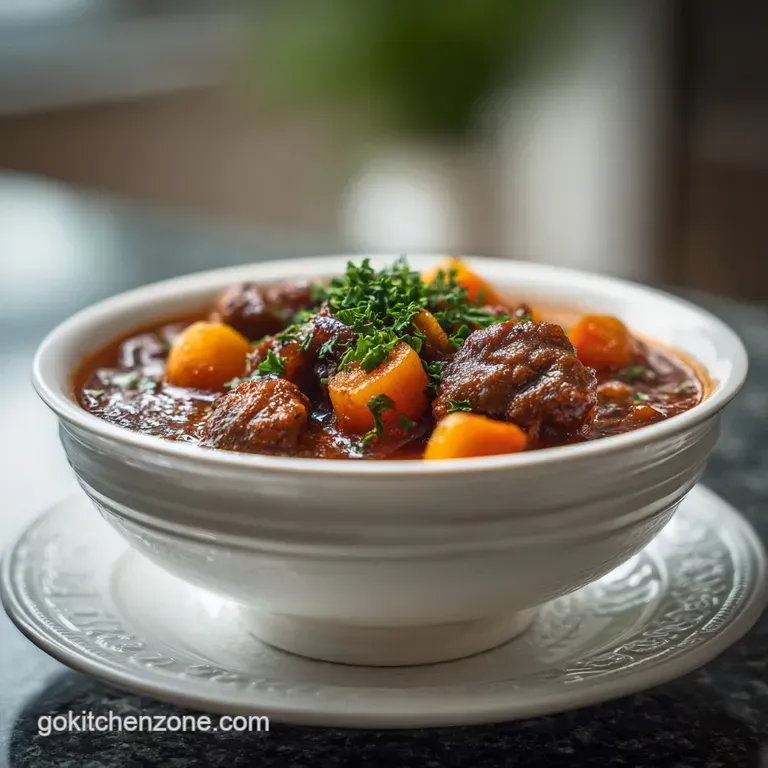
Why Your Goulash Is Mushy
Overcooking is the most common culprit for gummy pasta. Because the macaroni continues to cook in the residual heat of the thick sauce, you should aim to stop the stove when the pasta is just slightly firmer than you’d like.
If you let it go until it's completely soft, it will turn into a paste by the time it hits the table.
Correcting Excessive Acidity
Sometimes tomatoes can be overly tart, especially out of season. If the dish tastes too sharp or "metallic," it’s likely an imbalance of pH. You’ve already added ketchup, which helps, but a tiny pinch of sugar can fix a sauce that’s gone astray.
| Problem | Root Cause | Solution |
|---|---|---|
| Thin, watery sauce | Too much broth or lid kept on too long | Simmer uncovered for 5 mins to reduce liquid |
| Burnt bottom | Heat too high or not enough stirring | Move to a lower burner and stir every 3 mins |
| Bland flavor | Not enough salt or spices didn't bloom | Add a splash more Worcestershire or a pinch of salt |
Common Mistakes Checklist
- ✓ Pat the beef dry with a paper towel if it’s very wet before browning to get a better sear.
- ✓ Never skip browning the meat; grey meat equals grey flavor.
- ✓ Don't add the pasta too early; the sauce should be hot and bubbling first.
- ✓ Stir the bottom of the pot frequently once the pasta is added to prevent starch sticking.
- ✓ Check the pasta at the 10 minute mark to ensure it doesn't overcook.
Smart Substitutes and Twists
If you want to deviate from the traditional goulash recipe, it’s easy to swap things out based on what's in your pantry. For a leaner version, ground turkey works well, though I’d recommend adding a beef bouillon cube to keep that deep color and flavor.
If you find yourself without macaroni, small shells or even ditalini are great alternatives because they have enough surface area to grab the sauce.
Leaner Meat Substitutes
Using a 90/10 beef or ground bison can significantly reduce the fat content. However, since there’s less fat to carry flavor, you might want to add an extra teaspoon of smoked paprika or a dash of liquid smoke. If you're looking for something even lighter, check out how I handle lighter sauces in my Broccoli Casserole recipe for inspiration on creamy textures.
Adding a Cheesy Layer
While Grandma might have kept it strictly tomato based, many people love a "cheesy goulash" twist. Stirring in 1 cup of sharp cheddar or Monterey Jack right before serving transforms this into something closer to a homemade Hamburger Helper, but with way better ingredients.
Scaling the Recipe
Reducing this recipe is straightforward. If you’re cooking for two, simply halve all ingredients. You can still use a whole egg if you're making a dish that requires a binder, but here, just cutting the beef, pasta, and liquids by half works perfectly.
Use a smaller pot to ensure the liquid still covers the pasta.
Scaling up for a potluck? Doubling the recipe works well, but don't just double the salt and spices immediately. Start with 1.5 times the amount and taste as you go. You'll need a very large stockpot (at least 8 quarts) to handle 4 lbs of beef and 4 cups of pasta.
| Servings | Beef Amount | Macaroni | Pot Size |
|---|---|---|---|
| 2 People | 0.6 lb | 2/3 cup | 3 quart pot |
| 6 People | 2 lbs | 2 cups | 5 quart Dutch oven |
| 12 People | 4 lbs | 4 cups | 10 quart stockpot |
Debunking Goulash Myths
One frequent misconception is that American goulash is the same as Hungarian Pörkölt. Authentic Hungarian versions are usually meat stews served over noodles or dumplings, rarely containing macaroni or ground beef.
The American version is a "sink style" meal born from efficiency and household economy.
Another myth is that you must boil the pasta separately. While that's true for many Italian dishes, the whole point of this easy grandmas goulash is the one pot technique. Boiling the pasta in the sauce isn't a shortcut it’s a flavor building strategy that results in a more cohesive, hearty meal.
Storage and Waste Tips
- Fridge
- Store leftovers in an airtight container for up to 4 days. The pasta will continue to absorb sauce, so you may need to add a splash of water or broth when reheating.
- Freezer
- This dish freezes reasonably well for up to 3 months. However, be aware that the macaroni may become slightly softer upon thawing. It’s best to freeze it in individual portions for quick lunches.
- Reheating
- Use the microwave or a small saucepan. If using the stovetop, add a tablespoon of water and keep the heat low to prevent the pasta from breaking apart.
Zero Waste Ideas Don't throw away the ends of your onions or peppers. Keep a bag in your freezer for vegetable scraps to make your own broth later. If you have a small amount of goulash left that isn't quite a full serving, use it as a filling for stuffed bell peppers.
Simply top with cheese and bake until the pepper is tender. You can also thin out the leftovers with more beef broth to turn it into a hearty goulash soup for the next day.
Perfect Side Dish Ideas
Since this is such a heavy, carb rich meal, I usually pair it with something bright and crisp. A simple green salad with a sharp vinaigrette is the perfect foil for the rich tomato sauce. If you want to keep with the nostalgic theme, some buttered peas or roasted green beans work wonders.
For those who believe you can never have too many carbs, a slice of crusty garlic bread or a warm cornbread muffin is ideal for mopping up any extra sauce left on the plate. If you’re looking for a more traditional pairing, you might consider how an Authentic Hungarian Goulash recipe is served to see if those side inspirations fit your taste. Trust me, once you master the balance of smoky paprika and tender pasta, this will become a permanent fixture in your weeknight rotation.
High in Sodium ⚠️
1120 mg mg of sodium per serving (49% % of daily value)
The American Heart Association recommends limiting sodium intake to about 2,300mg per day.
Tips to Reduce Sodium in Your Macaroni
-
Broth Swap-30%
Use unsalted or homemade beef broth instead of low-sodium broth. This change alone can significantly reduce sodium.
-
Canned Tomato Choice-20%
Opt for no-salt added tomato sauce and diced tomatoes. Rinse diced tomatoes before adding to further reduce sodium.
-
Salt Control-25%
Eliminate the added teaspoon of salt entirely and adjust to taste with a small pinch of salt only if needed at the end of cooking.
-
Ketchup Cutback-20%
Reduce the amount of ketchup or switch to a low-sodium ketchup alternative. You can also add a touch of tomato paste and a little sweetener to mimic the flavor.
-
Spice It Up
Experiment with other herbs and spices like garlic powder, onion powder, or red pepper flakes to enhance flavor without adding sodium.
-
Worcestershire Wise-20%
Use a low-sodium Worcestershire sauce, or reduce the amount used. Alternatively, try a blend of balsamic vinegar and a tiny amount of soy sauce (used very sparingly) for a similar umami flavor.
Recipe FAQs
What are the ingredients in old fashioned goulash?
Key components include ground beef, elbow macaroni, tomato sauce, diced tomatoes, yellow onion, green pepper, ketchup, Worcestershire sauce, and smoked paprika. This combination provides the signature savory, slightly tangy flavor and thick texture typical of American comfort food goulash.
What is the secret to a rich goulash flavor?
Searing the ground beef properly and blooming the spices are essential for richness. Brown the meat thoroughly to create flavorful fond on the pot bottom, then stir in the smoked paprika and oregano with the fat to intensify their flavor before adding liquids.
What's the difference between Hungarian goulash and American goulash?
Yes, there is a significant difference. Hungarian goulash is traditionally a soup or stew featuring chunks of beef and vegetables, often served over dumplings or noodles, whereas American goulash is a one-pot casserole featuring ground beef and elbow macaroni simmered in a tomato based sauce.
What are the four ingredients in goulash?
The four absolute base ingredients are typically ground beef, pasta (usually elbow macaroni), canned tomatoes, and broth. These form the core structure of the Americanized version, with seasonings layered on top.
How to thicken American goulash without using flour?
Cook the dry macaroni directly in the sauce and broth mixture. As the pasta boils, it releases its starch into the liquid, naturally creating a thick, velvety gravy without needing a separate roux or cornstarch slurry.
Is it true that you must drain the fat after browning the beef?
No, it is generally recommended not to drain all the fat initially. You should only drain off the excess if there is a pool of oil; a tablespoon or two of the rendered fat is necessary to properly sauté the onions and "bloom" the spices for maximum flavor extraction.
How long should the macaroni simmer in the sauce?
Simmer covered on low heat for 12 to 15 minutes, stirring every four minutes. Check for doneness slightly before the 15-minute mark, remembering that the pasta will continue to soften slightly after you remove the pot from the heat during the resting period.
Grandmas Goulash Recipe
Ingredients:
Instructions:
Nutrition Facts:
| Calories | 618 kcal |
|---|---|
| Protein | 34.6 g |
| Fat | 21.5 g |
| Carbs | 47.8 g |
| Fiber | 4.2 g |
| Sugar | 10.5 g |
| Sodium | 1120 mg |
