French Toast Casserole: Make-Ahead Magic

- Time: Active 15 minutes, Passive 50 minutes, Total 1 hours 5 mins
- Flavor/Texture Hook: A velvety, spiced custard center topped with a buttery, shattering oat crust.
- Perfect for: Holiday mornings, weekend brunch hosting, or stress free meal prep.
- Create the Best French Toast Casserole
- Why This Morning Method Works
- Essential Specs for Your Bake
- Best Ingredients for Proper Texture
- Required Tools for Even Baking
- The Step by Step Process
- Common Pitfalls and Pro Fixes
- Smart Ways to Adapt Diet
- Myths About Bread Soaking
- Storing and Reheating Your Leftovers
- Best Sides for Your Brunch
- Recipe FAQs
- 📝 Recipe Card
Create the Best French Toast Casserole
Imagine waking up to the scent of warm cinnamon and bright orange zest wafting through the house without having to lift a finger. That’s the magic of this dish. We’ve all dealt with the dinner struggle, but the breakfast struggle is real too, especially when you have a house full of people.
Instead of standing over a hot griddle flipping individual slices while everyone else eats, you just slide this pan into the oven. It’s one of those recipes that makes you look like a pro while you're actually just sipping coffee.
It happens to be the most requested thing in my house for birthdays because it hits that sweet spot between comfort and indulgence.
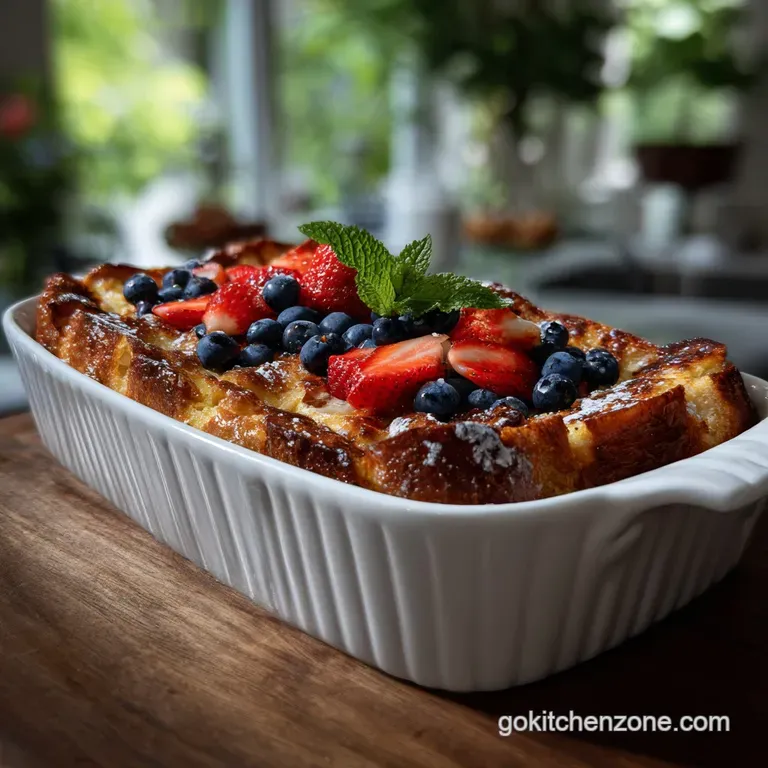
I’ve made the mistake of using thin, flimsy white bread before, and let me tell you, it was a mushy mess. This version uses thick cut brioche that holds its own against the custard. You'll get those crispy, golden edges on top and a center that feels almost like bread pudding.
Why This Morning Method Works
- Starch Gelatinization: The overnight rest allows the bread starches to fully absorb the liquid, ensuring a uniform texture that doesn't leak water when sliced.
- Protein Denaturation: The eggs in the custard uncoil and bond during baking, creating a structural web that sets the liquid into a firm yet silky crumb.
- Thermal Buffering: Using heavy cream alongside whole milk adds fat that coats the tongue and prevents the eggs from overcooking into a rubbery texture.
If you are looking for a slightly different flavor profile for your next brunch, you might also love my French Toast Casserole recipe which focuses on a traditional prep. This method, however, is all about that specific contrast between the soft base and the crunchy oat topping.
| Method | Time | Texture | Best For |
|---|---|---|---|
| Overnight Soak | 8-12 hours | Ultra creamy, custard like | Stress free hosting |
| Quick Soak | 30 minutes | More bread forward | Last minute cravings |
| Croissant Swap | 12 hours | Flaky and buttery | Extra indulgence |
The key difference in the methods above comes down to how much the liquid penetrates the bread. For the most velvety result, the overnight soak is truly the way to go. It gives the flavors time to meld and the orange zest time to brighten up the heavy cream.
Essential Specs for Your Bake
For Structural Integrity
The bread choice is the foundation of everything. I recommend a 1 lb Brioche loaf because the high egg and butter content in the bread itself prevents it from falling apart. If you use sourdough, the tang is nice, but the crust can sometimes be a bit too tough to cut through easily in a casserole format.
The Science of Cold Soak
Chilling the mixture isn't just about convenience. When the custard is cold when it enters the oven, the outside edges start to set while the middle stays protected. This prevents the eggs from "weeping" and ensures that the middle stays moist without being undercooked.
A Golden Shattering Crust
That topping is non negotiable. By mixing cold, cubed butter with coconut sugar and oats, we create a streusel that mimics a crumble topping. It provides a necessary crunch that breaks up the softness of the custard soaked bread.
| Component | Science Role | Pro Secret |
|---|---|---|
| Brioche Bread | Structure | Use bread that is at least two days old for better absorption. |
| Whole Milk/Cream | Fat Emulsion | The fat prevents the egg proteins from tightening too quickly. |
| Orange Zest | Flavor Catalyst | The oils in the zest cut through the richness of the maple syrup. |
Choosing the right liquid ratio is vital here. We are using 2 cups of whole milk and 1/2 cup of heavy cream. This specific ratio ensures the bake is rich but doesn't feel heavy or greasy on the palate after a few bites.
Best Ingredients for Proper Texture
- 1 lb (450g) Brioche loaf: Cut into 1 inch cubes. Why this? Brioche has the perfect crumb density to absorb custard without dissolving.
- 6 Large eggs: The binder. Why this? Provides the "lift" and structural setting for the liquid ingredients.
- 2 cups (480ml) Whole milk: The base liquid.
- 1/2 cup (120ml) Heavy cream: For richness.
- 1/3 cup (80ml) Pure maple syrup: Natural sweetener.
- 1 tbsp (15ml) Pure vanilla extract: Depth of flavor.
- 1 tsp (2g) Ground cinnamon: Warmth.
- 1/4 tsp (0.5g) Ground nutmeg: Adds a nutty complexity.
- 1/4 tsp (1.5g) Sea salt: Balances the sugar.
- Zest of 1 organic orange: Brightness.
- 1/2 cup (50g) Rolled oats: For the topping.
- 1/2 cup (60g) Raw pecans: Adds a savory crunch.
- 3 tbsp (45g) Coconut sugar: Caramel notes for the crust.
- 4 tbsp (56g) Unsalted butter: Cold and cubed.
| Original Ingredient | Substitute | Why It Works |
|---|---|---|
| Brioche | Challah | Similar egg rich dough. Note: Very comparable results. |
| Heavy Cream | Full fat Coconut Milk | High fat content. Note: Adds a slight tropical flavor. |
| Coconut Sugar | Brown Sugar | Similar molasses content for caramelization. |
Chef's Tip: Freeze your butter for 10 minutes before cubing it for the topping. This keeps the butter from melting too fast in the oven, giving you a much crispier, "shattering" texture rather than a greasy one.
Required Tools for Even Baking
You don't need fancy gear for this, but a 9x13 inch ceramic or glass baking dish is best. Ceramic holds heat more evenly than metal, which helps prevent the bottom from scorching before the middle is set. You'll also want a large mixing bowl to whisk your custard thoroughly.
A microplane is also a lifesaver for the orange zest. You want those tiny, fine pieces of zest so the citrus flavor is distributed evenly throughout the pan. Large chunks of zest can be bitter and distracting when you're looking for a smooth, velvety bite.
The step-by-step Process
- Cube the brioche. Slice your 1 lb loaf into uniform 1 inch cubes and place them in a greased 9x13 baking dish.
- Whisk the eggs. In a large bowl, beat 6 eggs until no streaks of yolk remain. Note: This ensures a smooth custard without "fried egg" spots.
- Combine liquids. Add 2 cups whole milk, 1/2 cup heavy cream, 1/3 cup maple syrup, and 1 tbsp vanilla to the eggs.
- Season the custard. Stir in 1 tsp cinnamon, 1/4 tsp nutmeg, 1/4 tsp sea salt, and the zest of 1 orange.
- Pour and soak. Pour the mixture evenly over the bread cubes. Press down gently with a spatula to ensure every piece is submerged.
- Chill the dish. Cover and refrigerate for at least 4 hours, or overnight for the best texture.
- Prepare the topping. Mix 1/2 cup oats, 1/2 cup pecans, 3 tbsp coconut sugar, and 1/2 tsp cinnamon.
- Add the butter. Work in 4 tbsp cold, cubed butter using a pastry cutter or your fingers until it looks like coarse sand.
- Bake the casserole. Sprinkle the topping over the bread and bake at 350°F for 45 to 50 minutes until the center is set and the top is golden brown.
- Rest before serving. Let it sit for 5 to 10 minutes until the custard firms up slightly for cleaner slicing.
Common Pitfalls and Pro Fixes
Preventing a Soggy Middle
If your casserole comes out soupy in the center, it usually means the oven temperature was too high or the bread cubes were too large. When the outside cooks too fast, it creates an insulating layer that prevents heat from reaching the core. Make sure your cubes are no larger than one inch.
Avoiding the Eggy Smell
A strong "eggy" odor often happens when the custard isn't flavored enough or the eggs aren't fully incorporated. The orange zest and high-quality vanilla extract in this recipe act as aromatic buffers. Always whisk your eggs thoroughly before adding the milk to ensure they are fully emulsified.
| Problem | Root Cause | Solution |
|---|---|---|
| Dry texture | Not enough soak time | Ensure at least 4 hours of refrigeration. |
| Burnt topping | Sugar caramelized too fast | Tent with foil halfway through baking. |
| Lack of flavor | Stale spices | Use fresh cinnamon and zest the orange right before mixing. |
Common Mistakes Checklist
- ✓ Use stale or "day old" bread to maximize custard absorption.
- ✓ Whisk the eggs separately before adding dairy to prevent clumps.
- ✓ Don't skip the salt; it's essential to balance the maple syrup.
- ✓ Ensure the butter for the topping is refrigerator cold.
- ✓ Let the casserole rest after baking so the slices hold their shape.
Smart Ways to Adapt Diet
If you need to scale this recipe down for a smaller family, you can easily halve everything and use an 8x8 inch pan. Just reduce the baking time by about 10 to 15 minutes.
For scaling up, I recommend using two separate 9x13 pans rather than one giant one, as the middle of a double sized pan will struggle to set without the edges burning.
If you are looking for more variety in your morning routine, you might consider my Cinnamon Roll Casserole recipe for a different twist on the baked breakfast theme.
| Servings | Ingredient Adjustments | Pan Size | Cook Time |
|---|---|---|---|
| 5 People | Half all ingredients | 8x8 inch | 35-40 minutes |
| 10 People | Standard recipe | 9x13 inch | 50 minutes |
| 20 People | Double all ingredients | Two 9x13 inch | 55 minutes |
When doubling the recipe, keep the spices at about 1.5x the original amount rather than a full 2x. Spices like nutmeg can become overpowering very quickly when scaled up too aggressively.
Myths About Bread Soaking
One common myth is that you must use fresh bread for the best flavor. Actually, fresh bread contains too much moisture and won't absorb the custard as well, leading to a flatter, denser bake. Slightly stale bread has open "pores" that act like a sponge for the milk and cream.
Another misconception is that you can't over soak the bread. While overnight is great, leaving it for more than 24 hours can cause the bread to break down too much, turning the texture into a mushy paste rather than a structured bake. Stick to the 8 to 12 hour window.
Storing and Reheating Your Leftovers
Storage: Keep any leftovers in an airtight container in the fridge for up to 3 days. The texture will get a bit denser as it sits, but the flavor remains excellent.
Freezing: You can freeze the baked casserole for up to 2 months. Slice it into individual portions first, wrap them tightly in plastic wrap, and then place them in a freezer bag. This makes it easy to grab one piece at a time for a quick weekday breakfast.
Zero Waste: If you have extra brioche crusts or scraps, don't toss them! Toast them in the oven with a bit of butter and cinnamon sugar to make "bread fries" for the kids, or pulse them into sweet breadcrumbs for topping a fruit crisp later in the week.
Best Sides for Your Brunch
For a Balanced Plate
Since this casserole is quite rich and sweet, I love serving it with something salty and high in protein. Thick cut crispy bacon or savory breakfast sausage links provide a great contrast.
A simple side of Greek yogurt with fresh berries also adds a nice acidic pop that cleanses the palate between bites of the custardy brioche.
The Fresh Orange Finish
To really lean into the orange zest in the recipe, serve a fresh citrus salad on the side. Sliced cara cara oranges and grapefruit with a drizzle of honey and a sprig of mint makes the whole meal feel much lighter. It balances the "heaviness" that can sometimes come with a baked bread dish.
Trust me, once you try the orange zest trick, you won't go back. It's that tiny detail that takes this from a standard breakfast to something that feels like it came from a high end bistro. Enjoy the extra sleep while this bakes away!

Recipe FAQs
Can French toast casserole be prepared the night before?
Yes, absolutely. Assembling the casserole the night before is ideal for French toast casserole. This allows the bread to fully soak up the custard, resulting in a more tender and flavorful dish when baked.
Does French toast casserole have to soak overnight?
No, but overnight soaking is best. While a minimum of 4 hours of soaking in the refrigerator yields good results, soaking overnight allows the bread to absorb the custard more thoroughly, creating a perfectly tender and velvety texture. If you enjoyed mastering the technique of even absorption here, see how the same principle applies to achieving a uniform texture in our Christmas Breakfast Casserole: make-ahead Magic.
What are common mistakes when making French toast casserole?
Using fresh bread and not soaking long enough are common errors. Fresh bread can become too soggy, while insufficient soaking time means the custard won't penetrate fully, leading to a drier, less cohesive casserole.
Why is my French toast casserole soggy?
A soggy middle usually means it wasn't baked long enough or the bread wasn't dense enough. Ensure the center is set and no longer liquid, and using a sturdier bread like brioche helps prevent the bread from breaking down too much.
How do I prevent my French toast casserole from being too wet?
Allow ample soaking time and bake thoroughly. Giving the bread sufficient time to absorb the custard overnight is crucial, and baking until the center is fully set, not just warm, will prevent excess moisture.
Can I use different types of bread for French toast casserole?
Yes, but choose wisely. Sturdier, slightly stale breads like brioche or challah work best as they absorb the custard without falling apart. Softer breads may become too mushy.
How long should French toast casserole soak?
Overnight, or at least 4-8 hours, is ideal for the best texture. This extended soaking period ensures the bread fully absorbs the custard, leading to a richer, more evenly cooked casserole. If you are short on time, a quick soak of 30 minutes is possible but won't yield the same luxurious result.
French Toast Casserole 2

Ingredients:
Instructions:
Nutrition Facts:
| Calories | 402 kcal |
|---|---|
| Protein | 11g |
| Fat | 23g |
| Carbs | 39g |
| Fiber | 2g |
| Sugar | 15g |
| Sodium | 180mg |
