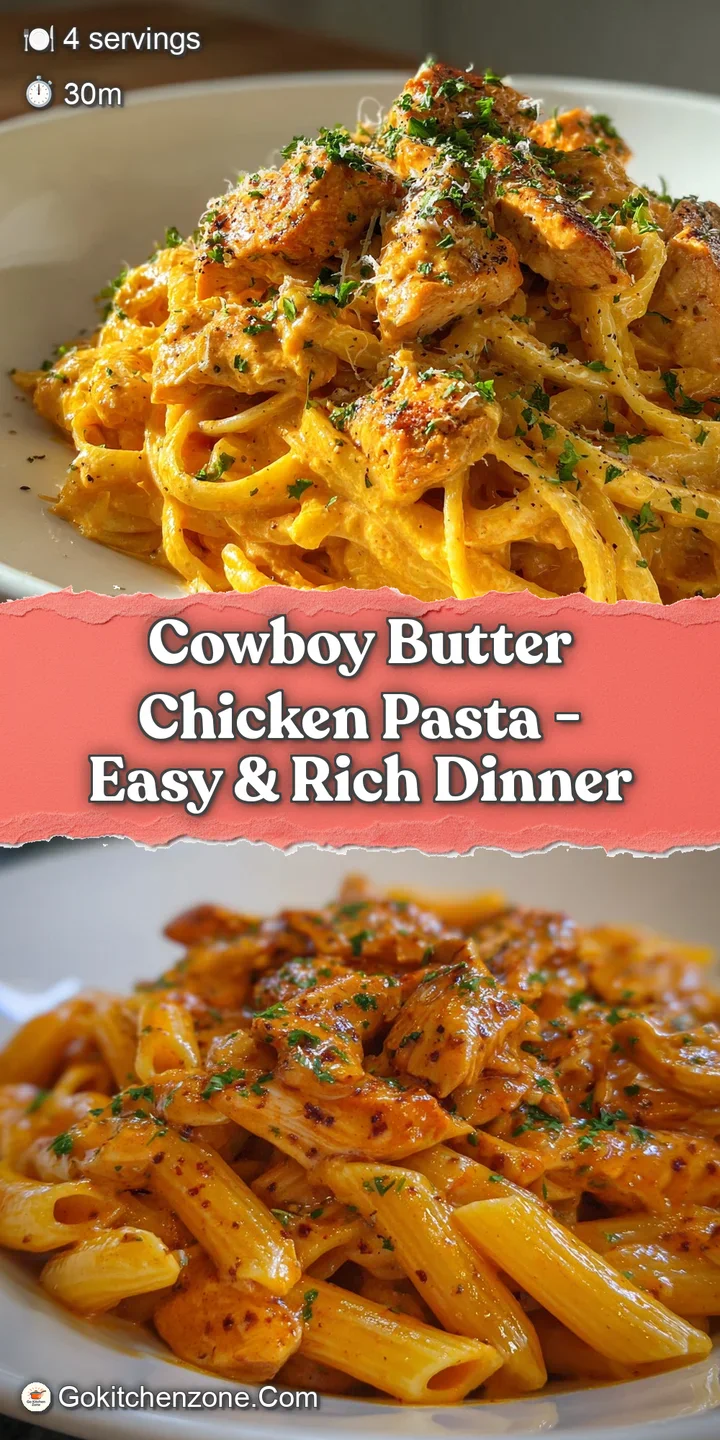
Cowboy Butter Chicken Pasta
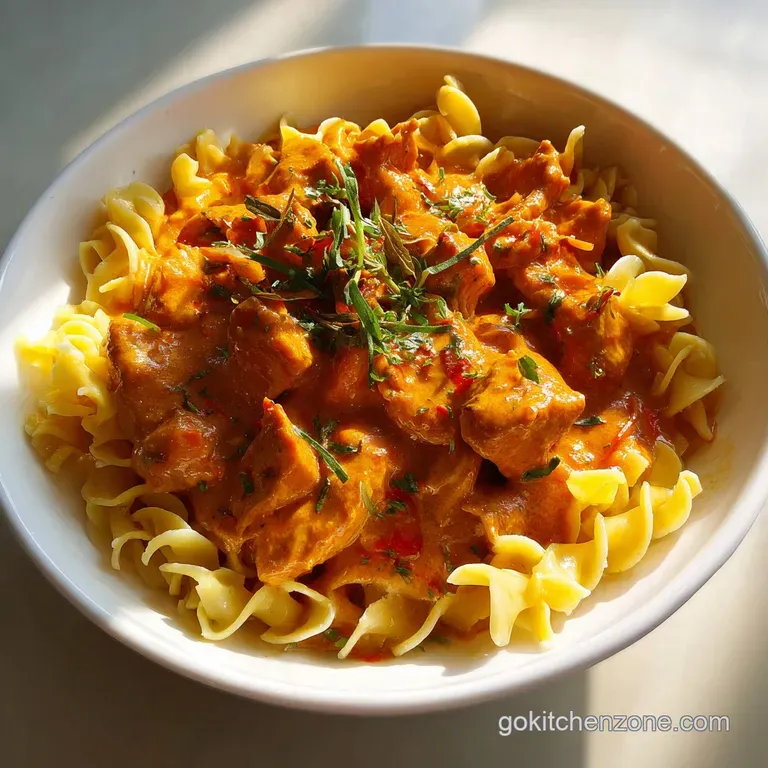
- Time: Active 15 minutes, Passive 15 minutes, Total 30 minutes
- Flavor/Texture Hook: Zingy, buttery, and velvety with a smoky finish
- Perfect for: Busy weeknights when you need a high protein win without a sink full of dishes
Honestly, the dinner struggle is so real some nights that I almost reach for the cereal box, but then I remember this Cowboy Butter Chicken Pasta. You know that smell when garlic hits hot butter along with a squeeze of lemon and some smoky paprika?
It's enough to bring everyone into the kitchen before the pasta is even drained. I've spent plenty of time messing up cream sauces that break or end up bland, and I've finally nailed the balance here.
We're talking about a sauce that isn't just heavy cream; it's a punchy, herb loaded experience that makes basic chicken feel like something you’d pay way too much for at a bistro.
It’s got that signature "cowboy" kick from the red pepper flakes and Dijon, but the heavy cream smooths out the edges just enough. This isn't a delicate dish, but it is a incredibly satisfying one.
The best part is that it happens in one pan after you boil the noodles. We're using budget friendly chicken thighs because they're juicier and way more forgiving than breasts if you get distracted by a text.
If you've been looking for an easy cowboy butter chicken pasta that actually has flavor in every bite, let's get into it.
Cowboy Butter Chicken Pasta Recipe
The real secret here is how we layer the flavors. We aren't just dumping ingredients into a pot; we’re building a foundation. By searing the chicken first, we leave behind all those tasty browned bits on the bottom of the pan.
Those bits are basically concentrated flavor gold that get whisked into the butter sauce later.
Silky Sauce Science
Emulsification: The Dijon mustard and pasta water act as stabilizers, binding the fats from the butter and cream to the liquid. This prevents the sauce from separating into an oily mess on your plate.
Maillard Reaction: Searing the chicken at a high temperature creates a complex crust of flavor through protein browning. These caramelized compounds dissolve into the sauce, adding a savory depth that raw boiled chicken simply can't provide.
Chef's Tip: Freeze your block of butter for 10 minutes before starting. When you whisk cold butter into the warm pan at the very end of the sauce making process, it creates a much more stable, velvety emulsion than starting with melted fat.
Why This Recipe Works
When we talk about savory pasta recipes cowboy style, it’s all about the high impact seasonings. Most pasta dishes rely on salt and maybe a little pepper, but this one uses a multi layered approach to heat and acid.
The smoked paprika adds a subtle wood fired vibe without needing a grill, while the lemon juice cuts right through the richness of the 0.5 cup of unsalted butter.
- Acid Balance: Lemon juice and Dijon mustard provide a sharp contrast that prevents the heavy cream from feeling too "heavy" or one dimensional on the palate.
- Starch Binding: Using 0.5 cup of reserved pasta water introduces starch that helps the sauce "grip" the linguine, ensuring the flavor doesn't just slide off to the bottom of the bowl.
- Aromatic Blooming: Frying the garlic, paprika, and red pepper flakes in the butter for 60 seconds releases fat soluble flavor compounds that wouldn't activate in water alone.
If you enjoy this kind of bold flavor profile, you might find similar comfort in a Buffalo Chicken Dip recipe for your next gathering. Both rely on that perfect marriage of fat and heat to keep people coming back for seconds.
Gathering Your Essentials
For this recipe, we are sticking to the official measurements to ensure the ratio of sauce to noodle is spot on. You'll need 1.5 lbs of boneless, skinless chicken thighs, which I prefer to slice into 1 inch strips for maximum surface area browning. This provides more "sear" per bite.
| Ingredient | Science Role | Pro Secret |
|---|---|---|
| Heavy Cream (0.5 cup) | Provides fat for a velvety mouthfeel | Room temp cream prevents the sauce from breaking when hitting the heat |
| Dijon Mustard (1 tsp) | Natural emulsifier containing lecithin | Whisk it into the butter to bridge the gap between oil and water |
| Pasta Water (0.5 cup) | Starch rich binder | Never dump the water; the starch is what makes the sauce "clingy" |
The 12 oz of dry linguine or penne is the backbone here. I personally love linguine because the flat surface area provides more space for the herb flecked butter to coat. However, if you're using penne, those little tubes act like straws for the sauce. It's a win win situation regardless of the shape you choose.
For the Chicken and Pasta
Make sure your chicken is patted dry with a paper towel before you add the 1 tsp of sea salt and 0.5 tsp of cracked black pepper. Moisture is the enemy of a good sear. If the chicken is wet, it will steam instead of brown, and you'll miss out on that "shatter" texture on the edges of the meat.
For the Cowboy Butter Sauce
This is where the magic happens. We’re using 0.5 cup of unsalted butter as the base. Using unsalted allows us to control the seasoning perfectly with the sea salt. The 4 cloves of garlic should be minced finely so they distribute evenly without leaving you with a giant chunk of raw garlic.
| Original Ingredient | Substitute | Why It Works |
|---|---|---|
| Heavy Cream (0.5 cup) | Full fat Coconut Milk | Similar fat content. Note: Adds a slight nutty sweetness to the finish |
| Avocado Oil (1 tbsp) | Ghee or Clarified Butter | High smoke point prevents burning during the chicken sear |
| Fresh Chives (1 tbsp) | Green Onion Tops | Provides that mild onion like bite with a similar vibrant color |
One thing I've learned the hard way: don't skip the fresh parsley and chives. While dried herbs work in a pinch, the fresh stuff adds a brightness that makes this rich butter chicken pasta dinner feel balanced.
Necessary Kitchen Equipment
You don't need a professional kitchen for this, but a few specific tools make the process much smoother. I highly recommend a large cast iron or stainless steel skillet. These materials hold heat better than thin non stick pans, which is crucial when you're trying to sear 1.5 lbs of chicken thighs without the temperature dropping.
- Pasta Pot: A large 6 quart pot to give the 12 oz of linguine plenty of room to move so it doesn't clump.
- Microplane: For getting that 0.5 lemon zested into fine, aromatic curls that melt into the sauce.
- Tongs: Essential for flipping the chicken strips individually to ensure every side gets that golden brown finish.
If you find yourself making a lot of these one pan style meals, you might also like the workflow used in a Boursin Orzo with Chicken recipe. It uses a similar logic of building a creamy base around a protein.
Key Preparation Steps
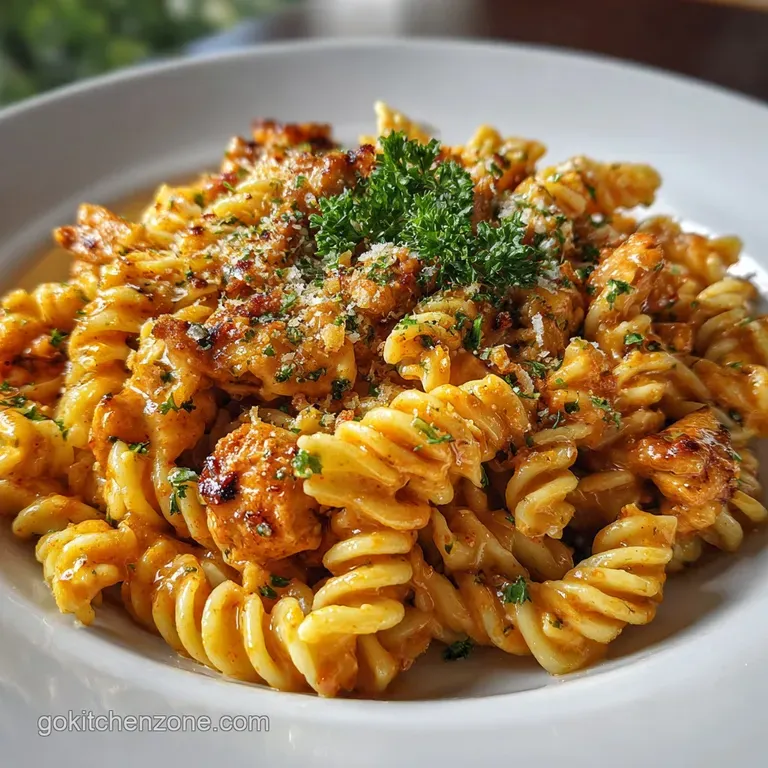
Let's get the timing right so everything finishes together. Start your pasta water first, as that usually takes the longest. Once the water is boiling, you can start the chicken.
- Boil the pasta. Cook 12 oz dry linguine in salted water according to the box instructions. Checkpoint: Set a timer for 2 minutes less than the box says for "al dente."
- Prep the chicken. Season 1.5 lbs of sliced chicken thighs with 1 tsp sea salt and 0.5 tsp black pepper.
- Sear the protein. Heat 1 tbsp avocado oil in a large skillet over medium high heat. Add chicken in a single layer.
- Cook until golden. Sauté for about 6-8 minutes until the chicken hits an internal temp of 165°F and looks deeply browned.
- Remove and rest. Take the chicken out of the pan and set it aside on a plate; don't wash the pan!
- Melt the butter. Lower the heat to medium and add 0.5 cup unsalted butter.
- Bloom the aromatics. Add 4 cloves minced garlic, 1 tsp smoked paprika, 0.5 tsp red pepper flakes, and 1 tsp Dijon mustard. Whisk for 1 minute until the garlic is fragrant and the butter turns a deep orange.
- Build the emulsion. Whisk in 0.5 cup heavy cream and 0.5 cup reserved pasta water. Simmer for 2 minutes until the sauce slightly thickens.
- Combine. Add the cooked pasta and seared chicken back into the skillet.
- Final toss. Add 0.5 cup Parmesan, lemon juice, zest, 2 tbsp parsley, and 1 tbsp chives. Toss vigorously until the sauce looks glossy and coats every noodle.
How to Achieve a Perfect Sear?
The mistake I once made was overcrowding the pan. If you put all 1.5 lbs of chicken in at once, the temperature of the oil drops, and the chicken releases juice that boils the meat. Work in two batches if your skillet isn't at least 12 inches wide.
You want that sizzle to be loud and consistent the moment the meat touches the oil.
Why Add Pasta Water?
It might look like cloudy, useless water, but that liquid is liquid gold. The starches released by the 12 oz of pasta act as a bridge between the watery lemon juice and the fatty butter. Without it, the sauce can feel "thin" or "greasy" rather than "creamy."
Troubleshooting Common Issues
Sometimes things don't go exactly as planned, especially if the heat is a bit too high or the pasta sits too long. Here is how to fix the most common mishaps with this creamy cowboy butter chicken pasta.
Why Your Sauce Separated
If your sauce looks like pools of yellow oil instead of a smooth cream, it likely got too hot. When heavy cream boils too vigorously, the fat globules can clump together. To fix this, remove the pan from the heat immediately and whisk in a tablespoon of cold pasta water or a splash of cold cream.
This drops the temperature and helps re emulsify the mixture.
| Problem | Root Cause | Solution |
|---|---|---|
| Gritty Sauce | Added Parmesan while sauce was boiling | Remove from heat before stirring in cheese to prevent clumping |
| Dry Pasta | Pasta absorbed all the liquid too fast | Add an extra 2 tbsp of warm pasta water and a knob of butter |
| Bitter Aftertaste | Garlic was burned during the blooming phase | Start the butter sauce over; burned garlic cannot be masked |
Preventing Bitter Garlic
Garlic transitions from fragrant to bitter in about 15 seconds once it turns brown. When you add the 4 cloves of minced garlic to the 0.5 cup of butter, stay right there with your whisk. As soon as you smell that amazing aroma, move to the next step of adding the liquids. This stops the browning process instantly.
Decision Shortcut
- If you want a thicker sauce, simmer the cream and pasta water for an extra 2 minutes before adding the noodles.
- If you want a spicier kick, double the red pepper flakes to 1 tsp and add a dash of your favorite hot sauce.
- If you want a brighter finish, double the lemon zest and add the juice of the full lemon instead of just half.
Scaling For Your Needs
If you are cooking for a crowd or just yourself, you need to adjust more than just the quantities. I've found that scaling butter based sauces requires a little bit of math to keep the texture right.
Scaling Down (Half Batch): If you only need 2 servings, use 0.75 lbs of chicken and 6 oz of pasta. Use a smaller 10 inch skillet. You should still use the full 1 tsp of Dijon mustard, though, because you need that emulsifying power to keep the smaller amount of sauce together.
Reduce the initial searing time by about 20% since the pan won't be as full.
Scaling Up (Double Batch): For 8 servings, use a very large wide pot or work in two separate skillets. When doubling the spices, I suggest only using 1.5x the red pepper flakes initially (about 0.75 tsp) and tasting before adding the rest. Spices can sometimes amplify exponentially in larger volumes.
Keep the heavy cream at exactly 1 cup (double the 0.5 cup) to ensure it stays creamy.
For those planning a larger brunch or meal prep session, you might consider how this scaling logic applies to an Egg Casserole Recipe, where ratios are equally critical for a set texture.
Kitchen Myths Debunked
Myth: You must rinse pasta after cooking to stop it from sticking. Truth: Never rinse your pasta for this recipe! Rinsing removes the very starch we need to make the cowboy butter sauce stick to the noodles.
The heat from the sauce will finish the cooking process, and the starch ensures a velvety coating.
Myth: Searing chicken "seals in" the juices. Truth: Searing is purely for flavor and texture. Moisture is actually lost during the searing process, but the trade off is the Maillard reaction which creates that savory crust.
We use chicken thighs specifically because their higher fat content keeps them moist even after a hard sear.
Myth: Using more cream makes the sauce better. Truth: Too much cream actually masks the vibrant flavors of the lemon, garlic, and chives. The balance of 0.5 cup heavy cream to 0.5 cup butter is designed to let the "cowboy" seasonings shine through rather than drowning them in dairy.
Storage and Zero Waste
This pasta is best served immediately because the butter sauce is at its most stable when warm. However, life happens and sometimes you have leftovers.
Storage: Store in an airtight container in the fridge for up to 3 days. When reheating, do not use the microwave on high power; it will break the sauce and leave you with a greasy puddle. Instead, reheat in a skillet over low heat with a splash of milk or water to loosen the sauce.
Freezing: I don't recommend freezing this dish. The heavy cream and butter emulsion often "weeps" or separates when thawed, resulting in a grainy texture that isn't very pleasant.
- Lemon Rinds
- After zesting and juicing your 0.5 lemon, toss the remaining rind into a jar of white vinegar. After two weeks, you'll have a great citrus scented natural cleaner.
- Parsley Stems
- Don't throw them out! Finely mince the tender upper stems along with the leaves. They contain just as much flavor and add a nice crunch.
- Leftover Chicken Scraps
- If you trimmed any fat or small bits off your 1.5 lbs of thighs, freeze them in a bag. Once you have a pound of scraps, you can boil them down for a quick homemade chicken stock.
Best Side Pairings
Since this Cowboy Butter Chicken Pasta is quite rich and savory, you want sides that offer a crisp or acidic contrast. A simple arugula salad with a light vinaigrette is my go to because the peppery greens stand up well to the garlic butter.
If you want something heartier, roasted broccoli with a heavy squeeze of lemon works beautifully. The charred florets soak up any extra sauce left on the plate. For a full "cowboy" feast, a piece of crusty sourdough bread is non negotiable for swiping up every last drop of that smoky butter sauce.
| Cooking Method | Best For | Result |
|---|---|---|
| Stovetop Skillet | Weeknight speed | Best sear on chicken and most emulsified sauce |
| Oven (Finish) | Meal prepping | Chicken stays very tender but pasta can overcook easily |
| Slow Cooker | Not recommended | Sauce will separate and pasta will turn to mush |
If you're looking for another high protein, easy to scale option for a different time of day, our Breakfast Casserole recipe is a great way to use up similar ingredients like cheese and proteins in a budget friendly way.
This easy cowboy butter chicken pasta has become a staple in my house because it’s fast, uses basic pantry staples, and tastes like I actually tried. Trust me, once you see how that 0.5 cup of pasta water transforms the butter into a silky glaze, you'll never go back to plain jarred sauce again.
Get your skillet hot, get that chicken seared, and enjoy a dinner that actually works.
Recipe FAQs
Can I use chicken breast instead of thighs?
Yes, but be careful. Chicken breasts are leaner and can dry out easily. Sear them quickly and don't overcook to maintain moisture.
What kind of pasta works best?
Long, flat pasta like linguine is ideal. Its surface area allows the rich sauce to cling beautifully, but penne or fettuccine also work well.
How do I make the sauce thicker?
Simmer the sauce longer. After adding the cream and pasta water, let it simmer gently for an additional 2-3 minutes to reduce and thicken.
Is it okay to skip the pasta water?
No, don't skip it. The starchy pasta water is crucial for emulsifying the sauce, helping the fat and liquid bind together for a creamy, cohesive texture.
How can I make this dish spicier?
Add more red pepper flakes. You can also incorporate a dash of your favorite hot sauce or even a pinch of cayenne pepper to the butter mixture.
Can I prepare the cowboy butter ahead of time?
Yes, absolutely. The cowboy butter mixture can be made up to 3 days in advance and stored in an airtight container in the refrigerator for quicker assembly later.
Why did my sauce separate?
Your sauce likely got too hot. Overheating can cause the fats in the cream and butter to separate. Remove from heat and whisk vigorously with a tablespoon of cold pasta water to re-emulsify.
Cowboy Butter Chicken Pasta
Ingredients:
Instructions:
Nutrition Facts:
| Calories | 1068 kcal |
|---|---|
| Protein | 52 g |
| Fat | 66 g |
| Carbs | 67 g |
| Fiber | 3.2 g |
| Sugar | 2.1 g |
| Sodium | 845 mg |
