Easy Cinnamon Roll Casserole Recipe
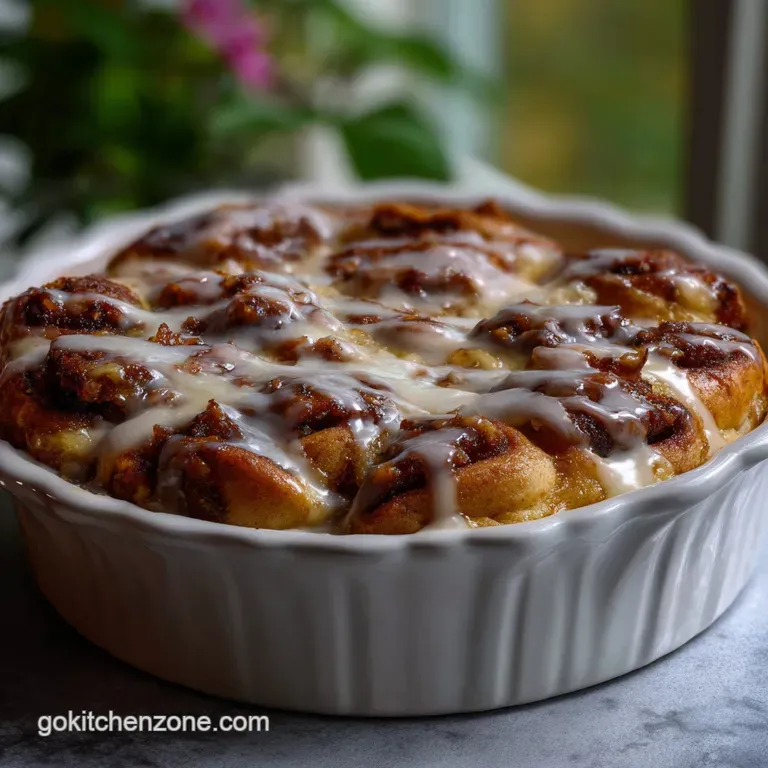
- Effort/Time: 15 minutes prep / 45 minutes total
- Flavor Hook: Buttery cinnamon-spice with a shattering sugar crust
- Perfect for: Low-stress holiday mornings or feed-a-crowd brunches
- The Science of Moisture and Texture in Brunch Classics
- Efficiency Metrics for Busy Morning Baking
- Strategic Elements for a Budget-Friendly Morning Feast
- Minimalist Tool Selection for Maximum Kitchen Efficiency
- Precision Assembly for the Ultimate Cinnamon Roll Casserole
- Fixing Texture Failures and Temperature Imbalances
- Adapting the Flavor Architecture for Every Budget
- ⚗️ The Scaling Lab: The Physics of Quantity
- Common Myths Debunked
- Preserving the Structural Integrity of Leftover Bites
- Complementary Elements for a Balanced Breakfast Table
- Recipe FAQs
- 📝 Recipe Card
There is nothing worse than spending your entire morning in the kitchen only to pull a soggy, gummy heap of dough out of the oven that cost you $20 in premium butter. I’ve seen many home cooks including myself in my early days try to rush a breakfast bake by crowding the pan or skimping on the fat, resulting in a center that stays raw while the edges turn to charcoal.
That financial and emotional drain is exactly what we are avoiding today by hacking the physics of pre-made dough.
I once destroyed three pans of this during a frantic Christmas morning because I thought "more liquid equals more moisture." I was wrong; I ended up with a cinnamon flavored soup that had to be trashed.
I learned the hard way that the chemistry of a bake depends on the ratio of fats to proteins, not just pouring in milk and hoping for the best. It took several "budget surviving" iterations to realize that the shortcut isn't just about speed it's about managing the hydration of the dough.
The secret to this cinnamon roll casserole isn't some high priced artisan flour; it’s the protein denaturation of the eggs combined with the fat-rich heavy cream.
This creates a custard barrier that protects the Pillsbury™ dough from drying out while the sugars undergo a rapid Maillard reaction. You aren't just heating up rolls; you are creating a new molecular structure that results in a velvety interior and a mahogany colored, caramelized top that yields a distinct "shatter" when you bite in.
The Science of Moisture and Texture in Brunch Classics
Understanding why this cinnamon roll casserole recipe works requires a quick look at thermal physics. When we cut the dough into smaller pieces, we increase the surface area available for the custard to penetrate, ensuring no dry pockets remain.
- Starch Gelatinization: As the heavy cream heats, the starch in the pre-made dough absorbs liquid and swells, creating a tender, pillow like crumb.
- Protein Coagulation: The 3 large eggs act as a structural binder, setting the custard so the dish doesn't collapse into a pile of mush after cooling.
- Osmotic Pressure Management: Adding 0.25 tsp sea salt isn't just for flavor; it balances the osmotic pressure, preventing the 2 tbsp light brown sugar from drawing too much moisture out of the dough too quickly.
- Lipid Insulation: The 0.25 cup unsalted butter provides a fat layer that coats the flour particles, inhibiting excessive gluten development for a more delicate mouthfeel.
Efficiency Metrics for Busy Morning Baking
This easy cinnamon roll casserole is designed for the cook who needs to survive a busy morning without sacrificing quality. We use high impact shortcuts that preserve the integrity of the bake while keeping your prep time at exactly 15 minutes.
| Metric | Value | Technical Context |
|---|---|---|
| Active Prep | 15 minutes | Time required for cutting and whisking |
| Thermal Exposure | 30 minutes | Duration for center to reach 88°C (190°F) |
| Yield Volume | 8 servings | Calibrated for a standard 9x13 inch baking dish |
| Caloric Density | 438 kcal | Energy dense profile per 1/8th of the pan |
Strategic Elements for a Budget Friendly Morning Feast
To keep this cinnamon roll casserole with heavy cream cheap and effective, we rely on pantry staples and specific brand engineered doughs. Using Pillsbury™ refrigerated cinnamon rolls provides a reliable leavening agent (sodium acid pyrophosphate) that ensures a consistent rise every time.
| Ingredient | Chemical/Physical Role (Science) | The Pro Secret (Why This Matters) |
|---|---|---|
| 3 Large Eggs | Protein denaturation & emulsification | Provides the structural "lift" to support the heavy cream. |
| 0.5 Cup Heavy Cream | Lipid rich hydration & fat-in-water emulsion | Why this? Prevents the rolls from drying out by providing a high fat moisture barrier. |
| 2 tbsp Light Brown Sugar | Caramelization & hygroscopy | Enhances the Maillard reaction for a darker, stickier crust. |
| 1 tsp Ground Cinnamon | Aromatic volatility | Adds depth to the pre-packaged spice mix in the rolls. |
Component Substitutions:
- Pillsbury™ cinnamon rolls: Any store brand refrigerated cinnamon roll works, but ensure the weight is close to 12.4 oz per can to maintain the custard ratio.
- 0.5 cup heavy whipping cream: Full fat coconut milk (canned). Note: Adds a subtle tropical nuttiness and keeps the fat content high.
- 1 tbsp pure vanilla extract: 1 tsp almond extract. Note: Provides a much more intense, "bakery style" aroma but use sparingly.
- 0.25 cup unsalted butter: Salted butter. Note: If using salted, omit the extra 0.25 tsp sea salt to prevent over seasoning.
Minimalist Tool Selection for Maximum Kitchen Efficiency
You don't need a high end stand mixer for this. In fact, keeping things manual prevents over mixing the custard.
- Lodge 9x13-inch Ceramic Baking Dish: Ceramic holds heat longer than metal, which is crucial for even cooking in this cinnamon roll casserole.
- Pyrex Glass Mixing Bowl: Allows you to see if the eggs are fully incorporated into the cream.
- Stainless Steel Kitchen Shears: Faster and cleaner than a knife for cutting the dough into uniform pieces.
- Silicone Whisk: Ensures you reach the corners of the bowl when emulsifying the vanilla and cinnamon.
Precision Assembly for the Ultimate Cinnamon Roll Casserole
Follow these steps exactly to ensure the thermodynamics of the bake are balanced.
- Preheat oven to 175°C (350°F). Note: Ensures immediate oven spring for the dough.
- Grease the Lodge baking dish with a light coating of butter. Note: Prevents sugars from bonding to the ceramic.
- Open 2 cans (12.4 oz each) Pillsbury™ refrigerated cinnamon rolls and set the icing aside.
- Cut each roll into 4 equal pieces using kitchen shears. Note: Maximizes surface area for custard absorption.
- Scatter dough pieces evenly in the dish until the bottom is fully covered without heavy overlapping.
- Whisk 3 large eggs, 0.5 cup heavy whipping cream, 1 tbsp pure vanilla extract, 1 tsp ground cinnamon, and 0.25 tsp sea salt in a bowl until the mixture is a uniform pale tan color with no visible egg streaks.
- Drizzle the 0.25 cup unsalted butter (melted) over the dough pieces.
- Pour the egg mixture over the rolls until every piece of dough is partially submerged.
- Sprinkle 2 tbsp light brown sugar across the top. Note: Creates the signature "shatter" crust.
- Bake for 30 minutes until the center no longer jiggles and the tops are mahogany brown.
- Warm the reserved icing for 10 seconds in the microwave until it reaches a pourable, velvety consistency.
- Glaze the casserole while hot until the icing melts into the crevices.
Chef's Tip: To deepen the flavor without spending extra money, add a pinch of espresso powder to the custard. This doesn't make it taste like coffee; it just makes the cinnamon taste "more" like cinnamon.
Fixing Texture Failures and Temperature Imbalances

Even a pillsbury cinnamon roll casserole can go wrong if your oven has hot spots or your eggs were too cold. This dish relies on an emulsion that can break if handled incorrectly. If you enjoy the custard base of this dish, you'll find similar techniques in my Breakfast Casserole recipe, which uses a savory egg-to-dairy ratio.
Why Your Casserole is Soggy in the Middle
If the center feels like wet dough while the edges are crisp, the culprit is usually "Thermal Mass Delay." The outer edges of the dish heat up faster, causing the egg proteins there to set while the center remains cool.
| Problem | Root Cause | The Fix | Pro Protocol |
|---|---|---|---|
| Soggy Center | Oven temp too high/too much liquid. | Tent with foil and bake 5 10 mins longer. | Use a thermometer; center should reach 88°C. |
| Dry/Tough Rolls | Overbaking or lack of fat. | Increase heavy cream by 2 tbsp next time. | Ensure rolls are fully coated in butter before custard. |
| Curdled Custard | Eggs were cold or whisked too hard. | Whisk room temp eggs gently. | Temper the eggs with a splash of warm cream first. |
Why Your Rolls are Dry or Tough
This usually happens when the dough hasn't been properly hydrated by the cinnamon roll casserole with heavy cream mixture. If the pieces of dough sit too high above the liquid line, they will bake like regular rolls but without the protection of the steam created by the custard.
Always ensure you press the dough pieces down slightly so they are "bathed" in the liquid before entering the oven.
Adapting the Flavor Architecture for Every Budget
You don't need a pantry full of expensive spices to change the vibe of this best cinnamon roll casserole.
- Nutty Maple Twist: Swap the vanilla for maple extract and add 0.5 cup of chopped pecans. The pecans provide a "crunch" contrast to the velvety dough.
- Cinnamon Roll Casserole Crock Pot Version: If you need the oven for something else, you can make a cinnamon roll casserole in crockpot. Grease the slow cooker, layer the ingredients, and cook on LOW for 2 hours 30 mins. It won't have the "shatter" crust, but the texture will be incredibly fudgy.
- Overnight Preparation: You can assemble this the night before, but wait to pour the custard until the morning. If the dough sits in the liquid for 8 hours, it will break down and lose its structural integrity, resulting in a texture more like bread pudding than a casserole.
Fast vs. Classic Comparison
| Feature | This Hack (Fast) | From Scratch (Classic) |
|---|---|---|
| Prep Time | 15 minutes | 3 hours (including proofing) |
| Tool Count | 4 (Bowl, Whisk, Shears, Dish) | 10+ (Mixer, Hooks, Scale, Rolling Pin) |
| Cost | ~$10 total | ~$18 (due to high-quality yeast/flour/butter) |
⚗️ The Scaling Lab: The Physics of Quantity
When you need to feed 16 people instead of 8, you cannot simply double everything and use the same pan.
- Pan Crowding (Maillard Killer): If you double the recipe into one deep pan, the middle will never cook before the edges burn. You MUST use two separate 9x13 dishes or a very large hotel pan to maintain surface area.
- The Evaporation Paradox: When doubling the liquid for a larger pan, reduce the heavy cream by about 10% (use 0.9 cups instead of 1 full cup). Larger volumes of custard trap steam more effectively, which can lead to a "weeping" casserole.
- Thermal Mass & Thermodynamics: A double batch in a single thick ceramic dish has a massive thermal mass. It will take significantly longer to heat up. Drop the oven temp to 160°C (325°F) and extend the time by 15 20 minutes to allow heat to penetrate the core without scorching the exterior.
- Flavor Saturation: Do not double the salt. Use 1.5x the salt (0.37 tsp) for a double batch. Salt perception increases non-linearly in baked goods.
Common Myths Debunked
Myth: You must use expensive "pure" maple syrup in the bake. Truth: Since we are baking at high heat, the delicate flavor compounds in expensive syrup evaporate. For the bake itself, the brown sugar provided in the recipe creates a better structural caramel.
Save the expensive syrup for drizzling at the table.
Myth: You can't use "expired" refrigerated dough. Truth: As long as the can is still sealed and hissed when opened (indicating gas is still trapped), the chemical leaveners are usually active for a few weeks past the "best by" date.
However, the dough may be slightly stickier due to enzyme breakdown.
Preserving the Structural Integrity of Leftover Bites
Leftover roll casserole can actually be a treat if you don't kill it in the microwave.
- Fridge: Store in an airtight container for up to 4 days. The starch will undergo retrogradation (getting firm), but the high fat content from the heavy cream keeps it from becoming "stale" in the traditional sense.
- Freezing: This casserole freezes surprisingly well. Cut into individual squares, wrap tightly in plastic, and freeze for up to 2 months.
- Reheating: Avoid the microwave if possible; it makes the dough rubbery. Instead, place a square in a toaster oven at 150°C (300°F) for 10 minutes. This recrisps the sugar crust while gently warming the custard center.
💡 ZERO WASTE PHILOSOPHY: Don't discard the extra icing! Transform: Whisk it with a splash of milk and a pinch of salt to create a thinner glaze for pancakes or waffles later in the week. Science: The stabilizers in the icing (like xanthan gum) help create a smooth emulsion that won't separate when chilled. If you are looking for more ways to use up pantry staples, my Cinnamon Rolls recipe explains how to make a similar icing from scratch using just powdered sugar and dairy.
Complementary Elements for a Balanced Breakfast Table
Because this cinnamon roll casserole is very sugar forward and fat-dense, you need high acid or high protein pairings to reset the palate.
- The Savory Balance: Serve with thick cut smoked bacon or soft scrambled eggs with chives. The salt and sulfur in the eggs cut right through the heavy cream coating.
- Fresh & Bright: A side of grapefruit segments or a sharp berry salad (raspberries/blackberries) provides the citric acid necessary to break up the "weight" of the custard.
- Liquid Pairings: A dark roast coffee (not a latte!) is the ideal partner. The bitterness of the tannins in the coffee balances the 24.8 g of sugar per serving perfectly.
Decision Shortcut: If you want a crunchy top, use a glass baking dish and sprinkle extra sugar 5 minutes before the timer ends.
If you want a fudgy, bread pudding texture, use a ceramic dish and pour the custard over the dough 30 minutes before baking to let it soak. If you want a fast cleanup, use a disposable foil pan and pre-cut the rolls directly into the pan.
This cinnamon roll casserole is the ultimate survival hack for the budget cook. It proves that you don't need a culinary degree or a massive grocery budget to create something that feels expensive.
By understanding the science of the custard and the physics of the bake, you can turn two cheap cans of dough into the centerpiece of your morning. Let's crack on and get that oven preheated!

Recipe FAQs
How do I prevent the center from remaining gummy or raw?
Bake until the center reaches 88°C internally. The high moisture from the heavy cream requires adequate thermal exposure to coagulate the egg proteins fully.
- Ensure dough pieces are not heavily overlapped
- Use a reliable oven thermometer
- Do not skip the 30-minute bake time
Can I assemble this the night before?
No, the dough will degrade structurally. Allowing the refrigerated dough to sit submerged in the liquid custard for over eight hours causes the dough structure to dissolve before the proteins set. Wait to pour the custard until the morning of baking.
What is the difference between using metal versus ceramic pans?
Ceramic pans offer slower, more even heat distribution. Metal pans conduct heat rapidly, often leading to over baked edges and a cooler center, which compromises the custard's setting time. Ceramic retains heat longer, allowing the core to finish cooking uniformly.
Is it necessary to use heavy cream over milk?
Heavy cream creates a necessary lipid barrier. Milk contains too little fat to properly emulsify with the egg yolks, resulting in a thinner, watery custard that offers poor insulation to the dough.
Myth: A sprinkle of salt is just for flavor enhancement.
Myth: A sprinkle of salt is just for flavor enhancement. Reality: The salt balances the osmotic pressure against the brown sugar, regulating how quickly moisture is drawn from the dough pieces during the initial bake.
What is the fastest way to cut the dough pieces?
Kitchen shears provide the cleanest, fastest cuts. They minimize dough compression compared to a knife, preserving the trapped leavening gases needed for a light texture.
Myth: Freezing leftovers makes them inedible.
Myth: Freezing leftovers makes them inedible. Reality: Freezing works well if squares are tightly wrapped; the high fat content prevents the starch from becoming excessively stale upon thawing, unlike lean breads.
Cinnamon Roll Casserole Hack

Ingredients:
Instructions:
Nutrition Facts:
| Calories | 438 kcal |
|---|---|
| Protein | 6.4 g |
| Fat | 23.5 g |
| Carbs | 49.4 g |
| Fiber | 1.1 g |
| Sugar | 24.8 g |
| Sodium | 775 mg |
