Velvety Caramel Monkey Bread Recipe
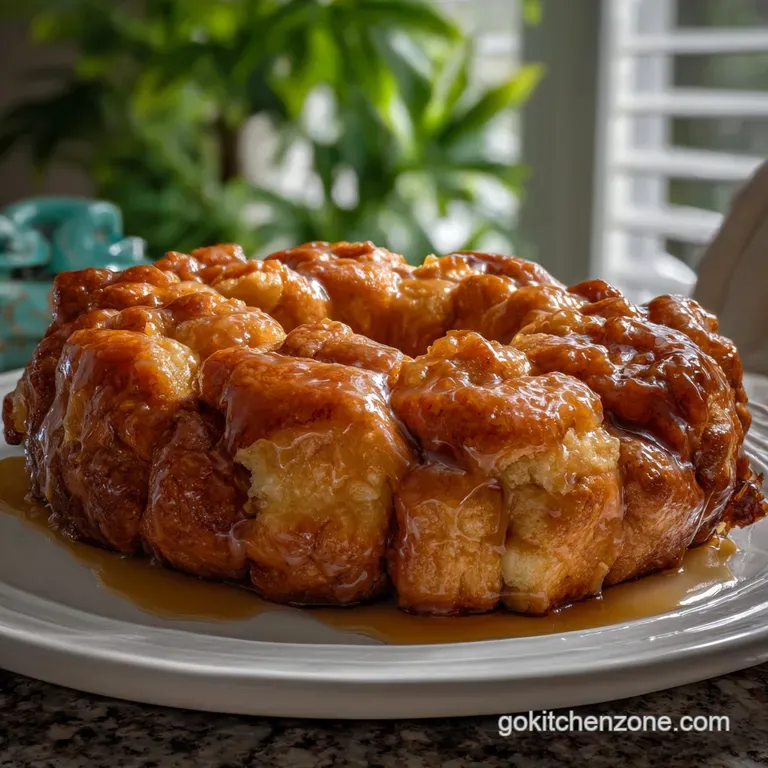
- Effort/Time: 50 minutes total (15m prep / 35m cook)
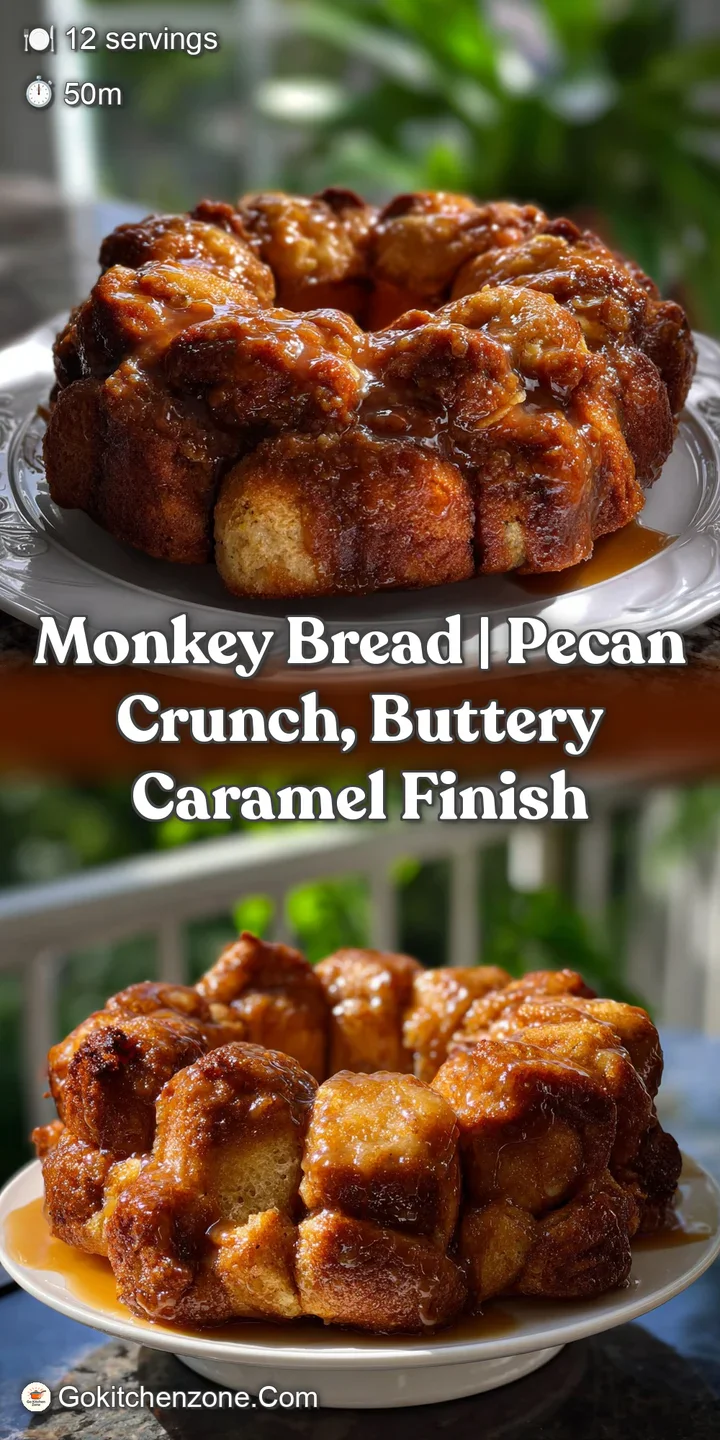
- Flavor Hook: Buttery, cinnamon-spiced caramel with a shattering pecan crunch on this monkey bread.
- Perfect for: Low-stress holiday brunches and high-yield weekend treats like this classic monkey bread.
- Mastering the Ultimate Pull-Apart Texture of Classic Monkey Bread
- The Thermal Dynamics of Sugar and Dough Bonds
- Precision Planning for High-Impact Brunch Execution
- The Alchemy of Caramelization: Selecting Your Elements
- Professional Tools for Consistent Thermal Distribution
- The Synchronized Assembly Protocol for Peak Caramelization
- Solving the Structural Integrity of Your Caramel Bakes
- Flavor Architecture and Textural Adaptations
- ⚗️ The Scaling Lab: The Physics of Quantity
- Common Myths
- Maintaining Moisture and Glaze Stability Over Time
- Final Presentation and Sensory Pairing Strategies
- Recipe FAQs
- 📝 Recipe Card
Mastering the Ultimate Pull Apart Texture of Classic Monkey Bread
There is nothing more frustrating than pulling a beautiful golden ring of dough out of the oven only to have the center collapse into a raw, doughy soup while the exterior is hard enough to break a tooth.
I’ve lived through that nightmare, standing over a ruined bundt pan with a spatula, trying to salvage a soggy mess for hungry guests. That failure usually stems from a misunderstanding of thermal mass the center of the ring simply cannot reach the required 190°F before the sugar on the outside begins to carbonize.
Baking this monkey bread successfully requires patience.
I once destroyed three batches in a single morning by trying to "cheat" the temperature, cranking the heat to 400°F thinking it would speed things up. All I got was a charcoal scented crust and a cold, pale middle that felt like wet clay.
It was a humbling lesson in the patience required for starch gelatinization. You can't rush physics; the heat needs time to migrate through the layers of sugar and dough to set the structure without burning the glaze of your monkey bread.
The secret to a perfect outcome isn't just about the sugar; it’s about the capillary action of the butter and sugar mixture. When the butter melts and combines with the brown sugar, it creates a viscous syrup that coats every crevice of the Pillsbury Refrigerated Biscuit Dough.
As it bakes, the leavening agents in the dough expand, pushing the pieces together while the sugar undergoes the Maillard reaction, creating that signature "chewy snap." The result is a mahogany colored, glossy finish that shatters slightly when pulled apart the hallmark of great monkey bread.
We are aiming for peak textural contrast in this monkey bread.
The Thermal Dynamics of Sugar and Dough Bonds
- Sucrose Caramelization: High heat breaks down sugar molecules into a complex liquid, creating deep amber color and nutty flavor profiles.
- Starch Gelatinization: Flour molecules absorb moisture and heat, expanding to create the "scaffold" that supports the weight of the heavy caramel glaze surrounding the dough pieces in the monkey bread.
- Emulsion Stability: The pure vanilla extract and melted butter form a temporary emulsion that prevents the sugar from crystallizing into a grainy texture throughout the monkey bread.
Precision Planning for High Impact Brunch Execution
| Phase | Duration | Objective |
|---|---|---|
| Prep Flow | 15 minutes | Quartering dough, coating in cinnamon sugar, and preparing the "lava" glaze for the monkey bread. |
| Cooking Flow | 35 minutes | Managing the thermal climb to ensure the center reaches a safe 190°F for perfectly cooked monkey bread. |
| Finish Flow | 10 minutes | The critical "rest and invert" period where gravity redistributes the glaze over the finished monkey bread. |
The Alchemy of Caramelization: Selecting Your Elements
| Ingredient | Chemical/Physical Role (Science) | The Pro Secret (Why This Matters) |
|---|---|---|
| Pillsbury Biscuit Dough | Chemical leavening via sodium acid pyrophosphate | Why this? Provides consistent, rapid expansion without the 4 hour yeast proofing time needed for traditional monkey bread. |
| Unsalted Butter | Lipid mediated heat transfer | Why this? High fat content prevents the sugar from bonding too tightly to the pan, ensuring easy release of the monkey bread. |
| Light Brown Sugar | Molasses driven acidity and moisture | Why this? The humectant properties keep the dough soft even after the sugar sets on the monkey bread. |
| Cinnamon | Hydrophobic aromatic barrier | Prevents dough pieces from fusing into a single solid loaf, allowing for that signature "pull" of monkey bread. |
Professional Tools for Consistent Thermal Distribution
To achieve the "shattering" exterior, you need a Nordic Ware 12 Cup Bundt Pan. Heavy cast aluminum is non-negotiable here; thin tin pans will hot-spot, burning the sugar before the dough is set. You will also need a Ziploc Gallon Sized Bag for the coating process.
This isn't just for ease; the physical agitation in the bag ensures a microscopic, uniform layer of McCormick Ground Cinnamon and sugar, which is vital for the individual "beads" of dough to remain distinct after baking this monkey bread.
A Pyrex Glass Measuring Cup is the best vessel for melting your butter and whisking the brown sugar, as it retains heat long enough to keep the glaze fluid during assembly for the monkey bread.
The Synchronized Assembly Protocol for Peak Caramelization
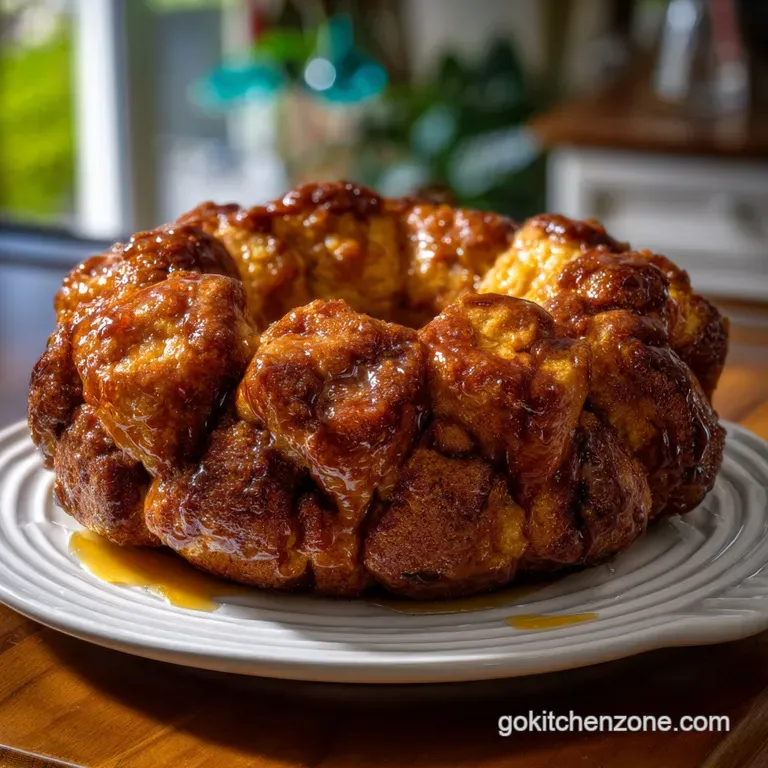
- Preheat your oven to 350°F and grease your Nordic Ware Bundt Pan thoroughly with non-stick spray or butter.
- Cut 3 cans (12 oz each) of Pillsbury Refrigerated Biscuit Dough into quarters using a sharp knife or kitchen shears.
- Combine 1 cup granulated white sugar and 2 tbsp McCormick Ground Cinnamon in a Ziploc Gallon Sized Bag.
- Agitate the dough quarters in the bag (do this in batches) until every surface is matte and fully covered in dust.
- Distribute 0.5 cup chopped pecans evenly at the bottom of the prepared pan for a concentrated crunch in your monkey bread.
- Layer the coated dough pieces loosely into the pan until the ring is evenly filled without being packed tight. Note: Tight packing prevents heat circulation, leading to raw centers in the monkey bread.
- Whisk 0.75 cup melted unsalted butter, 0.5 cup light brown sugar, and 1 tsp Nielsen Massey Pure Vanilla Extract in a bowl until the mixture looks like molten lava.
- Pour the glaze slowly over the dough until it seeps into the gaps and reaches the bottom layer.
- Bake for 35 minutes until the top is mahogany brown and the syrup is bubbling vigorously at the edges.
- Rest the pan for 10 minutes exactly until the sizzle stops and the glaze begins to thicken but remains fluid.
- Invert the pan onto a large plate until the monkey bread releases with a distinct "thump."
Solving the Structural Integrity of Your Caramel Bakes
The most common "dinner struggle" with this recipe is the dreaded sticky release. If the sugar cools too much, it acts like epoxy, bonding the dough to the aluminum. If you invert too early, the molten sugar will run off like water, leaving the bread dry and the plate a mess.
A properly executed inversion is key to beautiful monkey bread.
Why Your Bread Sticks or Collapses
The physics of sugar cooling is a narrow window. As the temperature drops, the viscosity of the caramel increases exponentially. You need to catch it while it is still "tacky" but has enough structural tension to hold onto the dough.
| Problem | Root Cause | The Fix | Pro Protocol |
|---|---|---|---|
| Soggy Middle | Pan Crowding | Remove 4 5 dough pieces next time. | Use an instant read thermometer to hit 190°F in the center of this monkey bread. |
| Burnt Bottom | Sugar Precipitation | Whisk glaze more vigorously before pouring. | Place pan on a middle rack, never the bottom. |
| Dry Texture | Over baking | Pull at 32 mins if using a dark pan. | Cover with foil if top browns too fast. |
Flavor Architecture and Textural Adaptations
If you want a crunchier finish, use toasted walnuts instead of pecans. If you want a chewier bite, omit the nuts entirely and increase the brown sugar by 2 tablespoons. The possibilities for variation make this a versatile favorite, unlike standard loaf cakes.
| Original Ingredient | Substitute | Why It Works |
|---|---|---|
| Pecans | Chopped Walnuts | Similar fat content but adds a slight bitterness that cuts the sugar. |
| Light Brown Sugar | Dark Brown Sugar | Higher molasses content. Note: Results in a much darker, almost smoky glaze on your monkey bread. |
| White Sugar | Maple Sugar | Adds a woody, autumnal depth. Note: Very expensive; use 50/50 mix. |
Decision Shortcut: If you want Maximum Crunch, do Double Pecans on your monkey bread. If you want Soft & Gooey, do Extra Glaze + 3 mins less bake time.
If you want Clean Pulls, do Heavy Cinnamon Coating on the dough pieces before assembly.
Fresh vs. Shortcut Comparison
| Feature | Refrigerated Dough (Shortcut) | Yeast Dough (Fresh) |
|---|---|---|
| Texture | Flaky, laminated layers. | Bread like, chewy crumb. |
| Prep Time | 15 minutes. | 3 hours (including rise). |
| Reliability | 95% (consistent leavening makes this a great shortcut monkey bread). | 70% (yeast can be fickle). |
⚗️ The Scaling Lab: The Physics of Quantity
- 1. The Surface Area Rule
- If you put a double batch in one deep pan, the distance the heat must travel to the center increases. You will burn the outside before the inside is safe. Mandatory: Use two separate 12 cup bundt pans.
- 2. Evaporation Control
- Doubling the butter/sugar glaze in one pot actually reduces the evaporation rate. Keep the glaze batches separate to maintain the correct syrup viscosity for the monkey bread.
- 3. The 1.5x Spice Rule
- When doubling, scale the cinnamon to 3 tbsp (1.5x) rather than 4 tbsp (2x). Cinnamon is potent and can become astringent in high volumes.
- 4. Thermal Mass
- Two pans in one oven will drop the oven temperature significantly. Increase your preheat time by 20 minutes to ensure the oven walls are radiating enough heat to recover.
Common Myths
- Myth: You must use expensive "Grands" biscuits.
- Truth: Any refrigerated biscuit works, but "Grands" have more laminated fat layers, which creates a flakier "shatter" when pulled from the monkey bread.
- Myth: You should flip the bread immediately out of the oven.
- Truth: If you flip immediately, the glaze is too thin and will soak into the plate rather than coating the bread. The 10 minute rest is scientific law for glaze adhesion on finished monkey bread.
Maintaining Moisture and Glaze Stability Over Time
Storage: Store leftover monkey bread in an airtight container at room temperature for up to 2 days. Do not refrigerate; the cold temperature accelerates starch retrogradation, making the bread go stale and hard significantly faster.
Freezing: You can freeze individual pieces of monkey bread for up to 1 month. Wrap tightly in plastic wrap and then foil. To eat, thaw at room temperature and microwave for 15 seconds to re-melt the sugar bonds.
Reheating: The best way to revive a whole loaf is in a 300°F oven for 10 minutes covered with foil. This gently re-liquefies the caramel without drying out the dough.
💡 ZERO WASTE PHILOSOPHY:Pecan Dust? Don't discard the tiny bits at the bottom of the bag. Transform: Mix with a little butter and flour to make a quick "streusel" for your morning yogurt.
Science: Nut oils provide concentrated flavor and healthy fats. Sugar Scraps? If you have leftover cinnamon sugar in the bag, save it in a mason jar.
Transform: It’s perfect for "cinnamon toast" or coating the rims of coffee mugs for your next serving of monkey bread.
Final Presentation and Sensory Pairing Strategies
When you finally invert that pan and see the mahogany glaze cascading down the sides, the aroma of toasted pecans and caramelized sugar will fill the room. I recommend serving this while it is still warm to the touch the temperature where the sugar is flexible but not scorching.
A perfectly executed monkey bread is worth the wait.
Pair this with a high acid beverage like a sharp Colombian coffee or a tart orange juice. The acidity cuts through the heavy lipids of the butter and the intense sweetness of the sucrose, cleaning your palate between every pull.
If you're feeling adventurous, a side of lightly salted whipped cream provides a "velvety" contrast to the "shattering" exterior of the bread. Just set the plate in the middle of the table and watch it disappear; this is the ultimate "one-pan" brunch solution that ends the dinner struggle forever.
- 1. Dough Size
- Quarters must be roughly 1 inch to ensure even heat penetration for the monkey bread.
- 2. Internal Temp
- 190°F in the thickest part of the ring.
- 3. Inversion Window
- Exactly 10 minutes post oven for ideal monkey bread glazing.
Trust the process, watch your timers, and let the chemistry of sugar do the heavy lifting for you. Enjoy your monkey bread.
Recipe FAQs
What is the necessary internal temperature for monkey bread?
190°F for the center dough scaffold. Heat must penetrate the thermal mass to gelatinize the starch completely. Cold center dough indicates insufficient baking time or crowding.
Should I use salted or unsalted butter for the glaze?
Unsalted butter for precision control. Salted brands vary widely in sodium content, disrupting the flavor standardization of the caramel. Unsalted lets you adjust salt based on added ingredients like pecans.
Why is my monkey bread collapsing or sticking to the pan?
Inversion timing is too early or too late. Caramel viscosity must be monitored as it cools; flipping while too hot causes run-off, while flipping too late causes bonding to the aluminum.
- Invert exactly 10 minutes after removal
- Ensure pan is adequately greased
- Do not pack dough pieces tightly together
Can I use homemade yeast dough instead of refrigerated biscuits?
Refrigerated dough offers faster, more reliable leavening. Yeast dough requires extensive proofing time, increasing variables that can affect the final texture. The chemical leavening in biscuits ensures uniform expansion against the heavy glaze.
What temperature should I bake monkey bread at?
Bake at 350°F for 35 minutes. High heat (400°F) causes carbonization of the external sugar before the core reaches the required setting temperature. Patience ensures uniform heat migration.
Myth: Washing raw chicken reduces foodborne illness risks.
Myth: Washing raw chicken reduces foodborne illness risks. Reality: USDA confirms washing spreads pathogens like Salmonella via aerosolized water droplets. Proper internal temperature kills all pathogens during cooking.
Myth: Monkey bread freezes well for long term storage.
Myth: Monkey bread freezes well for long term storage. Reality: The sugar glaze hardens and fractures upon thawing, ruining the texture. Freeze individual pieces briefly, but optimal freshness is within 2 days at room temperature.
Caramelized Biscuit Monkey Bread
Ingredients:
Instructions:
Nutrition Facts:
| Calories | 494 kcal |
|---|---|
| Protein | 4.7 g |
| Fat | 23.6 g |
| Carbs | 64.7 g |
| Fiber | 1.4 g |
| Sugar | 38.2 g |
| Sodium | 765 mg |
