Best Cinnamon Rolls Recipe from Scratch
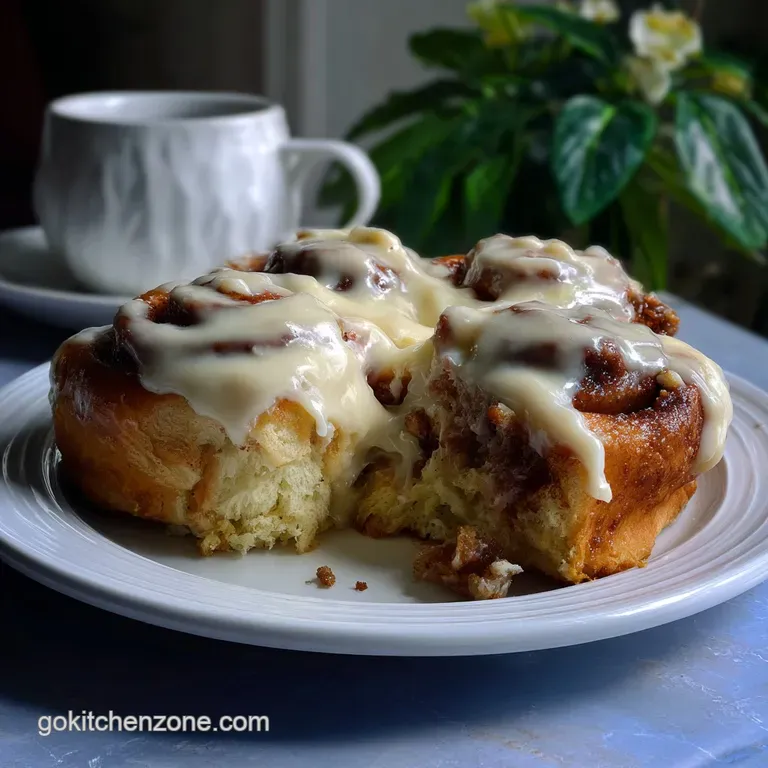
- Effort/Time: 2 hours 55 mins (mostly passive proofing)
- Flavor Hook: Rich mahogany cinnamon swirls meet a tangy, velvet-smooth cream cheese glaze.
- Perfect for: budget-friendly holiday brunches and make-ahead weekend treats.
- Master the Ultimate Homemade Cinnamon Rolls
- The Science of Why This Recipe Works
- Precision Checkpoints for the Best Cinnamon Rolls Recipe
- Budget Smart Elements for Fluffy Cinnamon Rolls
- Essential Tools for Crafting Professional Results at Home
- Execution Protocol for Easy Cinnamon Rolls from Scratch
- Why Your Dough Didn't Rise: Pro Baker Fixes
- Flavor Architecture and Smart Ingredient Swaps
- ⚗️ The Scaling Lab: Physics of Quantity
- Common Myths
- Thermal Mass Recovery: Storage and Reheating Strategy
- Aesthetic Presentation and Serving Suggestions
- Recipe FAQs
- 📝 Recipe Card
Master the Ultimate Homemade Cinnamon Rolls
Nothing kills a morning faster than biting into a cinnamon roll only to find it has the structural integrity of a budget luggage set. I’ve spent countless dollars on "premium" bakery rolls that were essentially dry bread disguised by a pound of sugar.
The financial sting of a failed bake is real wasting nearly five cups of flour and a stick of butter on something that ends up in the trash is a heartbreak your wallet doesn't need.
This recipe is the antidote to the "cardboard crumb" syndrome, focusing on hydration and fat distribution to guarantee a soft, shattering texture every single time you make these cinnamon rolls.
Early in my baking journey, I made the classic amateur mistake: I killed my yeast with boiling milk. I was in a rush, didn't use a thermometer, and ended up with twelve dense, leaden hockey pucks that wouldn't rise if their lives depended on it. It was a humbling lesson in the physics of fermentation.
Yeast is a living organism, and like any of us, it shuts down under extreme stress. Learning to respect the 110°F threshold changed my kitchen forever. Now, I treat temperature as a non-negotiable ingredient, not a suggestion for making excellent cinnamon rolls.
The secret to that "melt-in-your mouth" sensation isn't just adding more sugar; it’s about starch gelatinization and the Maillard reaction. By pouring a small amount of heavy cream over the cinnamon rolls just before they hit the oven, we create a steam injection environment that keeps the dough hydrated while the sugars in the filling caramelize into a gooey, mahogany colored nectar.
This technical maneuver prevents the edges from hardening into a crust, leaving you with a velvety center and a tender exterior that pulls apart in delicate, feathery ribbons. These cinnamon rolls are worth the effort.
The Science of Why This Recipe Works
- Protein Network Strength: Using King Arthur Bread Flour provides a higher protein content (approx. 12.7%) than all-purpose flour, creating a robust gluten structure that traps CO2 bubbles for a superior rise in your cinnamon rolls.
- Enrichment Induced Softness: The addition of 1 large egg and 0.33 cup unsalted butter interferes with gluten formation just enough to ensure the crumb remains tender rather than chewy like a bagel.
- Osmotic Pressure Management: 0.5 cup granulated sugar in the dough provides food for the yeast but is kept at a level that doesn't dehydrate the yeast cells through osmotic stress, ensuring a vigorous bulk fermentation for perfect cinnamon rolls.
- Thermal Steam Injection: Pouring 2 tbsp heavy cream over the cinnamon rolls before baking increases the local humidity in the Lodge Cast Iron Skillet, preventing the starch molecules on the surface from retrograding and becoming hard.
Precision Checkpoints for the Best Cinnamon Rolls Recipe
To survive the complexities of bread baking, you need numeric milestones. Use these three checkpoints to ensure your cinnamon rolls are on the right trajectory:
- Hydration Temperature: Your 1 cup whole milk must be exactly 110°F. Use a Taylor Digital Thermometer; any higher than 120°F and you risk protein denaturation of the yeast.
- Bulk Fermentation Volume: The dough must reach 2x its original size (approx. 1 hour 30 mins at room temperature). If your kitchen is under 70°F, use the "oven with the light on" hack to maintain a consistent 75 80°F for better proofing of the cinnamon rolls.
- Internal Doneness: Bake until the internal temperature reaches 190°F. This ensures the center is fully set and won't collapse into a doughy mess once cooled, resulting in ideal cinnamon rolls.
Budget Smart Elements for Fluffy Cinnamon Rolls
| Ingredient | Chemical/Physical Role (Science) | The Pro Secret (Why This Matters) | ||||
|---|---|---|---|---|---|---|
| King Arthur Bread Flour | Gluten network formation | Why this? High protein content (12%+) creates the elastic "stretch" needed for a high rise. | ||||
| Instant Yeast | CO2 production via fermentation | Provides immediate leavening without the need for a separate blooming step in water. | ||||
| Unsalted Butter | Lipid shortening of gluten strands | Why this? Fat coats flour proteins, preventing "tough" bread and creating a tender crumb. | ||||
| Light Brown Sugar | Hygroscopic moisture retention | Molasses content adds depth and keeps the filling from drying out into a gritty powder. | Original Ingredient | Substitute | Why It Works | |
| :--- | :--- | :--- | ||||
| Whole Milk (1 cup) | 0.5 cup Evaporated Milk + 0.5 cup Water | Higher protein/fat concentration in evaporated milk mimics the richness of whole milk at a lower cost. | ||||
| Bread Flour (4.25 cups) | All-Purpose Flour + 2 tbsp Cornstarch | Cornstarch lowers the protein slightly, resulting in a softer (though less structured) roll. | ||||
| Heavy Cream (2 tbsp) | Half and Half | Provides similar fat-to-liquid ratio for the "steam bake" without the high price tag of a full pint. |
Essential Tools for Crafting Professional Results at Home
- KitchenAid Stand Mixer: Essential for the 5 7 minute knead. Doing this by hand is possible but risks under developing the gluten required for great cinnamon rolls.
- Lodge 12 inch Cast Iron Skillet: The high thermal mass of cast iron ensures even heat distribution, preventing "hot spots" that burn the bottom of your cinnamon rolls.
- Unflavored Dental Floss: The ultimate hack for clean cuts. Using a knife squashes the delicate air pockets; floss shears through them with zero compression.
- Taylor Digital Food Thermometer: Accuracy is the difference between a rise and a dud.
Execution Protocol for Easy Cinnamon Rolls from Scratch
- Warm 1 cup whole milk to 110°F until it feels like lukewarm bath water. Note: Critical for yeast viability.
- Combine 2.25 tsp instant yeast, 0.5 cup granulated sugar, 1 large egg, and 0.33 cup melted butter in a KitchenAid bowl.
- Incorporate 4.25 cups bread flour and 1 tsp fine sea salt until a shaggy, tacky mass forms.
- Knead for 7 minutes on medium low until the dough is smooth, elastic, and clears the sides of the bowl.
- Rest in a greased Pyrex bowl for 1 hour 30 mins until the dough has doubled in volume and looks puffy.
- Roll the dough on a floured surface into a 12x18 inch rectangle until it is an even 1/4 inch thickness.
- Spread 0.5 cup very soft unsalted butter across the surface until every edge is coated in a velvety layer.
- Sprinkle a mixture of 1 cup light brown sugar and 2.5 tbsp McCormick Cinnamon until the butter is completely obscured.
- Roll tightly from the long edge until you have a firm, uniform log.
- Cut into 12 even pieces using dental floss until you see the clean, spiral architecture of the layers.
- Place in a greased Lodge Skillet and pour 2 tbsp heavy cream over the top until the cream pools slightly at the base.
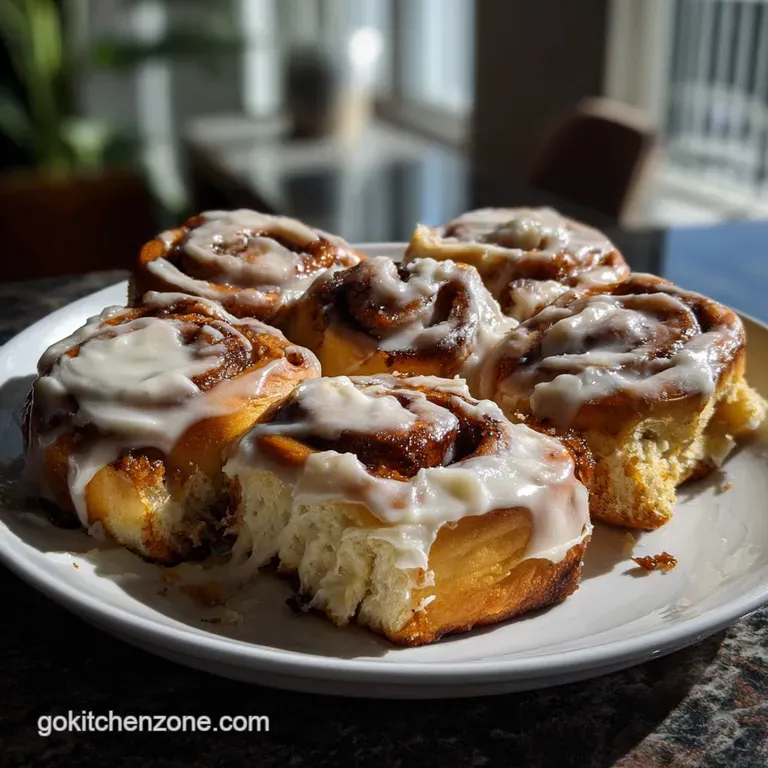
- Bake at 350°F for 25 minutes until the tops are a deep mahogany brown and the centers spring back when touched.
- Whisk 4 oz cream cheese, 0.25 cup butter, 1.5 cups powdered sugar, 1 tsp vanilla, and a pinch of salt until it is glossy and pourable.
- Glaze the cinnamon rolls while still warm until the frosting melts slightly into the crevices.
Why Your Dough Didn't Rise: Pro Baker Fixes
If your cinnamon rolls recipe yields dense, flat disks, you've likely encountered a fermentation failure. The primary culprit is often thermal shock either the milk was too hot (killing the yeast) or the room was too cold (putting the yeast into dormancy).
Another hidden factor is salt contact; if your 1 tsp fine sea salt touched the yeast directly before the flour was added, it could have inhibited the yeast's osmotic balance. These issues are common when first learning to make successful cinnamon rolls.
| Problem | Root Cause | The Fix | Pro Protocol |
|---|---|---|---|
| No Rise in Oven | Over proofing in the first stage | Cut bulk fermentation time by 15 mins. | Test dough by poking; it should spring back slowly. |
| Dry, Crumbly Texture | Excess flour during kneading | Measure flour by weight (120g/cup) or use the spoon and level method. | Dough should be "tacky" but not stick to clean fingers. |
| Filling Leaked Out | Butter was too melted/liquid | Use "cool room temp" butter, not melted butter for the filling. | Chill the rolled log for 10 mins before cutting to set the butter. |
Flavor Architecture and Smart Ingredient Swaps
To survive a boring breakfast rotation, you need variations. The base dough of these homemade cinnamon rolls is a blank canvas for budget friendly flavor hacks. Mastering the base recipe ensures you can pivot to any flavor profile you desire for future batches of cinnamon rolls.
- The "Citrus Survival" Hack: Add the zest of one orange to the brown sugar filling. The citric acid cuts through the heavy fat of the butter and cream cheese.
- The "Espresso Depth" Trick: Add 1 tsp of instant espresso powder to the cinnamon mix. This mimics the complexity of expensive Mexican chocolate, making these cinnamon rolls deeper in flavor.
- The "Nutty Crunch" Swap: If you have half a bag of pecans in the pantry, toast them and press them into the butter before rolling.
| Method | Texture Outcome | Speed |
|---|---|---|
| Oven (Cast Iron) | Uniform rise, mahogany exterior, soft centers. The preferred method for these cinnamon rolls. | 25 minutes |
| Stovetop (Covered Skillet) | Denser, "steamed" bun texture; crispy bottoms. | 35 minutes (Low heat) |
⚗️ The Scaling Lab: Physics of Quantity
- The 1.5x Spice Rule
- Use 3.75 tbsp cinnamon, not 5 tbsp. In large quantities, cinnamon can become astringent and overpower the yeast’s natural aroma, ruining the flavor of the cinnamon rolls.
- The Evaporation Paradox
- If doubling the cream pour, only use 3 tbsp total. Too much liquid in a crowded pan will cause the bottoms of the cinnamon rolls to become soggy rather than caramelized.
- Thermal Mass Warning
- Doubling the dough in one bowl increases the internal temperature due to the exothermic nature of fermentation. Check your rise 20% earlier (around 1 hour 10 mins) to prevent over proofing.
- Batch Cooking
- Never crowd more than 12 rolls in a standard skillet. If doubling, use two separate pans to maintain the airflow required for the Maillard reaction.
Common Myths
Myth: You must bloom instant yeast in warm water/milk first. Truth: Instant yeast (like SAF-Instant) is engineered to be mixed directly with dry ingredients. Blooming is a relic of "Active Dry" yeast requirements.
Save the 10 minutes and just mix it in; your cinnamon rolls will rise just as well.
Myth: The dough needs to be in a "hot" place to rise. Truth: A slow rise (68 75°F) allows for better flavor development (organic acids).
Rushing the rise with heat results in a "yeasty" or "beery" flavor that masks the butter and cinnamon in your cinnamon rolls.
Thermal Mass Recovery: Storage and Reheating Strategy
Storage: These best cinnamon rolls will stay soft for 48 hours at room temperature if wrapped tightly in plastic wrap. For longer storage, refrigerate for up to 5 days. The high fat content in the cream cheese frosting acts as a moisture barrier.
Freezing: You can freeze unbaked cinnamon rolls after the second proof. Wrap the pan in double foil. When ready to bake, thaw in the fridge overnight and bake as directed. Baked rolls can be frozen for 3 months; wrap individually to prevent freezer burn.
Reheating: Avoid the microwave if possible, as it turns starch molecules rubbery. Reheat in a 300°F oven for 10 minutes. If you must microwave, place a small cup of water inside to create steam and prevent the bread from drying out.
- Transform
- Use it as a dip for apple slices or a spread for graham crackers.
- Science
- The sugar and fat content prevent bacterial growth, making it a stable "sweet treat" base for days.
- Transform
- Roll them into "cinnamon holes" and bake in a muffin tin.
- Science
- Smaller surface area means they bake faster (12 15 mins) and provide a high ratio of caramelized exterior. The resulting cinnamon roll scraps are addictive.
Aesthetic Presentation and Serving Suggestions
If you want the best cinnamon rolls to look like a $10 per-piece bakery item, presentation is key. Apply half of the frosting while the rolls are 160°F (internal) this allows the glaze to melt into the spirals.
Apply the second half once they reach room temperature to create that thick, opaque, velvety "cloud" on top.
- If you want Maximum Goo
- Pour 3 tbsp heavy cream instead of 2 tbsp and under bake by 2 minutes for the gooier center of the cinnamon rolls.
- If you want Crispy Edges
- Skip the cream pour and use a light colored aluminum pan instead of cast iron.
- If you want Overnight Ease
- Complete the shaping, place in the pan, and refrigerate immediately for up to 12 hours. Bake straight from the fridge (add 5 mins to bake time).
Serve these with a high acid beverage like black coffee or a cold glass of milk to balance the intense sweetness and fat. These homemade cinnamon rolls aren't just a breakfast; they are a budget smart engineering feat that proves you don't need a professional kitchen to achieve a shattering, velvety, and aromatic masterpiece.
Let's crack on.
Q: Can I use 2% milk instead of whole milk? A: Yes, but you will lose some of the "velvety" mouthfeel. Whole milk provides the essential phospholipids that soften the crumb of the cinnamon rolls.
Q: Why is my frosting runny? A: Your butter or cream cheese was likely too warm. Chill the frosting for 15 minutes before whisking again to restore the emulsion on these cinnamon rolls.
Q: How do I know if I've over kneaded the dough? A: If the dough feels "tight" and snaps back immediately when you try to roll it out, let it rest for 20 minutes to allow the gluten to relax.
Over kneading is rare with a stand mixer but results in a tough, bread like texture rather than a soft roll.

Recipe FAQs
What temperature must the milk be for the yeast to activate correctly?
110°F is the ideal activation temperature. Temperatures above 120°F cause rapid protein denaturation, effectively killing the yeast cells needed for leavening. Any lower, and fermentation stalls.
Why are my rolls dry after just one day?
Heavy cream added pre-bake creates essential steam injection. This infusion keeps the starch molecules hydrated as they gelatinize, preventing retrogradation and hardening. Too little cream results in a stale texture quickly.
Should I use bread flour or all-purpose flour for the best structure?
Bread flour provides superior gluten network strength. Bread flour's higher protein content (approx. 12.7%) creates an elastic structure capable of trapping more CO2, leading to a higher, pillowy rise versus AP flour.
My filling leaked out during baking; why did this happen?
Butter in the filling was melted instead of soft. Liquid butter migrates immediately during the initial oven shock, causing the sugar and cinnamon paste to flow out of the spiral structure.
- Use butter at cool room temperature
- Chill the log 10 minutes before cutting
- Ensure a tight, uniform roll
Is chilling the dough after rolling necessary?
Chilling the log for 10 minutes sets the fats. Setting the butter and sugar mixture firm prevents the filling from immediately oozing when the log is sliced with dental floss. This ensures clean architectural spirals when baking.
Can I make these ahead of time and freeze the raw dough?
Yes, freezing raw dough yields excellent results. Wrap the proofed rolls tightly in double foil to prevent desiccation, then transfer to the freezer for up to 3 months. Bake directly from thawed (add 5 minutes to cook time).
Myth: Using instant yeast means I can skip measuring the milk temperature.
Myth: Instant yeast tolerance does not negate the need for proper thermal input. Reality: Extreme temperatures kill the living organisms, rendering the high-quality flour useless by preventing necessary CO2 production.
Velvety Cinnamon Rolls Masterclass
Ingredients:
Instructions:
Nutrition Facts:
| Calories | 527 kcal |
|---|---|
| Protein | 7.5 g |
| Fat | 22.5 g |
| Carbs | 74.8 g |
| Fiber | 2.1 g |
| Sugar | 40.2 g |
| Sodium | 275 mg |
