French Toast Casserole with Cream Cheese
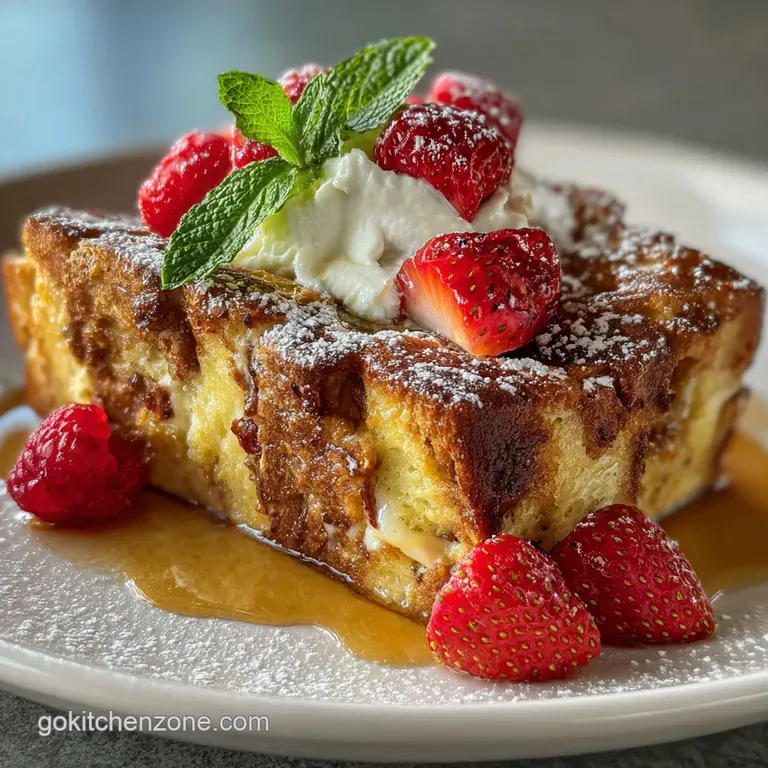
- Time: Active 20 minutes, Passive 50 minutes, Total 1 hours 10 mins
- Flavor/Texture Hook: Shatteringly crisp topping with a silky, cream cheese-ribboned center
- Perfect for: Stress free holiday brunch or weekend meal prep
- The Science of Why it Works
- Planning Your Morning Flow with Precision Timing
- Choosing the Right Elements for Maximum Texture
- The Simple Kitchen Tools You Actually Need
- Mastering the Build for a Shatteringly Crisp Topping
- Fixing Common Mistakes for a Consistent Bake
- Adjusting the Batch Size for Any Sized Crowd
- Debunking Traditional Brunch Methods That Don't Work
- Keeping Leftovers Fresh and Reducing Kitchen Waste
- Finishing Touches to Make Your Brunch Shine
- Recipe FAQs
- 📝 Recipe Card
The Science of Why it Works
Starch Retrogradation: Using stale or toasted bread allows the starch molecules to crystallize, creating a rigid structure that absorbs custard without collapsing into mush.
Protein Denaturation: As the 8 large eggs heat up, the proteins uncoil and bond together, trapping the milk and cream in a stable, velvety gel like matrix.
Fat Induced Tenderness: The combination of heavy cream and whole milk ensures a high fat to water ratio, which prevents the custard from becoming rubbery or watery during the 50 minutes of baking.
| Method | Time | Texture | Best For |
|---|---|---|---|
| Traditional Stovetop | 5 mins per slice | Crispy outside, can be dry | Solo breakfast for 1-2 people |
| Oven Casserole | 50 minutes | Custardy center, uniform crust | Feeding a crowd without standing over a stove |
| Crockpot Version | 4 hours | Dense and very moist | Overnight prep for maximum hands off time |
This comparison shows that while stovetop is fast, the oven method is the only way to get that specific contrast between a silky interior and a crunchy top. The heat distribution in a 9x13 pan allows the edges to caramelize while the center sets slowly.
Planning Your Morning Flow with Precision Timing
Cooking should never feel like a race you're losing. If you’re like me, the dinner struggle is real, but the "morning struggle" is even worse when you haven't had caffeine yet. This recipe relies on a specific sequence to ensure the bread is perfectly hydrated. Similar to the prep flow in our Breakfast Casserole recipe, we want to give the ingredients time to mingle before they hit the heat.
Component Analysis
| Ingredient | Science Role | Pro Secret |
|---|---|---|
| Brioche Loaf | Structural Base | Use bread that feels slightly firm to the touch for better soak. |
| Large Eggs | Emulsifier & Binder | Whisk until no streaks of white remain to avoid "fried egg" bits in the bake. |
| Heavy Cream | Fat Content | Provides the silky mouthfeel that milk alone can't achieve. |
| Brown Sugar | Hygroscopic Sweetener | Draws moisture into the bread while creating a deep caramel flavor. |
If you have leftover brioche and want to try a different flavor profile later, you might also enjoy my Cinnamon Roll Casserole recipe. The key is understanding how bread reacts to moisture. In this French Toast Casserole, the 1 lb brioche loaf acts like a sponge, but it needs the right amount of "pores" (stale air pockets) to hold that 2 cups of whole milk and 1 cup of heavy cream without dissolving.
Choosing the Right Elements for Maximum Texture
Don't just grab the first loaf of white bread you see at the store. The bread is the star here. I once made this with standard sandwich bread, and it was a disaster it literally vanished into the custard. You want something with "heft."
- 1 lb brioche loaf: Cut into 1 inch cubes. Why this? Higher egg and butter content in the dough creates a rich, pastry like crumb.
- 8 large eggs: Use room temperature eggs if possible. Why this? They emulsify more smoothly with the milk and cream.
- 2 cups whole milk: Don't use skim. Why this? Fat prevents the bread from becoming tough.
- 1 cup heavy cream: This is non negotiable for the texture. Why this? Adds the necessary richness for a dessert like brunch.
- 1/2 cup brown sugar (custard): Packed tightly. Why this? Molasses notes deepen the cinnamon profile.
- 1 tbsp vanilla extract: Use the real stuff. Why this? Artificial vanilla can turn bitter when baked for 50 minutes.
- 1 tsp ground cinnamon (custard): Freshly opened if possible.
- 1/4 tsp salt: Why this? Balances the sugar and makes the chocolate or fruit flavors pop.
- 8 oz cream cheese: Softened to room temperature.
- 1/4 cup powdered sugar: For the cream cheese filling.
- 1 tsp lemon zest: Why this? Cuts through the heavy fat and brightens the entire dish.
- 1/2 cup all purpose flour: For the streusel.
- 1/2 cup brown sugar (streusel): Creates the crunch.
- 1 tsp ground cinnamon (streusel): Extra spice for the top.
- 1/2 cup unsalted butter: Cold and cubed.
| Original Ingredient | Substitute | Why It Works |
|---|---|---|
| Brioche Loaf | Challah Bread | Similar high fat dough. Note: Slightly less sweet but holds shape well. |
| Whole Milk | Oat Milk (Full Fat) | High creaminess. Note: Adds a slight toasted grain flavor to the custard. |
| Heavy Cream | Coconut Cream | Very thick and fatty. Note: Will add a distinct tropical/coconut scent. |
| Cream Cheese | Mascarpone | Italian cream cheese. Note: Much richer and less tangy; skip the lemon zest. |
The Simple Kitchen Tools You Actually Need
You don't need a kitchen full of gadgets, but a few basics will make your life significantly easier. I'm a big fan of "one pan" cleanup, so choose a baking dish that looks good enough to go straight from the oven to the table.
- 9x13-inch Baking Dish: Glass or ceramic is best for even heat distribution.
- Large Mixing Bowl: For the main custard.
- Medium Mixing Bowl: For the streusel and cream cheese mix.
- Wire Whisk: To ensure the eggs are fully incorporated.
- Pastry Cutter or Fork: To work the cold butter into the flour.
- Zester/Microplane: For that essential lemon zest.
Chef's Tip: Freeze your 1/2 cup unsalted butter for 10 minutes before grating it with a box grater into the streusel mix. This ensures the butter stays cold, creating tiny steam pockets that make the topping extra flaky instead of greasy.
Mastering the Build for a Shatteringly Crisp Topping
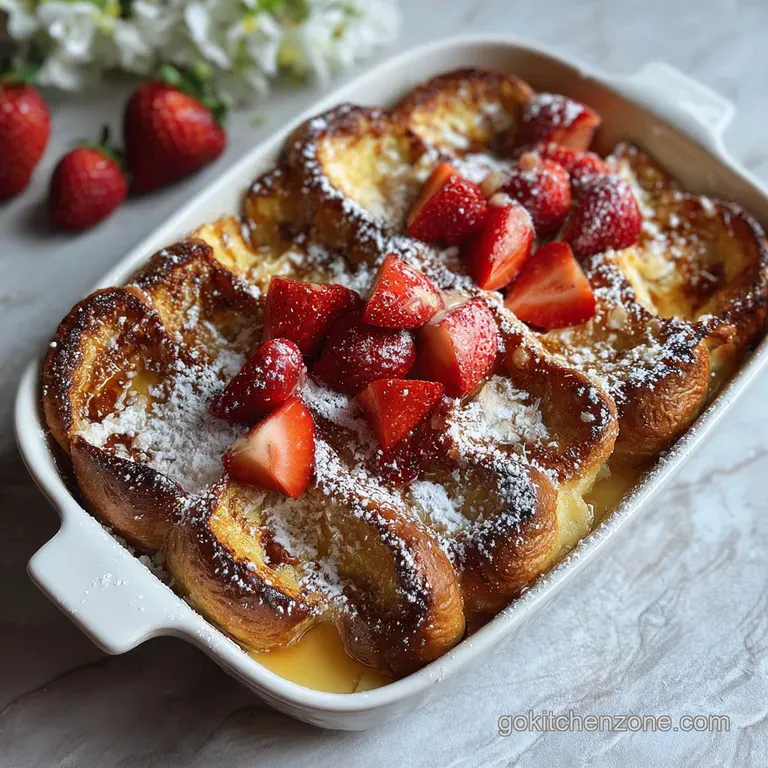
- Prep the bread. Cut your 1 lb brioche loaf into 1 inch cubes. If the bread is fresh, spread the cubes on a tray and bake at 300°F for 10 minutes to dry them out. Note: Dry bread is the "secret weapon" against sogginess.
- Whisk the custard. In a large bowl, combine 8 large eggs, 2 cups whole milk, 1 cup heavy cream, 1/2 cup brown sugar, 1 tbsp vanilla, 1 tsp cinnamon, and 1/4 tsp salt. Whisk until no egg streaks remain.
- Mix the cream cheese. In a separate small bowl, blend 8 oz softened cream cheese with 1/4 cup powdered sugar and 1 tsp lemon zest. Note: This creates a "cheesecake" ribbon inside the bake.
- Layer the base. Grease your 9x13 dish. Place half of the brioche cubes into the bottom in an even layer.
- Add the "stuffed" layer. Drop spoonfuls of the cream cheese mixture over the bread cubes. It doesn't have to be perfect; little pockets of cheese are better than a flat sheet.
- Top it off. Add the remaining brioche cubes on top of the cream cheese layer.
- Pour the soak. Slowly pour the custard over the bread. Press down lightly with a spatula until every cube has been submerged.
- Make the streusel. Combine 1/2 cup flour, 1/2 cup brown sugar, and 1 tsp cinnamon. Cut in the 1/2 cup cold, cubed butter until it looks like coarse crumbs.
- Chill (Optional). Cover and refrigerate for at least 30 mins or up to 12 hours. If baking immediately, let it sit for 20 mins to absorb liquid.
- Bake. Sprinkle the streusel over the top. Bake at 350°F for 50 minutes until the center is set and the top is golden and crackling.
If you're hosting a massive holiday crowd, this pairs well with a savory Christmas Morning Casserole recipe. The combination of sweet and salty is always a winner.
Fixing Common Mistakes for a Consistent Bake
Even the best cooks have "oops" moments. I once forgot to dry my bread and ended up with a casserole that looked like bread pudding soup. It tasted okay, but the texture was a nightmare.
Why Your Bake Is Still Wet in the Middle
If you pull the dish out and the center wobbles like a bowl of water, it’s undercooked. This usually happens because the oven temp is uneven or the bread was packed too tightly, preventing heat from reaching the core. Cover the top with foil (to prevent burning) and give it another 10-15 minutes.
Why the Custard Is Curdled or Grainy
This is a classic sign of overcooking or using high heat. When eggs cook too fast, they tighten up and squeeze out the liquid, leaving you with "weeping" custard. Always use a middle oven rack and stick to 350°F.
| Problem | Root Cause | Solution |
|---|---|---|
| Dry, tough bread | Not enough soak time | Let the casserole sit for at least 30 mins before baking. |
| Greasy streusel | Butter was too warm | Use frozen/cold butter and don't over mix with your hands. |
| Burnt top, raw middle | Oven rack too high | Move to the center rack and tent with foil halfway through. |
Common Mistakes Checklist
- ✓ Pat the bread dry or toast it if it's fresh (prevents the "mush" factor).
- ✓ Whisk the eggs thoroughly; nobody wants a bite of cooked egg white in their French toast.
- ✓ Use full fat dairy; skim milk will result in a watery, thin custard.
- ✓ Don't skip the salt; it’s essential to highlight the vanilla and cinnamon.
- ✓ Let the casserole rest for 5-10 minutes after baking to allow the custard to fully set.
Adjusting the Batch Size for Any Sized Crowd
Sometimes you're just feeding a small family, and other times you've got the whole neighborhood coming over. Scaling this French Toast Casserole is pretty straightforward, but you have to watch your liquid ratios.
Scaling Down (1/2 Batch) Use an 8x8-inch pan. Use 4 eggs, 1 cup milk, and 1/2 cup cream. Reduce the bake time by about 10-15 minutes. Start checking for doneness at the 35 minutes mark.
Scaling Up (Double Batch) Do not just double the bake time! Use two 9x13 pans instead of one giant one. If you try to bake this in a deeper dish, the outside will burn before the middle even gets warm. Rotate the pans halfway through the 50 minutes cook time to ensure even browning.
| Servings | Bread Amount | Pan Size | Cook Time |
|---|---|---|---|
| 5 People | 0.5 lb | 8x8 Square | 35-40 minutes |
| 10 People | 1 lb | 9x13 Rectangular | 50 minutes |
| 20 People | 2 lbs | Two 9x13 Pans | 55 minutes (rotated) |
Debunking Traditional Brunch Methods That Don't Work
The "Fresh Bread is Best" Myth Many people think buying a fresh, soft loaf of bread on the day of baking is the goal. It’s actually the opposite. Fresh bread is full of moisture. When you add custard to it, the bread can't absorb any more, so the liquid just pools around it.
Stale bread is thirsty bread it's the only way to get a velvety center.
The "Searing Each Cube" Fallacy I've seen some recipes suggest browning the bread cubes in butter before putting them in the dish. Don't bother. The 50 minutes in the oven provides plenty of Maillard reaction (browning) on the exposed tops of the bread.
Searing them first just adds extra grease and an hour of unnecessary work.
The "Overnight is Required" Belief While an overnight soak is convenient, it's not mandatory. With a high fat custard and brioche, 30 minutes is actually enough for the bread to hydrate.
If you soak it for 24 hours, the bread can actually start to break down too much, losing its structural integrity.
Keeping Leftovers Fresh and Reducing Kitchen Waste
Storage Guidelines Store any leftover French Toast Casserole in an airtight container in the fridge for up to 4 days. To reheat, avoid the microwave if you want to keep the crunch. Place a slice in the toaster oven or a regular oven at 350°F for 10 minutes.
This re crisps the streusel and warms the center without making it rubbery.
Freezing Instructions You can freeze the baked casserole! Cut into individual portions, wrap tightly in plastic wrap, then foil. They'll stay good for 2 months. Thaw in the fridge overnight before reheating.
Zero Waste Tips If you have leftover custard, don't pour it down the drain. It’s basically a crème anglaise base. You can cook it in a small saucepan over low heat until thickened and use it as a pour over sauce for cake or fruit.
If you have extra brioche scraps, toss them in cinnamon sugar and bake them into "bread croutons" for snacks.
Finishing Touches to Make Your Brunch Shine
Presentation matters, even if it’s just for your family on a Tuesday. The beauty of this bake is the contrast of colors the deep gold of the streusel against the pale cream of the custard.
When you pull it out of the oven, give it a light dusting of powdered sugar while it's still hot. It looks like a light snowfall and adds a tiny hit of immediate sweetness. I love serving this with a side of fresh raspberries or sliced strawberries to provide a tart balance to the rich, buttery brioche.
If you’re feeling extra, a drizzle of high-quality maple syrup is the classic choice, but don't sleep on a dollop of Greek yogurt or extra whipped cream. The tang of the yogurt plays perfectly with the lemon zest we hid in the cream cheese layer.
This dish is hearty, so a simple side of bacon or breakfast sausage is all you need to round out the meal. Now, grab a plate and enjoy the fact that you aren't stuck at the stove!

Recipe FAQs
Can I use fresh bread for French toast casserole?
No, use stale or toasted bread. Fresh bread is too moist and can turn into mush when soaked in the custard, preventing it from holding its structure.
How long should I soak the bread in the custard?
At least 30 minutes, but overnight is also fine. While 30 minutes is enough for hydration with brioche, an overnight soak allows flavors to meld more deeply. Avoid soaking for more than 24 hours to prevent the bread from disintegrating.
Why is my French toast casserole wet in the middle?
It's likely undercooked or the oven temperature was inconsistent. Cover the top with foil to prevent burning and bake for an additional 10-15 minutes, ensuring the center is set and no longer wobbly.
What kind of bread is best for French toast casserole?
Brioche or challah bread is ideal. These enriched breads have a higher fat and egg content, creating a richer, more tender crumb that absorbs custard beautifully without becoming soggy, similar to how these breads create a wonderful base for other baked dishes.
Can I make French toast casserole ahead of time?
Yes, assemble up to 12 hours ahead. Prepare the casserole completely, omitting the streusel topping, then cover and refrigerate. Add the streusel just before baking.
How do I reheat leftover French toast casserole?
Use a toaster oven or regular oven for best results. Reheat at 350°F for about 10 minutes to re-crisp the topping and warm the center without making it rubbery, unlike microwave reheating.
Is it true that the streusel topping can become soggy?
Yes, this is a common concern if not prepared correctly. Ensuring your butter is cold when making the streusel and not overmixing the ingredients helps create tiny steam pockets during baking, leading to a shatteringly crisp topping.
French Toast Casserole
Ingredients:
Instructions:
Nutrition Facts:
| Calories | 576 kcal |
|---|---|
| Protein | 13.7 g |
| Fat | 36.3 g |
| Carbs | 50.7 g |
| Fiber | 1.2 g |
| Sugar | 34.2 g |
| Sodium | 315 mg |
