Cheesy Hashbrown Casserole: Velvety Potato Base
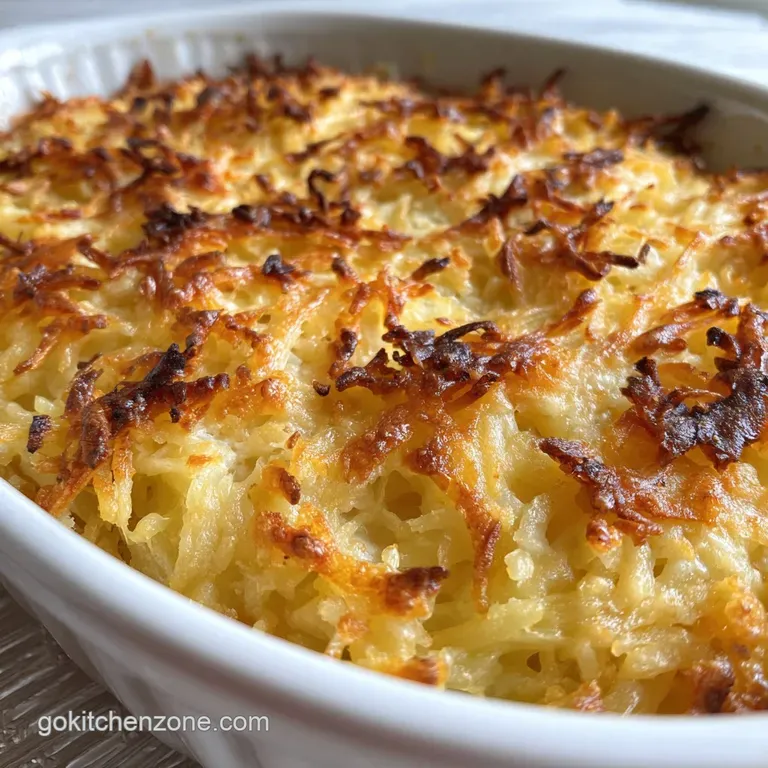
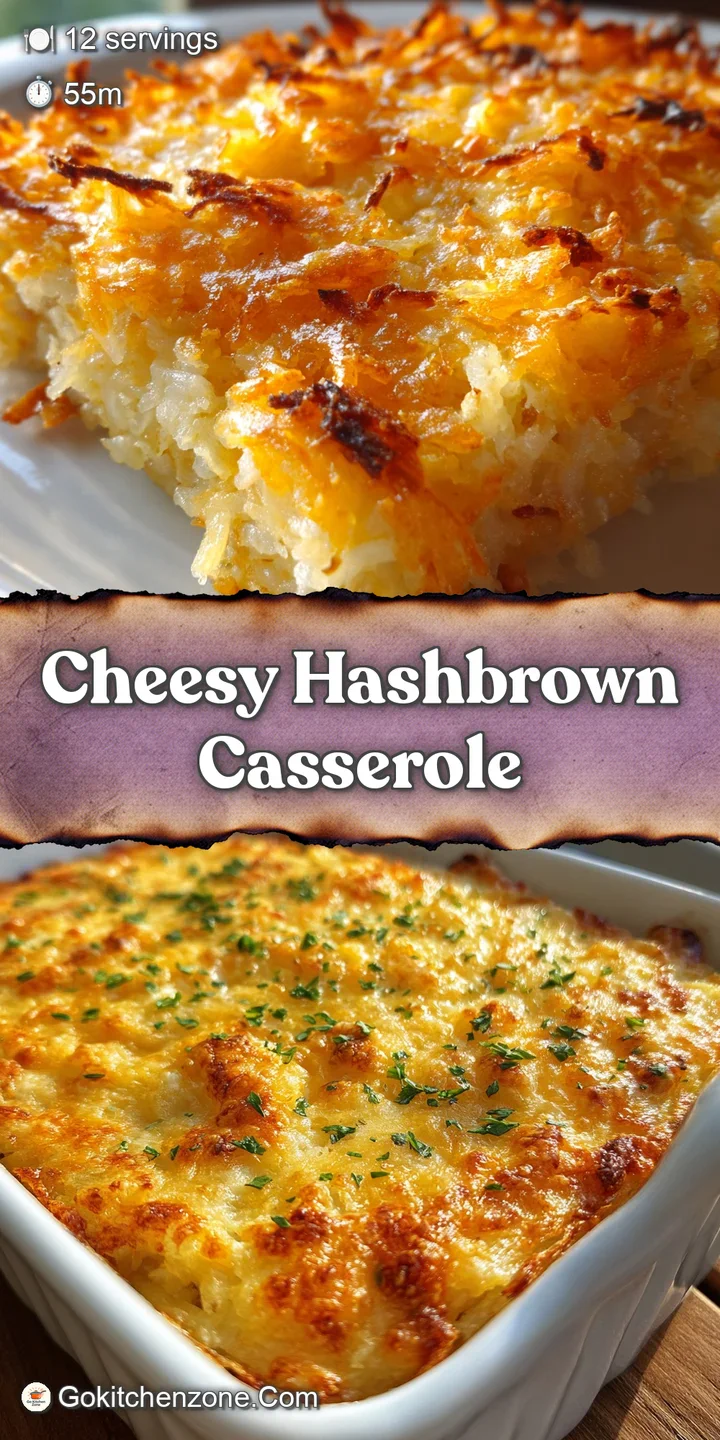
- Time: Active 10 minutes, Passive 45 minutes, Total 55 minutes
- Flavor/Texture Hook: Savory, cheesy, and incredibly crispy
- Perfect for: Holiday brunches, potlucks, or busy weeknight side dishes
- Making the Best Cheesy Hashbrown Casserole Ever
- The Science of Texture
- Recipe Specs and Yield
- Affordable Ingredients for Better Results
- Essential Tools for This Bake
- Instructions for the Golden Crust
- Solving Common Casserole Texture Issues
- Scaling for Different Crowds
- Decision Shortcuts
- Casserole Myths and Facts
- Storage and Reheating for Leftovers
- The Best Main Dish Pairings
- Recipe FAQs
- 📝 Recipe Card
Making the Best Cheesy Hashbrown Casserole Ever
We've all been to that gathering where a casserole dish arrives, smelling of toasted butter and melted cheese, only to find the center is a watery, flavorless mess. It's the ultimate dinner struggle when you're trying to feed a crowd on a budget but end up with something "fine" instead of something people actually fight over.
I spent years making this with whatever frozen potatoes were on sale, but I've realized that the difference between a soggy bake and a velvety masterpiece comes down to one simple thing: moisture management.
In this version, we're skipping the expensive add ins and focusing on making the pantry staples work harder. By treating the frozen hashbrowns correctly and layering the fats, we get a result that feels much more expensive than it is.
It's the kind of dish that makes people ask for the recipe before they've even finished their first helping.
Right then, let's talk about why this specific recipe works so well. We aren't just dumping things into a bowl and hoping for the best. We're building an emulsion that stays stable in the oven, ensuring every bite of your Cheesy Hashbrown Casserole is consistent from the crispy edges to the soft, savory center.
The Science of Texture
When you bake a Cheesy Hashbrown Casserole, several chemical reactions happen at once. Understanding them helps you avoid the common pitfalls like curdling or "leaking" at the bottom of the pan.
- Starch Gelatinization: As the hashbrowns heat up, the starches inside the potato swell and absorb the moisture from the sour cream and soup. If the potatoes are too wet to start with, they can't absorb the sauce, which is why drying them is non negotiable.
- Emulsion Stability: The fats in the butter, cheese, and sour cream are held together by the proteins in the condensed soup. This prevents the sauce from breaking into a greasy puddle during the 45 minutes of oven time.
- Maillard Reaction: The cornflake topping, coated in melted butter, undergoes rapid browning. The sugar and amino acids in the cereal react under the dry heat of the oven, creating that signature savory sweet crunch.
- Protein Denaturation: The cheese proteins melt and then slightly tighten, creating a structural web that holds the shredded potatoes together so the casserole doesn't fall apart when sliced.
| Potato Type | Prep Time | Texture Result | Cost Impact |
|---|---|---|---|
| Frozen Shredded | 0 mins | Consistently tender, holds sauce well | Budget friendly |
| Fresh Hand Grated | 20 mins | Firmer bite, requires rinsing/drying | Low cost, high labor |
| Frozen Cubed | 0 mins | Heartier, more individual potato flavor | Moderate cost |
Choosing frozen shredded potatoes is my preferred move for a Cheesy Hashbrown Casserole. The high surface area of the shreds allows the cheese sauce to coat every single piece, ensuring there are no dry spots in the final bake.
Recipe Specs and Yield
This recipe is designed to feed a large group without breaking the bank. It yields 12 generous servings, making it a reliable choice for family reunions or meal prepping for the week.
- Preparation Time: 10 minutes (mostly opening packages and mixing).
- Bake Time: 45 minutes at 350°F.
- Total Time: 55 minutes.
- Yield: 12 servings (standard 9x13 inch baking dish).
The timing here is key. At 45 minutes, the center reaches the necessary temperature to fully cook the onions and thicken the starch, while the top has enough time to develop a deep golden color.
If you pull it out too early, the onions might still have a raw "crunch" that disrupts the silky texture of the potatoes.
Affordable Ingredients for Better Results
You don't need a gourmet grocery store for this. In fact, the "cheaper" versions of some of these ingredients often perform better in a bake.
| Component | Science Role | Pro Secret |
|---|---|---|
| Sour Cream | Acidic Tenderizer | Use full fat for better emulsion; low-fat often breaks and becomes watery |
| Condensed Soup | Thickening Agent | Acts as a "glue" to prevent the cheese and butter from separating |
| Sharp Cheddar | Flavor & Structure | Grate it yourself; pre shredded cheese is coated in starch that prevents smooth melting |
Shopping List and Substitutions
- 30 oz frozen shredded hashbrowns: Make sure they are thawed completely and patted dry. Why this? Excess ice crystals cause the casserole to become watery during the bake.
- Substitute: 30 oz frozen cubed hashbrowns (adds more "bite").
- 1/2 cup unsalted butter, melted: Provides the fat needed for a rich mouthfeel.
- Substitute: Salted butter (just reduce the added sea salt by half).
- 1/2 cup yellow onion, finely minced: Essential for the base savory flavor.
- Substitute: 1 tablespoon onion powder (if you have picky eaters who hate the texture of onions).
- 1 tsp fine sea salt & 1/2 tsp cracked black pepper: Essential seasoning.
- 10.5 oz condensed cream of chicken soup: The structural binder.
- Substitute: Cream of mushroom or cream of celery for a vegetarian friendly option.
- 2 cups full fat sour cream: Adds tang and creaminess.
- Substitute: Plain Greek yogurt (adds more protein but a sharper tang).
- 2 cups sharp cheddar cheese, freshly grated: For the "cheesy" in Cheesy Hashbrown Casserole. Why this? Sharp cheddar has a lower moisture content than mild, providing better flavor.
- Substitute: Pepper Jack for a spicy kick.
- 1/4 tsp garlic powder & 1/8 tsp cayenne pepper: Subtle background heat and depth.
- 2 cups cornflakes, coarsely crushed: The shattering crust.
- Substitute: Crushed Ritz crackers or panko breadcrumbs.
- 1/4 cup unsalted butter, melted (for topping): Ensures the crust browns evenly.
Essential Tools for This Bake
You don't need fancy gadgets, but a few specific items make the process much smoother.
- 9x13 Inch Baking Dish: Glass or ceramic works best for even heat distribution. Metal pans can sometimes brown the bottom too quickly.
- Large Mixing Bowl: You need more room than you think to toss 30 ounces of potatoes without making a mess.
- Box Grater: If you want that velvety melt, grating your own cheese from a block is the only way. Pre shredded cheese is covered in cellulose (wood pulp) to keep it from sticking, which also keeps it from melting together perfectly.
- Clean Kitchen Towel: This is my secret weapon for drying the thawed potatoes.
Chef's Tip: Freeze your block of cheddar for 10 minutes before grating. It makes the cheese firmer and much easier to shred without it crumbling in your hands.
Instructions for the Golden Crust
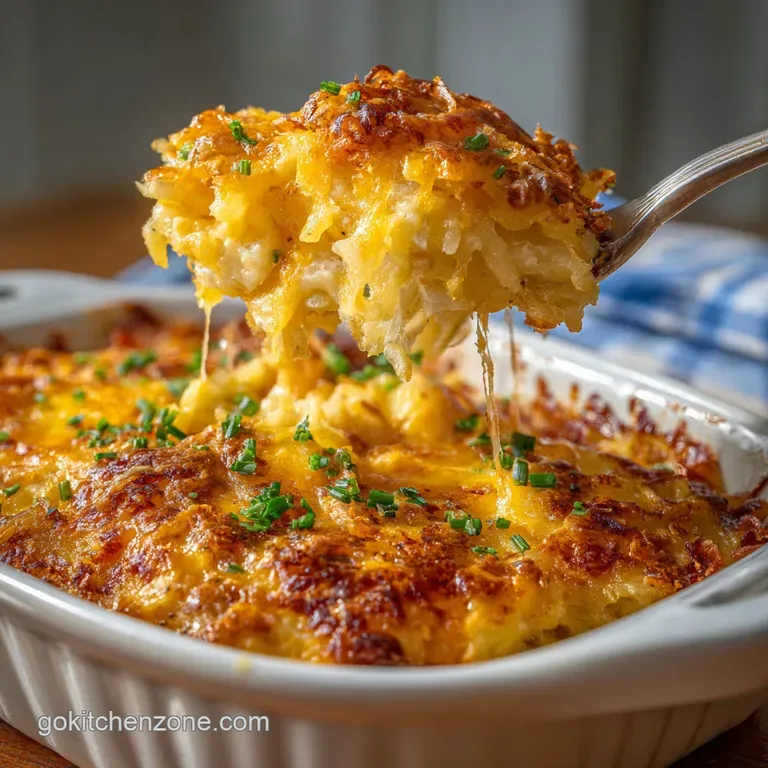
Follow these steps closely. The order in which you mix the ingredients actually matters for the final texture.
- Preheat and Prep. Set your oven to 350°F and grease your 9x13 dish with butter or non stick spray. Note: Preheating is vital so the casserole starts cooking the moment it hits the rack.
- Dry the Potatoes. Spread your thawed 30 oz hashbrowns on a clean towel and pat them firmly. They should feel damp, not wet.
- Mix the Binder. In a large bowl, whisk together the 1/2 cup melted butter, 10.5 oz soup, 2 cups sour cream, minced onion, salt, pepper, garlic powder, and cayenne.
- Fold in Cheese. Stir the 2 cups of grated cheddar into the wet mixture until evenly distributed.
- Combine. Add the dried hashbrowns to the bowl. Fold gently with a spatula until every shred is coated in the velvety sauce.
- Transfer. Spread the mixture into your prepared baking dish. Don't pack it down too hard; keep it a bit light so the heat can circulate.
- Prepare Topping. In a small bowl, toss the 2 cups of crushed cornflakes with the remaining 1/4 cup melted butter.
- Layer. Sprinkle the cornflakes evenly over the top. Use your hands to ensure the edges are covered too.
- Bake. Place in the center of the oven for 45 minutes until the edges are bubbling and the top is golden brown.
- Rest. Let the casserole sit for 5 minutes before serving. Note: This allows the sauce to set so it doesn't run when scooped.
Solving Common Casserole Texture Issues
Even with a straightforward recipe, things can go sideways if the ingredients behave unexpectedly. If your Cheesy Hashbrown Casserole isn't looking right, it's usually a moisture or temperature issue.
The Problem of Sogginess
If your casserole has a pool of liquid at the bottom, the potatoes likely weren't dried enough. Frozen potatoes are processed with water, which turns into steam and then liquid as they thaw. If that water stays in the bag, it ends up in your dish.
Uneven Cheese Melting
Sometimes you'll see clumps of cheese that didn't fully integrate. This usually happens if the sour cream and soup weren't whisked into a smooth base before the cheese was added. The cheese needs to be "suspended" in the emulsion to melt evenly.
| Problem | Root Cause | Solution |
|---|---|---|
| Greasy surface | Sauce broke due to high heat | Keep oven at 350°F; don't use "broil" to speed it up |
| Raw onion crunch | Onions chopped too large | Mince onions finely or sauté them for 2 mins before adding |
| Soggy topping | Not enough butter or late addition | Ensure cornflakes are fully coated in butter before baking |
Common Mistakes Checklist
- ✓ Never skip the thawing process; frozen potatoes will release too much water and lower the oven temp.
- ✓ Pat the potatoes bone dry with a towel to ensure the sauce sticks to the shreds.
- ✓ Avoid using "light" or "fat free" sour cream, as these contain stabilizers that can turn grainy when heated.
- ✓ Grate the cheese yourself to avoid the powdery coating on pre shredded bags.
- ✓ Don't cover the dish with foil while baking, or you'll steam the cornflakes instead of crisping them.
Scaling for Different Crowds
If you are cooking for a smaller family or a massive party, you can adjust this recipe easily.
Scaling Down (Half Batch) Use an 8x8 inch pan. Use 15 oz of potatoes and half of all other ingredients. If using eggs (for a breakfast variation), beat one egg and use exactly half. Reduce the bake time to about 30 to 35 minutes, keeping an eye on the browning.
Scaling Up (Double Batch) Don't just double the salt and spices; start with 1.5x and taste the binder before adding the potatoes. Use two separate 9x13 pans rather than one giant deep dish. Deep casseroles often end up with burnt edges and a cold, mushy center.
If you must bake two at once, rotate the pans halfway through the 45 minutes to account for oven hot spots.
For a protein packed morning version, you might want to look at a Breakfast Casserole recipe which uses similar potato logic but adds eggs and sausage.
Decision Shortcuts
- If you want a smokier flavor, add 1/2 tsp of smoked paprika to the binder.
- If you want a crunchier base, sauté the thawed hashbrowns in a skillet for 5 minutes before mixing.
- If you want a lighter feel, swap half the sour cream for Greek yogurt and use cream of celery soup.
Casserole Myths and Facts
Many people believe that you must cover a casserole with foil to keep it moist. Truthfully, for a Cheesy Hashbrown Casserole, foil is the enemy of the cornflake crust. The moisture from the potatoes needs to escape as steam so the sauce can thicken.
Covering it traps that steam, resulting in a soggy topping and a runny base.
Another common myth is that you can't over mix the filling. While it's not like bread dough where you worry about gluten, over mixing can actually break the fragile potato shreds into a mushy paste. You want to fold the ingredients together just until they are combined to maintain the "shredded" texture.
Storage and Reheating for Leftovers
This dish stores incredibly well, which is why it's a meal prep favorite.
Storage: Keep leftovers in an airtight container in the fridge for up to 4 days. The flavors actually deepen overnight as the potatoes continue to absorb the seasonings.
Freezing: You can freeze the unbaked casserole (without the cornflake topping) for up to 3 months. When ready to eat, thaw it in the fridge overnight, add the fresh buttered cornflakes, and bake as directed. Don't freeze the baked version, as the cornflakes will lose their "shatter" factor.
Zero Waste Tip: If you have leftover cornflakes that have gone slightly stale, don't toss them! Toasting them with the butter for the topping will revive their crunch perfectly. Also, save your onion scraps and cheese rinds in a freezer bag to make a savory vegetable stock later.
The Best Main Dish Pairings
Because this Cheesy Hashbrown Casserole is so rich and savory, it pairs best with proteins that have a bit of salt or acidity. It’s the ultimate partner for a honey glazed ham or crispy fried chicken.
If you're serving this for brunch, it balances beautifully with something sweet and custardy. I often serve it alongside a French Toast Casserole recipe to give guests both the salty and sweet experience. The contrast between the crunchy cornflakes and the soft, maple soaked bread is a total crowd pleaser.
For dinner, try serving it with simple roasted green beans or a bright arugula salad to cut through the heaviness of the cheese and sour cream. It’s a versatile side that fits just as well at a formal holiday table as it does next to a pile of backyard BBQ ribs.
Trust me, once you master the dry potato technique, this will become your most requested side dish.
Recipe FAQs
Should I thaw hash browns for casserole?
Yes, thaw and thoroughly dry them. Frozen hash browns release a significant amount of moisture as they thaw and bake. If not dried properly, this excess water will make your casserole watery and prevent the sauce from thickening.
What gives hashbrown casserole flavor?
Flavor comes from the binder and seasonings. A mix of condensed soup, sour cream, cheese (like sharp cheddar), sautéed onions, salt, pepper, and garlic powder creates a rich, savory base that coats the potatoes.
Can you use frozen hash browns for cheesy potatoes?
Yes, frozen hash browns are ideal. They're convenient and already shredded, allowing the cheesy sauce to coat each piece for maximum flavor distribution. Just be sure to thaw and pat them dry before baking.
What is John Wayne's casserole?
John Wayne's casserole is a layered dish typically featuring a biscuit or cornbread crust, ground beef filling, and a cheesy topping. It's often confused with other casseroles but is distinct due to its layered structure and specific ingredient combination. If you enjoy layered, savory bakes, you might also like our Christmas Morning Casserole: make-ahead.
How do I ensure my hash brown casserole topping is crispy?
Coat the topping thoroughly with melted butter. Whether using cornflakes, crackers, or breadcrumbs, ensure each piece is well coated before spreading it evenly over the casserole. This fat helps the topping to crisp and brown beautifully in the oven.
Can I make hash brown casserole ahead of time?
Yes, you can assemble it ahead, but add the topping later. Prepare the potato and cheese mixture, cover, and refrigerate. For the best crispy topping, toss and add the cornflakes just before baking, potentially adding a few extra minutes to the bake time.
My casserole is watery, what did I do wrong?
The most common cause is not drying the hash browns sufficiently. Excess water trapped in frozen hash browns will release during baking, diluting the sauce. Ensure you spread thawed hash browns on a clean towel and press firmly to remove as much moisture as possible.
Cheesy Hashbrown Casserole
Ingredients:
Instructions:
Nutrition Facts:
| Calories | 345 kcal |
|---|---|
| Protein | 8 g |
| Fat | 26 g |
| Carbs | 19 g |
| Fiber | 2 g |
| Sugar | 3 g |
| Sodium | 510 mg |
