Braised Short Ribs: Tender Red Wine Beef
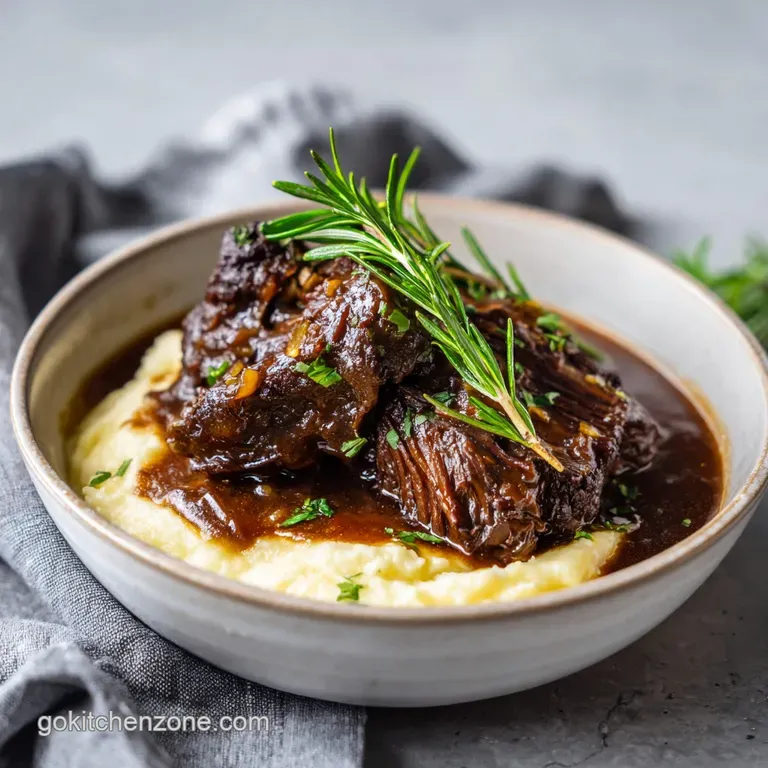
- Time: Active 20 minutes, Passive 210 minutes, Total 230 minutes
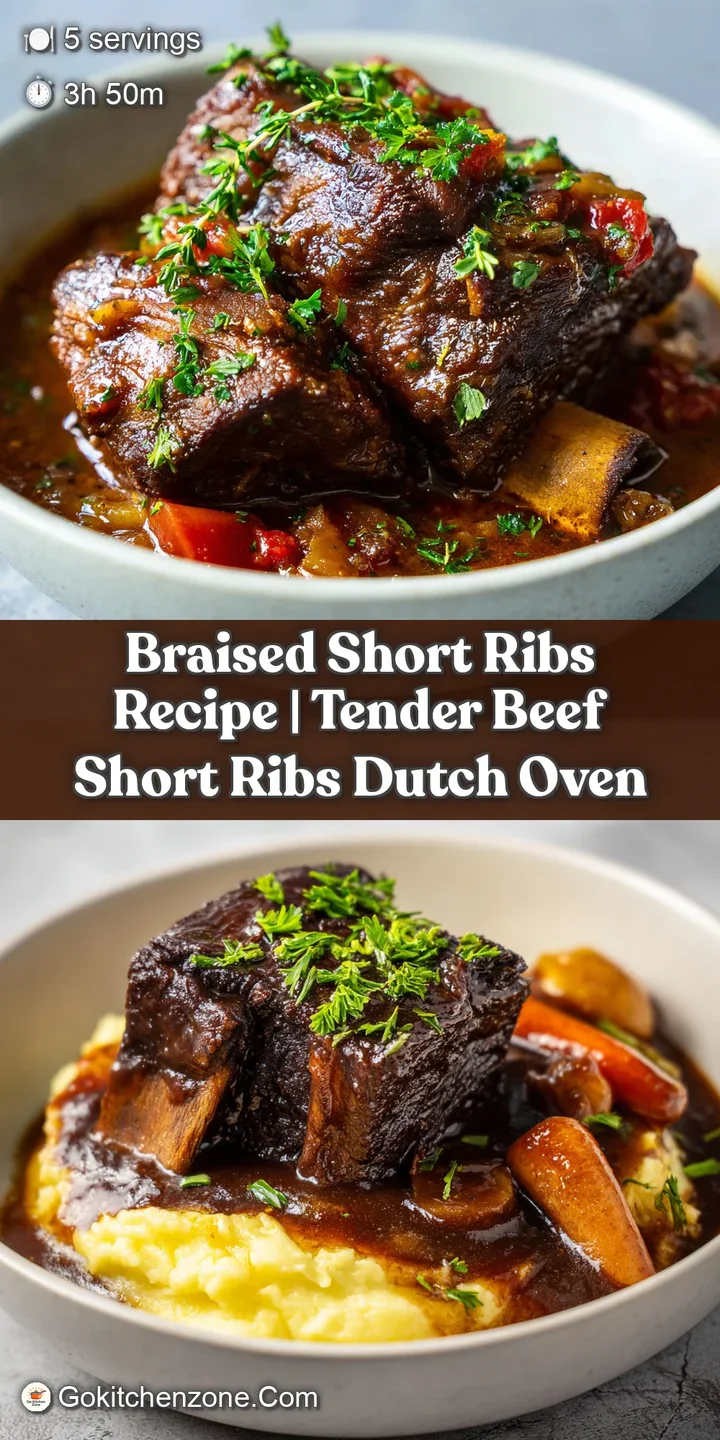
- Flavor/Texture Hook: Deep mahogany crust with a velvety, wine infused finish
- Perfect for: Cold Sunday afternoons or impressive family gatherings
- Master This Classic Braised Short Ribs Recipe
- Why Most Home Cooks Fail Braising
- Essential Numbers for Cooking Success
- Quality Ingredients for Better Results
- Minimal Tools for Maximum Flavor
- Step-by-Step Guide to Tender Beef
- Avoiding Common Kitchen Disasters
- Adjusting the Batch Size
- Busting Common Braising Rumors
- Smart Storage and Freezing Methods
- Perfect Complements for Rich Sauces
- High in Sodium
- Recipe FAQs
- 📝 Recipe Card
Master This Classic Braised Short Ribs Recipe
The house starts to smell different about two hours into this cook. It's not just "food" cooking; it's that heavy, wine soaked, savory aroma that creeps into every corner and makes everyone wander into the kitchen asking, "Is it ready yet?" I remember the first time I tried making these for a small dinner party.
I was so worried about the meat being tough that I kept peeking under the lid, letting all that precious steam escape.
Honestly, that was my first big mistake. Braising is a lesson in patience and trust. You've got these chunky, bone in English cut ribs that look intimidatingly solid, but once they hit that magic window in the oven, they just give up and turn into something you can eat with a spoon.
It's the kind of meal that feels expensive and fancy but actually relies on one of the most affordable, hardworking cuts of beef.
We're going to use a heavy hand with the seasoning and a very hot pan to get things started. Forget about those gray, boiled looking ribs you might have seen elsewhere. We want a crust that looks like dark chocolate before we even think about adding the liquid.
This isn't just a recipe; it's a technique that, once you get it down, will make you the designated "fancy dinner" person in your friend group.
Why Most Home Cooks Fail Braising
The biggest struggle with a braised short ribs recipe usually comes down to rushing the initial sear. If you don't get that deep, dark crust on the meat, you're leaving 50% of the flavor on the table.
Most people see the meat turn brown and think they're done, but we're looking for a serious sizzle and a crust that stays put. It takes about 4 to 5 minutes per side, and yes, it might get a little smoky, but that's where the magic lives.
Another stumbling block is the wine reduction. I’ve seen so many people just pour the wine in and immediately add the broth. If you do that, your sauce will taste like raw alcohol and won't have that velvety body we're after. You have to let that wine bubble away until it looks like a thick syrup.
This concentrates the sugars and the acidity, creating a base that stands up to the richness of the beef fat.
How Tough Meat Becomes Silky
The secret here is the breakdown of connective tissue. Short ribs are packed with collagen, which is basically a tough glue that holds muscle fibers together. At high heat, collagen just tightens up and stays chewy.
But when we hold it at 300°F (150°C) for 3 hours and 30 minutes, that collagen physically melts into gelatin. This is what gives the sauce its lip smacking quality and makes the meat feel moist even though it's technically "well done."
The Importance of the Fond
When you sear the beef, little brown bits stick to the bottom of your Dutch oven. This is called "fond." It’s basically concentrated beef essence. If you don't deglaze properly with the red wine, you're throwing away the best part of the dish.
Use a sturdy wooden spoon to scrape every single one of those bits back into the liquid. It's the difference between a thin soup and a professional grade braise.
Managing the Fat Content
Short ribs are notoriously fatty. While that fat provides incredible flavor during the cook, nobody wants a greasy puddle on their plate. The trick is either chilling the sauce to let the fat solidify or using a fine mesh strainer to catch the aromatics and then skimming the top.
A velvety sauce should coat the back of a spoon, not leave a film of oil on your tongue.
| Cook Method | Cook Time | Meat Texture | Sauce Consistency |
|---|---|---|---|
| Oven (300°F) | 3 hours 30 mins | Falling apart, succulent | Thick, glossy, and reduced |
| Stovetop (Low) | 3 hours 45 mins | Tender but can be uneven | Needs more frequent monitoring |
| Instant Pot | 1 hour | Soft but less flavor depth | Thinner, usually needs extra reducing |
Every cooking method has its place, but the oven provides the most consistent 360 degree heat. This gentle environment ensures the meat cooks evenly without the bottom scorching, which can sometimes happen on a stovetop burner even on the lowest setting.
Essential Numbers for Cooking Success
Success in the kitchen often comes down to the things we can measure. For this dish, we are dealing with 5 lbs of bone in beef short ribs, which sounds like a lot, but remember that those bones carry a lot of weight and the meat will shrink significantly as the fat renders out.
You want to look for "English cut" ribs, which are the thick rectangular blocks, rather than the thin flanken style ribs used for grilling.
Precision is your best friend when you're waiting for hours for a meal to finish. We’re aiming for an oven temperature of exactly 300°F (150°C). Any higher and you risk boiling the meat, which results in a stringy, dry texture.
Any lower and the collagen won't melt effectively within our timeframe.
Component Deep Dive
| Ingredient | Science Role | Pro Secret |
|---|---|---|
| Beef Short Ribs | High collagen source | Always pat them bone dry before searing to prevent steaming. |
| Tomato Paste | Umami and thickener | Fry it until it turns brick red to remove the raw, metallic taste. |
| Dry Red Wine | Acid and tannin | Use a wine you'd actually drink; the tannins help cut through the beef fat. |
| Bone Broth | Liquid base | Use low sodium to control the final saltiness after the sauce reduces. |
The red wine acts as a natural tenderizer thanks to its acidity, while the tannins provide a structural backbone to the sauce. When combined with the gelatin from the bone broth, you get a sauce that feels rich without needing heavy cream or flour thickeners.
Quality Ingredients for Better Results
To make this braised short ribs recipe truly stand out, you need to be picky about your aromatics. We aren't just throwing onions in for bulk; they provide the sweetness that balances the dry wine. Using 2 large yellow onions gives us a solid base of natural sugars.
- 5 lbs Bone in Beef Short Ribs: English cut is mandatory for that classic look. Why this? The bone adds incredible depth and prevents the meat from drying out.
- 2 tbsp Tomato Paste: This is our secret weapon for color. Why this? It provides a concentrated savory "umami" punch and thickens the sauce naturally.
- 750ml Dry Red Wine: Use a full bottle of Cabernet or Pinot Noir. Why this? The acidity breaks down tough fibers while providing a complex, fruity undertone.
- 2 cups Low Sodium Beef Bone Broth: Don't use standard stock if you can help it. Why this? Bone broth has more natural gelatin, leading to a silkier final sauce.
- Fresh Herbs (Thyme, Rosemary, Bay Leaves): Fresh is always better than dried here. Why this? The volatile oils in fresh herbs withstand the long cook time without becoming bitter.
| Original Ingredient | Substitute | Why It Works |
|---|---|---|
| Avocado Oil | Grapeseed or Vegetable Oil | Both have high smoke points. Note: Don't use extra virgin olive oil for the sear. |
| Red Wine | 1.5 cups Beef Broth + 2 tbsp Balsamic | Provides acidity. Note: The flavor will be less complex and fruit forward. |
| Beef Bone Broth | Chicken Stock | Similar body. Note: Results in a lighter color and slightly milder flavor. |
If you find yourself out of celery or carrots, don't panic. While the "holy trinity" of onions, carrots, and celery is traditional, the onions and garlic are the most critical for the savory foundation. If you're looking for a punchy topping to serve alongside this, you might want to try making a horseradish sauce for prime rib which cuts through the richness beautifully.
Minimal Tools for Maximum Flavor
You don't need a kitchen full of gadgets for this, but you do need one very specific pot. A 6 quart Dutch oven (like one from Le Creuset or Lodge) is the gold standard for braising. Its heavy lid and thick walls keep the heat steady and prevent moisture from escaping.
If the lid isn't perfectly tight, you can place a piece of parchment paper or foil over the pot before putting the lid on to create an extra seal.
Aside from the pot, a good pair of stainless steel tongs is essential. You'll be flipping 5 lbs of heavy meat, and you don't want them slipping back into the hot oil and splashing you. A fine mesh strainer is also a must have for the final step.
Straining the sauce makes the difference between a "home style stew" and a "restaurant quality braise."
Chef's Tip: If you don't have a fine mesh strainer, you can use a colander lined with cheesecloth. The goal is to remove every bit of onion and herb so the sauce is perfectly smooth.
step-by-step Guide to Tender Beef
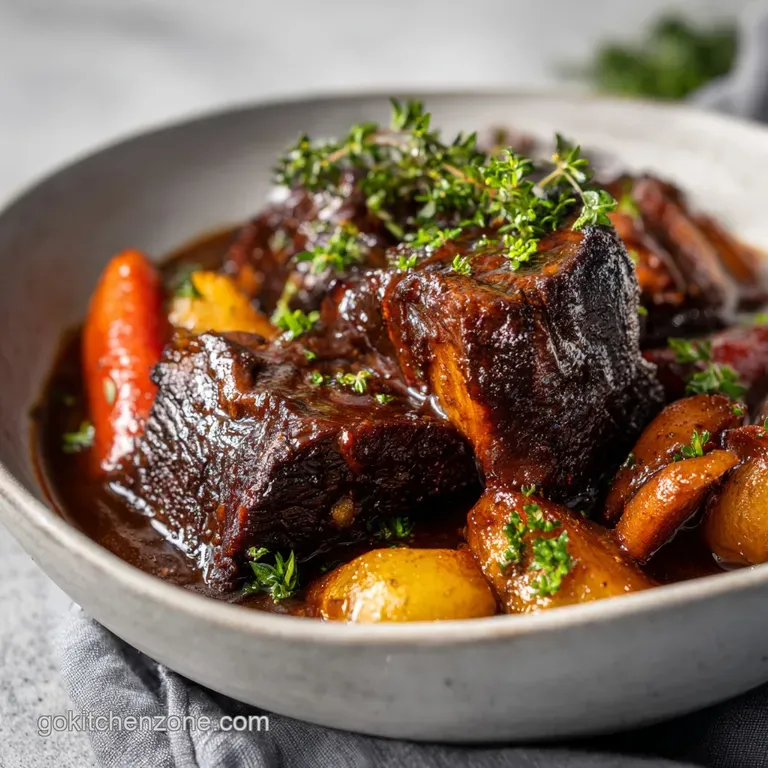
- Dry the meat. Pat the 5 lbs of ribs with paper towels until they are bone dry. Note: Wet meat will steam instead of searing, preventing that crust we need.
- Season and heat. Season aggressively with 2 tsp sea salt and 1 tsp black pepper. Heat 2 tbsp avocado oil in your Dutch oven over medium high heat until the oil shimmers and barely wisps smoke.
- Sear the ribs. Work in batches to avoid overcrowding. Sear the ribs for about 4 minutes per side until a deep mahogany colored crust forms. Remove and set aside.
- Sauté the aromatics. Reduce heat to medium. Add 2 diced onions, 3 sliced carrots, and 2 diced celery stalks. Cook until the onions are translucent and slightly golden.
- Add the paste. Stir in 6 smashed garlic cloves and 2 tbsp tomato paste. Cook for 2 minutes until the paste turns a deep brick red and smells toasted.
- Deglaze with wine. Pour in the 750ml of red wine. Use a wooden spoon to scrape every brown bit off the bottom of the pot. Simmer until the liquid reduces by half.
- Assemble the braise. Return the ribs to the pot. Pour in 2 cups beef bone broth and add 3 sprigs thyme, 2 sprigs rosemary, and 2 bay leaves.
- The long wait. Cover with a tight lid and bake at 300°F (150°C) for 3 hours and 30 minutes until the meat pulls away from the bone with no resistance.
- Strain and skim. Remove the ribs carefully. Strain the liquid through a fine mesh strainer into a bowl. Skim the clear fat off the top with a spoon before pouring the velvety sauce over the meat.
Avoiding Common Kitchen Disasters
The most heartbreaking disaster is "The Great Scorching." If your heat is too high or your lid isn't tight enough, the liquid can evaporate entirely, leaving you with burnt meat. Always check the pot about halfway through the 3 hours and 30 minutes.
If the liquid has dropped significantly, add another half cup of broth.
Why Your Meat is Still Tough
If the timer goes off and the meat is still resisting your fork, it simply hasn't cooked long enough. Not every cow is the same, and some ribs have more stubborn connective tissue than others. Don't panic; just put the lid back on and give it another 30 minutes.
| Problem | Root Cause | Solution |
|---|---|---|
| Greasy Sauce | Fat wasn't rendered or skimmed | Use a fat separator or chill the sauce to remove the solid fat layer. |
| Bland Flavor | Not enough salt or poor sear | Season the meat earlier and don't rush the browning process. |
| Dry Meat | Liquid boiled too vigorously | Ensure oven is at 300°F and the pot is tightly sealed. |
Common Mistakes Checklist
- ✓ Skipping the drying step: Always pat beef dry or it won't sear.
- ✓ Rushing the wine reduction: If it doesn't reduce by half, the sauce will taste "boozy."
- ✓ Using a pot that's too big: If the ribs aren't nestled together, the liquid won't cover them enough.
- ✓ Slicing immediately: Let the ribs rest in their liquid for 10 minutes before serving so they soak up the juices.
Adjusting the Batch Size
If you're cooking for a smaller crowd, you can easily halve this recipe. Use a smaller 3.5 or 4 quart pot. However, keep the cooking time roughly the same. Even with fewer ribs, the collagen still needs that 3 hours and 30 minutes at 300°F to fully dissolve.
If you halve the liquid, just make sure the ribs stay at least halfway submerged.
When doubling the recipe for a big party, you’ll likely need two Dutch ovens. Don't try to cram 10 lbs of ribs into one 6 quart pot; they won't sear properly and the liquid might overflow.
When scaling up spices like rosemary or thyme, only increase them by about 1.5x rather than doubling them, as their flavors can become overpowering in large volumes.
If you enjoy the process of slow cooked beef but want something a bit simpler for a weeknight, you might like beef tips and noodles which offers that same old-fashioned flavor with a bit less fuss.
Busting Common Braising Rumors
One of the most persistent myths is that "searing seals in the juices." Science has shown us that this isn't true moisture is actually lost during the over high heat searing process.
However, we sear for the Maillard reaction, which creates hundreds of new flavor compounds that make the meat taste "meaty." We're building flavor, not a moisture barrier.
Another myth is that you should always use the cheapest wine possible for cooking. While you don't need a $50 bottle, you should use something you enjoy drinking. As the wine reduces, its flavors concentrate.
If the wine is bitter or overly acidic to start with, those unpleasant traits will be front and center in your finished sauce.
Smart Storage and Freezing Methods
Storage: Braised short ribs are arguably better the next day. Keep them in an airtight container in the fridge for up to 4 days. The sauce will turn into a thick jelly this is the gelatin we worked so hard to create!
To reheat, place them in a pot with a splash of water or broth over low heat until the sauce liquefies and the meat is warmed through.
Freezing: These freeze beautifully for up to 3 months. I recommend freezing the meat and sauce together in a freezer safe bag with as much air squeezed out as possible. This prevents freezer burn and keeps the meat submerged in its protective sauce. Thaw in the fridge overnight before reheating.
Zero Waste: Don't throw away that rendered beef fat (tallow) you skimmed off the top! Filter it through a coffee filter and keep it in a jar in the fridge. It is incredible for roasting potatoes or searing steaks later in the week.
Also, if you have leftover sauce but no meat, toss it with some rigatoni for the best "accidental" pasta dinner of your life.
Perfect Complements for Rich Sauces
You need something to catch all that velvety sauce. Mashed potatoes are the classic choice, but make sure they are buttery and smooth. Polenta is another fantastic option, providing a creamy, slightly sweet backdrop to the savory beef.
If you want something lighter, a simple crusty baguette is all you really need to swipe through the reduction.
For a bit of brightness, serve a quick gremolata on top just some chopped parsley, lemon zest, and minced garlic. This hit of freshness cuts right through the heavy fat and wine flavors, waking up your palate between bites.
A side of roasted root vegetables or steamed green beans with a bit of lemon juice also works wonders to balance the plate.
- Decision Shortcut
- If you want X, do Y
- If you want a thicker sauce
- Remove the meat and boil the liquid on the stovetop for 10 minutes after straining.
- If you want a deeper color
- Add an extra tablespoon of tomato paste and sear the vegetables until they are dark brown.
- If you want a brighter flavor
- Stir in a teaspoon of balsamic vinegar or red wine vinegar right before serving.
High in Sodium
980 mg 980 mg (43% 43%)
The American Heart Association recommends no more than 2,300mg of sodium per day, with an ideal limit of 1,500mg for most adults.
Tips to Reduce Sodium
-
Switch to Low-Sodium Broth-30%
Replace the 2 cups of regular beef bone broth with low-sodium beef bone broth. This is a significant source of sodium in the recipe.
-
Halve the Added Salt-25%
Reduce the 2 tsp of sea salt to 1 tsp. You can always add more salt to taste at the table if needed.
-
Opt for No-Salt Added Tomato Paste-20%
If available, use no-salt added tomato paste instead of regular tomato paste. Check the label carefully.
-
Maximize Fresh Herbs and Spices
Continue to use the fresh thyme, rosemary, and bay leaves. Enhance flavor with extra garlic, onions, and black pepper.
-
Choose Lower Sodium Wine-5%
While wine contributes flavor, some varieties can have added preservatives. Opt for a dry red wine that is known to be lower in sodium, if possible.
Recipe FAQs
What is the best method for braising short ribs?
Sear the meat thoroughly before slow braising in a covered Dutch oven. The key is building flavor with a deep mahogany crust on the beef and then simmering it at 300°F in a mixture of wine and beef bone broth for exactly 3 hours and 30 minutes.
What is the best technique for cooking short ribs?
Focus on liquid reduction to concentrate flavor. After deglazing with red wine, reduce the liquid by half before adding the ribs back in; if you mastered the velvety gravy technique here, you will find this similar process essential for a restaurant quality finish.
What is the best liquid for braising ribs?
Use a combination of dry red wine and low-sodium beef bone broth. The wine provides acidity to cut through the richness, while the bone broth adds body and depth to the final sauce.
Do short ribs have collagen?
Yes, short ribs are high in connective tissue and collagen. Braising them slowly for 3 hours and 30 minutes is the only way to break this down, turning the tough meat into fork tender pieces.
How to ensure the sauce is not too greasy?
Strain the braising liquid through a fine mesh strainer and skim off the excess fat. For even better results, chill the strained liquid so the fat solidifies on top, making it effortless to remove before reheating.
Is it true I should skip searing to save time?
No, this is a common misconception. Skipping the sear means losing the deep mahogany colored crust that provides the base layer of flavor for your entire sauce.
How to know when the ribs are finished?
Check for fork tenderness after the 3 hour and 30 minute mark. The meat should be extremely soft and pulling away from the bone; always let them rest in the liquid for 10 minutes before serving to ensure they stay juicy.
Braised Short Ribs Recipe
Ingredients:
Instructions:
Nutrition Facts:
| Calories | 713 kcal |
|---|---|
| Protein | 44 g |
| Fat | 51 g |
| Carbs | 15 g |
| Fiber | 3 g |
| Sugar | 6 g |
| Sodium | 980 mg |
