Herb Crusted Prime Rib Roast Recipe
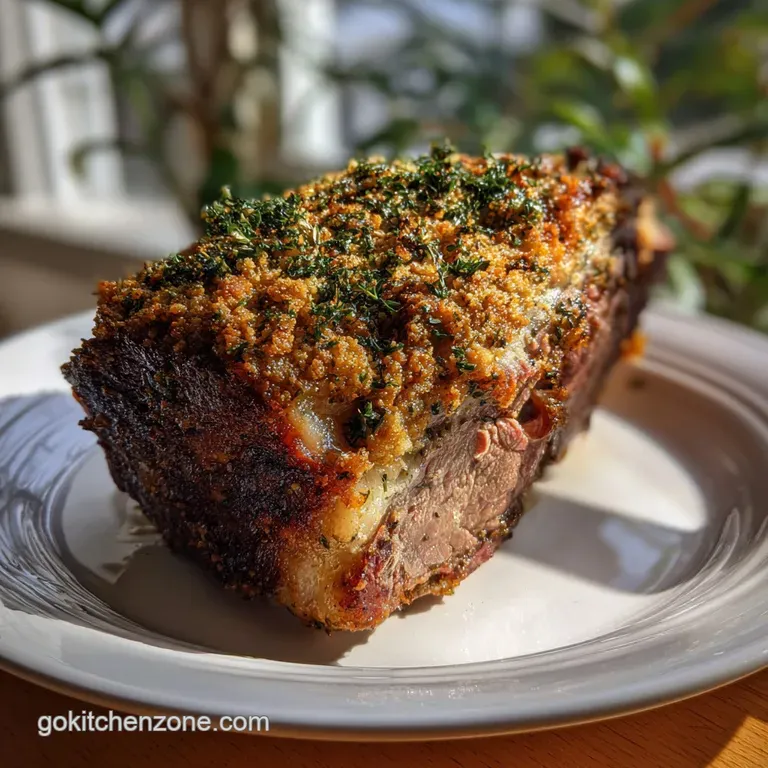
- Time: Active 20 minutes, Passive 24 hours (brining), Total 2 hours 50 minutes
- Flavor/Texture Hook: Shatter-crisp herb crust with a velvety, edge-to-edge pink center on your prime rib.
- Perfect for: Sunday dinner, holiday hosting, or high-end meal prep for a beautiful prime rib.
- The Science of Why it Works
- Building Authentic Prime Rib
- Vital Recipe Specifications
- The Essential Ingredients List
- Mandatory Cooking Equipment
- The Cooking Method Explained
- Solving Common Problems
- Creative Flavor Variations
- Storage and Reheating Tips
- Expert Presentation Advice
- Debunking Kitchen Folklore
- Common Questions
- 📝 Recipe Card
Nothing beats the smell of garlic and rosemary roasting alongside a massive cut of beef. It’s that aroma that instantly signals a special occasion, though the price tag on a large roast can be intimidating.
I remember the first time I hosted a big family dinner and stared at a 4 kilogram piece of beef, terrified I’d turn it into expensive shoe leather. The dinner struggle is real when you're balancing a budget with the desire to impress with a perfect prime rib.
The good news is that you don't need a professional kitchen to make this happen. My approach focuses on reliability and simple physics rather than fancy gadgets when cooking prime rib. We want that mahogany colored crust and a center that’s consistently tender.
By understanding how heat moves through the muscle fibers, we can take the guesswork out of cooking this impressive prime rib.
This recipe is built for the home cook who wants the win without the gourmet headache when preparing prime rib. We’re using accessible ingredients like stone ground Dijon and Greek yogurt to build layers of flavor.
Whether it’s your first time or your fiftieth, these steps ensure the meat stays juicy and the crust stays bold on your prime rib. Let's get into how this works on a scientific level for excellent prime rib.
The Science of Why it Works
- Osmotic Pressure: Salting the meat 24 hours early draws moisture out, dissolves the salt into a brine, and then reabsorbs it. This seasons the deep interior of the muscle rather than just the surface of the prime rib.
- Protein Denaturation: Cooking at a lower temperature allows the connective tissues to soften slowly. This prevents the muscle fibers from "wringing out" their juices, which happens during over high heat shocks on a large prime rib.
- Maillard Reaction: The coating of Dijon mustard and garlic creates a sticky surface that traps herbs. This layer undergoes a chemical reaction with the heat to produce hundreds of different flavor compounds and a dark, savory crust defining a great prime rib.
- Enzymatic Breakdown: The rest period after roasting allows the proteases (enzymes) to further tenderize the meat. This is why the texture of a rested prime rib feels significantly more velvety than one sliced immediately.
Building Authentic Prime Rib
Science of Dry Brining
Applying salt well before the heat hits the meat is non-negotiable for a professional result when preparing prime rib. When you apply the 3 tbsp of coarse Kosher salt, the salt draws out surface moisture.
After about 30 minutes, that moisture dissolves the salt and creates a concentrated brine. Eventually, the meat reabsorbs this liquid through osmosis. This process breaks down some of the tough muscle proteins, ensuring the roast stays tender even if you slightly overcook this cut of prime rib.
The Reverse Sear Method
Traditional recipes often call for a over high heat blast at the start. I find that starting low and slow is much more reliable for home ovens when cooking prime rib. By roasting at a lower temperature first, you get a much more even cook from the edge to the center.
This avoids the "gray ring" of overcooked meat that often surrounds a pink center in over high heat recipes for prime rib. You finish with a blast of heat at the end or a quick sear to get that crust on your centerpiece prime rib.
Maillard Reaction Tips
The crust isn't just for looks; it's where the flavor lives on your roast. We use garlic paste and minced rosemary to create a surface area that's primed for browning. The Dijon mustard acts as an emulsifier, helping the oil and herbs stick to the fat cap.
As the temperature rises, the amino acids and sugars in the rub react. This creates the complex, savory notes that define a great prime rib.
Vital Recipe Specifications
| Comparison Element | Fast High Heat Method | Classic Low-Slow Method |
|---|---|---|
| Internal Gradient | Large gray overcooked ring | Edge-to-edge pink center on prime rib |
| Juice Retention | High loss during carving | Maximum moisture retention in prime rib |
| Texture | Firm and slightly chewy | Velvety and buttery texture of prime rib |
Precision Checkpoints
- Salt Timing: Minimum 12 hours, ideally 24 hours in the fridge for optimal prime rib.
- Pull Temp: Remove from oven at 118°F (48°C) for a medium rare finish after resting the prime rib.
- Rest Duration: At least 30 minutes before the first slice.
The Essential Ingredients List
- 1 (4 bone) Standing Rib Roast (8 9 lbs): Why this? Bone-in roasts act as an insulator, slowing the cook for more even results on your prime rib.
- 3 tbsp Coarse Kosher Salt: Why this? Larger grains dissolve more slowly, providing a more controlled dry-brining process.
- 2 tbsp Extra Virgin Olive Oil: Helps conduct heat to the herbs and prevents the garlic from burning too quickly.
- 2 tbsp Stone ground Dijon Mustard: Provides an acidic "tang" that cuts through the richness of the beef fat.
- 4 tbsp Fresh Rosemary & Thyme: Finely minced to maximize surface area for flavor release.
- 6 cloves Garlic: Grated into a paste to ensure it integrates into the rub without leaving chunky, burnt bits.
- 1 cup Non-fat Greek Yogurt: Why this? A budget friendly, high protein swap for sour cream that adds more tang to the horseradish sauce.
- 3 tbsp Prepared Horseradish: Ensure it is drained to prevent the sauce from becoming watery.
Component Analysis
| Ingredient | Chemical/Physical Role (Science) | The Pro Secret (Why This Matters) |
|---|---|---|
| Kosher Salt | Denatures proteins via osmosis | Deeply seasons the meat fibers, not just the fat cap of the prime rib. |
| Garlic Paste | Sulfur compound release | Grating breaks more cell walls than chopping, intensifying the aroma. |
| Dijon Mustard | Emulsification and acidity | Acts as "glue" for the herbs while tenderizing the surface. |
| Greek Yogurt | Lactic acid tenderization | Provides a creamy base with lower fat and higher acidity than cream. |
Mandatory Cooking Equipment
To get this right, you don't need a thousand dollar setup. A heavy duty roasting pan is great, but a large Lodge Cast Iron Skillet or even a sturdy sheet pan with a wire rack will work.
The wire rack is the most important part because it allows hot air to circulate under the meat for even cooking of the prime rib. If the roast sits directly on the pan, the bottom will steam and become gray rather than browned.
You also absolutely need a digital meat thermometer. This is the only way to guarantee success when cooking a large roast like this prime rib. Relying on "minutes per pound" is a recipe for disaster because every oven and every roast shape is different.
A probe thermometer that stays in the meat while it cooks is the gold standard for reliability.
The Cooking Method Explained
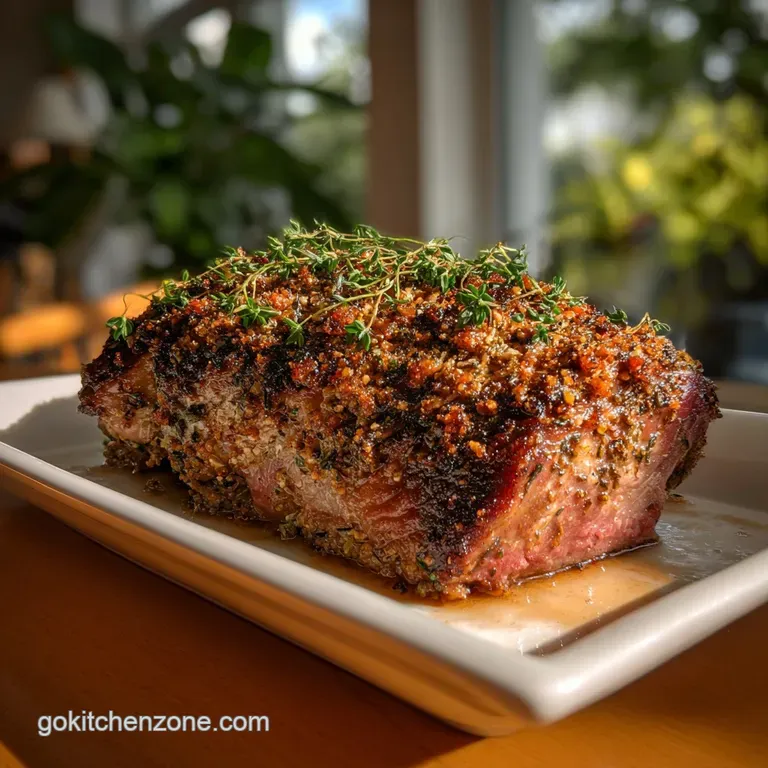
- Dry the meat. Use paper towels to remove all surface moisture from the 4 bone roast. Note: Surface moisture creates steam, which prevents the Maillard reaction from starting.
- Season heavily. Rub the 3 tbsp of Kosher salt over every inch of the beef. Note: This initiates the osmotic process to season the interior of the prime rib.
- Chill uncovered. Place the roast on a rack in the fridge for 24 hours. Note: Cold air dehydrates the surface, leading to a superior crust.
- Prepare the rub. Mix the olive oil, Dijon, rosemary, thyme, garlic, and pepper in a small bowl.
- Coat the roast. Slather the herb mixture over the top and sides of the meat. Note: The mustard acts as a binder for the aromatics.
- Preheat oven. Set your oven to 250°F (120°C). Note: Low heat prevents the outer layers from overcooking before the center is done.
- Roast slowly. Place the beef in the oven until the internal temperature hits 118°F (48°C) for medium rare. Note: This usually takes about 2 hours 30 minutes, but go by temperature only for the prime rib.
- Rest the meat. Remove the roast and tent loosely with foil for 30 minutes. Note: Resting allows fibers to reabsorb juices and temperature to rise via carryover heat.
- Make the sauce. Whisk the Greek yogurt, horseradish, chives, lemon juice, and sea salt in a bowl.
- Flash sear (Optional). If the crust isn't dark enough, put the roast back in a 500°F (260°C) oven for 5 8 minutes until the surface is sizzling and dark brown.
Solving Common Problems
The beef needs time, at least 8 hours, to become tender, but sometimes things go sideways with your roast. If you find your oven is running hot or you've started too late, don't panic. Understanding the physics of the meat helps you pivot to save your prime rib.
Why Your Roast Problems Happen
When meat becomes gray and tough, it is usually a result of protein fibers contracting too quickly. This happens when the exterior heat is so high that it forces the moisture out of the cells before the center even begins to warm. Similarly, a soggy crust is often the result of trapped steam.
This is common when people use a roasting pan with high sides that prevent air movement around the prime rib.
| Problem | Root Cause | The Fix | Pro Protocol |
|---|---|---|---|
| Meat is tough | Under resting or high heat | Rest for full 30 mins | Use a digital probe to track internal temp for perfect prime rib. |
| Soggy crust | Excess surface moisture | Pat dry + dry brine | Use a wire rack to allow 360 degree airflow. |
| Uneven cooking | Roast was too cold | Room temp for 2 hours | Rotate the pan halfway through the cook. |
Creative Flavor Variations
1. Balsamic and Fig Variation
If you want something sweeter, swap the Dijon for a balsamic glaze. This works beautifully with the beef and creates a very dark, sticky exterior. It’s a great way to use up half empty jars in the pantry. You can even mix in a little fig jam for a profile that pairs well with sharp cheeses.
2. Peppercorn and Porcini Rub
For a deep, earthy flavor, grind dried porcini mushrooms into a powder and mix them with cracked black pepper. This adds a massive hit of umami without needing expensive truffles. It mimics the flavors of a high end steakhouse. Just be sure to use a coarse grind on the pepper so it doesn't just disappear into the meat.
Decision Shortcut
- If you want a thick crust, do the 24 hour dry brine uncovered in the fridge for your prime rib.
- If you want maximum tenderness, do a longer rest (45 mins) and pull the meat at 115°F.
- If you are short on time, skip the dry brine but double the salt in the herb rub.
Storage and Reheating Tips
Yes, prime rib freezes for up to 2 months when sliced and wrapped tightly in heavy duty foil, then placed in airtight freezer bags. For fridge storage, keep it in a sealed container for up to 4 days. In my experience, leftover roast is actually better the next day in a sandwich.
Reheating is the tricky part. Never use the microwave; it will turn the meat gray and rubbery. Instead, place slices in a baking dish with a splash of beef stock, cover with foil, and heat at 250°F (120°C) until just warmed through.
This mimics the low and slow cooking process and keeps the meat pink.
Zero Waste Tip: Don't discard the bones! Simmer them with onion scraps and water for 4 hours to make a rich beef stock. The marrow and connective tissue provide natural gelatin, which creates a silky mouthfeel for future soups or gravies.
This is a great way to get a second meal out of a big purchase.
Expert Presentation Advice
Presentation is about contrast. Place the roast on a large wooden board rather than a porcelain plate to give it a rustic, hearty feel. Carve the meat at the table for a bit of drama, but make sure your knife is incredibly sharp. A dull knife will tear the fibers and make the slices look messy.
I like to garnish the board with fresh sprigs of the herbs used in the rub. It reinforces the flavor profile before the guests even take a bite. Serve the horseradish sauce in a small, separate bowl so people can control the heat level. This setup is similar to the presentation used in our Prime Rib Roast Oven recipe.
Proportional Adjustments
- Flavor (Salt/Spices)
- If doubling the meat weight, only scale the salt and spices to 1.5x. Excessive salt on a massive surface area can become overwhelming.
- Cooking Time
- Do not double the time if you double the weight. A thicker roast takes longer, but two roasts side-by-side take nearly the same time as one.
- Square Cube Law
- As the roast gets larger, the volume increases faster than the surface area. This means the interior will take much longer to reach temp while the outside risks drying out. Keep the oven temp low (225°F) for very large roasts.
Debunking Kitchen Folklore
Myth: Searing the meat at the start "locks in" the juices. Truth: Searing creates flavor through the Maillard reaction, but it does nothing to prevent moisture loss.
In fact, high heat at the start often leads to more moisture being pushed out of the meat fibers when cooking prime rib.
Myth: You must bring the meat to room temperature for 4 hours before cooking. Truth: A large roast won't actually change temperature much in 4 hours, and it can become a food safety risk.
A 2 hour window is sufficient to take the chill off without compromising safety.
Myth: Fresh herbs are always better than dried. Truth: While fresh rosemary and thyme have a brighter flavor, dried herbs can work if you hydrate them in the oil and mustard rub first. They are a perfectly fine budget friendly alternative.
Common Questions
What is the ideal internal temperature to remove prime rib from the oven?
Remove at 118°F (48°C) for medium rare finish. This accounts for carryover cooking, which raises the temperature during the crucial resting period. The fibrous muscle proteins will finish setting gently without drying out.
Why is my prime rib crust soggy?
Trapped steam prevents the Maillard reaction from crisping the surface. Steam forms when the surface moisture cannot escape rapidly into the oven air, effectively boiling the outside instead of roasting it.
- Ensure aggressive paper towel drying first
- Use a wire rack for 360-degree airflow
- Cook at a lower temperature initially to manage evaporation
Should I sear the roast before or after slow roasting?
After slow roasting ensures a better internal gradient. Searing first introduces unnecessary high heat, causing the edges to overcook before the center reaches temperature equilibrium. Finishing with a high heat blast guarantees crust development on an already perfectly cooked interior.
Is dry brining truly necessary for a tender roast?
Yes, dry brining seasons deeply via osmosis. Salting 24 hours ahead draws moisture out, dissolves the salt, and reabsorbs a perfectly seasoned brine into the muscle fibers. This deep seasoning is crucial for flavor penetration past the surface fat.
Can I substitute Greek yogurt for sour cream in the horseradish sauce?
Yes, yogurt provides necessary acidity with less fat. Greek yogurt's higher protein content thickens the sauce nicely while its lactic acid provides the required sharp counterpoint to the rich beef fat. The consistency is excellent when the horseradish is properly drained.
Myth: Searing the meat at the start locks in the juices.
Myth: Searing the meat at the start locks in the juices. Reality: Searing creates flavor through the Maillard reaction, but it does not prevent moisture loss. In fact, high initial heat often forces moisture out of muscle fibers prematurely.
Myth: You must let the roast sit out for four hours before cooking.
Myth: You must let the roast sit out for four hours before cooking. Truth: A large roast does not significantly change internal temperature in four hours, risking surface drying and potential food safety issues. Two hours maximum is sufficient to take the immediate chill off.
Best Prime Rib Roast Recipe
Ingredients:
Instructions:
Nutrition Facts:
| Calories | 642 kcal |
|---|---|
| Protein | 48 g |
| Fat | 46 g |
| Carbs | 4 g |
| Fiber | 1 g |
| Sugar | 1 g |
| Sodium | 920 mg |
