Beef Tips and Rice with Gravy
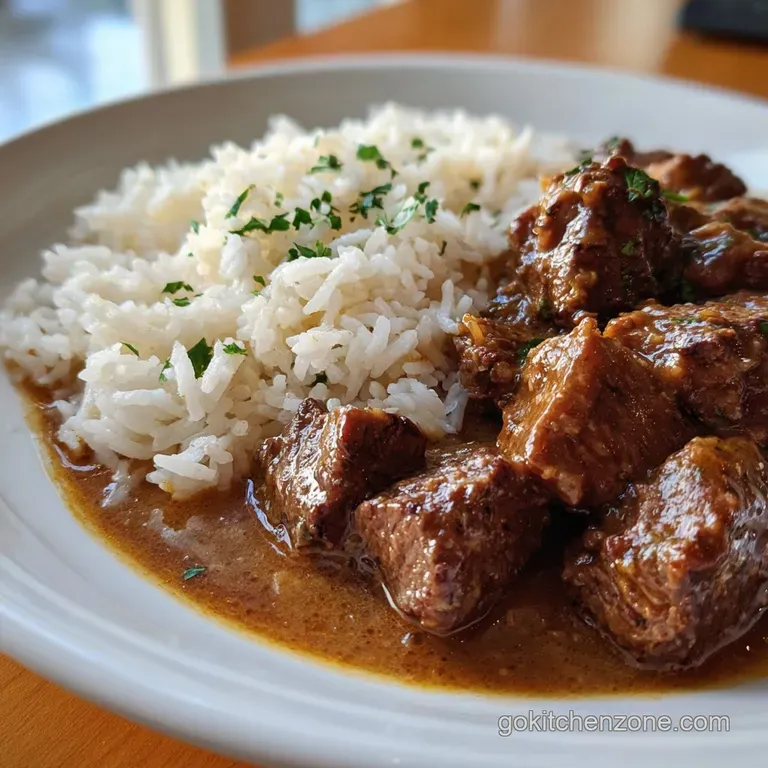
- Time: Active 15 minutes, Passive 45 minutes, Total 1 hours
- Flavor/Texture Hook: Velvety brown gravy paired with fork tender beef
- Perfect for: Stress free weeknight dinner or high protein meal prep
- Achieve Deep Savory Flavor with Beef Tips and Rice
- The Culinary Physics of Tender Meat and Thick Gravy
- Performance Metrics for Timing and Portioning Your Meal
- The Essential Pantry Elements for Savory Beef Tips
- Strategic Tools for a Seamless One Pan Process
- Executing the Prep Flow and Perfect Braising Steps
- Solving the Mystery of Tough Meat or Thin Gravy
- Fresh Ingredients Compared to Fast Shortcut Pantry Methods
- Smart Scaling for Small Batches or Large Families
- Debunking Myths About Browning Meat and Rice Texture
- Safe Storage and Creative Zero Waste Leftover Ideas
- Enhancing Your Plate with Visual Texture and Color
- Recipe FAQs
- 📝 Recipe Card
Achieve Deep Savory Flavor with Beef Tips and Rice
The sound of the heavy bottom pan hitting the burner always signals the start of my favorite weeknight ritual. There is a specific, aggressive sizzle that happens the moment those beef cubes touch the shimmering olive oil, a noise that promises a deep, savory crust is forming.
As the beef browns, the kitchen fills with that primal, roasted aroma that makes everyone wander in from the other room to ask when we are eating. It is the ultimate antidote to a long day, turning a few humble pantry staples into a meal that feels heavy on the soul but light on the effort.
I used to think you needed a slow cooker and eight hours to get beef this tender, but that is a dinner struggle we can leave behind. By using a heavy lid and a precise simmer, we can coax the collagen out of the beef in under an hour.
The magic happens when the sharp scent of the diced onions begins to mellow into something sweet and golden, mixing with the woody fragrance of dried thyme and the earthy depth of the bay leaf. It is a sensory transition from raw ingredients to a cohesive, velvety masterpiece.
We have all been there, staring at a pack of chuck roast and wondering if it will turn out like shoe leather or something truly tender. This method is the one I rely on because it works every single time without fail.
We are going to build layers of flavor, starting with a hard sear and finishing with a glossy, arrowroot thickened sauce that clings to every grain of the white rice. You will not find any thin, watery broths here; we are aiming for a richness that coats the back of a spoon and makes every bite feel substantial.
The Culinary Physics of Tender Meat and Thick Gravy
The secret to this dish lies in the transformation of tough connective tissue into succulent gelatin. Unlike lean cuts, the chuck roast contains significant amounts of collagen that require heat and moisture to break down.
- Maillard Reaction: over High heat searing creates hundreds of flavor compounds as amino acids and sugars react, providing the mahogany color.
- Collagen Denaturation: Maintaining a steady simmer at roughly 95°C allows collagen fibers to unwind and melt into gelatin, which naturally thickens the sauce.
- Starch Gelatinization: Arrowroot powder contains large starch granules that swell and trap water when heated, creating a clear, glossy sheen rather than a cloudy flour paste.
- Deglazing Mechanics: The addition of beef bone broth releases the "fond" (browned bits) from the pan, reintegrating concentrated umami back into the gravy.
| Cut Thickness | Target Texture | Simmer Time | Visual Cue |
|---|---|---|---|
| 2.5 cm Cubes | Fork tender | 45 minutes | Meat yields easily to a dull fork |
| 1.5 cm Cubes | Soft but firm | 30 minutes | Gravy is dark and bubbles are slow |
| 4 cm Cubes | Shred style | 1 hours 15 mins | Fibers begin to separate naturally |
Using a heavy lid is non negotiable for this process. It creates a micro environment where the steam is trapped, forcing heat back into the center of the beef cubes and preventing the broth from evaporating too quickly before the meat is ready.
Performance Metrics for Timing and Portioning Your Meal
When we talk about the chemistry of a great braise, the ingredients do more than just provide flavor; they act as the structural engineers of the sauce.
| Component | Science Role | Pro Secret |
|---|---|---|
| Beef Chuck | Fat to lean ratio | Freeze for 20 minutes before cutting for sharp, clean edges. |
| Bone Broth | Protein density | Use bone broth over standard stock for a higher collagen count and richer mouthfeel. |
| Arrowroot | Viscosity control | Always mix with cold water first to prevent "clumping" in the hot pan. |
| Worcestershire | Acidic catalyst | The vinegar content helps tenderize meat fibers while the anchovy base adds hidden depth. |
Chef Tip: If you have ten extra minutes, let the beef sit at room temperature after cubing and before searing. Cold meat drops the pan temperature instantly, which leads to steaming rather than that beautiful, crusty sear we want.
The choice of long grain white rice as a base is intentional. The individual grains stay separate and firm, providing a textural contrast to the soft beef and the fluid gravy. If you want that slow cooked depth without the rush, you might enjoy my Beef Stew Crock recipe.
The Essential Pantry Elements for Savory Beef Tips
Gathering your elements is the first step toward a successful one pan meal. Everything here has a specific job, from the aromatics to the thickening agent.
- 900g Beef Chuck Roast: Cut into 2.5 cm cubes. Why this? The marbling ensures the meat stays juicy through the braising process.
- 30ml Extra Virgin Olive Oil: For the over high heat sear.
- 1 Large Yellow Onion: Diced small. Why this? Onions provide the sweetness that balances the salty bone broth.
- 3 Cloves Garlic: Minced fresh.
- 5g Sea Salt: For drawing out moisture and seasoning.
- 3g Coarsely Ground Black Pepper: Adds a biting floral heat.
- 475ml Low Sodium Beef Bone Broth: The liquid foundation.
- 30ml Worcestershire Sauce: For a savory, fermented punch.
- 1 tsp Dried Thyme: Earthy notes that pair with beef.
- 1 Bay Leaf: Adds a subtle herbal complexity.
- 20g Arrowroot Powder: Our gluten-free thickening agent.
- 60ml Cold Water: To create the arrowroot slurry.
- 450g Cooked Long Grain White Rice: Prepared according to package directions.
| Original Ingredient | Substitute | Why It Works |
|---|---|---|
| Arrowroot Powder | Cornstarch | Similar thickening power. Note: Cornstarch creates a more matte finish. |
| Beef Chuck Roast | Venison or Stew Meat | Leaner but holds up well to braising. Note: May require 10 mins extra. |
| Yellow Onion | Shallots | Provides a more delicate, garlicky sweetness to the sauce. |
Strategic Tools for a Seamless One Pan Process
You don't need a kitchen full of gadgets, but a few specific tools will make this much easier. A heavy bottomed skillet or a Dutch oven is the most important piece of equipment. Cast iron is my go to because it retains heat like nothing else, ensuring that the beef sears the moment it touches the surface.
A sharp chef's knife makes quick work of the chuck roast, and a sturdy wooden spoon is essential for scraping the bottom of the pan during the deglazing phase. You will also want a small whisk for the arrowroot slurry to ensure there are no lumps before it hits the hot gravy.
For the rice, a simple pot with a tight fitting lid works, but if you are making this often, a dedicated rice cooker ensures the grains are perfectly fluffy every time. Having everything prepped before the heat goes on what we call mise en place—prevents the garlic from burning while you are still chopping onions.
Executing the Prep Flow and Perfect Braising Steps

The timeline for this meal is straightforward: Prep for 15 minutes, Sear for 10 minutes, and Simmer for 35 minutes.
- Prep the Beef. Pat the 900g of chuck roast completely dry with paper towels. Note: Dry meat sears; wet meat steams.
- Heat the Oil. Place 30ml olive oil in a large skillet over medium high heat until it shimmers and wisps of smoke appear.
- The Power Sear. Add the beef cubes in a single layer. Sear for 3-4 minutes per side until a dark brown crust forms. Work in batches if necessary to avoid overcrowding.
- Sauté the Aromatics. Remove beef and add the diced onion. Cook for 5 minutes until translucent and the edges turn golden.
- Deglaze and Season. Add minced garlic, thyme, bay leaf, salt, and pepper. Stir for 60 seconds, then pour in the bone broth and Worcestershire sauce, scraping the brown bits from the pan bottom.
- The Controlled Braise. Return the beef to the pan. Bring to a boil, then reduce heat to low. Cover and simmer for 45 minutes until the beef is fork tender.
- Slurry Integration. In a small bowl, whisk 20g arrowroot with 60ml cold water. Pour slowly into the simmering liquid while stirring constantly.
- Finish the Gravy. Simmer uncovered for 2-3 minutes until the sauce thickens into a velvety glaze.
- Combine and Serve. Discard the bay leaf. Spoon the beef and generous amounts of gravy over the cooked white rice.
The savory notes here remind me of the rich base in this Meat Sauce Recipe, which also relies on that deep caramelization of the aromatics.
Solving the Mystery of Tough Meat or Thin Gravy
Sometimes things don't go exactly to plan, usually because of heat fluctuations or meat quality. If your beef feels like it is fighting back, it simply hasn't spent enough time in the "collagen breakdown zone."
Why Your Beef Feels Tough
If the meat is chewy, it hasn't simmered long enough. Chuck roast is a hard working muscle. If it isn't tender by 45 minutes, give it another 10 to 15 minutes. Ensure your heat is low; a violent boil will actually tighten the muscle fibers and make them tougher.
Why Your Gravy is Too Thin
This usually happens if the lid wasn't tight enough and too much liquid evaporated, or if the arrowroot slurry wasn't cooked long enough to activate. If it’s thin, simmer it uncovered for a few extra minutes to reduce the volume.
| Problem | Root Cause | Solution |
|---|---|---|
| Gravy is lumpy | Slurry added too fast | Whisk vigorously or strain the sauce through a fine mesh sieve. |
| Meat is dry | Simmered at too high a heat | Keep the liquid at a "lazy bubble" rather than a rolling boil. |
| Flavor is flat | Needs more acidity | Add a small splash of apple cider vinegar or extra Worcestershire. |
Common Mistakes Checklist:
- ✓ Pat the beef dry before searing to ensure a crust, not a grey steam.
- ✓ Do not crowd the pan; if the cubes touch, they won't brown properly.
- ✓ Always use cold water for the arrowroot slurry to avoid gelatinous clumps.
- ✓ Let the beef rest for 5 minutes after cooking to allow the juices to redistribute.
Fresh Ingredients Compared to Fast Shortcut Pantry Methods
While I always advocate for fresh onions and real bone broth, there are days when the "dinner struggle" is real and you need a shortcut.
| Feature | Fresh Method (This Recipe) | Shortcut (Canned/Packaged) |
|---|---|---|
| Flavor Depth | Complex, layered, and rich | Salty and one dimensional |
| Texture | Velvety and glossy | Can be gummy or thin |
| Sodium Control | You decide the salt level | Often very high in salt/preservatives |
Decision Shortcut: If you want maximum comfort, stick to the chuck roast and fresh aromatics. If you are short on time, use pre cut "stew meat" from the butcher counter.
If you want a richer flavor, swap half the water for a dry red wine like Cabernet.
Smart Scaling for Small Batches or Large Families
This recipe is incredibly forgiving when it comes to changing the yield. If you are cooking for two, you can easily halve the ingredients. For the beef, still use the same size skillet to ensure you get a good sear.
Reduce the simmering time by about 10 minutes, as the smaller volume of meat will tenderize faster.
If you are doubling the recipe for a crowd, do not double the salt or spices immediately. Start with 1.5 times the amount and taste at the end. You will definitely need to sear the beef in three or four batches to keep the pan hot. Use a larger Dutch oven to accommodate the extra liquid and meat.
For those looking for a different preparation style altogether, like a "set it and forget it" Sunday, check out my Beef Short Ribs recipe.
Debunking Myths About Browning Meat and Rice Texture
One of the biggest myths in the kitchen is that searing meat "seals in the juices." Science tells us this isn't true; moisture is lost during the searing process regardless. However, we sear for the flavor of the Maillard reaction. That crust is where the soul of the dish lives.
Another misconception is that you should rinse all white rice until the water is perfectly clear. While rinsing removes excess surface starch and prevents clumping, leaving a tiny bit of starch can actually help the rice hold onto the gravy better. It is a balance between "fluffy" and "functional."
Finally, people often think you can't overcook chuck roast in a braise. While it is hard to do, eventually the fibers will become mushy and lose their structural integrity. Aim for "fork tender," not "falling apart into dust."
Safe Storage and Creative Zero Waste Leftover Ideas
Leftover beef tips are arguably better the next day because the flavors have more time to mingle in the fridge.
- Fridge: Store in an airtight container for up to 4 days. The gravy will thicken into a jelly like consistency due to the gelatin; it will liquefy again upon reheating.
- Freezer: This dish freezes beautifully for up to 3 months. Thaw overnight in the fridge before reheating.
- Zero Waste Tip: If you have leftover gravy but no meat, use it as a base for a poutine over fries, or stir it into a beef barley soup. Any onion scraps or garlic skins can be saved in a freezer bag for your next batch of homemade vegetable stock.
When reheating, add a splash of water or extra broth to the pan. This loosens the gravy and prevents the beef from drying out as it comes back up to temperature.
Enhancing Your Plate with Visual Texture and Color
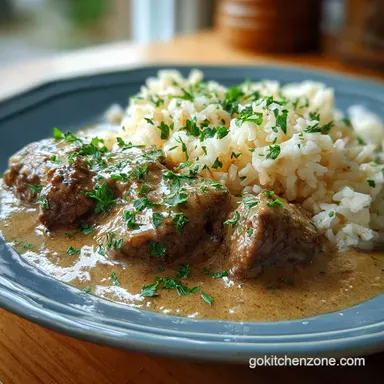
We eat with our eyes first, and a brown on-white dish can look a little dull without a bit of help. I love to finish the plate with a heavy sprinkle of fresh flat leaf parsley. The bright green pop cuts through the visual heaviness of the gravy and adds a fresh, peppery note.
If you want a bit more texture, try adding some sautéed mushrooms or crispy fried onions on top right before serving. The contrast between the soft rice, the tender beef, and a bit of crunch makes the whole experience feel more like a restaurant meal and less like a quick Tuesday fix.
Serving this in wide, shallow bowls is also a pro move. It keeps the gravy pooled around the rice rather than running off the side of a flat plate, ensuring every single forkful is perfectly sauced. Enjoy the sizzle, the scent, and most importantly, that first velvety bite.

Recipe FAQs
What kind of rice goes with beef tips?
Long grain white rice is best. Its individual grains stay separate and firm, providing a textural contrast to the soft beef and gravy.
What goes well with beef tips?
Simple side dishes that complement richness work well. A fresh green salad or steamed green beans are excellent, or consider classic pairings like mashed potatoes, such as in our Prime Rib Side Dish with Garlic Mashed Potatoes.
What's the secret to juicy beef tips?
Proper searing and a controlled simmer. Searing creates a flavorful crust, and then a low, slow simmer allows the connective tissues in cuts like chuck roast to break down into gelatin, ensuring tenderness. If you enjoyed mastering the temperature control here, apply that same precision to our Prime Rib Roast Recipe: Shatter Crisp Crust.
Are beef tips and rice healthy to eat?
It depends on portion size and preparation. Beef tips are a good source of protein, but can be high in fat depending on the cut. White rice is a source of carbohydrates. Opting for leaner cuts and controlling gravy richness can improve the health profile.
Can I make beef tips in a slow cooker?
Yes, you can adapt it for a slow cooker. Brown the beef and sauté the aromatics as instructed, then transfer everything to your slow cooker and cook on low for 4-6 hours until tender. This method is similar to our approach for a hearty Beef Stew Crock recipe.
What cut of beef is best for beef tips?
Chuck roast is ideal for its marbling. Cuts with good fat and connective tissue content, like chuck roast, break down beautifully during braising to become tender and flavorful.
How do I thicken the gravy if it's too thin?
Make an arrowroot slurry and simmer. Whisk 1-2 tablespoons of arrowroot powder with an equal amount of cold water until smooth, then slowly stir it into the simmering gravy and cook for a few minutes until thickened. This technique is crucial for achieving that glossy finish.
Beef Tips Rice
Ingredients:
Instructions:
Nutrition Facts:
| Calories | 669 kcal |
|---|---|
| Protein | 41 g |
| Fat | 31 g |
| Carbs | 33 g |
| Fiber | 1 g |
| Sugar | 3 g |
| Sodium | 560 mg |
