Old Fashioned Beef Tips and Noodles
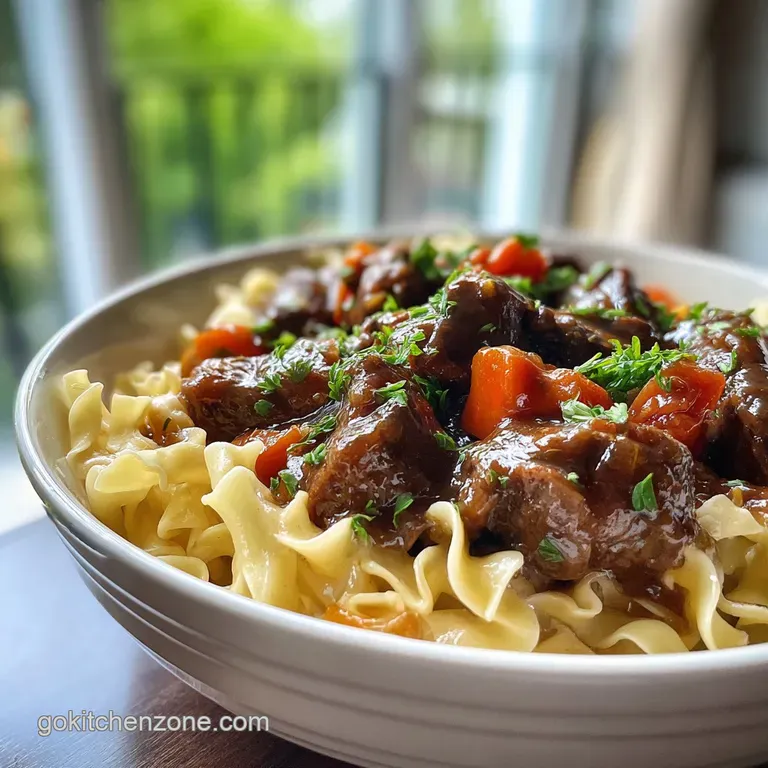
- Time: Active 20 mins, Passive 2 hours, Total 2 hours 20 mins
- Flavor/Texture Hook: Savory mahogany gravy with velvety beef
- Perfect for: Cold weather Sunday dinner or meal prep
- The Physics of Collagen Melt
- Timing Your Beef and Noodles
- Selecting Your Ingredients and Substitutes
- Simple Tools for Busy Cooks
- Step by Step Cooking Instructions
- Fixing Common Sauce Problems
- Simple Flavor Swaps and Twists
- Scaling Your Family Meal
- Debunking Common Kitchen Myths
- Storing Your Leftovers Safely
- Serving Suggestions for Better Meals
- High in Sodium
- Beef Tips and Noodles Recipe FAQs
- 📝 Recipe Card
The Physics of Collagen Melt
Thermodynamic Breakdown: Tougher cuts like chuck roast contain high amounts of collagen, which only transforms into silky gelatin when held between 70°C and 85°C for an extended period.
Surface Area Maillard: Cutting the beef into 1 inch tips increases the surface area for browning, which creates the complex flavor compounds that characterize a deep, dark gravy.
| Method | Time | Texture | Best For |
|---|---|---|---|
| Stovetop | 2 hours | Ultra tender, reduced sauce | Maximum flavor control |
| Slow Cooker | 8 hours | Shreddy, soft beef | Busy work days |
| Instant Pot | 45 mins | Firm but cooked | Last minute cravings |
Choosing the right method depends entirely on your schedule. While the stovetop provides the best crust on the meat, the slow cooker is the undisputed king of convenience. If you are looking for a similar vibe but with a different starch, you might enjoy my Beef Tips and recipe which swaps the noodles for fluffy rice.
Timing Your Beef and Noodles
| Ingredient | Science Role | Pro Secret |
|---|---|---|
| Beef Chuck | Collagen Source | Pat it bone dry with paper towels before searing to ensure a crust rather than steam. |
| Greek Yogurt | Emulsifier/Acid | Stir it in at the very end off the heat to prevent curdling while adding a tangy richness. |
| Onion Soup Mix | Umami Bomb | This provides a concentrated hit of toasted onion flavor that mirrors a 5 hour reduction. |
Understanding these components helps you realize that cooking is just a series of small, logical steps. The bone broth provides the structure, the beef provides the heart, and the cornstarch slurry provides the finish. It is a reliable system that works every single time.
Selecting Your Ingredients and Substitutes
To get the best results, you need to start with the right building blocks. I always go for a chuck roast and cut it myself rather than buying pre cut "stew meat," which often contains random scraps that cook at different rates.
- 900 g Beef Chuck Roast: Trim the heavy fat but keep some marbling. Why this? High collagen content ensures it becomes tender, not dry.
- Substitute: Venison or bottom round (though round is slightly leaner).
- 30 ml Avocado Oil: High smoke point is essential for searing. Why this? Won't burn or smoke at the high temps needed for browning.
- Substitute: Grapeseed oil or clarified butter.
- 710 ml Low sodium Beef Bone Broth: Richer than standard broth. Why this? Adds body and natural gelatin to the final sauce.
- Substitute: 2 beef bouillon cubes in 710 ml water.
- 225 g Cremini Mushrooms: These have more flavor than white buttons. Why this? Adds an earthy depth and mimics the texture of meat.
- Substitute: Shiitake for extra umami or omit if you are a hater.
- 340 g Wide Egg Noodles: The classic vessel for heavy gravy. Why this? The broad shape catches every drop of the sauce.
- Substitute: Pappardelle or even mashed potatoes.
- 120 ml Plain Greek Yogurt: A modern swap for sour cream. Why this? Adds creaminess with more protein and a sharper tang.
- Substitute: Full fat sour cream or heavy cream.
Chef's Tip: Freeze your beef for 15 minutes before slicing. It firms up the fat and muscle fibers, allowing you to cut perfectly uniform 1 inch cubes without the meat sliding around.
Simple Tools for Busy Cooks
I am a firm believer in the "less is more" philosophy when it comes to gear. You don't need a thousand gadgets to make a decent meal. A heavy bottomed pot, like a Dutch oven, is your best friend here because it holds heat evenly and prevents the bottom of your gravy from scorching during the long simmer.
You will also want a solid pair of metal tongs for flipping the beef. Don't use a spatula to move the meat around; you want to turn each piece individually to ensure every side gets that dark mahogany crust.
A simple whisk is the only other "special" tool you need to make sure your cornstarch slurry blends smoothly into the liquid without leaving white lumps behind.
step-by-step Cooking Instructions
- Prep the meat. Pat the 900 g of beef tips completely dry and season with 1 tsp salt and 0.5 tsp pepper. Note: Moisture is the enemy of a good sear.
- Sear in batches. Heat 30 ml avocado oil in your pot until it shimmers. Brown the beef until a dark, crusty exterior forms on all sides, about 3 minutes per batch.
- Sauté the aromatics. Remove the beef and add the diced onion and 225 g sliced mushrooms. Cook until the onions are translucent and mushrooms have shrunk.
- Deglaze the pan. Add the 2 cloves of minced garlic and 1 tsp dried thyme for 30 seconds. Pour in a splash of the 710 ml bone broth and scrape the bottom of the pot. Note: Those brown bits are where all the flavor lives.
- Start the braise. Pour in the remaining bone broth, 15 ml Worcestershire sauce, and the onion soup mix. Return the beef to the pot.
- Simmer low. Cover and turn the heat to low. Let it bubble gently for 2 hours until the beef is fork tender and yields easily.
- Boil the noodles. About 15 minutes before the beef is done, cook the 340 g of egg noodles in a separate pot until they are al dente and firm.
- Thicken the sauce. Whisk 30 ml cornstarch and 30 ml water together. Stir this into the beef mixture and simmer for 2 minutes until the sauce coats the back of a spoon.
- Finish with cream. Turn off the heat. Stir in 120 ml Greek yogurt until the sauce turns a velvety, light brown.
- Garnish and serve. Toss in the fresh parsley and serve the beef and gravy over the hot noodles.
If you enjoy this kind of one pan comfort, you might find the technique similar to making a Ground Beef Pasta recipe where the sauce and starch come together for a quick finish.
Fixing Common Sauce Problems
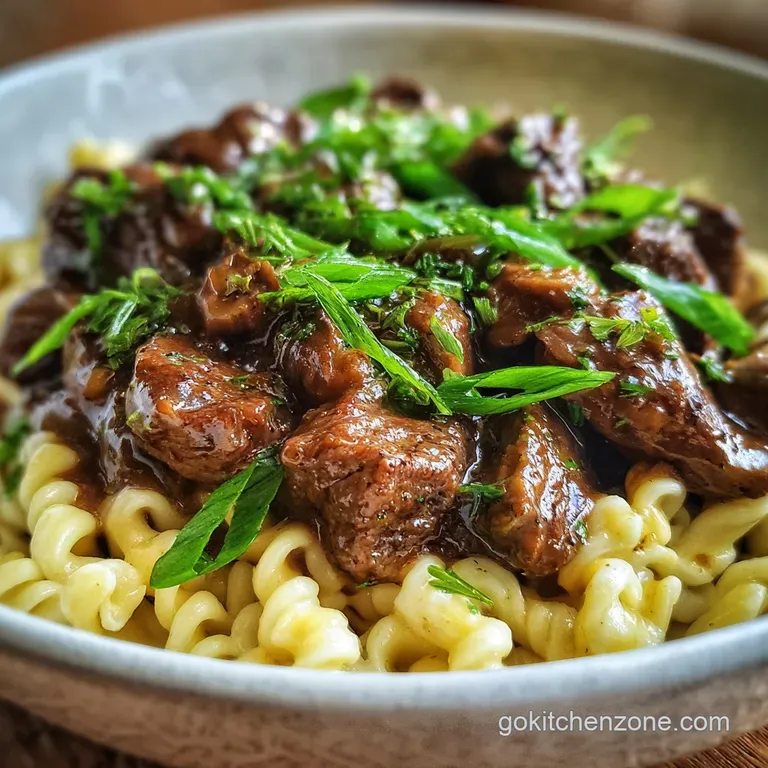
My Meat is Still Tough
This is almost always a matter of time. If your beef feels rubbery, the collagen hasn't finished breaking down into gelatin yet. Simply put the lid back on and give it another 20 minutes. Chuck roast is very forgiving; it is almost impossible to overcook it in a liquid braise.
The Sauce is Too Thin
Sometimes the onions or mushrooms release more water than expected. If your gravy looks more like soup, don't just add more cornstarch directly. You must make a separate slurry with cold water first, or you will end up with "flour pockets" that never dissolve.
| Problem | Root Cause | Solution |
|---|---|---|
| Grainy Sauce | Yogurt curdled from high heat | Stir in dairy ONLY after removing from heat source. |
| Bland Gravy | Lack of acidity or salt | Add a teaspoon of balsamic vinegar or more Worcestershire. |
| Pale Beef | Pan was not hot enough | Sear in smaller batches to maintain high pan temperature. |
Common Mistakes Checklist:
- ✓ Skipping the sear: You lose about 40% of the potential flavor without the Maillard reaction.
- ✓ Using lean beef: Sirloin or filet will turn dry and stringy; stick to chuck.
- ✓ Adding noodles to the pot: They will soak up all your gravy and turn into a mushy mess.
- ✓ Boiling the yogurt: High heat breaks the emulsion and creates a clumpy texture.
Simple Flavor Swaps and Twists
| Premium | Budget | Flavor Impact | Savings |
|---|---|---|---|
| Fresh Thyme | Dried Thyme | Dried is more concentrated and earthy | Save $3-4 |
| Beef Bone Broth | Bouillon + Water | Slightly less "mouthfeel" but same salt | Save $5 |
| Cremini Mushrooms | Canned Mushrooms | Less texture but good umami | Save $2 |
If you are looking for a "Pioneer" style punch, you can add a tablespoon of prepared horseradish to the sauce right at the end. It cuts through the heavy fat of the beef and gives the whole dish a bright, spicy lift that wakes up your palate.
For a gluten-free alternative, swap the egg noodles for a large scoop of mashed cauliflower or gluten-free rotini.
Scaling Your Family Meal
If you are cooking for a crowd and need to double this, don't just double everything blindly. For the spices and salt, start with 1.5x the amount and taste as you go. Liquids should be reduced by about 10% when doubling because you lose less to evaporation in a larger, fuller pot.
You will definitely need to work in batches for the searing; if you crowd the pan with 1.8 kg of beef, the temperature will drop and the meat will boil in its own juices rather than browning.
When scaling down for a solo dinner, use a smaller pot. If the pot is too wide, the liquid will evaporate too quickly, leaving your beef high and dry before it becomes tender. For the egg, if you were making a recipe that required one, you would beat it and use half, but here we just reduce the noodles and beef proportionally.
Debunking Common Kitchen Myths
There is a long standing myth that searing meat "seals in the juices." This is scientifically incorrect. Moisture loss happens regardless of the sear. The real reason we sear is for the flavor development on the surface. That brown crust is literally the foundation of the entire gravy.
Another common misconception is that you should always salt your mushrooms at the start. Actually, salting them early draws out water immediately, which prevents them from browning. I prefer to let them brown in the beef fat first, then season them once they have developed some color and texture.
Storing Your Leftovers Safely
This recipe is arguably better the next day. As it sits in the fridge, the flavors in the gravy continue to meld. You can keep it in an airtight container for up to 4 days. When reheating, the gravy will likely have thickened into a jelly like consistency thanks to the gelatin.
Just add a splash of water or broth when you microwave it or warm it on the stove to loosen it back up.
For freezing, the beef and gravy freeze beautifully for up to 3 months. However, I do not recommend freezing the cooked egg noodles. They tend to become mushy and lose their structural integrity when thawed. Freeze the beef mixture solo, then boil fresh noodles when you are ready to eat.
For a zero waste tip, save your mushroom stems and onion ends in a bag in the freezer to make your own beef stock later.
Serving Suggestions for Better Meals
Presentation matters, even on a Tuesday. A heavy sprinkle of fresh parsley doesn't just add color; the hit of fresh herbs cuts through the richness of the beef. I love serving this with a side of steamed green beans or a crisp green salad to provide some crunch against the soft noodles and velvety beef.
If you are feeling extra, a crusty piece of sourdough bread is mandatory for mopping up every last bit of that mahogany gravy. If you find yourself craving this deep, slow cooked flavor profile but want something even more "set it and forget it," you should look into my Beef Short Ribs recipe for the ultimate tender result.
Decision Shortcut: If you want a deeper flavor, use 120 ml of red wine to deglaze the pan before adding the broth. If you want it extra creamy, increase the Greek yogurt to 180 ml.
If you are short on time, cut the beef into smaller 1/2 inch pieces to reduce simmer time by 30 minutes.

High in Sodium
915 mg mg of sodium per serving (40% % of daily value)
The American Heart Association recommends limiting sodium intake to about 2,300mg per day.
Tips to Reduce Sodium
-
Omit Onion Soup Mix-30%
Eliminate the onion soup mix, as it's a significant source of sodium. Replace with extra finely diced onion and garlic, using 2 medium onions and 4 cloves of garlic.
-
Reduce Added Salt-25%
Decrease the amount of salt added to the recipe. Try using only 1/2 tsp salt initially and add more to taste, if needed, after the dish is cooked.
-
DIY Broth Upgrade-20%
Make your own low-sodium beef broth or use a 'no salt added' version. Alternatively, dilute the existing broth with water at a 50/50 ratio to lower sodium content.
-
Low-Sodium Worcestershire-15%
Use a low-sodium Worcestershire sauce. Many brands offer reduced sodium versions that can significantly cut down on sodium content without sacrificing flavor. Use 10 ml instead of 15 ml.
-
Spice It Up
Enhance the flavor with sodium free herbs and spices! Experiment with other flavorings like smoked paprika, garlic powder, or a bay leaf to add depth without increasing sodium.
Beef Tips and Noodles Recipe FAQs
What meat do you use for beef tips and noodles?
Beef chuck roast is best. It has a high collagen content that breaks down during slow cooking, making the tips incredibly tender and the gravy rich. Avoid pre-cut "stew meat" as it can be inconsistent.
What's the secret to juicy beef tips?
Proper searing and slow braising. Pat the beef completely dry before searing in a hot pan to develop a deep crust. Then, simmer it in liquid for at least two hours until fork tender. This process breaks down connective tissues into gelatin, ensuring juiciness.
What are common mistakes with beef tips?
Skipping the sear and using lean beef. Not searing the meat results in a lack of flavor depth, and using lean cuts like sirloin will make the tips dry and stringy. Also, avoid adding the noodles directly to the beef mixture, as they'll absorb all the gravy.
What ingredients do I need for beef and noodles?
You'll need beef chuck roast, oil for searing, beef bone broth, mushrooms, wide egg noodles, and plain Greek yogurt for finishing. Staples like salt, pepper, Worcestershire sauce, and onion soup mix are also essential for building the savory gravy.
Can I use a different cut of beef?
While chuck is ideal, you can use bottom round. Bottom round is leaner, so it might not become quite as melt-in-your mouth tender, but it will still yield a delicious dish. For a similarly tender slow cooked experience, consider our Short Ribs Slow Cooker: Red Wine Braised recipe.
My sauce is too thin, what went wrong?
This usually happens if the vegetables release too much liquid. To fix a thin sauce, create a slurry with cornstarch and cold water, then whisk it into the simmering beef mixture. Let it cook for a few more minutes until it thickens to your desired consistency.
Is it true that searing meat "seals in the juices"?
No, that's a common kitchen myth. Searing meat doesn't trap juices; instead, it creates flavor through the Maillard reaction, developing a delicious crust that forms the foundation of your gravy. This browning is crucial for the dish's overall taste.
Beef Tips Noodles
Ingredients:
Instructions:
Nutrition Facts:
| Calories | 692 kcal |
|---|---|
| Protein | 42.6 g |
| Fat | 24.5 g |
| Carbs | 47.2 g |
| Fiber | 2.8 g |
| Sugar | 3.9 g |
| Sodium | 915 mg |
